(*Spoken as Jimmy Fallon doing wacky FM DJ*) And we’re back! Actually, we were planning on being back a few weeks ago, but Andrew McMahon, lead singer and songwriter of Jack’s Mannequin, is a tough guy to pin down. Turn your back on him for a second, and he’s peeled off in his tour bus to do another four months of dates. We caught his final show with Guster last month, and it was a blast, especially when the two teamed up for a cover of Peter Bjorn and John’s “Young Folks.”
The Mannequin’s third album, People and Things, was released last week, and when McMahon finally decided to sit down and rest for a second, we were quick to strike: Tell us the 10 songs rocking your world at the moment, or your piano bites it. Surprisingly, there is little piano to be found here, but there are lots of happy techno beats. Rave on, rave on.
“Safe and Sound,” Capital Cities
A great tune in the indie/techno vein.
“Our Hearts Are Wrong,” Jessica Lea Mayfield
“The only time I miss you is every single day.” That says it all.
“Heartbeats,” Jose Gonzales
Hypnotizing guitars and vocals on this sad jam.
“I Think It’s Going to Rain Today,” Randy Newman
Randy’s not normally my jam, but this is a haunting song.
“Wonderful The Way I Feel,” My Morning Jacket
Damn, this dude can sing and the lyric on this tune is genius.
“The Day Is Coming,” My Morning Jacket
Killer groove and production on this track.
“Holocene,” Bon Iver
A truly beautiful piece of music.
“Patience Gets Us Nowhere Fast,” Capital Cities
So true.
“Go Outside,” The Cults
The song does the title justice, it makes me want to go party in the sunshine.
“Young Blood,” The Naked and Famous
Reminds me of the “Breakfast Club” soundtrack, and that’s hard to argue with.
I don’t even know why I’m here, frankly. I think it’s pretty well documented that all I do these days is write about television and interview people ’til the cows come home. Once upon a time, though, I used to be a music critic, dammit…and once you’ve had opinions about music, you’ll always have opinions about music. As such, here are my thoughts on the albums and songs that grabbed me this year. This may be the first time I’ve actually written about most of them, but you can damn well be sure that I’ve spent plenty of time listening to them.
Favorite Albums
1. Tom Jones: Praise & Blame
It’s a pretty consistent tradition that my #1 slot on my Best Albums list of any given year belongs to an artist whose career I’ve followed for quite some time, but Sir Tom earned his spot fair and square. Kicking things off with a stark cover of Bob Dylan’s “What Good Am I?” which will leave listeners spellbound, the Welsh wonder goes gospel with this record, and while it’s admittedly not the sort of career move that generally results in the shifting of mass units, it’s a creative success, one which befits a man entering his seventies far more than, say, another retread of “Sexbomb.” Having already secured legendary status (not to mention a knighthood), our man Tom can afford to step outside of people’s perceptions, and for those who’ve been paying attention, that’s what he’s been doing for the past several albums, including 2008’s 24 Hours and his 2004 collaboration with Jools Holland. But while Praise & Blame is a continuation of an existing trend, it’s also arguably the first time Jones has made absolutely no commercial concessions. There’s no wink-and-a-nudge cover of “200 Lbs. of Heavenly joy.” There’s no song by Bono and the Edge nor uber-hip production from Future Cut. There’s just Tom Jones, age 70…and, by God, he’s still got it.
2. Glen Matlock & The Philistines: Born Running
It isn’t as though it’s surprising that John Lydon’s the member of the Sex Pistols who’s gone on to have the most successful solo career – he was, after all, the frontman for the group – but it continues to be equally eyebrow-raising that so few of the band’s fans have kept their ears open for the consistently solid material emerging from Glen Matlock‘s camp. It’s not quite as punk as the Pistols – which makes perfect sense if you believe the story about Matlock supposedly getting the boot from the band for liking the Beatles a bit too much – but the songs on Born Running still pack a fierce wallop.
3. Brian Wilson: Reimagines Gershwin
The older I get, the less I allow myself to feel guilty about enjoying an album that I could easily peddle to people my grandparents’ age. All things considered, I’d much rather have a full collection of new originals from Mr. Wilson, but the way he takes these Gershwin classics and arranges them to match his traditional sound is still music to my ears. Then, of course, there’s the added bonus that he’s taken on the task of completing a couple of previously-unfinished Gershwin songs. Unsurprisingly, they sound just like Brian Wilson compositions…not that there’s anything wrong with that. At all.
4. Farrah: Farrah
There’s Britpop, and then there’s power pop, but you don’t tend to find bands who can manage to comfortably keep a foot in both camp; I’d argue that Farrah succeeds at this task, but given that they don’t have a particularly high profile in either, I suppose it really all depends on how you define success. For my part, though, if an artist releases an album which contains a significant number of catchy-as-hell hooks, it’s top of the pops in my book, which means that this self-titled entry into their discography is yet another winner for Farrah.
Having children has had a profound impact on my musical tastes. Will it make them cry? Will it teach them naughty words? Will it bore them? Then it doesn’t get played around the house, which has resulted in my sharp turn towards the poppier side of modern. And really, once you’ve seen your three-year-old completely lose his shit when hearing a song with a chorus of “Na, na na na, na na na, na na na na na na na,” it’s hard to push anything on him that doesn’t come armed to the teeth with the pop hooks. Mind you, I think the Ramones are a pop band too, so I’m painting with a pretty broad brush here. But make no mistake – these bands are pop bands, of varying stripes and shapes. If you fancy yourself a hipster, you’d be best to move on and check out one of the other writers’ lists. I gave up being hip a couple years ago, and let me tell you: it’s extremely liberating.
Note: Some of the notes at the end of the write-ups will offer suggestions of which songs to check out. Others actually offer the songs. If you see “Click here for a free download…”, those songs are on our server, meaning you won’t be dragged off to some site that asks you to give up your email address for a song. These puppies all come with no strings attached, so please download away.
Top 10 Albums of 2010
1. Mark Ronson: Record Collection
Ahhhhhh. If I get to heaven, this is what the radio station will sound like. Tasteful drum beats paired with even tastier synth tracks, highlighted by brilliantly chosen guest contributors from Q-Tip and D’Angelo to Simon Le Bon and a devastating performance by Boy George. Definitely gonna ride this bike until we get home. Download these: “The Bike Song,” “Somebody to Love Me,” “Record Collection”
3. Prefab Sprout: Let’s Change the World with Music
Man, what a sweet surprise this was. Originally scheduled to be the follow-up album to 1990’s Jordan: The Comeback, the album was scrapped despite Prefab leader Paddy McAloon already finishing studio-quality demo versions of every song. Eighteen years later, the songs finally see the light of day, and the result is instant nostalgia. He supposedly has dozens more albums on his shelves from the same period. Please don’t make us wait 18 years for the next one, Paddy. Download these: “Let There Be Music,” “Ride,” “God Watch Over You”
4. The Hours: It’s Not How You Start, It’s How You Finish
This one is knocked down a few rungs on a technicality, in that it’s a Franken-album consisting of the best songs from the band’s two UK-only releases. But hot damn, are those songs good. Shimmering, sky-high, piano-driven pop that addresses the darkness in people’s lives but strives for hope and change. No wonder Nike used one of these songs for their unforgettable “Human Chain” ad earlier this year. Favorite lyric: “I can understand how someone can go over to the dark side, ’cause the Devil, he’s got all the tunes.” Download these: “See the Light,” “Big Black Hole,” “Come On”
5. The Silver Seas: Chateau Revenge
I’m still pissed about this one. I got a sneak peek of the record months before its release because our publicist is tight with the band. We played the daylights out of it, and couldn’t wait to sing its praises when it came out in April…only April never happened. Then it was July, and when it came out, the damn thing was buried. Why, why, why? Not enough irony or cynicism? I see no reason why the Shins can sell millions while the Silver Seas still toil in obscurity. The phrase ‘criminally underrated’ was written about bands like this. Click here for a free download of the Silver Seas’ “The Best Things in Life”
6. Midnight Juggernauts: The Crystal Axis
The back half of “Lara Versus the Savage Pack” makes me positively giddy. Armed with a hypnotic six-note riff, this Australian trio lays on the strangest chord sequence before finally landing on the original chord in spectacular fashion, then sending one note climbing the walls, guaranteeing that everyone lucky enough to be in the club that plays this song will do the same. A little odder and more groove-oriented than their (awesome) alt-dance debut Dystopia, but one gets the sense that the Midnight Juggernauts are just getting warmed up. Sweet. Download these: “Lara Versus the Savage Pack,” “The Great Beyond,” “Vital Signs”
7. Codeine Velvet Club: Codeine Velvet Club
The lead singer of the Fratellis hooks up with his wife’s friend (not in that way) and makes what is arguably his best album yet, a collection of ’60s-minded boy/girl songs that could be spy anthems or ballads that Nancy Sinatra would have killed for. They even had the guts to cover a song from one of the most hallowed English pop records of all time (that would be the Stone Roses’ first album, see clip below). Yes, it’s true: Fratelli wrote “I Would Send You Roses” for Roger Daltrey. (Click here to read our interview with Jon Fratelli.) Click here for a free download of Codeine Velvet Club’s “Hollywood”
8. Scissor Sisters: Night Work
It’s officially time to recognize Jake Shears as one of the most versatile singers in music today. He has a baritone that would give Chris Difford pause and a falsetto that would give Barry Gibb a hissy fit. His band, meanwhile, chugs out the most awesome disco pop the world has heard since, well, disco. I get why these guys aren’t chartbusters in the States – they’re far too comfortable with their sexuality than most Americans are. Still, you’d think that their craft as songwriters would rise above what they do in their private lives. Sigh. Download these: “Invisible Light,” “Nightlife,” “Harder You Get”
9. Trashcan Sinatras: In the Music
Ah, my beloved Trashcans. I hope they will forgive me for not putting them at the top of my list, but let’s face it: they’re in a different musical place now, and so am I. I still love them – I even made good on my promise to buy guitarist Paul Livingston a drink after their show in Chicago the weekend of Lollapalooza last year – but not quite like I once did. It’s a beautiful record – it’s just not the record I needed this year, hence its ranking in the bottom part of my list. I’ll definitely play it more when the kids get older, though. Click here for a free download of the Trashcan Sinatras’ “People”
10. Home Video: The Automatic Process
I’m shocked that, in the Internet age, any band would give themselves the name Home Video. I even teased the lead singer for the Australian band Oh Mercy for the same thing earlier this year – who the hell is going to find your band among a million Google hits about Bob Dylan album reviews, or in the case of this electro-pop duo, old VHS titles? But when you’re armed with a song that sounds like a modern-day take on Seal’s “Future Love Paradise” (that would be “Beatrice”), then you can probably name your band any old thing you want. If you like the idea of Radiohead more than the band itself these days, definitely give this a listen. Doves fans should take note, too. Download these: “The Smoke,” “Beatrice,” “You Will Know What to Do”
The Coral: Butterfly House
This was the first I had heard from them in eight years. Nice to see you again.
Fitz & the Tantrums: Pickin’ Up the Pieces
I was late to this party, but once I arrived, I couldn’t stop dancing. We could use about a dozen more bands like this.
Nitzer Ebb: Industrial Complex
Alan Wilder told us that Nitzer Ebb always had good rhythmic ideas, but lacked melodic content. The band listened.
Surprise of the Year
Ratt: Infestation
Shockingly good for a group of guys whose last good song is old enough to buy its own beer.
Notable songs that kicked ass
“He’s Not a Boy,” The Like (Click here for a free download)
It’s like a female Strokes, only fun. And check out this video. Those ’60s outfits just slay me. Va-voom.
“Closer,” Kylie Minogue
I’m still baffled as to how this hasn’t been released as a single. This is the most epic three-minute bubblegum pop song I’ve heard in years. I bet Muse would do a killer cover of it. This version is a little sped up, to keep Kylie’s label from throwing the hammer down, but you get the idea.
“Hot ‘n Fun,” N.E.R.D. featuring Nelly Furtado
How on earth was this song not huge? It’s like a modern-day “Wanna Be Startin’ Something,” for crying out loud.
“Burn It Down,” Awolnation (Click here for a free download)
Little Richard surely loves this song, though I’m betting he opts for the version that doesn’t say “motherfucker” in the chorus.
“How You Like Me Now,” The Heavy
A bit of a cheat, since the album came out last year, but the single came out this year. And it made for a hell of a Super Bowl commercial.
“Remedy,” Little Boots
My pop star crush of 2010. She makes me tingly. (Click here to see the video, embedding disabled.)
“I L U,” School of Seven Bells(Click here for a free download)
Breakup song of the year. It’s also the best song My Bloody Valentine never wrote.
“Numbers Don’t Lie,” The Mynabirds
The video for this one totally won me over. Clever low-budget clip, and the lead singer is a total cutie.
“DHDQ,” Andy Bell
Think Eurythmics’ “Would I Lie to You” on synth steroids, about a Debbie Harry drag queen. Yep, that’s what “DHDQ” stands for.
“From Above,” Ben Folds & Nick Hornby
Best song Ben Folds has sung in nearly a decade, and quite possibly the definitive ‘ships passing in the night’ anthem.
“Thinking Bout Somethin’,” Hanson
Go ahead, you can laugh all you want (Ben Folds fans just nodded knowingly), but good luck getting this one out of your head. The video is about 16 different flavors of awesome, too.
Exit Calm: Exit Calm
Liam Gallagher and Mani from the Stone Roses love ’em. Big, loud, epic indie guitar rock.
Diego Garcia: The Girls Are Yours
If the first track from the former Elefant man (oh, I hate myself for typing that) is any indication, we have a guitar pop classic waiting in the wings. Click here to download Diego Garcia’s “You Were Never There”
The days of getting lost in an album have passed me by. This year, I really tried to rekindle that lost listening art of playing entire albums – instead of compiling playlists in iTunes. It hasn’t been easy. I think the ease of digitally downloading albums has dried up the sense of anticipation that used to come with a purchase of a physical copy of an album at a record store. Now, the record store is just part of the millions and billions of distractions that await you on the Internet – much of it for free.
Now, I don’t mean to go on a diatribe against the devaluation of music because of the Internet, but one thing that has occurred because of the sheer plethora of music available with one click of your mouse is a kind of ADD when it comes to listening to music. My colleague both here and at Popdose (that would be Jeff Giles) has written about it more eloquently than I can, but the sentiment is very much the same: because of the volume of music that is available in downloadable form, it’s difficult for me to form a deep connection with an entire album. If we could flash back 20 years, it would have been a different story to feature 10 albums. Nowadays, it’s rare that an entire album can hold my attention.
But, never say never, right?
What you will find here are mostly my favorite songs of 2010, but occasionally you’ll find entire albums. I know, after all that “downloadable music is ruining my attention span” crap, I say that there were some albums that really captured my attention. But like I said, I’ve tried to rekindle the art of listening to entire albums, and while I feel I’m losing that battle, I haven’t entirely lost the war. So, here we go with my top 10 of 2010!
10. Paper or Plastic, “The Honest Man”
Every now and then a link arrives in my inbox that lives up to the hype. Case in point is the New York group, Paper or Plastic, who has a kind of Ben Folds thing going on with “The Honest Man.” The song is an example of some very lovely power pop, and you’ll find yourself humming the chorus after a few listens. The band is giving away their EP Ron Save the King on their website. Get it, if only for “The Honest Man.”
9. Somebody’s Darling, “Lonely” In my review of this album, I was upfront about my allergy to country music – even if it’s alt-country. But Somebody’s Darling has enough rock-n-roll in them to make the musical waters safe for a guy with my particular affliction. “Lonely” is by far my favorite track on the album, and it’s not difficult to hear why. The song is just one big fireball of energy with a great driving beat and some wailing guitars. But it’s the full-throated vocals from Amber Ferris that takes this song from good to great.
8. Daft Punk: Tron Legacy
I used to be an avid soundtrack collector, but those days have passed me by. When I got a hold of the “Tron Legacy” soundtrack, however, it reminded me what I used to love about these kind of soundtracks: the combination of standard orchestration with tasteful touches of synth laced in for good measure. And that’s what Daft Punk has delivered in what could have been some cheesy-ass electronica music cues. Serving the weighty tone of the movie, Daft Punk avoided the familiar clubby territory of their music and went right for a fusion of classic music cues with flourishes of electronica.
7. Kanye West, “Dark Fantasy”
While most music critics are jizzing in their pants over Kanye’s My Beautiful Dark Twisted Fantasy, I was underwhelmed by most of it. However, give me a great hook, and I’ll take West’s tone-deaf singing any day. And Kanye delivers both on the album opener, but thankfully keeps the singing to a minimum. Sure, the chorus of the song is tremendously catchy, but West also adds some lyrical heft with rhymes like these:
Hey, teacher, teacher / Tell me how do you respond to students/
And refresh the page and restart the memory / Respark the soul and rebuild the energy / We stopped the ignorance, we killed the enemies / Sorry for the night demons still visit me / The plan was to drink until the pain over / But what’s worse, the pain or the hangover?
6. Devo, “Sumthin’”
Devo was such a part of my high school and college experience, that it was so refreshing to hear that classic Devo sound resurrected for 2010. With “Sumthin’,” it’s like it’s 1982 all over again, and it’s heartening that the Spud Boys, after their breakup and detour into the world of TV soundtrack work, haven’t lost that jerkin’ back and forth feel on this song. The entire album is good, but this track stands out as the strongest on the album – and one that I keep coming back to over and over and over.
5. Prince, “Lavaux”
In this day of the instant download, how do you create a buzz around an album release? Well, if you’re Prince, you make it difficult to obtain the album outside of the certain geographic region. Case in point is the release of 20Ten – which Prince only gave away in the UK to readers of The Daily Mirror and The Daily Record. He undoubtedly knew that once the physical CD was ripped and uploaded to a torrent, it would go viral and people would be talking about the entire album – and not just a single. Alas, the album for me was more of a miss than a hit. But when Prince did “hit,” as he did in “Lavaux,” it was reminder of the kind of sublime pieces of music he’s capable of making.
4. Chromeo, “Hot Mess”
This Canadian duo’s brilliant lead track on their 2010 release, Business Casual, is a sonic delight with some wonderful ‘80s throwback production techniques. Plus the fact that song is just pure pop joy doesn’t hurt matters at all. Pretty good work from a group whose lead singer is working on a PhD at Columbia University.
3. Arcade Fire, “Suburban War”
Another album that’s bound to make many ‘o critic’s top 10 this year, and yet it’s another album that really didn’t impress me. But what did impress me was “Suburban War” with its ’60s-era Byrds-inspired guitar work and hypnotic vocals. If the song stayed with that tempo and style, it would have been a kind of sleepy standout track on the album, but Arcade Fire did something interesting: they upped the tempo (and the tension) of the song for the final ride out that masterfully raised the emotional depth – which is something rare in popular music.
2. Rush, “Caravan”
I don’t apologize for my love of Rush, but I’m not such a fanboy that I will laud everything the band puts out. The two singles they released in conjunction with their Time Machine Tour are a study in contrasts. “Caravan” has a number of classic Rush flourishes, but it’s also a song that has enough quirky elements that it demonstrates Rush’s commitment to progressive rock in that, they are never quite comfortable resting on their reputation. I have to admit to not liking the song when it first came out, but when I saw it performed live, it was such a blistering rocker that it quickly became a favorite in Rush’s oeuvre. I can’t say the same for “BU2B (Brought up to Believe)” – which I found a bit of retread of some of the weaker songs on Snakes & Arrows.
1. The Gaslight Anthem, American Slang
If you’re a fan of rock anthems that’ll get you singing songs that sound like they were written during Bruce Springteen’s heyday, then you’ll fall in love with the Gaslight Anthem’s second full album release. Song after song exemplifies the best in this style of rock music. The album is free of any filler, and while the hybrid of Springsteen and the Clash suggests a lack of originality, The Gaslight Anthem are able to use the old wine skins that has influenced their music and make a new wine that’s tasty, taut, and thunderous.
In my mind, 2010 will be remembered more for moments of strangeness, oddity, and lessened expectation, than it will be for transcendent music. The throwaway nature of pop has never been more transient or incidental; technology enables us to hear as much as we want and, by the sheer volume of those possibilities, to actively listen as little as we ever have. How else to explain Ke$ha and the Glee cast recordings, much less the continuing nonsense of Black Eyed Peas? Raise your hand if you think Bruno Mars or Rihanna are still going to be churning out hits ten years from now, or that Katy Perry (more about her below) will still be squeezing into latex after she and her pasty Brit hubby have two or three little Russells to contend with, and things start saggin’.
I will remember 2010 for several key moments:
Top 10 Music Moments of 2010
1. The Roots, Being the Roots. Are they the best band on the planet? It’s hard to argue when their versatility is put on display every weeknight, and when they reiterate their overall excellence by turning out two of the best records of the year (How I Got Over and Wake Up, with John Legend).
2. Dio, Chilton Die. We lost metal’s gentle sorcerer (Ronnie James Dio) and Big Star’s genius-in-residence (Alex Chilton) within a few months of one another. May they both rock in peace.
3. “The Bed Intruder Song.” Some television producer obviously thought putting Antoine Dodson’s rant on the evening news would make for amusing viewing. Add Autotune, YouTube, and stir, and you have the most unlikely viral hit of the year.
4. Michael Jackson single: Real or Fake? It’s him. Not even Sony would be so dumb as to taint their posthumous cash cow by trying to pawn off a soundalike as the man himself. It’s too easy to get caught. Until MJ rises from the dead (which I firmly believe will happen), this is how he’ll stay in the headlines.
5. ICP’s “Miracles” Video. There is no WTF moment from 2010 nearly as WTF as this WTF moment.
6. Katy Perry’s Breasts Make Videos. Perry’s videos display the two things she does best: making catchy singles and showing off her breastuses. Not since chocolate and peanut butter were mixed by H.B. Reese has a combination worked so well.
7. Rush Become Movie Stars. Who’da thunk the kimono-wearin’, prog-playin’, not-very-pretty Canucks who made Hemispheres and 2112 would ever be so compelling on film? They’re funny, charming, and have more inside jokes than you and your seventh-grade buddies did.
8. Tyler to Idol. It is my fervent hope that Steven Tyler’s defection to television does what 20 years of shitty Aerosmith records was unable to do—namely, stick a fork in a band that has rattled on long past its expiration date.
9. Bret Michael Survives. Dude’s got nine lives. Twenty-five years of groupies, lite metal, drugs, booze, and more groupies has to be good for you.
10. Quasi release “Bye Bye Blackbird.” It’s been in their set for a while, but to hear it on American Gong was something of a revelation. Play it loud enough, and you will be moved. Maybe out of your shoes.


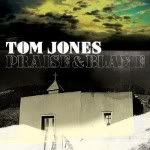 1. Tom Jones: Praise & Blame
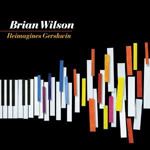 3. Brian Wilson: Reimagines Gershwin
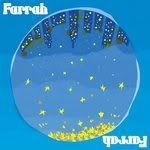 4. Farrah: Farrah
 2.
2.  3.
3.  4.
4.  5.
5.  6.
6.  7.
7.  8.
8.  9.
9.  10.
10. 
 10. Paper or Plastic, “The Honest Man”
  9. Somebody’s Darling, “Lonely”
  8. Daft Punk: Tron Legacy
  7. Kanye West, “Dark Fantasy”
  6. Devo, “Sumthin’”
  5. Prince, “Lavaux”
  4. Chromeo, “Hot Mess”
  3. Arcade Fire, “Suburban War”
  2. Rush, “Caravan”
