It’s funny how we learn about new music today in the digital world. I haven’t quite turned in my music journalism card yet, so I receive many pitches for new and established artists. Also, in the interest of full disclosure, I’m a music publicist–so I won’t pimp my own artists in this spot. So besides those press releases, I hear about new artists through my clients, through other taste makers like Val’s List and Bob Lefsetz and Kings of A&R. I hear about great music from trusted friends. I hear stuff from colleagues repping cool new acts. I hear songs on TV shows or in movies, or on the radio through bumper music (but almost never from the actual radio anymore). And occasionally from online radio stations. That’s it. It’s amazing how music will find its way into our ears and onto our hard drives now. And speaking of that, I had better purge my iTunes a bit before my PC explodes. Meanwhile, here are some things I’m listening to that you should check out if you feel so inclined.
“Skeleton” by The Good Natured–If you’re a fan of synth-driven ’80’s pop, this title track to the British group’s 2011 EP will take you back to those days a bit, while sounding like it could work on today’s Top 40 radio–whatever that may be. I found this group through a pitch from their publicist, who is pimping their new single, “Video Voyeur.” Now, that video will surely take you back to the early MTV days.
“Celebrate Tonight” by Allen Stone–One of my clients opened for this kid, who really came out of nowhere. He’s a scrawny Seattle-bred white kid with an old school R&B soul. Kind of like Daryl Hall, who took Stone in for a “Live from Daryl’s House” session that literally gives me goosebumps when I see and hear it. The best part is seeing the unbridled joy on Stone’s face as Daryl plays along and sings with him.
“Show and Tell” by Sugar & The Hi-Lows–Nashville singer/songwriters Trent Dabbs and Amy Stroup collaborate here for some pure magic–beautiful melody, arrangement, and a soaring yet lo-fi harmony drenched chorus. It also has a mild ’70’s vibe ala Josh Rouse’s 1972 album (sorry, I have a penchant for music from past decades!).
“Almost Blue” by Joseph Arthur–This guy’s music follows me around, and it’s sheer brilliance. And this past week he released a new double album on his website, available for free download (though there is no way I’m not hitting the “donate” button–I want Joseph Arthur to make music until he’s 80).
“Sweetheart Like You” by World Party–Their new Arkeology set (releasing next Tuesday April 10) is 70 tracks deep and features old songs, new songs, covers, live recordings and more. The World Party fan in your life just has to have this. This song is a Bob Dylan cover that singer Karl Wallinger spins his own way, and it winds up sounding like it jumped off of The New Radicals’ only (and genius) album from 1998.
“Drumming Song” by Florence + The Machine–There is something purely intoxicating about Florence + the Machine, and this song embodies that desire to get drunk with her voice and music, as well as the booming percussion. That said, you just have to check out this acoustic video from KEXP–there is no auto-tune, no slick production–mostly Florence’s positively sick vocals out front.
“Please Stay Strong” by Stolen Silver–I guess it’s okay for me to talk about a band put together with members from a former client band of mine? Well, I just did. These guys have an incredible acoustically driven, harmony-rich sound with some killer songs.
“Forget the Diamonds” by Dave McGraw and Mandy Fer–Just like Sugar & The Hi-Lows above, this duo makes magic together. It’s Americana, yet really it’s just haunting and melodic music that you will find really hard to stop listening to.
“Wine Dark Sea” by Daniel Tashian–Tashian is one of those under-the-radar Nashville cats who I’m certain writes insanely sweet melodies in his sleep. The front man for The Silver Seas steps aside with a solo project here, but it’s really an extension of his band, and something that will tide this big fan over until the next Seas release.
Okay, so I just realized that I could do this all day. But maybe I should save it and do this more often. What do you think? Hit me up here, or on Facebook or Twitter. And thanks for hanging out in my music room for a bit.
There are few slopes that are as slippery as music that could fairly be described as precious. A wrong move in any direction, and that ‘c’ becomes a ‘tent’, if you know what we mean. It was therefore with great trepidation that we clicked Play on the song from Little Tybee, a group of Georgians whose press release was quick to mention Fleet Foxes. And don’t get us wrong, we like Fleet Foxes…but do we need a dozen of them?
As it turns out, “Nero,” the first song from the band’s upcoming album Humorous to Bees, is probably being done a disservice by being compared to anyone, but you know how press releases work – they need to mention a couple of successful bands to give the reader a reference point (and truthfully, that’s exactly how we like it). If anything, the song reminds us of a less amped version of the Noisettes’ song “Wild Young Hearts,” perhaps refitted for play in a jazz club. Trade out drum sticks for brushes, throw in some fiddle, and groove, man. Good stuff. The record drops in April. Hopefully this will tide you over until then.
I don’t even know why I’m here, frankly. I think it’s pretty well documented that all I do these days is write about television and interview people ’til the cows come home. Once upon a time, though, I used to be a music critic, dammit…and once you’ve had opinions about music, you’ll always have opinions about music. As such, here are my thoughts on the albums and songs that grabbed me this year. This may be the first time I’ve actually written about most of them, but you can damn well be sure that I’ve spent plenty of time listening to them.
Favorite Albums
1. Tom Jones: Praise & Blame
It’s a pretty consistent tradition that my #1 slot on my Best Albums list of any given year belongs to an artist whose career I’ve followed for quite some time, but Sir Tom earned his spot fair and square. Kicking things off with a stark cover of Bob Dylan’s “What Good Am I?” which will leave listeners spellbound, the Welsh wonder goes gospel with this record, and while it’s admittedly not the sort of career move that generally results in the shifting of mass units, it’s a creative success, one which befits a man entering his seventies far more than, say, another retread of “Sexbomb.” Having already secured legendary status (not to mention a knighthood), our man Tom can afford to step outside of people’s perceptions, and for those who’ve been paying attention, that’s what he’s been doing for the past several albums, including 2008’s 24 Hours and his 2004 collaboration with Jools Holland. But while Praise & Blame is a continuation of an existing trend, it’s also arguably the first time Jones has made absolutely no commercial concessions. There’s no wink-and-a-nudge cover of “200 Lbs. of Heavenly joy.” There’s no song by Bono and the Edge nor uber-hip production from Future Cut. There’s just Tom Jones, age 70…and, by God, he’s still got it.
2. Glen Matlock & The Philistines: Born Running
It isn’t as though it’s surprising that John Lydon’s the member of the Sex Pistols who’s gone on to have the most successful solo career – he was, after all, the frontman for the group – but it continues to be equally eyebrow-raising that so few of the band’s fans have kept their ears open for the consistently solid material emerging from Glen Matlock‘s camp. It’s not quite as punk as the Pistols – which makes perfect sense if you believe the story about Matlock supposedly getting the boot from the band for liking the Beatles a bit too much – but the songs on Born Running still pack a fierce wallop.
3. Brian Wilson: Reimagines Gershwin
The older I get, the less I allow myself to feel guilty about enjoying an album that I could easily peddle to people my grandparents’ age. All things considered, I’d much rather have a full collection of new originals from Mr. Wilson, but the way he takes these Gershwin classics and arranges them to match his traditional sound is still music to my ears. Then, of course, there’s the added bonus that he’s taken on the task of completing a couple of previously-unfinished Gershwin songs. Unsurprisingly, they sound just like Brian Wilson compositions…not that there’s anything wrong with that. At all.
4. Farrah: Farrah
There’s Britpop, and then there’s power pop, but you don’t tend to find bands who can manage to comfortably keep a foot in both camp; I’d argue that Farrah succeeds at this task, but given that they don’t have a particularly high profile in either, I suppose it really all depends on how you define success. For my part, though, if an artist releases an album which contains a significant number of catchy-as-hell hooks, it’s top of the pops in my book, which means that this self-titled entry into their discography is yet another winner for Farrah.
Having children has had a profound impact on my musical tastes. Will it make them cry? Will it teach them naughty words? Will it bore them? Then it doesn’t get played around the house, which has resulted in my sharp turn towards the poppier side of modern. And really, once you’ve seen your three-year-old completely lose his shit when hearing a song with a chorus of “Na, na na na, na na na, na na na na na na na,” it’s hard to push anything on him that doesn’t come armed to the teeth with the pop hooks. Mind you, I think the Ramones are a pop band too, so I’m painting with a pretty broad brush here. But make no mistake – these bands are pop bands, of varying stripes and shapes. If you fancy yourself a hipster, you’d be best to move on and check out one of the other writers’ lists. I gave up being hip a couple years ago, and let me tell you: it’s extremely liberating.
Note: Some of the notes at the end of the write-ups will offer suggestions of which songs to check out. Others actually offer the songs. If you see “Click here for a free download…”, those songs are on our server, meaning you won’t be dragged off to some site that asks you to give up your email address for a song. These puppies all come with no strings attached, so please download away.
Top 10 Albums of 2010
1. Mark Ronson: Record Collection
Ahhhhhh. If I get to heaven, this is what the radio station will sound like. Tasteful drum beats paired with even tastier synth tracks, highlighted by brilliantly chosen guest contributors from Q-Tip and D’Angelo to Simon Le Bon and a devastating performance by Boy George. Definitely gonna ride this bike until we get home. Download these: “The Bike Song,” “Somebody to Love Me,” “Record Collection”
3. Prefab Sprout: Let’s Change the World with Music
Man, what a sweet surprise this was. Originally scheduled to be the follow-up album to 1990’s Jordan: The Comeback, the album was scrapped despite Prefab leader Paddy McAloon already finishing studio-quality demo versions of every song. Eighteen years later, the songs finally see the light of day, and the result is instant nostalgia. He supposedly has dozens more albums on his shelves from the same period. Please don’t make us wait 18 years for the next one, Paddy. Download these: “Let There Be Music,” “Ride,” “God Watch Over You”
4. The Hours: It’s Not How You Start, It’s How You Finish
This one is knocked down a few rungs on a technicality, in that it’s a Franken-album consisting of the best songs from the band’s two UK-only releases. But hot damn, are those songs good. Shimmering, sky-high, piano-driven pop that addresses the darkness in people’s lives but strives for hope and change. No wonder Nike used one of these songs for their unforgettable “Human Chain” ad earlier this year. Favorite lyric: “I can understand how someone can go over to the dark side, ’cause the Devil, he’s got all the tunes.” Download these: “See the Light,” “Big Black Hole,” “Come On”
5. The Silver Seas: Chateau Revenge
I’m still pissed about this one. I got a sneak peek of the record months before its release because our publicist is tight with the band. We played the daylights out of it, and couldn’t wait to sing its praises when it came out in April…only April never happened. Then it was July, and when it came out, the damn thing was buried. Why, why, why? Not enough irony or cynicism? I see no reason why the Shins can sell millions while the Silver Seas still toil in obscurity. The phrase ‘criminally underrated’ was written about bands like this. Click here for a free download of the Silver Seas’ “The Best Things in Life”
6. Midnight Juggernauts: The Crystal Axis
The back half of “Lara Versus the Savage Pack” makes me positively giddy. Armed with a hypnotic six-note riff, this Australian trio lays on the strangest chord sequence before finally landing on the original chord in spectacular fashion, then sending one note climbing the walls, guaranteeing that everyone lucky enough to be in the club that plays this song will do the same. A little odder and more groove-oriented than their (awesome) alt-dance debut Dystopia, but one gets the sense that the Midnight Juggernauts are just getting warmed up. Sweet. Download these: “Lara Versus the Savage Pack,” “The Great Beyond,” “Vital Signs”
7. Codeine Velvet Club: Codeine Velvet Club
The lead singer of the Fratellis hooks up with his wife’s friend (not in that way) and makes what is arguably his best album yet, a collection of ’60s-minded boy/girl songs that could be spy anthems or ballads that Nancy Sinatra would have killed for. They even had the guts to cover a song from one of the most hallowed English pop records of all time (that would be the Stone Roses’ first album, see clip below). Yes, it’s true: Fratelli wrote “I Would Send You Roses” for Roger Daltrey. (Click here to read our interview with Jon Fratelli.) Click here for a free download of Codeine Velvet Club’s “Hollywood”
8. Scissor Sisters: Night Work
It’s officially time to recognize Jake Shears as one of the most versatile singers in music today. He has a baritone that would give Chris Difford pause and a falsetto that would give Barry Gibb a hissy fit. His band, meanwhile, chugs out the most awesome disco pop the world has heard since, well, disco. I get why these guys aren’t chartbusters in the States – they’re far too comfortable with their sexuality than most Americans are. Still, you’d think that their craft as songwriters would rise above what they do in their private lives. Sigh. Download these: “Invisible Light,” “Nightlife,” “Harder You Get”
9. Trashcan Sinatras: In the Music
Ah, my beloved Trashcans. I hope they will forgive me for not putting them at the top of my list, but let’s face it: they’re in a different musical place now, and so am I. I still love them – I even made good on my promise to buy guitarist Paul Livingston a drink after their show in Chicago the weekend of Lollapalooza last year – but not quite like I once did. It’s a beautiful record – it’s just not the record I needed this year, hence its ranking in the bottom part of my list. I’ll definitely play it more when the kids get older, though. Click here for a free download of the Trashcan Sinatras’ “People”
10. Home Video: The Automatic Process
I’m shocked that, in the Internet age, any band would give themselves the name Home Video. I even teased the lead singer for the Australian band Oh Mercy for the same thing earlier this year – who the hell is going to find your band among a million Google hits about Bob Dylan album reviews, or in the case of this electro-pop duo, old VHS titles? But when you’re armed with a song that sounds like a modern-day take on Seal’s “Future Love Paradise” (that would be “Beatrice”), then you can probably name your band any old thing you want. If you like the idea of Radiohead more than the band itself these days, definitely give this a listen. Doves fans should take note, too. Download these: “The Smoke,” “Beatrice,” “You Will Know What to Do”
The Coral: Butterfly House
This was the first I had heard from them in eight years. Nice to see you again.
Fitz & the Tantrums: Pickin’ Up the Pieces
I was late to this party, but once I arrived, I couldn’t stop dancing. We could use about a dozen more bands like this.
Nitzer Ebb: Industrial Complex
Alan Wilder told us that Nitzer Ebb always had good rhythmic ideas, but lacked melodic content. The band listened.
Surprise of the Year
Ratt: Infestation
Shockingly good for a group of guys whose last good song is old enough to buy its own beer.
Notable songs that kicked ass
“He’s Not a Boy,” The Like (Click here for a free download)
It’s like a female Strokes, only fun. And check out this video. Those ’60s outfits just slay me. Va-voom.
“Closer,” Kylie Minogue
I’m still baffled as to how this hasn’t been released as a single. This is the most epic three-minute bubblegum pop song I’ve heard in years. I bet Muse would do a killer cover of it. This version is a little sped up, to keep Kylie’s label from throwing the hammer down, but you get the idea.
“Hot ‘n Fun,” N.E.R.D. featuring Nelly Furtado
How on earth was this song not huge? It’s like a modern-day “Wanna Be Startin’ Something,” for crying out loud.
“Burn It Down,” Awolnation (Click here for a free download)
Little Richard surely loves this song, though I’m betting he opts for the version that doesn’t say “motherfucker” in the chorus.
“How You Like Me Now,” The Heavy
A bit of a cheat, since the album came out last year, but the single came out this year. And it made for a hell of a Super Bowl commercial.
“Remedy,” Little Boots
My pop star crush of 2010. She makes me tingly. (Click here to see the video, embedding disabled.)
“I L U,” School of Seven Bells(Click here for a free download)
Breakup song of the year. It’s also the best song My Bloody Valentine never wrote.
“Numbers Don’t Lie,” The Mynabirds
The video for this one totally won me over. Clever low-budget clip, and the lead singer is a total cutie.
“DHDQ,” Andy Bell
Think Eurythmics’ “Would I Lie to You” on synth steroids, about a Debbie Harry drag queen. Yep, that’s what “DHDQ” stands for.
“From Above,” Ben Folds & Nick Hornby
Best song Ben Folds has sung in nearly a decade, and quite possibly the definitive ‘ships passing in the night’ anthem.
“Thinking Bout Somethin’,” Hanson
Go ahead, you can laugh all you want (Ben Folds fans just nodded knowingly), but good luck getting this one out of your head. The video is about 16 different flavors of awesome, too.
Exit Calm: Exit Calm
Liam Gallagher and Mani from the Stone Roses love ’em. Big, loud, epic indie guitar rock.
Diego Garcia: The Girls Are Yours
If the first track from the former Elefant man (oh, I hate myself for typing that) is any indication, we have a guitar pop classic waiting in the wings. Click here to download Diego Garcia’s “You Were Never There”
It was an interesting year for me music-wise. So much great stuff passed my desk or by e-mail from publicists, but something odd happened: my old PC started getting so slow that I literally could not listen to my iTunes and work at the same time. Makes writing CD reviews tough, but makes listening while I work to get a feel for new music even harder. I persevered, playing stuff in the car and also, finally, getting a super-fast new PC recently. My joy of listening to my iTunes catalog and discovering new music has returned. And so, I give to you, my Top 10 albums of 2010:
1. The Silver Seas: Chateau Revenge
There are two songs on this album that can bring anyone from the lowest of lows to the highest of highs in no time flat: “The Best Things in Life” and “What’s the Drawback.” Daniel Tashian and company continue to make some of the best music that, unfortunately, most people have never heard. So hey, this holiday season, do something about that. Go buy the Silver Seas’ music, and tell them I sent you.
2. Rooney: Eureka
Bullz-Eye Music Editor David Medsker: “Hey, I think you’ll like these guys.” Me, after hearing band: “Um, understatement.” It’s just good, unadulterated pop/rock – no whiny kid voice and no Auto Tune.
3. Grace Potter & the Nocturnals: Grace Potter & the Nocturnals
It’s nice that this indie queen is finally getting her due with Disney-owned Hollywood Records, because she’s got the goods. She can write, sing and play. Did I say sing? Yeah, Grace can REALLY sing.
4. Leeroy Stagger: Everything Is Real
You don’t have to be Canadian to dig a good alternative twang artist like Leeroy Stagger. In fact, you have to just dig that fact that he can make music this good.
5. Rogue Wave: Permalight
This band just oozes cool without anyone telling them that they’re cool. This album is a bit different than previous work, but when you’re awesome, you’re awesome.
6. The Album Leaf: A Chorus Of Storytellers
This group continues to make mesmerizingly hip music to chill to. Bonus: chicks dig the Album Leaf. Well, my wife does.
7. Heart: Red Velvet Car
Back with their first studio album in almost a decade, and their best since maybe the ‘70s.
8. Miggs: Wide Awake
Pure pop/rock along the lines of Butch Walker with a bit of New Jersey-ish Bon Jovi vocal tone.
9. Bachman & Turner: Bachman & Turner
Speaking of their best in decades, Randy Bachman and Fred Turner reunite for a new incarnation of BTO with new awesome songs.
10. Aqualung: Magnetic North
“36 Hours” is another top song of the year on another strong effort from Aqualung.



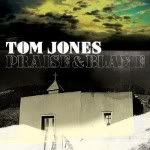 1. Tom Jones: Praise & Blame
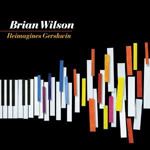 3. Brian Wilson: Reimagines Gershwin
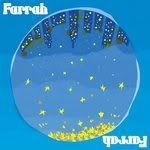 4. Farrah: Farrah
 2.
2.  3.
3.  4.
4.  5.
5.  6.
6.  7.
7.  8.
8.  9.
9.  10.
10. 
 2. Rooney: Eureka
 3. Grace Potter & the Nocturnals: Grace Potter & the Nocturnals
 4. Leeroy Stagger: Everything Is Real
 5. Rogue Wave: Permalight
 6. The Album Leaf: A Chorus Of Storytellers
 7. Heart: Red Velvet Car
 8. Miggs: Wide Awake
 9. Bachman & Turner: Bachman & Turner
 10. Aqualung: Magnetic North