
RIYL: The Byrds, Bob Dylan, Kings of Leon
Tom Petty set the standard for greatest hits compilations in 1993 when he released the aptly-titled Greatest Hits, which included 16 of his biggest singles, a soon-to-be-smash (“Mary Jane’s Last Dance”), and a very worthwhile cover (Thunderclap Newman’s “Something in the Air”). While some might argue that 1983’s “Change of Heart” (peaking at #21) and 1987’s “Jammin’ Me” (#18) were technically bigger hits than some of the singles that were included, no Petty fan worth his salt is going to argue that those two tunes held up better than the likes of “Listen to Her Heart” (#59) or “Here Comes My Girl” (#59).
Fast forward two years to Petty’s first box set, 1995’s Playback, which was a hodgepodge of hit singles, live tracks and rarities. The set wasn’t very cohesive, but it was important because of its excellent sixth disc (“Nobody’s Children”), which featured 11 leftover tracks from 1986 to 1993 – maybe the most productive span of Petty’s career.
Then there was 2000’s Anthology: Through the Years, which was essentially an expansion of the Greatest Hits disc, though, oddly enough, it didn’t include anything from post-Greatest Hits albums Wildflowers (“You Don’t Know How It Feels,” “It’s Good to Be King,” “You Wreck Me”), She’s The One (“Walls”) or Echo (“Free Girl Now,” “Room At the Top”).

So now we have The Live Anthology, which comes in several different formats – the standard set (48 tracks on 4 CDs), the deluxe set (62 tracks on 5 CDs, including a 14-track bonus disc, two DVDs, a Blu-Ray disc, a vinyl re-master of of the ’76 Official Live Leg, and more, only available at Best Buy), and a vinyl deluxe box set (51 tracks pressed on seven 180-gram audiophile quality vinyl LPs). This review is of the digital version of the standard set, which is the first live release from Tom Petty and the Heartbreakers since 1986’s Pack Up the Plantation-Live!
Eleven songs in the set are live versions of tracks included on both Greatest Hits and Anthology. (Think big hits like “Refugee” and “American Girl.”) Most of these tracks are relatively faithful interpretations of the studio versions, save for the beautiful “Learning to Fly” and “I Won’t Back Down,” which Petty often plays in concert with a much sparser production. Both tunes are well worth a listen.
Nine album tracks from The Live Anthology also made my recommended Tom Petty Deep Cuts playlist, and are welcome additions here. It’s hard to pick favorites, but it’s nice to see “Angel Dream (No. 2)” and “Have Love Will Travel” get some live love, and “Dreamville” is an especially impressive live performance. “Southern Accents” is vastly improved from the album version since it’s without the irritating, echoing cross stick that was used in the studio.
Considering that the set has been culled together from hundreds of hours of live recordings from 1979 to 2007, the most impressive thing is how cohesive each disc sounds when played start to finish. It’s almost as if the listener gets four individual, hour-long sets from the Heartbreakers. The band has never been afraid to dive into a cover or two, as evidenced by the the presence of Fleetwood Mac’s “Oh Well,” the Zombies’ “I Want You Back Again,” Booker T. and the MGs “Green Onions,” the Grateful Dead’s “Friend of the Devil,” the Dave Clark Five’s “Any Way You Want It” and more.
The Live Anthology is by no means definitive, but it provides a good, in-depth look at one of the greatest live acts of the last thirty years. Moreover, it’s available at the band’s website for $18.49, which is a nice deal for almost four hours of music. (Reprise, 2009)

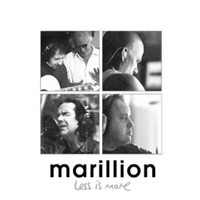 It seems a somewhat formidable task to encapsulate two decades of music within the span of a dozen tracks, but Marillion’s latest makes the case that it’s at least worth trying. Summing up the group’s progress following the transition from original singer Fish to current front man Steve Hogarth at the end of the ‘80s, this modest anthology holds together remarkably well, each song segueing seamlessly into the next with scarcely any change in tone or tempo. One can only surmise that that the band is either a stickler for consistency or simply at a loss for new ideas; either way, their sprawling, unhurried sound is as spare as the album title suggests. Songs begin with little more than a few notes on a keyboard or the simple strum of an acoustic guitar before acceding to an underlying, unresolved tension that ripples just below the surface. When the material soars, as with the slightly more emphatic “Hard As Love” or via the bebop rhythms of “If My Heart Were a Ball,” Marillion manage to emulate the plaintive tomes of U2 and Simple Minds. However, aside from the “hidden track” “Cannibal Surf Babe” and a moving cover of Radiohead’s “Fake Plastic Trees” – one of two live bonus tunes – the melodies are somewhat diffuse, showing only a lackluster attempt at capturing a more emphatic sound.

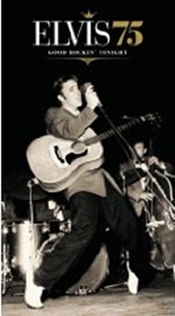
 In honor of Elvis’ 75th birthday – we won’t get into whether he is “the late Elvis” or still rockin’ in the wilds of Michigan – Legacy’s issuing a bunch of records, this one being first up and coinciding with a Graceland bash. In a word, it’s great stuff, a career-spanning retrospective that covers the gamut of the good, bad and ugly from rock’s first real icon, its undisputed King. Elvis diehards probably have most of the 100 tracks spanning the almost 25 years of his recorded career, from the 1953 “My Happiness” demo to Moody Blue tracks; probably only the most manic completists among longtime fans will nibble at this.