Page 134 of 583

Sade: Soldier of Love


RIYL: Everything But the Girl, Basia, Anita Baker

Sade’s been releasing babymaking music for so long that the kids who were conceived to the strains of their first single, “Your Love Is King,” are old enough to have children of their own. You’d think they’d have run out of ideas by now – or, at the very least, run out of people willing to purchase their albums – but Sade’s last release, 2000’s Lovers Rock, actually sold more than its predecessor, 1992’s Love Deluxe.

That kind of longevity has always been exceedingly rare in pop music, especially for acts who, like Sade, tend to take a decade or so between releases – but then again, most artists don’t enjoy the kind of cool consistency Sade has displayed over the course of its career. From a certain point of view, you could say that if you’ve heard one Sade album you’ve heard them all; it’s probably more accurate, though, to say that the members of the band know exactly which kind of music they were born to make, and they simply play to their artistic strengths more strongly than most.

Whichever way you look at it, Sade’s sixth studio album is a lot like the five that came before it: Plenty of languid R&B, heavy on the machine-driven beats and moody synths, topped off with a little sax, a little guitar, and a whole lot of Sade Adu’s coolly smoky vocals. She doesn’t look or sound like she’s aged a day since 1984, which is exactly what Sade fans want to hear – you don’t listen to this music looking for radical change, you turn to it for comfort, and to hear the sound of impeccably crafted, grown-up lust. (Seriously, Adu is 51? This woman cannot be human.)

That said, there is a bit of change afoot on Soldier of Love – but just a bit, and it’s most noticeable on the strutting title track, which finds Adu’s lithesome vocals wafting above a booming beat, stabbing rhythm guitars, and martial percussion samples. Though still recognizably Sade, it’s the equivalent of a more restless band changing genres completely, which might be why the rest of the album is much more in line with the group’s previous work. For most other artists, this would sound like creative drought; for Sade, it’s as comfortable as falling back into the sheets. Long may she moan. (Epic 2010)

Sade MySpace page

Fucked Up: Couple Tracks: Singles 2002-2009


RIYL: Pissed Jeans, Minor Threat, FEAR

Fucked Up’s The Chemistry of Common Life was the best album of the decade (if you ask me). The downside to releasing an album that good, of course, is that now they have some pretty high standards to live up to. Couple Tracks is actually composed entirely of material that pre-dates that masterpiece, culling from the band’s extensive 7” singles discography, most of which were never released digitally or even on CD. While it may be unfair to compare this earlier material to what came later, it’s impossible not to.

Luckily most of Couple Tracks comes close to living up to the high standards set forth by the band’s later work. “Triumph of Life” and “Black Hats” both hint at the wall of noise sound that was to come on The Chemistry of Common Life, and pulse-pounding, ready-made moshers like “Ban Violins” and “Dangerous Fumes” show that before Fucked Up was tearing down the boundaries of what it meant to be a hardcore band, they were working within the confines of the genre damn well. The band even lets their artistic and avant-garde guard down with a series of covers, which include “Anorak City” (originally by Another Sunny Day) and “I Don’t Want to Be Friends with You” (originally by the Shop Assistants). It’s silly, for sure, but it shows the rarely seen lighter side of Fucked Up, as they transform both songs into Ramones-style punk numbers. Also showing off the band’s sense of humor is “Generation,” which is a purposely stupid anthem song meant to rally the easily led.

Unfortunately there is a bit of filler on here. Early versions of album cuts “Crooked Head” and “No Epiphany” seem like pointless additions, and the live tracks from a Daytrotter session are fun, but more vinyl-only rarities would have been preferred. Still, if you’re a hardcore fan of the band but missed out the singles the first time around (or you just don’t have the turntable to play them), then this collection is pretty much essential. If you’re new to the band and only know The Chemistry Of Common Life the more straightforward sound of Couple Tracks might surprise you, but you’ll still find something to like. (Matador 2010)

Fucked Up MySpace Page

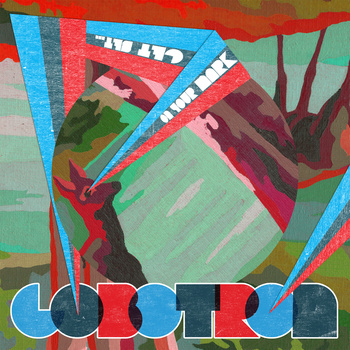
Gobotron: On Your Mark, Get Set…


RIYL: The Lemonheads, Pavement, Ben Kweller

On Your Mark, Get Set… receives bonus points off the bat for the band title, which riffs on our favorite video game of all time. It also receives a couple ‘Who’d a thunk it’ points because the album is the work of Manchester Orchestra guitarist Robert McDowell, a band who had us running for the hills two minutes into their performance at last year’s Lollapalooza. But still waters apparently run deep, as McDowell’s solo venture, which he performed and recorded by himself one summer and mixed the following summer, bears no resemblance to his day job, forsaking shrieking melodrama for yesteryear-flavored indie pop. “Nice Things” could pass for a lo-fi Sloan, and “Never Turn Around,” with its classic give-and-take vocals, is as perfect a power pop song as you’re likely to hear in this year or the next. Which means, of course, that there is no chance of these elements being incorporated into Manchester Orchestra’s sound, a decision that is as understandable (five words: girls don’t like power pop) as it is unfortunate. With any luck, thought, the Audities listees will buy enough copies of On Your Mark, Get Set… to encourage McDowell to give it another go. (Favorite Gentlemen 2010)

Gobotron MySpace page

MOTOR: Hyper Machine


RIYL: Human Resource, 808 State, Boys Noize

MOTOR is hardcore (too hardcore for lowercase letters, apparently), and they want you to know it. With song titles like “Bite the Bullet,” “Death Rave,” “Le Bitch,” and “Jacked Up” they’re advertising their abrasive acid house before you even listen to them. With house going the way of electro and disco thanks to artists like Justice and Daft Punk, it’s nice to see someone take it back to the acid house roots of the late ’80s/early ’90s while adding their own spin to it. In the case of MOTOR, that spin is a dark and menacing vibe that is usually reserved for darkcore drum and bass and hardstyle. Acid house was already jarring and abrasive enough, so when you add the dark and evil vibe that MOTOR is going for, you get nonstop jarring, pounding rhythms, vicious synth riffs, countless hoovers and screeching sirens custom designed to raise the roof at a midnight rave. There’s no other way to put it – this shit is intense.

Maybe too intense. Hyper Machine sure as hell lives up to its name. It never lets up, the beats are nonstop, the sirens get louder and louder and save for a few quick samples, there are no vocals to speak of. So it can wear on you after a while, especially since later tracks like “Le Bitch” and “Thwack” just aren’t as interesting as the high-energy title track or “Death Rave,” a track so in your face that it’s just one step away from punching you in the face. Perhaps it’s best in small doses or at an actual rave But those looking for a throwback to classic hard house should really dig this. (Dim Mak 2010)

MOTOR MySpace Page

Allison Moorer: Crows


RIYL: Emmylou Harris, Linda Rondstadt, Tift Merritt

Weaving her way through the series of hard-luck stories that illuminate Crows – her much-anticipated follow-up to last year’s critically acclaimed Mockingbird – Allison Moorer cries foul on any number of subjects, among them broken hearts, leaving lovers and all manner of ills in general. Apparently life for Mrs. Steve Earle is no bed of roses, and with song titles like “Just Another Fool,” “The Broken Girl,” “Should I Be Concerned,” “When You Wake Up Feeling Bad” and “Sorrow (Don’t Come Around),” it’s clear she has numerous thoughts that need venting.

Allison_Moorer_03

Then again, Moorer’s music rarely dwells on optimism. Over the course of her eight albums, Moorer’s reflected a worrisome perspective, belabored by ongoing remorse, disappointment and despair, as well as an ache and a yearning that often keeps her focus somewhat removed. Crows essentially offers more of the same, from the troubled rumblings of “Abalone Sky” and the plaintive repose of “Easy in the Summertime” to the acrimonious dismissal of “Sorrow (Don’t Come Around)” and the scorching break-up ballad “Still This Side of Gone.” The mournful sentiments create an air of unrelenting sadness, yet one that still allows the beautiful melodies to shine through. Suffice it to say, those who were smitten by Mockingbird will find Crows a similar bird of a feather. (Ryko 2010)

Allison Moorer MySpace page

« Older posts Newer posts »