Page 135 of 583

The Watson Twins: Talking to You, Talking to Me


RIYL: Jenny Lewis, Cocteau Twins, Patty Larkin

After nearly a decade attempting to make their name among L.A.’s alternative elite, the Watson Twins scored their big breakthrough when they were chosen by Rilo Kiley’s Jenny Lewis to share the billing on her first solo outing, Rabbit Fur Coat, in 2006. Since then, they’ve been able to carry the marquee rights on their own, earning themselves a deal with the venerable Vanguard label, which released last year’s major label debut, Fire Songs and subsequently, an even better sophomore set.

Despite their down-home Appalachian upbringing, the sisters lean less on heartland sentiments and more on urban rock sensibilities, a modernist approach that places the emphasis on propulsive rhythms and eclectic arrangements to bolster their dreamy harmonies. In the course of these dozen tracks, the Watsons’ vary their vocals between the languid and the assertive, with melodies that veer from ethereal hymns to those that sound positively chipper by comparison. So while songs like “Forever Me,” “Snow Canyons” and “Give Me a Chance” tend to cast the album in a meditative haze, the pronounced stomp of “Savin’ You” and “U-N-Me” bolster the bottom line and add the emphasis that’s needed. (Vanguard 2010)

The Watson Twins MySpace page

David Sanborn: Only Everything


RIYL: Hank Crawford, David “Fathead” Newman, Kirk Whalum

David Sanborn has used his recent move to Decca as an excuse to renew his focus on the music that inspired him as a kid: Only Everything, like 2008’s Here & Gone, functions as a sort of loose tribute to the Ray Charles blues axis, with particular emphasis on the work of sax players Hank Crawford and David “Fathead” Newman. It’s certainly a step in the right direction, given Sanborn’s history of burying his formidable talent under synth-powered smooth jazz (listen to most of his ‘80s output – or better yet, don’t) or just aimless, albeit impeccably performed, noodling (most of the ‘90s). But this is still David Sanborn we’re talking about, and although Only Everything is billed as a Hammond-heavy, rootsy jazz record, it really only lives up to that description in the context of Sanborn’s exceedingly polite discography. (It’s certainly a good deal more mannered than 1992’s Upfront, Sanborn’s last foray into Hammond territory.) The end result, for the most part, is an album of well-played covers that will leave you with an itch to dig out the originals – with the exception of the two vocal numbers, which are sure to be singles on every smooth jazz station around the country. It’s hard to understand why anyone thought it would be a good idea to have Joss Stone step up to the microphone for “Let the Good Times Roll,” or why you’d ask James Taylor to sing “Hallelujah I Love Her So,” but all parties responsible should be horsewhipped: Stone’s showoff performance is stuffed with unnecessary melisma, and Taylor’s about as ill-suited a vocalist as you could imagine for the Ray Charles songbook. Skip over those tracks, though, and you’ve got a fine, if frustratingly mild, addition to Sanborn’s catalog – and if you’re at all familiar with his work, “mild” is probably exactly what you’re looking for. (Decca 2010)

David Sanborn MySpace page

Various Artists: Crazy Heart: Original Motion Picture Soundtrack


RIYL: Stephen Bruton, Ryan Bingham, T Bone Burnett

At the turn of the century – just about the time the record industry was experiencing its Wile E. Coyote moment before plunging into its recent sales abyss – Jeff Bridges decided to start a label, Ramp Records, and release a Michael McDonald album alongside Bridges’ own solo debut, Be Here Now. Neither release received much attention at the time, but as vanity-plate recording projects from actors tend to go, Bridges’ wasn’t bad; he had a rumpled, Dude-like charm as a vocalist, and although his songwriting tended toward the ponderous (“Buddha & Christ at Large,” anyone?), the songs communicated the same calculatedly offhand attention to craft as his acting. Point is, Bridges’ critically acclaimed turn as the booze-soaked songwriter at the center of “Crazy Heart” isn’t wholly revelatory – and Be Here Now might have stood a better chance at being a hit if he’d surrounded his songs with stellar, downbeat performances from artists like Buck Owens, Sam Phillips, and the Louvett Brothers.

And okay, so Bridges didn’t have much of a hand in writing “Crazy Heart’s” original songs, but he does steal the spotlight on the soundtrack – no mean feat when you’re sharing the stage with the aforementioned artists, as well as young Americana lion Ryan Bingham, who’s already won a Golden Globe for one of his contributions, “The Weary Kind.” There really aren’t any bad songs here, but it’s Bridges’ performances that’ll draw you in the most – when he sings “funny how fallin’ feels like flyin’ for a little while,” sounding for all the world like a more tuneful John Hiatt, you’ll flash back to every heartbreak you’ve ever suffered and every shitty bar you’ve ever been sorry you sat down in. If you’ve seen the movie, you’ll want to own this, without question – but even if you haven’t, it’s the best cross-industry soundtrack we’ve seen since John Mellencamp starred in Falling from Grace in 1992. Pour yourself a strong one, sprinkle some sawdust on the floor, and get carried away. (New West 2010)

Crazy Heart MySpace page

The Villains: The Villains


RIYL: The Eagles, Poco, One Flew South

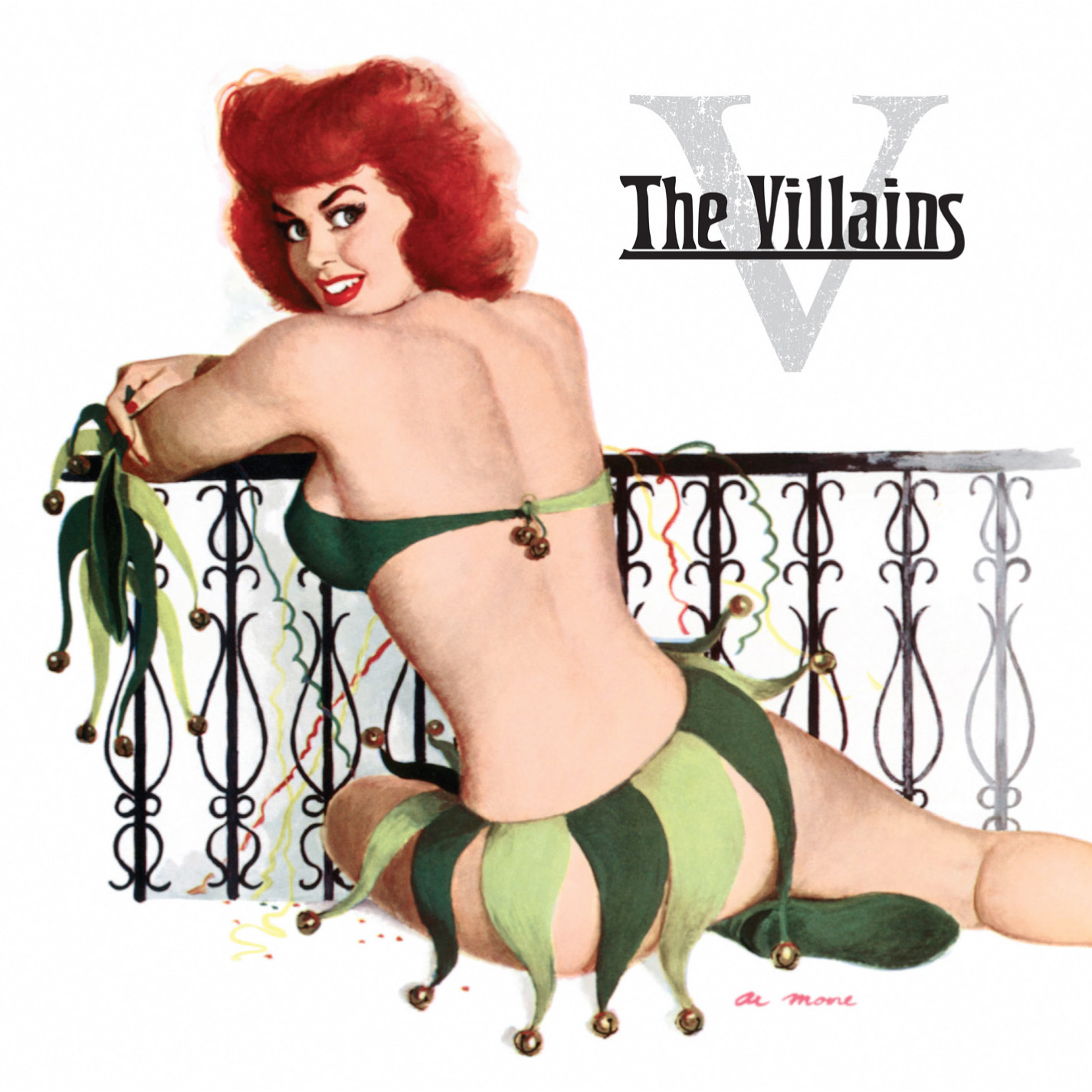
Don’t let their name fool you – pinup on the album cover notwithstanding, there’s very little that’s even slightly villainous about this six-piece Atlanta outfit. Not that that’s a bad thing, mind you, especially for fans of the country-tinged Laurel Canyon rock of the ‘60s and ‘70s; in fact, at times, this eight-song self-titled effort suggests what might have happened if strands of DNA from members of Poco and the Eagles were stolen by a mad scientist 30 years ago and used to create a new band. The Villains’ strongest material boasts all the tight harmonies, spotless guitars, and sunny hooks you could hope for, and the album’s weak spots – like the shudder-inducing, Jimmy Buffett-esque “Where We Began” – are pleasantly few and far between. In a perfect world, an album with only eight tracks would kick ass top to bottom, but for Eagles fans weary of 25-year waits between albums – or country fans stuck between Willie Nelson and Rascal Flatts – The Villains will hit the spot quite nicely. Crank up “Let’s Forget About It Tonight,” pour yourself a cold beer, and be glad rock & roll is still alive. (DCM Records 2010)
The Villains MySpace page

The Flaming Lips: Dark Side of the Moon


RIYL: Les Claypool’s cover album of Animals, charity compilations, not Pink Floyd

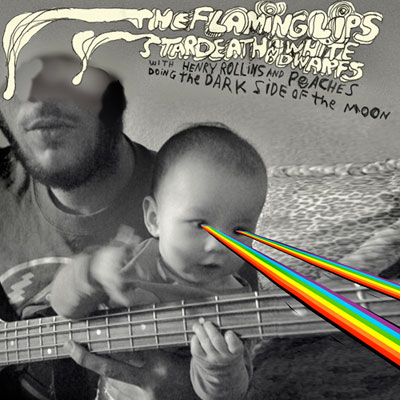
The decision for the Flaming Lips to cover, in its entirety, Pink Floyd’s classic Dark Side of the Moon has certainly been met with a lot of hostility by people who consider the original to be a sacred artifact of a bygone era that should be treated with an almost religious reverence. Those people have decided to hate this album without ever hearing it, and that’s a shame, because if they did take the time to listen to it, they would have plenty of reasons to hate it on its own merits.

Okay, that’s a little harsh; this bizarre little experiment isn’t horrible by any stretch of the imagination, but it’s certainly not good, and is, as the purists love pointing out, entirely unnecessary. Most of the time the Lips (and on occasion Stardeath And the White Dwarf, who are credited as the sole performers on two tracks and as a back-up band on four others) just don’t seem to be trying. Their big creative decision seems to be on “Money,” when they sing through vocoders. The rest of the the time they just aren’t doing enough to make it really stand out from the original. “Time” gets some looping cough effects for some reason, and “On the Run” is transformed into a bass-heavy acid Jazz jam. The rest is pretty much just Dark Side with added wacky effects and cranked-up bass. It’s not weird or exciting – it’s just boring, not to mention lazy and predictable. Is anyone surprised by the fact that the Flaming Lips happen to be huge Floyd fans? I mean…duh. If the Flaming Lips really want to create a WTF moment, they should leave classics like Dark Side alone and take on something truly unexpected, maybe REO Speedwagon’s High Infidelity or Genesis’ Invisible Touch. Wayne Coyne singing “Land of Confusion,” now that would be a track worth hearing. (Warner Bros. 2010)

Flaming Lips MySpace page

« Older posts Newer posts »