Category: R&B (Page 7 of 11)

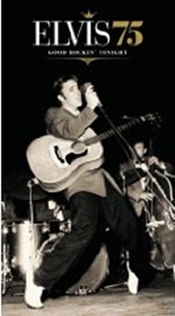
Elvis Presley: Elvis 75 – Good Rockin’ Tonight


RIYL: 1950s rockabilly, 1960s pop, 1970s country, rock history in general

In honor of Elvis’ 75th birthday – we won’t get into whether he is “the late Elvis” or still rockin’ in the wilds of Michigan – Legacy’s issuing a bunch of records, this one being first up and coinciding with a Graceland bash. In a word, it’s great stuff, a career-spanning retrospective that covers the gamut of the good, bad and ugly from rock’s first real icon, its undisputed King. Elvis diehards probably have most of the 100 tracks spanning the almost 25 years of his recorded career, from the 1953 “My Happiness” demo to Moody Blue tracks; probably only the most manic completists among longtime fans will nibble at this.

For the rest of us, however, it puts Presley’s work in context: There’s no denying the power of Young Elvis, who had an incredible combination of talent, charisma, and the stones to fuse music from black R&B records, gospel, redneck bluegrass, and loud guitars. When he walked into the Memphis Sun Studios and hooked up with label impresario Sam Phillips in 1954 to put down his brilliant first sides, he was just a singer who loved all the music he heard from both sides of the tracks and just didn’t particularly care what people would think if he did. Maybe I’m alone in this opinion, but I believe that all the stuff that came after – the politics, the goofy Graceland stuff, the Army, the movies, the drugs, the Comeback, stuffing his sweaty and overweight frame into sequined Vegas costumes, and finally, the overdose, were not of his doing but caused by external forces he endured, albeit willingly at times. The early songs still sound fresh and crisp: “Mystery Train,” “Blue Moon of Kentucky,” “Jailhouse Rock.” A powderkeg of testosterone and unbridled joy. Rock, undistilled. Then comes the ballads, the country, the gospel stuff…the brutal “Suspicion.” It’s all here, along with the 2002 techno remix of “A Little Less Conversation.”

Listening to this end to end, it’s bizarre to hear Elvis’ transformation from the white-hot beginning to the dying embers of a career when he finally ingested that deadly cocktail of prescription drugs. At first, he synthesized all these at-the-time disparate musical influences to create such musical magic. By the mid-1970s, however, he was clinging desperately to country, sounding like a second-rate Hank Jr. knockoff at best (who himself was a poor Xerox of his daddy). Elvis ended up the ghost of his 1950s and early-’60s heyday, barely recognizable and subject to all the ridicule that’s followed his 1977 death. The moral of the story? Elvis wasn’t larger than life; he was just another rock star, human after all. But just like the NFL has good quarterbacks and bad, as far as rock stars go, Elvis was no Kyle Orton; he was Brett Favre, the greatest statistical player – unstoppable at first but maybe should have called it quits before his career turned into a circus. If you’ve never dug Elvis seriously, check out this box. There’s a lot more going on here than Jay Leno punch lines. When he was on top of his game, he wrote rock history with a gorgeously powerful voice and a beguiling smile. This box remembers that part, best. (Sony/Legacy, 2009).

Rihanna: Rated R


RIYL: Keri Hilson, Amerie, Jordin Sparks

Lest you think Rihanna meant to make some kind of cute alliterative play by naming her fourth album Rated R, she quickly disabuses any such notions by getting down to business with a collection every bit as inappropriate for young ears as its title would suggest. “I’m such a fuckin’ lady,” she purrs in the second track, “Wait Your Turn,” and from there it’s off to war. When last we heard from Rihanna, she was urging us to stand under her umbrella; this time out, she’s more focused on letting us know how hard she is, bragging about licking her gun because “revenge is sweet,” and barking “Get it up … is you big enough?” The music reflects this lyrical left turn; the arrangements are braced with metallic, tricked-out beats, cold, buzzing synths, and stacks of raw electric guitars (that’s Slash you hear on the ridiculous “Rockstar 101,” which finds her boasting, “Rocking this club / Got my middle finger up / I don’t give a fuck”).

Rihanna_06

It’s a curious blend, really, because as aggressive as Rated R wants to be – and often is, craptastic ballads like “Stupid in Love” and “Te Amo” notwithstanding – Rihanna can never get past her steel-plated drone of a voice long enough to really make it work. More than anything, she just sounds bored, whether she’s declaring herself a “gangsta 4 life” or strolling her way through a duet with will.i.am. This doesn’t blunt the impact of Rated R’s best moments, like the thudding “Hard” and softcore porn of “Rude Boy”; taken in total, it can even function as a sort of meta statement on the emotional disconnect between mainstream culture and its young consumers. In a pop climate where lack of emotion is the norm, Rihanna’s bloodless art makes perfect sense. Still, after a while, it’s impossible not to wish for some good old-fashioned passion. Remember when R&B had soul? (Def Jam 2009)

Rihanna MySpace page

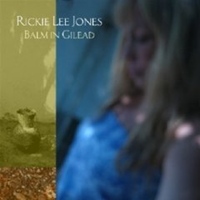
Rickie Lee Jones: Balm In Gilead


RIYL: Joni Mitchell, Carly Simon, Janis Ian

It seems but a blink of the eye when in reality it’s been three decades since Rickie Lee Jones scored her breakthrough hit, “Chuck E.’s In Love,” and subsequently garnered her Grammy for Best New Artist. In the 30 years since, Jones has mostly flown below the radar, at least in terms of her commercial appeal, but her sassy, soulful style continues to leave its imprint and make her a recurring staple. Jones has always seemed most comfortable playing the role of both barfly and ingénue, crooning twilight ballads with a knowing air of cool and sophistication, while also taking sharp turns at practically every juncture.

Its not surprising then that those disarming glances haven’t necessarily helped tug Jones back into the mainstream. So consider it fortunate that her new album, the uniformly pleasing Balm In Gilead, again finds her at the top of her game, vamping with versatility through a surprisingly disparate set of songs. No longer the shadowy chanteuse, she proves here that her pull is still intact. Encompassing songs that were written years, and even decades, before, the album gathers some of the best songs she’s authored in years. While her devotees will find the smoky barroom vibe of “Old Enough,” “The Moon Is Made of Gold” and “Eucalyptus Trail” akin to a reassuring refrain, her country croon on “Remember Me” and ambient drone of the stirring “His Jeweled Floor” show an obvious willingness to expand her parameters into more accessible terrain. Toss in some beguiling ballads – “Bonfire,” “Wild Girl” and “A House on Bayless Street” – and Balm In Gilead becomes a soothing salve indeed. (Fantasy 2009)

Rickie Lee Jones web page
Click to buy Balm in Gilead from Amazon

Blind Boys of Alabama: Duets


RIYL: Temptations, Mavis Staples, Al Green

Long revered in gospel circles but never more than teetering on the fringes of popular appeal, the Blind Boys of Alabama opt for a strategy not unlike others in the same predicament, namely, to co-opt some popular names and join forces in a series of duets. While such a stance often diminishes the artists in question, here they find some favorable symmetry even though they’re mostly forced to take a supporting role in the proceedings. The mesh is especially ideal when they’re paired with reggae great Toots Hibbert (“Perfect Peace”), Solomon Burke (“None of Us Are Free”) and Ben Harper (“Take My Hand”), each of whom possess the power, conviction and singing style as their musical hosts. Likewise, its no wonder that Lou Reed’s “Jesus” is the most stirring song he’s offered since his days with the Velvets.

Unfortunately, handing the spotlight to guest stars does have its drawbacks; when lumped in the company of other eloquent voices – Susan Tedeschi on the powerful “Magnificent Sanctuary Band,” Bonnie Raitt with the eloquent “When the Spell Is Broken” and Timothy B. Schmidt on the ballad “Secular Praise” – it’s hard not to shake the impression that the Blind Boys are merely along for the ride, relegated to the role of hired hands on their own album. Wisely, the producers confine most of the material to an inspirational context, those soaring gospel harmonies being at their best in the service of faith and belief. Here’s hoping that by linking their fortunes to these marquee names, the Blind Boys of Alabama not only rally their faithful but rouse non-believers as well. (Saguaro Road 2009)

Blind Boys of Alabama website

Joss Stone: Colour Me Free


RIYL: Aretha Franklin, Christina Aguilera, Sly & the Family Stone

British soul singer Joss Stone’s fourth album finds her mining some familiar territory, but also stepping out with a variety of collaborations that touch on fresh ground. Opening track and lead single “Free Me” sets the tone with a feel-good, funky soul rock number that Stone does as well as anyone these days. Later tracks like “Incredible” and “You Got the Love” also mine upbeat funky grooves where Stone’s dynamic voice really shines. The sounds of the early ’70s are well represented on R&B lament “Could Have Been You” and “Parallel Lines,” which opens with some electric piano funk that recalls Stevie Wonder’s classic “Superstition.” No less than Jeff Beck adds tasty guitar fills while Sheila E. provides the backing vocals for one of the album’s best tracks.

“4 and 20” is a playful ballad not about the sweet leaf, but Stone’s desire for a man to prove his love 24 hours a day. Raphael Saadiq chips in vocals on “Big Ole Game,” a funky mid-tempo tune with a sexy vibe, while hip-hop ace Nas helps Stone out on “Governmentalist,” a socially conscious number with a dirty blues-funk sound that would fit right in on the “Dead Presidents” soundtrack. “Trying to find the truth behind the lies,” sings Stone, before Nas comes in to talk smack about cops, the FDA and others who try to keep the people down – “Governmentalists killed the Kennedies, I heard that Joss Stone got the remedy,” raps Nas. David Sanborn contributes some big sax lines to the old school Bo Diddley-type blues of “I Believe It to My Soul,” and Jamie Hartman trades vocals with Stone on moody ballad “Stalemate.”

Colour Me Free finds Stone, still just 22 years old, continuing to expand her sonic palette in a world that would seem to be her oyster. The fact that she’s also willing to take a deeper look at that world on a tune like “Governmentalist” shows that she’s got a lot more happening upstairs than most of her pop contemporaries as well. (EMI 2009)

Joss Stone MySpace page

« Older posts Newer posts »