Page 134 of 583

Gobotron: On Your Mark, Get Set…


RIYL: The Lemonheads, Pavement, Ben Kweller
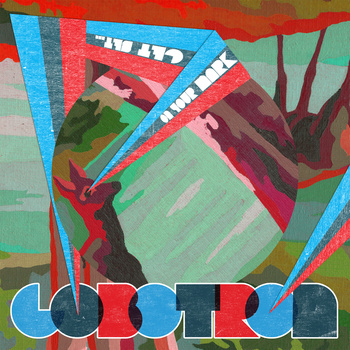
On Your Mark, Get Set… receives bonus points off the bat for the band title, which riffs on our favorite video game of all time. It also receives a couple ‘Who’d a thunk it’ points because the album is the work of Manchester Orchestra guitarist Robert McDowell, a band who had us running for the hills two minutes into their performance at last year’s Lollapalooza. But still waters apparently run deep, as McDowell’s solo venture, which he performed and recorded by himself one summer and mixed the following summer, bears no resemblance to his day job, forsaking shrieking melodrama for yesteryear-flavored indie pop. “Nice Things” could pass for a lo-fi Sloan, and “Never Turn Around,” with its classic give-and-take vocals, is as perfect a power pop song as you’re likely to hear in this year or the next. Which means, of course, that there is no chance of these elements being incorporated into Manchester Orchestra’s sound, a decision that is as understandable (five words: girls don’t like power pop) as it is unfortunate. With any luck, thought, the Audities listees will buy enough copies of On Your Mark, Get Set… to encourage McDowell to give it another go. (Favorite Gentlemen 2010)

Gobotron MySpace page

MOTOR: Hyper Machine


RIYL: Human Resource, 808 State, Boys Noize

MOTOR is hardcore (too hardcore for lowercase letters, apparently), and they want you to know it. With song titles like “Bite the Bullet,” “Death Rave,” “Le Bitch,” and “Jacked Up” they’re advertising their abrasive acid house before you even listen to them. With house going the way of electro and disco thanks to artists like Justice and Daft Punk, it’s nice to see someone take it back to the acid house roots of the late ’80s/early ’90s while adding their own spin to it. In the case of MOTOR, that spin is a dark and menacing vibe that is usually reserved for darkcore drum and bass and hardstyle. Acid house was already jarring and abrasive enough, so when you add the dark and evil vibe that MOTOR is going for, you get nonstop jarring, pounding rhythms, vicious synth riffs, countless hoovers and screeching sirens custom designed to raise the roof at a midnight rave. There’s no other way to put it – this shit is intense.

Maybe too intense. Hyper Machine sure as hell lives up to its name. It never lets up, the beats are nonstop, the sirens get louder and louder and save for a few quick samples, there are no vocals to speak of. So it can wear on you after a while, especially since later tracks like “Le Bitch” and “Thwack” just aren’t as interesting as the high-energy title track or “Death Rave,” a track so in your face that it’s just one step away from punching you in the face. Perhaps it’s best in small doses or at an actual rave But those looking for a throwback to classic hard house should really dig this. (Dim Mak 2010)

MOTOR MySpace Page

Allison Moorer: Crows


RIYL: Emmylou Harris, Linda Rondstadt, Tift Merritt

Weaving her way through the series of hard-luck stories that illuminate Crows – her much-anticipated follow-up to last year’s critically acclaimed Mockingbird – Allison Moorer cries foul on any number of subjects, among them broken hearts, leaving lovers and all manner of ills in general. Apparently life for Mrs. Steve Earle is no bed of roses, and with song titles like “Just Another Fool,” “The Broken Girl,” “Should I Be Concerned,” “When You Wake Up Feeling Bad” and “Sorrow (Don’t Come Around),” it’s clear she has numerous thoughts that need venting.

Allison_Moorer_03

Then again, Moorer’s music rarely dwells on optimism. Over the course of her eight albums, Moorer’s reflected a worrisome perspective, belabored by ongoing remorse, disappointment and despair, as well as an ache and a yearning that often keeps her focus somewhat removed. Crows essentially offers more of the same, from the troubled rumblings of “Abalone Sky” and the plaintive repose of “Easy in the Summertime” to the acrimonious dismissal of “Sorrow (Don’t Come Around)” and the scorching break-up ballad “Still This Side of Gone.” The mournful sentiments create an air of unrelenting sadness, yet one that still allows the beautiful melodies to shine through. Suffice it to say, those who were smitten by Mockingbird will find Crows a similar bird of a feather. (Ryko 2010)

Allison Moorer MySpace page

The Watson Twins: Talking to You, Talking to Me


RIYL: Jenny Lewis, Cocteau Twins, Patty Larkin

After nearly a decade attempting to make their name among L.A.’s alternative elite, the Watson Twins scored their big breakthrough when they were chosen by Rilo Kiley’s Jenny Lewis to share the billing on her first solo outing, Rabbit Fur Coat, in 2006. Since then, they’ve been able to carry the marquee rights on their own, earning themselves a deal with the venerable Vanguard label, which released last year’s major label debut, Fire Songs and subsequently, an even better sophomore set.

Despite their down-home Appalachian upbringing, the sisters lean less on heartland sentiments and more on urban rock sensibilities, a modernist approach that places the emphasis on propulsive rhythms and eclectic arrangements to bolster their dreamy harmonies. In the course of these dozen tracks, the Watsons’ vary their vocals between the languid and the assertive, with melodies that veer from ethereal hymns to those that sound positively chipper by comparison. So while songs like “Forever Me,” “Snow Canyons” and “Give Me a Chance” tend to cast the album in a meditative haze, the pronounced stomp of “Savin’ You” and “U-N-Me” bolster the bottom line and add the emphasis that’s needed. (Vanguard 2010)

The Watson Twins MySpace page

David Sanborn: Only Everything


RIYL: Hank Crawford, David “Fathead” Newman, Kirk Whalum

David Sanborn has used his recent move to Decca as an excuse to renew his focus on the music that inspired him as a kid: Only Everything, like 2008’s Here & Gone, functions as a sort of loose tribute to the Ray Charles blues axis, with particular emphasis on the work of sax players Hank Crawford and David “Fathead” Newman. It’s certainly a step in the right direction, given Sanborn’s history of burying his formidable talent under synth-powered smooth jazz (listen to most of his ‘80s output – or better yet, don’t) or just aimless, albeit impeccably performed, noodling (most of the ‘90s). But this is still David Sanborn we’re talking about, and although Only Everything is billed as a Hammond-heavy, rootsy jazz record, it really only lives up to that description in the context of Sanborn’s exceedingly polite discography. (It’s certainly a good deal more mannered than 1992’s Upfront, Sanborn’s last foray into Hammond territory.) The end result, for the most part, is an album of well-played covers that will leave you with an itch to dig out the originals – with the exception of the two vocal numbers, which are sure to be singles on every smooth jazz station around the country. It’s hard to understand why anyone thought it would be a good idea to have Joss Stone step up to the microphone for “Let the Good Times Roll,” or why you’d ask James Taylor to sing “Hallelujah I Love Her So,” but all parties responsible should be horsewhipped: Stone’s showoff performance is stuffed with unnecessary melisma, and Taylor’s about as ill-suited a vocalist as you could imagine for the Ray Charles songbook. Skip over those tracks, though, and you’ve got a fine, if frustratingly mild, addition to Sanborn’s catalog – and if you’re at all familiar with his work, “mild” is probably exactly what you’re looking for. (Decca 2010)

David Sanborn MySpace page

« Older posts Newer posts »