Category: Americana (Page 14 of 23)

Taylor Hollingsworth: Life with a Slow Ear


RIYL: Steve Earle, Conor Oberst, The Jayhawks
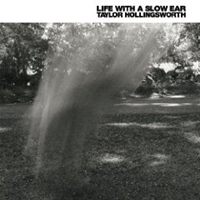
If 2009 were to yield a list of its strangest LPs, I, for one, would nominate the aptly named Life with a Slow Ear for at least an honorable mention. Not that its ragged, homespun ruminations offer anything especially unusual in and of itself; heading up the country and getting back to the roots is a popular path these days, especially for musicians who hunger for a respite from a daily diet of scorching guitars, amplifiers turned up to the max and rhythmic onslaughts that could replicate a small tsunami.

The surprise then isn’t that Taylor Hollingsworth follows suit. A journeyman musician, he spent time in the service of Conor Oberst’s Mystic Valley Band before upping both attitude and amplitude for his initial series of solo outings. However, now that he’s opted to unplug, the thing that separates him from his fellow rustic ramblers is – in a word – his vocals (That’s two words. -Ed.), a high-whining cornhusker of a drawl that suggests a cartoonish attempt at hillbilly authenticity. It undercuts any attempt to take these musings seriously, if for no other reason than it’s such a jolt every time he commands the microphone. While one could concede there’s some synchronicity in his chipmunk chatter and the twangy plunking of “I Didn’t Know It Was the Devil” and “Westfalia,” anytime the mood turns somewhat surreptitious – as in “96 Crayons” and the blustery boogie of “New Orleans Blues” – Hollingsworth actually sounds silly. Attempting to give some weight to “Sin City Blues” – which references both Gram Parsons and Dylan’s “Stuck Inside of Memphis with Those Memphis Blues Again” – Hollingsworth’s voice betrays him, even despite his obvious instrumental dexterity. So while Life with a Slow Ear Is otherwise an admirable effort, it’s a less than critical ear that’s required. (Team Love 2009)

Taylor Hollingsworth MySpace page

The Mother Hips: Pacific Dust


RIYL: Crazy Horse, the Eagles, New Riders of the Purple Sage

Granted, any band that’s been around more than a decade and a half should have been picked up on the public’s radar by this time, and the fact that the Mother Hips have barely registered a blip doesn’t exactly offer any sort of attribute in their favor. It’s a misfortune they lament on “Third Floor Story,” a tale of record company imbroglio that ranks as one of several highlights on this otherwise agreeable new album, their seventh outing to date and possibly their best shot at routing the indifference that’s greeted them thus far. Indeed, based on the evidence offered herein, there’s no reason why this California combo ought not finally win the following that’s eluded them so long. Faithful purveyors of West Coast country rock, with more than a hint of a ‘70s sensibility, they serve up unfettered melodies that once would have invited radio play and the adulation of the masses. Songs like “White Falcon Fuzz,” “One Way Out” and “All in Favor” recall the dusty, free-wheeling affinity that made the Eagles, Neil Young, the Jayhawks and others of that ilk rank so prominently as heartland heroes. Perhaps their problem lies in the fact that they could be perceived as retracing terrain that was so widely traversed more than 30 years ago, and is now considered somewhat out of sync, especially given competition from boy band wannabes, unrepentant rappers and the various other pop pretenders that dominate the charts these days. Too bad – it may not be hip to like the Hips, but when it comes to mining a solid, road-weary sound, they become the Mother of reinvention. (Camera Records 2009)

The Mother Hips MySpace page

Or, The Whale: Or, The Whale


RIYL: The Jayhawks, The Parson Red Heads, Wilco

Note to Alison Krauss and Bob Dylan: give Or, The Whale a call next time you’re looking for a hot young opening band to help carry your Americana torch. Indeed, a tinge of that days-of-old feeling permeates the sweet, harmony-laden sounds of San Francisco’s rising alt-country starlets in Or, The Whale. On the band’s self-titled second album, steel and acoustic guitars provide the rural flavor, and the vocals of Lindsay Garfield, bassist Justin Fantil, keyboardist Julie Ann Thomasson and guitarists Alex Robins and Matt Sartain seal the deal. They lead, coalesce, and otherwise intertwine in ways that suggest a deep down happiness that transcends the heartbreaking subject matter, like the agoraphobe in “Never Coming Out” and dead dog lament “Datura.” These are all fine and dandy, but the album’s clincher is the slow building centerpiece “Count the Stars,” where sound, feel and execution meet to achieve a harmonious balance that rivals the one inherent in the band’s own vocal strength. (Seany 2009)

Or, The Whale MySpace

Blind Boys of Alabama: Duets


RIYL: Temptations, Mavis Staples, Al Green

Long revered in gospel circles but never more than teetering on the fringes of popular appeal, the Blind Boys of Alabama opt for a strategy not unlike others in the same predicament, namely, to co-opt some popular names and join forces in a series of duets. While such a stance often diminishes the artists in question, here they find some favorable symmetry even though they’re mostly forced to take a supporting role in the proceedings. The mesh is especially ideal when they’re paired with reggae great Toots Hibbert (“Perfect Peace”), Solomon Burke (“None of Us Are Free”) and Ben Harper (“Take My Hand”), each of whom possess the power, conviction and singing style as their musical hosts. Likewise, its no wonder that Lou Reed’s “Jesus” is the most stirring song he’s offered since his days with the Velvets.

Unfortunately, handing the spotlight to guest stars does have its drawbacks; when lumped in the company of other eloquent voices – Susan Tedeschi on the powerful “Magnificent Sanctuary Band,” Bonnie Raitt with the eloquent “When the Spell Is Broken” and Timothy B. Schmidt on the ballad “Secular Praise” – it’s hard not to shake the impression that the Blind Boys are merely along for the ride, relegated to the role of hired hands on their own album. Wisely, the producers confine most of the material to an inspirational context, those soaring gospel harmonies being at their best in the service of faith and belief. Here’s hoping that by linking their fortunes to these marquee names, the Blind Boys of Alabama not only rally their faithful but rouse non-believers as well. (Saguaro Road 2009)

Blind Boys of Alabama website

Vic Chesnutt: Skitter on Take-Off


RIYL: Bob Dylan, Neil Young, Daniel Johnston

Documenting a solo concert in San Francisco, Vic Chesnutt revisits his roots and goes back to basics with this stark example of shadowy introspection. Accompanying himself with mostly a subdued strum of his acoustic guitar and the incidental input of the enigmatic Jonathan Richman on guitar and harmonium and drummer/percussionist Tommy Larkin, he meanders through a troubling set of dark and dire melodies. Yet, despite this turgid set-up, Chesnutt populates his rumbling, meandering narratives with oddball hi-jinks, from the bizarre homage entitled “Dick Cheney” to the roll call of weirdos delineated in “Worst Friend” (“Your friend likes to get peed on in sexual situations… Your friend dresses up like Little Bo Peep… Your friend claims to have taken a dump in the White House…”). Likewise, the palpable anger that ripples through “My New Life” affirms the depth of these ominous overtones and moots any connection with the crowd. Quirky yet austere, Skitter on Take-Off provides what’s best described as an intimidating encounter. (Vapor Records 2009)

Vic Chesnutt web page

« Older posts Newer posts »