Category: Americana (Page 13 of 23)

Jay Farrar & Benjamin Gibbard: One Fast Move or I’m Gone: Kerouac’s Big Sur


RIYL: Neil Young, Greg Laswell, Hem

It’s fitting that this modest film based on the life of one of America’s most iconic authors would garner a soundtrack composed and performed by two of today’s most compelling alternative musicians, Jay Farrar and Benjamin Gibbard. Jack Kerouac, of course, helped define the underground subculture of the late ‘50s and early ‘60s with his novel “On the Road,” influencing a generation of displaced and rebellious individuals who dared defy the norms of a placid society. While they may not be quite so influential, Farrar and Gibbard’s efforts with Son Volt and Death Cab for Cutie, respectively, have nevertheless had a lingering impact on other artists who have ventured away from the tried and true and immersed themselves in similarly adventurous realms.

Arousing both literary and musical interests, One Fast Move or I’m Gone: Kerouac’s Big Sur documents its subject’s subsequent retreat from a culture he helped create, a period when he hid himself away at poet Lawrence Ferlinghetti’s cabin in Big Sur in an attempt to cope with his doubts and depression. Using Kerouac’s own words, interspersed with commentary from surviving contemporaries and such avowed devotees as Patti Smith, Tom Waits and Robert Hunter, the film explores his shattered psyche and sad circumstance that led to the author’s eventual downward spiral.

In that context, Farrar and Gibbard weave a lilting musical tapestry, one that emphasizes low-lit harmonies, a predominance of acoustic guitars, gentle melodies and a sweep of pedal steel. The 12 songs create a weary ambiance that fits the film’s somber pastiche; fitting midway between the somber sensitivities that characterize Farrar’s usual demeanor and the more effusive sounds that characterize Gibbard’s Death Cab duties, songs such as “California Zephyr,” “Low Life Kingdom” and “These Roads Don’t Move” give the soundtrack an amiable sway and an unobtrusive appeal. Kerouac may furnish the narrative, but Farrar and Gibbard help manipulate the mood while providing the score with its easy appeal.

After one look and a single listen, Gone is not easily forgotten.

One Fast Move webpage

Radney Foster and the Confessions: Revival


RIYL: Steve Earle, Rodney Crowell, Ryan Adams

No doubt about it – Revival is quite an apt title for this latest effort from Texas-bred singer/songwriter Radney Foster. Formerly half of the country pop duo Foster and Lloyd, he’s come a long way towards establishing an Americana brand since initially venturing out on his own in the early ’90s. That said, Revival finds him significantly raising the bar and setting a new standard as far as his own output is concerned. An uplifting, soul-defining statement of unadulterated affirmation, both the messages and melodies linger long after the final notes fade away. The songs soar like expansive anthems, and on tracks such as “A Little Revival,” “Forgiveness” and “Shed a Little Light” those stirring sentiments evoke a spiritual ferocity and unbounded optimism in a manner that’s genuinely affecting. “I Made Peace with God” and “Suitcase” are especially revealing, each a testament to a new-found faith that Foster invokes without hesitation.

Still, it would be misleading to dismiss him solely as a would-be Bible thumper; the rowdy and rollicking “Until It’s Gone” and the carefree abandon of “Trouble Tonight” show Foster still solidly ensconced in secular realms. Newcomers ought to consider this an excellent place to begin, while Foster fans will find this his most indelible effort yet. Clearly, this Revival rates a solid hallelujah and an unqualified amen. (Devil’s River Records 2009)

Radney Foster MySpace page

Devendra Banhart: What Will We Be


RIYL: Donovan, Marc Bolan, Veviter

Toiling within the ranks of the indie underground, Devendra Banhart has managed to elevate himself into the highest ranks of the so-called “freak folk” hierarchy. His last album, Smokey Rolls Down Thunder Canyon, made a pitch to expand that tag, with Banhart attempting to meld his obtuse approach with the idyllic imagery of the L.A. environs that spawned such ‘60s lynchpins as Neil Young, CSN, the Mamas and the Papas, Joni Mitchell, and various others that made music in those hallowed hills. Likewise, his recruitment by the majors – in this case, Warner Bros. records, home to many of those aforementioned icons – seemed to indicate a concerted effort to break through the barriers.

Indeed, while Banhart’s new label affiliation might seem a concession to commercialism, in truth, the results are every bit as eclectic…and, for that matter, every bit as eccentric…as his earlier efforts. The songs are sung in both English and Spanish, and rather than the clear, coherent melodies identified with the so-called Southern California elite, Banhart still shifts his set-ups – often radically and in the space of a single song. Consequently, “Rats” has a somewhat foreboding start before segueing abruptly into a state of kinetic jubilation. The jazzy inference of “Chin Chin & Muck Muck” morphs several times before the song hits its stride. Likewise, “Angelika” might have succeeded as a soothing serenade had it not accelerated midway through into a sizzling Latin samba.

Still, for all his abrupt turns, Banhart retains a decidedly old school stance. His melodies may seem somewhat amorphous, but his quivering vocals and loping tempos frequently recall the pixie-like warble of Donovan and Marc Bolan. A couple of tracks might bode well for future sing-alongs, specifically “16 & Valencia Roxy Music” and the gentle Spanish serenade called “Brindo.” As an album that’s magnified by ambition and grand designs, What Will We Be may well be his best yet. (Warner Bros. 2009)

Devendra Banhart MySpace page
Click to buy What Will We Be from Amazon

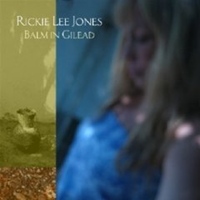
Rickie Lee Jones: Balm In Gilead


RIYL: Joni Mitchell, Carly Simon, Janis Ian

It seems but a blink of the eye when in reality it’s been three decades since Rickie Lee Jones scored her breakthrough hit, “Chuck E.’s In Love,” and subsequently garnered her Grammy for Best New Artist. In the 30 years since, Jones has mostly flown below the radar, at least in terms of her commercial appeal, but her sassy, soulful style continues to leave its imprint and make her a recurring staple. Jones has always seemed most comfortable playing the role of both barfly and ingénue, crooning twilight ballads with a knowing air of cool and sophistication, while also taking sharp turns at practically every juncture.

Its not surprising then that those disarming glances haven’t necessarily helped tug Jones back into the mainstream. So consider it fortunate that her new album, the uniformly pleasing Balm In Gilead, again finds her at the top of her game, vamping with versatility through a surprisingly disparate set of songs. No longer the shadowy chanteuse, she proves here that her pull is still intact. Encompassing songs that were written years, and even decades, before, the album gathers some of the best songs she’s authored in years. While her devotees will find the smoky barroom vibe of “Old Enough,” “The Moon Is Made of Gold” and “Eucalyptus Trail” akin to a reassuring refrain, her country croon on “Remember Me” and ambient drone of the stirring “His Jeweled Floor” show an obvious willingness to expand her parameters into more accessible terrain. Toss in some beguiling ballads – “Bonfire,” “Wild Girl” and “A House on Bayless Street” – and Balm In Gilead becomes a soothing salve indeed. (Fantasy 2009)

Rickie Lee Jones web page
Click to buy Balm in Gilead from Amazon

Timothy B. Schmit: Expando


RIYL: Graham Nash, America, Poco

Despite his indelible imprint on several generations of Southern California soft rockers – from Poco to the Eagles and various side duties along the way in support of his like-minded peers – Timothy B. Schmit has only rarely taken the solo spotlight via a mere handful of individual albums over the expanse of the past 40 years or so. With Expando, Schmit does what he’s always done beast, offering up a set of unassuming, inoffensive mid-tempo pop songs that spotlight his lilting vocals and amiable, good-natured melodies.

Indeed, if the new album reflects a burnished, distinctly ‘70s feel, its for good reason; Graham Nash, Levon Helm, Van Dyke Parks, Jim Keltner and the ever-present Benmont Tench are among the venerable old school stalwarts lending support. Not surprisingly, Schmit’s most impressive offerings are those that find him testing his upper register – specifically, “Ella Jean,” “A Good Day” and “Secular Praise,” a song that finds the Blind Boys of Alabama providing gospel accompaniment. The latter can also be found on the Blind Boys’ new Duets LP, where it also stands out as among the best of that bunch.

In fact, the only time Schmit seems out of his element is when he delves into a hint of blues and funk, respectively – as on lead-off track “One More Mile” and the tongue-in-cheek “White Boy From Sacramento.” Here’s a hint as far as the latter is concerned – the title tells all. (Lost Highway 2009)

Timothy B. Schmit website

« Older posts Newer posts »