Category: Adult Contemporary (Page 10 of 16)

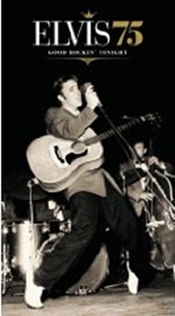
Elvis Presley: Elvis 75 – Good Rockin’ Tonight


RIYL: 1950s rockabilly, 1960s pop, 1970s country, rock history in general

In honor of Elvis’ 75th birthday – we won’t get into whether he is “the late Elvis” or still rockin’ in the wilds of Michigan – Legacy’s issuing a bunch of records, this one being first up and coinciding with a Graceland bash. In a word, it’s great stuff, a career-spanning retrospective that covers the gamut of the good, bad and ugly from rock’s first real icon, its undisputed King. Elvis diehards probably have most of the 100 tracks spanning the almost 25 years of his recorded career, from the 1953 “My Happiness” demo to Moody Blue tracks; probably only the most manic completists among longtime fans will nibble at this.

For the rest of us, however, it puts Presley’s work in context: There’s no denying the power of Young Elvis, who had an incredible combination of talent, charisma, and the stones to fuse music from black R&B records, gospel, redneck bluegrass, and loud guitars. When he walked into the Memphis Sun Studios and hooked up with label impresario Sam Phillips in 1954 to put down his brilliant first sides, he was just a singer who loved all the music he heard from both sides of the tracks and just didn’t particularly care what people would think if he did. Maybe I’m alone in this opinion, but I believe that all the stuff that came after – the politics, the goofy Graceland stuff, the Army, the movies, the drugs, the Comeback, stuffing his sweaty and overweight frame into sequined Vegas costumes, and finally, the overdose, were not of his doing but caused by external forces he endured, albeit willingly at times. The early songs still sound fresh and crisp: “Mystery Train,” “Blue Moon of Kentucky,” “Jailhouse Rock.” A powderkeg of testosterone and unbridled joy. Rock, undistilled. Then comes the ballads, the country, the gospel stuff…the brutal “Suspicion.” It’s all here, along with the 2002 techno remix of “A Little Less Conversation.”

Listening to this end to end, it’s bizarre to hear Elvis’ transformation from the white-hot beginning to the dying embers of a career when he finally ingested that deadly cocktail of prescription drugs. At first, he synthesized all these at-the-time disparate musical influences to create such musical magic. By the mid-1970s, however, he was clinging desperately to country, sounding like a second-rate Hank Jr. knockoff at best (who himself was a poor Xerox of his daddy). Elvis ended up the ghost of his 1950s and early-’60s heyday, barely recognizable and subject to all the ridicule that’s followed his 1977 death. The moral of the story? Elvis wasn’t larger than life; he was just another rock star, human after all. But just like the NFL has good quarterbacks and bad, as far as rock stars go, Elvis was no Kyle Orton; he was Brett Favre, the greatest statistical player – unstoppable at first but maybe should have called it quits before his career turned into a circus. If you’ve never dug Elvis seriously, check out this box. There’s a lot more going on here than Jay Leno punch lines. When he was on top of his game, he wrote rock history with a gorgeously powerful voice and a beguiling smile. This box remembers that part, best. (Sony/Legacy, 2009).
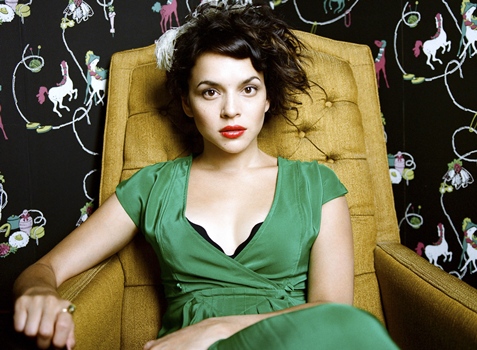
Norah Jones: The Fall


RIYL Cassandra Wilson, Grace Potter, Patty Larkin

Advance word to the contrary, Norah Jones’ fourth album shows a marked change in approach but little difference in attitude. Stirring up the ambiance with synths, effects, beats and a general trend towards more modern programming tools, Jones lays out a steady series of laments about traitorous lovers and ruined relationships with a distinct emphasis on disillusionment in general. Titles like “Stuck,” “I Wouldn’t Need You” and “You’ve Ruined Me” offer an early hint of her malfunctioning mindset, but lines like “If I touched myself the way you touched me…then I wouldn’t need you,” speak directly to her disappointment. Conversely, the carnival-like atmosphere of “Chasing Pirates,” the practically jaunty “Tell Yer Mama” and the propulsive duo of “Young Blood” and “It’s Gonna Be” prove a welcome respite from the deathly serious tact that Jones helped trademark on her three earlier albums.

Norah edit 2

And while there’s still ample evidence of that wounded, torch song set-up imbued in “Manhattan,” “Even Though,” “I Wouldn’t Need You” and “Waiting,” even her more sobering perspectives seem somewhat more illuminated, given fuller arrangements that detract attention from her solitary keyboard and instead steer the proceedings towards the emphatic strum of her electric guitar. Ending the album on a lighter note that finds her offering an ode to her dog – the winsome “Man of the Hour” – shows that for her all her trepidation and turmoil, Jones has the capability of picking herself up, no matter how serious the fall. Blue Note 2009

Norah Jones MySpace page

OneRepublic: Waking Up


RIYL: Coldplay, U2, Greg Laswell

OneRepublic’s 2008 debut was full of the kind of middle-of-the-road, calculatedly inoffensive pop that’s groomed for multiplatinum success – and it found that success, selling nearly a million copies and spinning off a Top Five single in the Timbaland-assisted “Apologize.” You’d think finding its commercial stride so soon would be the only excuse a band would need to churn out a carbon copy of its debut, but give OneRepublic credit: Album Number Two, Waking Up, actually represents a surprising step forward for a band that, just a year ago, gave no indication it was even ready to learn how to crawl. Make no mistake, the band’s stock in trade remains slick, pointedly proficient pop – but the band has gotten much better at carving canyon-sized hooks out of the barren bedrock of its influences.

onerepublic edit

There isn’t a single moment on the album that could be described as unusual or surprising – heck, maybe not even strictly interesting – and that’s exactly what makes it such an easy listen. This type of music derives its pleasure from smart adherence to pop formula, and OneRepublic follows it brilliantly; what it lacks in true creativity, it makes up in the strict discipline of knowing how to get from Point A to Point B – carrying a 500-pound chorus or three – without getting lost or messy along the way. Expecting great things from OneRepublic is probably unfair. But big things? You’re listening to ‘em. (Interscope/Mosley 2009)

OneRepublic MySpace page

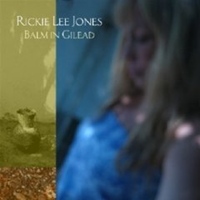
Rickie Lee Jones: Balm In Gilead


RIYL: Joni Mitchell, Carly Simon, Janis Ian

It seems but a blink of the eye when in reality it’s been three decades since Rickie Lee Jones scored her breakthrough hit, “Chuck E.’s In Love,” and subsequently garnered her Grammy for Best New Artist. In the 30 years since, Jones has mostly flown below the radar, at least in terms of her commercial appeal, but her sassy, soulful style continues to leave its imprint and make her a recurring staple. Jones has always seemed most comfortable playing the role of both barfly and ingénue, crooning twilight ballads with a knowing air of cool and sophistication, while also taking sharp turns at practically every juncture.

Its not surprising then that those disarming glances haven’t necessarily helped tug Jones back into the mainstream. So consider it fortunate that her new album, the uniformly pleasing Balm In Gilead, again finds her at the top of her game, vamping with versatility through a surprisingly disparate set of songs. No longer the shadowy chanteuse, she proves here that her pull is still intact. Encompassing songs that were written years, and even decades, before, the album gathers some of the best songs she’s authored in years. While her devotees will find the smoky barroom vibe of “Old Enough,” “The Moon Is Made of Gold” and “Eucalyptus Trail” akin to a reassuring refrain, her country croon on “Remember Me” and ambient drone of the stirring “His Jeweled Floor” show an obvious willingness to expand her parameters into more accessible terrain. Toss in some beguiling ballads – “Bonfire,” “Wild Girl” and “A House on Bayless Street” – and Balm In Gilead becomes a soothing salve indeed. (Fantasy 2009)

Rickie Lee Jones web page
Click to buy Balm in Gilead from Amazon

Sam Shrieve: Bittersweet Lullabies


RIYL: Denison Witmer, Jeff Buckley, Adam Cohen

A chip off the old rock? Well, not exactly, although admittedly Sam Shrieve shares his dad’s penchant for making a mark at an early age. The elder Shrieve was, of course, the frenetic drummer for the first Santana band, the youngest musician to play Woodstock and the piercing on-camera presence that practically stole the show from his colleagues. Young Sam takes a more refined route and while his glamorous good looks are obviously destined for full exploitation, his music is considerably more cerebral than either dad’s tribal tempos or than the typical pinup poser. Consequently, Bittersweet Lullabies proves an apt title for these pleasant soft pop musings, alternately celebratory (“Beautiful,” “”Kiss You,” “I’m Sorry”) and unabashedly sentimental (“Welcome to Your Life,” “”I’ll Be There,” “”Sanctuary”). An aching take on the oft-covered “Hallelujah” actually cuts through the competition and fits perfectly in the mix, as sure a sign of Shrieve’s proficiency as any of his originals. A solid support cast, including veterans Bill Frisell and Lyle Workman, lend additional credibility, but Sam’s the man when it comes to carrying the bulk of the musical weight. Dad must be proud, although wondering where the rhythm went. Nevertheless, this impressive initial outing carries a weight all its own. (Colorburst Soundfield 2009)

Sam Shrieve MySpace page

« Older posts Newer posts »