Page 42 of 583

Duran Duran: All You Need Is Now


RIYL: Duran Duran’s first two albums, Mark Ronson

It’s funny how people can surprise you even when you think you know them better than they know themselves. After spending a good decade releasing albums that ranged from underrated (Medazzaland) to underwritten (Pop Trash), Duran Duran reunited the Fab Five lineup early in the 2000s and dropped Astronaut in 2004. It was the closest the band had come to their trademark sound in 20 years, and they were rewarded with some of the best reviews of their career. But old feelings die hard, and guitarist Andy Taylor bailed on the band again the middle of making the follow-up to Astronaut. That album, titled Reportage, was supposed to be a back-to-basics affair, an angrier, more aggressive album. Rather than finish the album, though, the band dissolved their partnership (we’re guessing that’s a money move, so Andy would no longer be involved in any revenue sharing) and started over from scratch…

…with Timbaland and his hack protege, Danja Hills. Ye gods.

DD_London_3705_Reduced

The ensuing album, 2007’s Red Carpet Massacre, was a gigantic step backward, filled with wonky synthesizers and the worst drum sounds a rock band ever put to tape (and that includes Missing Persons’ Rhyme & Reason). The whole modern-day hip-hop production didn’t suit them at all, and the worst part is that there were ways that Duran Duran could have modernized their sound without looking silly; Timbaland was not one of them.

And clearly the band realized this, because midway through the tour for Red Carpet Massacre, they teamed up with UK It Boy Mark Ronson and asked him to remodel their hits. The collaboration proved to be fruitful, as Simon Le Bon would go on to sing on Ronson’s (great) 2010 album Record Collection (the title track, no less), and keyboardist Nick Rhodes contributed a song. Ronson returned the favor by producing the band’s new album, All You Need Is Now, and with that, they found their new Colin Thurston and released their best album since Rio.

Let’s qualify that best-album-since-Rio line, though. It’s their most consistent album since Rio, no question, with nary a duff track in the bunch. But it’s surprisingly lacking in the ‘killer hit single’ department. The title track is a gem, and “Runaway Runaway” captures the essence of the band’s glory days better than anything here, but as good as these songs are, it’s an album full of songs on par with “Anyone Out There” and “My Own Way.” There isn’t an “Ordinary World,” “Planet Earth” or even a “New Moon on Monday” to be found.

There is, however, a new “The Chauffeur” buried in the album’s final third. “The Man Who Stole a Leopard” is a masterpiece, but its run time (over six minutes) and tone will make it a hard sell for release as a single. Beginning with a flanged keyboard, string accents (courtesy of Arcade Fire’s Owen Pallet) and minimalist percussion, the song slowly builds into a melancholy dance track not unlike Massive Attack’s “Unfinished Sympathy,” with haunting call-and-respond vocals from Kelis. Easily the best song the band’s done since “Ordinary World” and “Come Undone.”

It looks as though something good came out of Red Carpet Massacre after all. The band realized that chasing the pop charts is a fool’s errand, and that the best thing they can do at this point in time is simply be themselves. All You Need Is Now could be better, sure, but Duran Duran hasn’t shown this kind of focus in nearly 30 years, and that alone is reason to be cheerful. Well done. (Skin Divers 2011)

Duran Duran MySpace page

2011 Song of the Year Candidate #1: Duran Duran, “The Man Who Stole a Leopard”

Welcome to a new column here at ESDMusic, which I created for the sole purpose of talking about new songs that make me giddy. First up: my boys from Birmingham, Duran Duran.

Last time we heard from Duran, they were, well, royally pissing me off. They had just shelved an album that was reportedly a harder-edged back-to-basics affair, modeled after the Kaiser Chiefs and Bloc Party, two bands that Duran bassist John Taylor loved. Why would they do such a thing, you ask? Because Andy Taylor had left the band, again, because the band expressed interest in adding one more song to the album…featuring Timbaland and Justin Timberlake. Now, I can see where a guy like Justin might appeal to them, but Timbaland? Really? Do they know what he does to the people he produces? He makes sure they all sound like him. You will use this drum machine; you will use this keyboard sound. And you will let him say “wicky wicky” at some point. Is there any place for that on a Duran album? Answer: no, and Andy knew it, so he bailed.

DD_London_3705_Reduced

So the band started over from scratch, using the Timbaland collaboration not as a one-off but as a starting point (!). The end result: Red Carpet Massacre, where Duran Duran traded in their identity for one last attempt to remain relevant to the pop charts. The single stiffed, the label dropped them, and Duran went about making things right by doing what I’ve been wanting them to do since 2007: work with Mark Ronson. The band’s new album, All You Need Is Now, released on their own Skin Divers label – a curious name, considering it’s the name of the failed Timbaland collaboration – is the most traditional-sounding Duran Duran album since Seven and the Ragged Tiger (and is actually better than Tiger). And tucked away in the album’s back half is one of the best songs they’ve ever done.

“The Man Who Stole a Leopard”… Jesus, what do you say about this? It builds slowly, a la “The Chauffeur,” and features this gorgeous call-and-response vocal from Kelis that borders on haunting. The lyrics, based on an idea of John and Nick’s (and inspired by the 1965 Terence Stamp movie “The Collector”), tell the tale of a man who, you guessed it, kept a leopard in his apartment, and how his obsession with said creature fulfilled him like nothing else, but also led to his undoing. Ronson tones down the drum tracks some, making for one of those melancholy dance tracks along the lines of “Enjoy the Silence” or “Unfinished Sympathy.” With a run time of over six minutes, “The Man Who Stole a Leopard” is not likely to be among the songs chosen for release as a single, but you can bet that it will – and if the YouTube comments are any indication, already has – become a fan favorite. Give the video one listen, and see if you’re not running to the iTunes store seconds later.

Steal This Remix: OK Go, “White Knuckles”

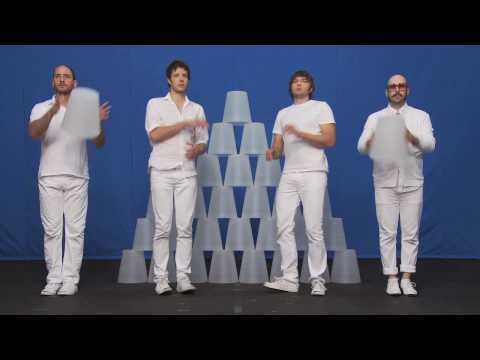
It’s been kind of quiet here in ESD Land, and that’s intentional – everyone has stuff to do during the holidays, and we’re only happy to wind things down so we can get our shopping done. But here’s a little pre-Christmas treat for you all, courtesy of the people behind what my daughter calls the doggie video, OK Go.

Like most remixes these days, the majority of the original song didn’t survive, but there are a few lines from the song and a keyboard riff here and there. And hey, it’s free. Can’t beat free. Happy holidays, everyone. See you in 2011.

OK Go – White Knuckles (Sam Sparro remix)

The Marsalis Family: Music Redeems

stars:
RIYL: John Coltrane, Thelonious Monk, Harry Connick Jr.

The first family of New Orleans jazz gathered for a special concert last year at the Kennedy Center in Washington, D.C., and thank goodness they recorded it for release. There is far too little collaboration in this clan – patriarch Ellis on piano, Wynton on trumpet, Branford on sax, Delfeayo on trombone and youngest brother Jason on drums. They’re all world-renowned musicians and hearing them together is something special. This CD also makes a great gift for any jazz fan – it’s a historic gathering of the Marsalis clan, including stories and anecdotes about growing up in New Orleans. The proceeds also go to educational programming at the Ellis Marsalis Center for Music, “the heart of the New Orleans Habitat Musicians’ Village.” The project was conceived in 2005 by Branford Marsalis and Harry Connick, Jr. (who also guests in this performance) in partnership with New Orleans Habitat for Humanity following Hurricane Katrina.

The band opens with Charlie Parker’s “Donna Lee,” featuring an up-tempo walking bass line from the bassist Eric Revis, some dynamic whistling melodies from Jason and a great piano solo from Ellis.
Wynton and Branford both speak afterward about growing up, with Branford noting how Ellis’ breakthrough song “Monkey Puzzle” (written by James Black) was almost like a cartoon theme song to the kids. The classic song receives an eight-minute treatment, with great solos all around and some stellar work by Jason on the vibes.

A pair of Ellis-penned tunes follow. “After” is an elegant solo piano song, and then “Syndrome,” an old school piano-based tune that brings in the rest of the band with some smooth unison horn lines. Harry Connick Jr., then joins the ensemble for “Sweet Georgia Brown,” where sparks fly on sensational dueling pianos between Connick and Ellis. Another peak occurs with a reading of Thelonious Monk’s “Teo,” which oozes the jazzy jazz that comes from such great horn players. There’s also another superb piano solo, followed by a succession of stylish horn solos that are like a jazz playbook.

Ellis Marsalis III then delivers a poignant spoken word poem written just for the occasion to honor his father, “The Man and the Ocean.” A nearly 10-minute version of Jason’s “At the House in Da Pocket” follows and it’s a magic track, with the horns seeming to hold an animated conversation while the other instruments vamp out behind. The Marsalis family chemistry really starts flowing here and it’s only a shame that this track basically ends the set instead of setting the stage for more. But in classic New Orleans fashion, the group apparently exits through the audience playing a rousing version of the traditional song, “The 2nd Line.”

This entire performance will make you want to book travel to New Orleans at your nearest convenience. If you can’t make it in person, the next best thing may be streaming local radio station WWOZ, without a doubt one of the greatest and most diverse stations on the planet. (Marsalis Music 2010)

10 Books for the *REAL* Music Fan on your Holiday Shopping List

Got a music fan on your holiday shopping list? We’re not talking about someone who only listens to the radio in the car and, even then, spends half of their time talking on their cell phone. We’re talking about someone who – like the name of this blog – eats, sleeps, and drinks music, someone who isn’t afraid to do a little bit of genre-jumping and who, after being introduced to an artist or a scene, seeks out reference material to learn more about the songs they’re hearing and the people who brought them to fruition. If so, we’ve got a few books for you.

Now, mind you, this isn’t intended to be a comprehensive list, as most obviously evidenced by the fact that neither Keith Richards’ Life nor Jay-Z’s Decoded are anywhere to be found, not to mention Justin Bieber’s scintillating story, First Step 2 Forever. All we’re trying to do is offer up some suggestions based on what we’ve seen, read, and gotten excited about over the course of 2010. And now that you know that, read on…

1. John Lennon: Life is What Happens, by John Borack
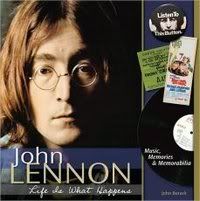
Beatles-related coffee-table books are practically a literary industry unto themselves, but John Borack’s contribution to the field is one of the best to come down the pipeline in quite some time, offering a blend of photographs, album covers, movie posters, memorabilia and minutiae from throughout John Lennon’s career while interspersing the visual presentation with text.

Some of it comes courtesy of the author himself, who provides a more thorough history of Lennon’s life and times than you might expect; given the eye candy with which he’s surrounded his words, Borack could’ve gone the simple route, but rest assured that this is no rote history. Beyond his contributions, there are quotes from Lennon himself, of course, both from his lyrics and his interviews, but there are also comments from various musicians, DJs, and others who have been affected by Lennon’s work throughout the years.

You’d be right to hesitate and think to yourself, “Do I really need another big-arse book about John Lennon and the Beatles?” In this case, though, you probably do.

2. Fab: An Intimate Life of Paul McCartney, by Howard Sounes
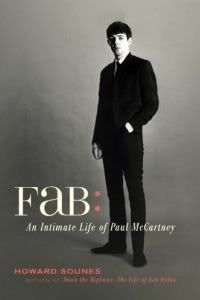
Ah, but do you need another big-arse book about Paul McCartney and the Beatles? Fortunately, in the case of Howard Sounes’s Fab, you’re not looking at a coffee-table volume but, rather, a proper biography. Sure, Barry Miles would seem to have the upper hand on McCartney bios, given that his contribution, Many Years from Now, was actually authorized by Macca himself, but with the 200+ interviews done by Sounes, the fact that he wasn’t working directly with his subject means that you’ll probably end up learning a few things that Sir Paul probably would prefer that you hadn’t. Given that Sounes manages to tackle both the highs and the lows of McCartney’s career while neither rhapsodizing nor crucifying the man, it’s no surprise that the reviews for Fab have been, well, fab.

3. Talking to Girls About Duran Duran: One Young Man’s Quest for True Love and a Cooler Haircut, by Rob Sheffield
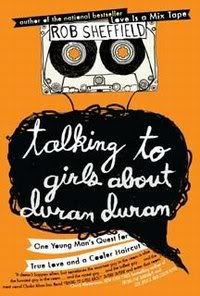
I mean this in the best possible way and intend absolutely no disrespect to Rob Sheffield, but…I totally could’ve written this book. And so, for that matter, could my fellow Bullz-Eye editor, David Medsker. Even though this book may not mirror either of our lives precisely, it contains enough universal truths about growing up in the 1980s and the soundtrack of the era that the experience of reading it proves at various times to be heartwarming and heartbreaking but – fortunately – with a whole lot of hilarity also thrown into the mix. Covering everything from Duran Duran and Depeche Mode to Rob Base and DJ E-Z Rock and Def Leppard, it may be Sheffield’s memoir, but a lot of it is our lives, too. You’ll probably find it contains a bit of yours as well, even if you weren’t even yet born when the ’80s ended (man, did you just hear that really loud collective sigh from all of the thirty- and fortysomethings?)…and if you’re like David and I, it’ll probably make you want to write your own book. But until after you curse Sheffield for having written his first.

4. A Wizard, A True Star: Todd Rundgren in the Studio, by Paul Myers
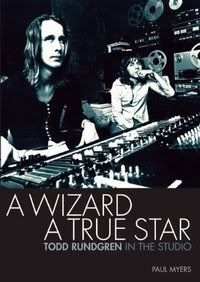
Paul Myers may have made his biggest literary splash – or certainly his most high profile, anyway – by penning Barenaked Ladies’ authorized biography, Public Stunts, Private Stories, but it’s his passion projects which have proven the most educational for music-bio aficionados.

2007 brought us his examination of the British blues scene of the 1960s as viewed through the kaleidoscope of Long John Baldry’s career (It Ain’t Easy: Long John Baldry and the Birth of the British Blues). Now, Myers has set his sights on a more mainstream musical figure…although, really, when someone inspires his followers to declare, “Todd is God,” doesn’t that by definition mean that they have a cult following?

But I digress.

With A Wizard, A True Star, Myers attempts the daunting task of exploring Rundgren’s work behind the board, as it were, exploring in great detail the albums that he’s produced over the years, including Meat Loaf’s Bat Out of Hell, the New York Dolls’ self-titled album, XTC’s Skylarking, and, as the cliche goes, many, many more. Researched and written with the participation and cooperation of Rundgren himself, Myers also draws upon exclusive new interviews with Robbie Robertson, Patti Smith, XTC, Sparks, Daryl Hall and John Oates, Meat Loaf, Jim Steinman, Cheap Trick, Grand Funk, The Psychedelic Furs, The Tubes, Steve Hillage, and the members of Utopia.

If you’re a Rundgren fan and didn’t already know what you wanted for Christmas before reading this, I think it’s fair to say that you do now.

5. Husker Du: The Story of the Noise-Pop Pioneers Who Launched Modern Rock, by Andrew Earles
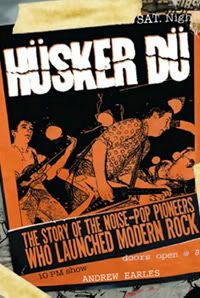
In the interest of full disclosure, I must admit that I have yet to pick up a copy of this book, but while I’m not necessarily expecting it to top Michael Azerrad’s look at the band in Our Band Could Be Your Life: Scenes from the American Indie Underground 1981-1991, the idea of someone putting together a full-fledged history of the work that Bob Mould, Grant Hart, and Greg Norton did together has me excited enough that I feel like I should at least spread the word about it.

Here’s the official description of the book:

Taking their name from a popular Danish children’s board game, Bob Mould, Grant Hart, and Greg Norton formed Hüsker Dü in St. Paul, Minnesota, in 1979 as a wildly cathartic outfit fueled by a cocktail of volume and velocity. Author Andrew Earles examines how Hüsker Dü became the first hardcore band to marry pop melodies with psychedelic influences and ear-shattering volume, and in the process become one of the most influential rock bands of the 1980s indie underground. Earles also explores how the Twin Cities music scene, the creative and competitive dynamic between Mould and Hart, and their personal lives all contributed to the band’s incredible canon and messy demise. Few bands from the American indie movement did more than Hüsker Dü to inform the alternative rock styles that breached the mainstream in the 1990s. Here, finally, is the story behind their brilliance.

Hey, it certainly sounds good. Whichever one of us gets it first, meet back here and let the other know how it is, deal?

Continue reading »

« Older posts Newer posts »