Page 159 of 583

Renegade company selling Beatles catalogue online

Beatles

Has anyone here ever heard of a music website called BlueBeat.com? Me neither. Well, they’ve recently made the news in a big way.

The online music store, owned by the audaciously-named Media Rights Technologies, has been selling downloads of Beatles albums and songs. Problem is, EMI is the only company licensed to distribute Beatles recordings. Despite the benefits of selling individual mp3s, the Beatles are absent on iTunes and other online music merchants. EMI has something else in mind. On December 7, EMI and Apple Records will release a “limited edition stereo USB” containing the Beatles entire catalogue in digital format.

Still, some fans just want individual Beatles songs, especially now that they’ve all been remastered.

Late last week, BlueBeat began selling Beatles song downloads for 25 cents a pop. It’s a great deal, but EMI isn’t jumping for joy. They’re suing.

BlueBeat is a division of Media Rights Technologies, a diversified Northern California digital media distribution firm. Execs at Media Rights Technologies did not respond to phone and email requests for comment.

Observers immediately viewed BlueBeat’s sale of Beatles tracks with suspicion, since even iTunes musicstore, digital music’s industry leader, has never had access to the Beatles’ music. The online sale of the band’s material has been the subject of protracted wrangling between EMI and Apple Corps (not to be confused with Apple Computer, parent company of iTunes).

Each album is offered as an unlimited free stream. Prices on full albums range from $3.50 for the Beatles’ debut “Please Please Me” to $7.50 for “The Beatles” (the so-called “White Album”).

In a twist ripe with irony, representatives of Media Rights Technologies recently wrote to the Librarian of Congress asking that the webcasting licenses of such firms as iTunes, Pandora and MSN Music be revoked on piracy grounds.

In a company press release issued in 2007, Media Rights co-founder and CEO Hank Risan accused Apple of failing to obtain the necessary licenses to distribute copyrighted material on the Internet, which prompted the company to remove all links to iTunes from BlueBeat.com.

Ha! Countersue!

Most of us don’t know who specifically makes money off the Beatles’ music. Obviously, Paul McCartney, Ringo Starr, and their respective families get their proper share, but most of us could give a damn about the executives from EMI. Still, the company has the distribution rights. I don’t know what loophole Hank Risan and his Media Rights Technologies found, but I doubt it’s legitimate.

How do we solve this dilemma?

Why not make the Beatles catalogue public property? When Paul and Ringo start to experience ill health, I hope they sign over the Beatles music to all their fans. The idea may sound ridiculous now, but give it some time.

Devendra Banhart: What Will We Be


RIYL: Donovan, Marc Bolan, Veviter

Toiling within the ranks of the indie underground, Devendra Banhart has managed to elevate himself into the highest ranks of the so-called “freak folk” hierarchy. His last album, Smokey Rolls Down Thunder Canyon, made a pitch to expand that tag, with Banhart attempting to meld his obtuse approach with the idyllic imagery of the L.A. environs that spawned such ‘60s lynchpins as Neil Young, CSN, the Mamas and the Papas, Joni Mitchell, and various others that made music in those hallowed hills. Likewise, his recruitment by the majors – in this case, Warner Bros. records, home to many of those aforementioned icons – seemed to indicate a concerted effort to break through the barriers.

Indeed, while Banhart’s new label affiliation might seem a concession to commercialism, in truth, the results are every bit as eclectic…and, for that matter, every bit as eccentric…as his earlier efforts. The songs are sung in both English and Spanish, and rather than the clear, coherent melodies identified with the so-called Southern California elite, Banhart still shifts his set-ups – often radically and in the space of a single song. Consequently, “Rats” has a somewhat foreboding start before segueing abruptly into a state of kinetic jubilation. The jazzy inference of “Chin Chin & Muck Muck” morphs several times before the song hits its stride. Likewise, “Angelika” might have succeeded as a soothing serenade had it not accelerated midway through into a sizzling Latin samba.

Still, for all his abrupt turns, Banhart retains a decidedly old school stance. His melodies may seem somewhat amorphous, but his quivering vocals and loping tempos frequently recall the pixie-like warble of Donovan and Marc Bolan. A couple of tracks might bode well for future sing-alongs, specifically “16 & Valencia Roxy Music” and the gentle Spanish serenade called “Brindo.” As an album that’s magnified by ambition and grand designs, What Will We Be may well be his best yet. (Warner Bros. 2009)

Devendra Banhart MySpace page
Click to buy What Will We Be from Amazon

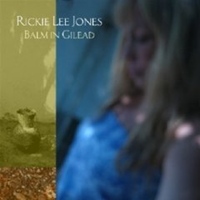
Rickie Lee Jones: Balm In Gilead


RIYL: Joni Mitchell, Carly Simon, Janis Ian

It seems but a blink of the eye when in reality it’s been three decades since Rickie Lee Jones scored her breakthrough hit, “Chuck E.’s In Love,” and subsequently garnered her Grammy for Best New Artist. In the 30 years since, Jones has mostly flown below the radar, at least in terms of her commercial appeal, but her sassy, soulful style continues to leave its imprint and make her a recurring staple. Jones has always seemed most comfortable playing the role of both barfly and ingénue, crooning twilight ballads with a knowing air of cool and sophistication, while also taking sharp turns at practically every juncture.

Its not surprising then that those disarming glances haven’t necessarily helped tug Jones back into the mainstream. So consider it fortunate that her new album, the uniformly pleasing Balm In Gilead, again finds her at the top of her game, vamping with versatility through a surprisingly disparate set of songs. No longer the shadowy chanteuse, she proves here that her pull is still intact. Encompassing songs that were written years, and even decades, before, the album gathers some of the best songs she’s authored in years. While her devotees will find the smoky barroom vibe of “Old Enough,” “The Moon Is Made of Gold” and “Eucalyptus Trail” akin to a reassuring refrain, her country croon on “Remember Me” and ambient drone of the stirring “His Jeweled Floor” show an obvious willingness to expand her parameters into more accessible terrain. Toss in some beguiling ballads – “Bonfire,” “Wild Girl” and “A House on Bayless Street” – and Balm In Gilead becomes a soothing salve indeed. (Fantasy 2009)

Rickie Lee Jones web page
Click to buy Balm in Gilead from Amazon

Wolfmother: Cosmic Egg


RIYL: Led Zeppelin, Deep Purple, Black Sabbath

Wolfmother is back! Well, Andrew Stockdale, the lead singer/guitarist of Wolmother is back – everyone else quit/got fired last year and Stockdale decided to continue the Wolfmother name without them. But the new Wolfmother, now a foursome instead of a power trio, doesn’t sound terribly different from the old Wolfmother. So there’s not much need to describe the “sound” of Cosmic Egg: it sounds like Wolfmother. Have you heard “Woman” or “The Joker and the Thief,” from their 2005 self-titled debut? Then you know what you’re in for here. Is that really a problem, though? Sure, Stockdale may just be cribbing the best bits from ’70s metal (specifically, the crunching riffs of Black Sabbath’s Tony Iommi, the howling screams of Robert Plant, and the totally groovy organ solos of Deep Purple), but what the hell is wrong with that? Have you heard the “modern” rock on the radio today?

wolfmother cosmic edit

Maybe we got it right in 1976 – why move forward? If anything, Wolfmother needs to move further in that direction. When they try to slow things down or pop things up for radio, such as on the anemic love ballad “Far Away,” they sound lost. When they let themselves kick out the jams, they deliver; whether slow and methodical, such as the wah-wah heavy “Sundial,” or fist-pounding and headbanger friendly, like “New Moon Rising,” “Phoenix,” or just about every other song on the album. Yeah, it may not be the most original or “intelligent” release of the year, but it’s a solid dose of hard rock and heavy metal at a time when they’re few and far between.

A quick note of annoyance, though: there are two versions of Cosmic Egg, deluxe and standard (our review copy was the standard edition). The deluxe copy comes with four more songs, which add up to 20 more minutes of music. These aren’t outtakes, live tracks or acoustic versions; there’s nothing notably different about these tunes. So when you’re buying the “standard” version of the record you’re basically not getting the full version. It’s hard to tell what the purpose behind such a release strategy is, since all it does it drive people who bought the standard version to go online and download what they’re missing. It’s hard enough for artists to sell records these days, and crap like this just makes it that much harder. What’s the point? (Modular 2009)

Wolfmother’s MySpace Page
Click to buy Cosmic Egg on Amazon

Los Cenzontles with David Hidalgo & Taj Mahal: American Horizon


RIYL: Los Lobos, Taj Mahal, Ry Cooder

Odds are you’ve never heard of Los Cenzontles (the name translates to “the Mockingbirds”), but they’ve been a major force in traditional Mexican music since forming in 1989. Twenty years and 17 albums later, they’ve teamed up with Taj Mahal and Los Lobos’ David Hidalgo (who also worked with the group on last year’s Songs of Wood and Steel) for American Horizon, a sprawling, 15-track concept album that, in the band’s words, “tells a timely story of immigration, work, and the American Dream.” Not the sort of thing you’re going to hear coming out of Sean Hannity’s car stereo, in other words, but if you’re looking for a beautifully moving collection of roots music that literally transcends language, get ready to spend a few weeks curled up inside the restless grooves of this album. You won’t be able to understand the literal meaning of much of it if you don’t speak Spanish, but don’t worry – you only need a soul and a pair of ears to be able to feel American Horizon’s bright strains of joy and sadness. Think of it as a sort of spiritual cousin to the Buena Vista Social Club, and you’ll be on the right track. Mahal and Hidalgo receive second billing, but don’t buy Horizon looking for flashy cameos; instead, their work here reflects a pair of careers spent knocking down musical barriers. It’s one of the most heartfelt – and purely interesting – records we’ve heard all year. (Los Cenzontles 2009)

Los Cenzontles MySpace page
Click to buy American Horizon on Amazon

« Older posts Newer posts »