Category: Melodramatic (Page 7 of 12)

Marillion: Less Is More


RIYL: U2, Simple Minds, Radiohead
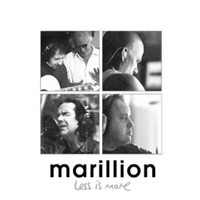
It seems a somewhat formidable task to encapsulate two decades of music within the span of a dozen tracks, but Marillion’s latest makes the case that it’s at least worth trying. Summing up the group’s progress following the transition from original singer Fish to current front man Steve Hogarth at the end of the ‘80s, this modest anthology holds together remarkably well, each song segueing seamlessly into the next with scarcely any change in tone or tempo. One can only surmise that that the band is either a stickler for consistency or simply at a loss for new ideas; either way, their sprawling, unhurried sound is as spare as the album title suggests. Songs begin with little more than a few notes on a keyboard or the simple strum of an acoustic guitar before acceding to an underlying, unresolved tension that ripples just below the surface. When the material soars, as with the slightly more emphatic “Hard As Love” or via the bebop rhythms of “If My Heart Were a Ball,” Marillion manage to emulate the plaintive tomes of U2 and Simple Minds. However, aside from the “hidden track” “Cannibal Surf Babe” and a moving cover of Radiohead’s “Fake Plastic Trees” – one of two live bonus tunes – the melodies are somewhat diffuse, showing only a lackluster attempt at capturing a more emphatic sound.

Ironically, when Fish sang with the band during their formative years, Marillion was far more dynamic, though they were constrained by the notion they were simply a poor man’s Genesis. Less Is More suggests the Fish connection is still there, but it’s more like the kind that seeks a hook to hang on. (Eagle Records 2009)
Marillion website

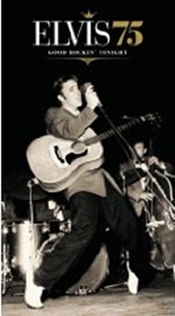
Elvis Presley: Elvis 75 – Good Rockin’ Tonight


RIYL: 1950s rockabilly, 1960s pop, 1970s country, rock history in general

In honor of Elvis’ 75th birthday – we won’t get into whether he is “the late Elvis” or still rockin’ in the wilds of Michigan – Legacy’s issuing a bunch of records, this one being first up and coinciding with a Graceland bash. In a word, it’s great stuff, a career-spanning retrospective that covers the gamut of the good, bad and ugly from rock’s first real icon, its undisputed King. Elvis diehards probably have most of the 100 tracks spanning the almost 25 years of his recorded career, from the 1953 “My Happiness” demo to Moody Blue tracks; probably only the most manic completists among longtime fans will nibble at this.
For the rest of us, however, it puts Presley’s work in context: There’s no denying the power of Young Elvis, who had an incredible combination of talent, charisma, and the stones to fuse music from black R&B records, gospel, redneck bluegrass, and loud guitars. When he walked into the Memphis Sun Studios and hooked up with label impresario Sam Phillips in 1954 to put down his brilliant first sides, he was just a singer who loved all the music he heard from both sides of the tracks and just didn’t particularly care what people would think if he did. Maybe I’m alone in this opinion, but I believe that all the stuff that came after – the politics, the goofy Graceland stuff, the Army, the movies, the drugs, the Comeback, stuffing his sweaty and overweight frame into sequined Vegas costumes, and finally, the overdose, were not of his doing but caused by external forces he endured, albeit willingly at times. The early songs still sound fresh and crisp: “Mystery Train,” “Blue Moon of Kentucky,” “Jailhouse Rock.” A powderkeg of testosterone and unbridled joy. Rock, undistilled. Then comes the ballads, the country, the gospel stuff…the brutal “Suspicion.” It’s all here, along with the 2002 techno remix of “A Little Less Conversation.”

Listening to this end to end, it’s bizarre to hear Elvis’ transformation from the white-hot beginning to the dying embers of a career when he finally ingested that deadly cocktail of prescription drugs. At first, he synthesized all these at-the-time disparate musical influences to create such musical magic. By the mid-1970s, however, he was clinging desperately to country, sounding like a second-rate Hank Jr. knockoff at best (who himself was a poor Xerox of his daddy). Elvis ended up the ghost of his 1950s and early-’60s heyday, barely recognizable and subject to all the ridicule that’s followed his 1977 death. The moral of the story? Elvis wasn’t larger than life; he was just another rock star, human after all. But just like the NFL has good quarterbacks and bad, as far as rock stars go, Elvis was no Kyle Orton; he was Brett Favre, the greatest statistical player – unstoppable at first but maybe should have called it quits before his career turned into a circus. If you’ve never dug Elvis seriously, check out this box. There’s a lot more going on here than Jay Leno punch lines. When he was on top of his game, he wrote rock history with a gorgeously powerful voice and a beguiling smile. This box remembers that part, best. (Sony/Legacy, 2009).

Norah Jones: The Fall


RIYL Cassandra Wilson, Grace Potter, Patty Larkin

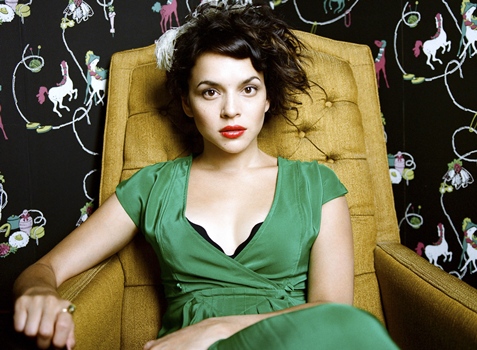
Advance word to the contrary, Norah Jones’ fourth album shows a marked change in approach but little difference in attitude. Stirring up the ambiance with synths, effects, beats and a general trend towards more modern programming tools, Jones lays out a steady series of laments about traitorous lovers and ruined relationships with a distinct emphasis on disillusionment in general. Titles like “Stuck,” “I Wouldn’t Need You” and “You’ve Ruined Me” offer an early hint of her malfunctioning mindset, but lines like “If I touched myself the way you touched me…then I wouldn’t need you,” speak directly to her disappointment. Conversely, the carnival-like atmosphere of “Chasing Pirates,” the practically jaunty “Tell Yer Mama” and the propulsive duo of “Young Blood” and “It’s Gonna Be” prove a welcome respite from the deathly serious tact that Jones helped trademark on her three earlier albums.

Norah edit 2

And while there’s still ample evidence of that wounded, torch song set-up imbued in “Manhattan,” “Even Though,” “I Wouldn’t Need You” and “Waiting,” even her more sobering perspectives seem somewhat more illuminated, given fuller arrangements that detract attention from her solitary keyboard and instead steer the proceedings towards the emphatic strum of her electric guitar. Ending the album on a lighter note that finds her offering an ode to her dog – the winsome “Man of the Hour” – shows that for her all her trepidation and turmoil, Jones has the capability of picking herself up, no matter how serious the fall. Blue Note 2009

Norah Jones MySpace page

Sam Shrieve: Bittersweet Lullabies


RIYL: Denison Witmer, Jeff Buckley, Adam Cohen

A chip off the old rock? Well, not exactly, although admittedly Sam Shrieve shares his dad’s penchant for making a mark at an early age. The elder Shrieve was, of course, the frenetic drummer for the first Santana band, the youngest musician to play Woodstock and the piercing on-camera presence that practically stole the show from his colleagues. Young Sam takes a more refined route and while his glamorous good looks are obviously destined for full exploitation, his music is considerably more cerebral than either dad’s tribal tempos or than the typical pinup poser. Consequently, Bittersweet Lullabies proves an apt title for these pleasant soft pop musings, alternately celebratory (“Beautiful,” “”Kiss You,” “I’m Sorry”) and unabashedly sentimental (“Welcome to Your Life,” “”I’ll Be There,” “”Sanctuary”). An aching take on the oft-covered “Hallelujah” actually cuts through the competition and fits perfectly in the mix, as sure a sign of Shrieve’s proficiency as any of his originals. A solid support cast, including veterans Bill Frisell and Lyle Workman, lend additional credibility, but Sam’s the man when it comes to carrying the bulk of the musical weight. Dad must be proud, although wondering where the rhythm went. Nevertheless, this impressive initial outing carries a weight all its own. (Colorburst Soundfield 2009)

Sam Shrieve MySpace page

Hem: Twelfth Night


RIYL: Incredible String Band, Amazing Blondel, Pentangle

It ought to come as no surprise that a combo which has taken its cue from iconic Anglo folk music should carry those interests further – in this case, creating an album rich in Celtic and Baroque tradition. But in accepting a commission to pattern a soundtrack for the Public Theater’s production of Shakespeare’s “Twelfth Night,” Hem’s allowed their Elizabethan extremes to run rampant, augmenting their usual mellow musings with a contingent of pipes, flutes, whistles and orchestral flourishes all in keeping with the trappings of the period. Mostly instrumental, it gives vocal nods to a theatrically superior cast that includes Anne Hathaway and Raul Esparza, but it’s a relatively unknown David Pittu who proves best suited to singing the sonnets, especially on such traditionally-tied verses as “The Wind and the Rain,” “Hey Robin, Jolly Robin” and “I Am Gone, Sir.” As the titles suggest, this is neither rock, nu-folk nor any combination thereof, but rather a sound that owes its origins and inspiration to the Bard. Hem enthusiasts will likely note this as a momentary detour in anticipation of a band project due early next year. For their part, theater purists will probably appreciate the effort and admire its authenticity. (Nettwerk 2009)

Hem MySpace page

« Older posts Newer posts »