Category: CD QuickTakes (Page 39 of 149)

Sade: Soldier of Love


RIYL: Everything But the Girl, Basia, Anita Baker

Sade’s been releasing babymaking music for so long that the kids who were conceived to the strains of their first single, “Your Love Is King,” are old enough to have children of their own. You’d think they’d have run out of ideas by now – or, at the very least, run out of people willing to purchase their albums – but Sade’s last release, 2000’s Lovers Rock, actually sold more than its predecessor, 1992’s Love Deluxe.

That kind of longevity has always been exceedingly rare in pop music, especially for acts who, like Sade, tend to take a decade or so between releases – but then again, most artists don’t enjoy the kind of cool consistency Sade has displayed over the course of its career. From a certain point of view, you could say that if you’ve heard one Sade album you’ve heard them all; it’s probably more accurate, though, to say that the members of the band know exactly which kind of music they were born to make, and they simply play to their artistic strengths more strongly than most.

Whichever way you look at it, Sade’s sixth studio album is a lot like the five that came before it: Plenty of languid R&B, heavy on the machine-driven beats and moody synths, topped off with a little sax, a little guitar, and a whole lot of Sade Adu’s coolly smoky vocals. She doesn’t look or sound like she’s aged a day since 1984, which is exactly what Sade fans want to hear – you don’t listen to this music looking for radical change, you turn to it for comfort, and to hear the sound of impeccably crafted, grown-up lust. (Seriously, Adu is 51? This woman cannot be human.)

That said, there is a bit of change afoot on Soldier of Love – but just a bit, and it’s most noticeable on the strutting title track, which finds Adu’s lithesome vocals wafting above a booming beat, stabbing rhythm guitars, and martial percussion samples. Though still recognizably Sade, it’s the equivalent of a more restless band changing genres completely, which might be why the rest of the album is much more in line with the group’s previous work. For most other artists, this would sound like creative drought; for Sade, it’s as comfortable as falling back into the sheets. Long may she moan. (Epic 2010)

Sade MySpace page

Fucked Up: Couple Tracks: Singles 2002-2009


RIYL: Pissed Jeans, Minor Threat, FEAR

Fucked Up’s The Chemistry of Common Life was the best album of the decade (if you ask me). The downside to releasing an album that good, of course, is that now they have some pretty high standards to live up to. Couple Tracks is actually composed entirely of material that pre-dates that masterpiece, culling from the band’s extensive 7” singles discography, most of which were never released digitally or even on CD. While it may be unfair to compare this earlier material to what came later, it’s impossible not to.

Luckily most of Couple Tracks comes close to living up to the high standards set forth by the band’s later work. “Triumph of Life” and “Black Hats” both hint at the wall of noise sound that was to come on The Chemistry of Common Life, and pulse-pounding, ready-made moshers like “Ban Violins” and “Dangerous Fumes” show that before Fucked Up was tearing down the boundaries of what it meant to be a hardcore band, they were working within the confines of the genre damn well. The band even lets their artistic and avant-garde guard down with a series of covers, which include “Anorak City” (originally by Another Sunny Day) and “I Don’t Want to Be Friends with You” (originally by the Shop Assistants). It’s silly, for sure, but it shows the rarely seen lighter side of Fucked Up, as they transform both songs into Ramones-style punk numbers. Also showing off the band’s sense of humor is “Generation,” which is a purposely stupid anthem song meant to rally the easily led.

Unfortunately there is a bit of filler on here. Early versions of album cuts “Crooked Head” and “No Epiphany” seem like pointless additions, and the live tracks from a Daytrotter session are fun, but more vinyl-only rarities would have been preferred. Still, if you’re a hardcore fan of the band but missed out the singles the first time around (or you just don’t have the turntable to play them), then this collection is pretty much essential. If you’re new to the band and only know The Chemistry Of Common Life the more straightforward sound of Couple Tracks might surprise you, but you’ll still find something to like. (Matador 2010)

Fucked Up MySpace Page

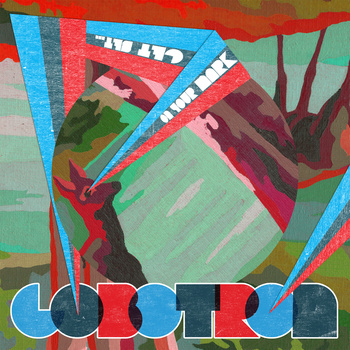
Gobotron: On Your Mark, Get Set…


RIYL: The Lemonheads, Pavement, Ben Kweller

On Your Mark, Get Set… receives bonus points off the bat for the band title, which riffs on our favorite video game of all time. It also receives a couple ‘Who’d a thunk it’ points because the album is the work of Manchester Orchestra guitarist Robert McDowell, a band who had us running for the hills two minutes into their performance at last year’s Lollapalooza. But still waters apparently run deep, as McDowell’s solo venture, which he performed and recorded by himself one summer and mixed the following summer, bears no resemblance to his day job, forsaking shrieking melodrama for yesteryear-flavored indie pop. “Nice Things” could pass for a lo-fi Sloan, and “Never Turn Around,” with its classic give-and-take vocals, is as perfect a power pop song as you’re likely to hear in this year or the next. Which means, of course, that there is no chance of these elements being incorporated into Manchester Orchestra’s sound, a decision that is as understandable (five words: girls don’t like power pop) as it is unfortunate. With any luck, thought, the Audities listees will buy enough copies of On Your Mark, Get Set… to encourage McDowell to give it another go. (Favorite Gentlemen 2010)

Gobotron MySpace page

David Sanborn: Only Everything


RIYL: Hank Crawford, David “Fathead” Newman, Kirk Whalum

David Sanborn has used his recent move to Decca as an excuse to renew his focus on the music that inspired him as a kid: Only Everything, like 2008’s Here & Gone, functions as a sort of loose tribute to the Ray Charles blues axis, with particular emphasis on the work of sax players Hank Crawford and David “Fathead” Newman. It’s certainly a step in the right direction, given Sanborn’s history of burying his formidable talent under synth-powered smooth jazz (listen to most of his ‘80s output – or better yet, don’t) or just aimless, albeit impeccably performed, noodling (most of the ‘90s). But this is still David Sanborn we’re talking about, and although Only Everything is billed as a Hammond-heavy, rootsy jazz record, it really only lives up to that description in the context of Sanborn’s exceedingly polite discography. (It’s certainly a good deal more mannered than 1992’s Upfront, Sanborn’s last foray into Hammond territory.) The end result, for the most part, is an album of well-played covers that will leave you with an itch to dig out the originals – with the exception of the two vocal numbers, which are sure to be singles on every smooth jazz station around the country. It’s hard to understand why anyone thought it would be a good idea to have Joss Stone step up to the microphone for “Let the Good Times Roll,” or why you’d ask James Taylor to sing “Hallelujah I Love Her So,” but all parties responsible should be horsewhipped: Stone’s showoff performance is stuffed with unnecessary melisma, and Taylor’s about as ill-suited a vocalist as you could imagine for the Ray Charles songbook. Skip over those tracks, though, and you’ve got a fine, if frustratingly mild, addition to Sanborn’s catalog – and if you’re at all familiar with his work, “mild” is probably exactly what you’re looking for. (Decca 2010)

David Sanborn MySpace page

Various Artists: Crazy Heart: Original Motion Picture Soundtrack


RIYL: Stephen Bruton, Ryan Bingham, T Bone Burnett

At the turn of the century – just about the time the record industry was experiencing its Wile E. Coyote moment before plunging into its recent sales abyss – Jeff Bridges decided to start a label, Ramp Records, and release a Michael McDonald album alongside Bridges’ own solo debut, Be Here Now. Neither release received much attention at the time, but as vanity-plate recording projects from actors tend to go, Bridges’ wasn’t bad; he had a rumpled, Dude-like charm as a vocalist, and although his songwriting tended toward the ponderous (“Buddha & Christ at Large,” anyone?), the songs communicated the same calculatedly offhand attention to craft as his acting. Point is, Bridges’ critically acclaimed turn as the booze-soaked songwriter at the center of “Crazy Heart” isn’t wholly revelatory – and Be Here Now might have stood a better chance at being a hit if he’d surrounded his songs with stellar, downbeat performances from artists like Buck Owens, Sam Phillips, and the Louvett Brothers.

And okay, so Bridges didn’t have much of a hand in writing “Crazy Heart’s” original songs, but he does steal the spotlight on the soundtrack – no mean feat when you’re sharing the stage with the aforementioned artists, as well as young Americana lion Ryan Bingham, who’s already won a Golden Globe for one of his contributions, “The Weary Kind.” There really aren’t any bad songs here, but it’s Bridges’ performances that’ll draw you in the most – when he sings “funny how fallin’ feels like flyin’ for a little while,” sounding for all the world like a more tuneful John Hiatt, you’ll flash back to every heartbreak you’ve ever suffered and every shitty bar you’ve ever been sorry you sat down in. If you’ve seen the movie, you’ll want to own this, without question – but even if you haven’t, it’s the best cross-industry soundtrack we’ve seen since John Mellencamp starred in Falling from Grace in 1992. Pour yourself a strong one, sprinkle some sawdust on the floor, and get carried away. (New West 2010)

Crazy Heart MySpace page

« Older posts Newer posts »