Author: Jeff Giles (Page 16 of 41)

Mika: The Boy Who Knew Too Much


RIYL: Queen, George Michael, Harry Nilsson

As anyone who’s ever tried to tell a story to a room full of people can tell you, it’s exceedingly difficult to entertain even one person, let alone several million – which is part of why it’s always so disappointing to see successful entertainers try and get serious on us. From Bill Murray in “The Razor’s Edge” to George Michael with Listen Without Prejudice, Volume One, artists are forever trying to show us that they can do more than make us laugh and/or dance – usually with disappointing results. Let’s give Mika credit, then, for not forgetting what moved six million copies of his 2007 debut, Life in Cartoon Motion – namely, the same gleefully layered Technicolor pop that forms the basis of its follow-up, The Boy Who Knew Too Much.

Mika makes no bones about sticking close to his roots, so to speak; as soon as you lay eyes on Boy’s artwork, which looks – at a glance, anyway – awfully similar to Cartoon Motion’s, you’ll know this isn’t going to be a major departure. In fact, it’s really just more of everything: more bright pop hooks, more production, and more wonderfully over-the-top arrangements. It takes less than a full minute before Mika’s leading what sounds like a cast of hundreds in a sing-along chant of “We are not what you think we are! We are golden!” and it’s off to the races from there, in one endless falsetto loop-de-loop of swirling harmonies, pounding pianos, and instantly memorable melodies.

Of course, it also bears mentioning that they’re fairly derivative; at his best, Mika suggests nothing so much as Queen’s greatest hits and Faith-era George Michael thrown together in a blender and pureed to a sweet, frothy consistency, with a few 21st-century production gewgaws sprinkled in for extra texture. It’s certainly nothing you haven’t heard before, in other words – but on the other hand, few artists who attempt this kind of pop fetishism do it as well as Mika; The Boy Who Knew Too Much, like Life in Cartoon Motion, feels more like an extension of his influences’ aesthetics than a hollow homage. After listening to an album this ridiculously fun, it’s natural to brace yourself for the bad aftertaste, but Mika does such a good job of synthesizing his personal songwriting perspective with these familiar ingredients that the hangover never comes.

There really aren’t any bad tracks here, although Mika is at his best when he’s doing his upbeat dance between baroque brilliance and utter ridiculousness; the album’s more sedate songs might have a deeper meaning, but they aren’t nearly as much fun. The pick of the litter is unquestionably “Touches You,” which sounds – in the best possible way – like it could have been a Faith B-side. With its driving piano, whomping synth bass, oceans of dovetailing background vocals, and a melody that sounds like it was as much fun to write as it is to play at full volume, it neatly encapsulates everything that’s great about Mika – and pretty much everything that works in modern pop music, for that matter – in a tidy 3:20. Let’s hope he never forgets it. (Universal/Casablanca 2009)

Mika MySpace page

Bruce Hornsby and the Noisemakers: Levitate

His last two releases were a bluegrass record with Ricky Skaggs and a jazz trio album with Christian McBride and Jack DeJohnette, and a few songs from his latest are already earmarked for a stage musical – but Bruce Hornsby hasn’t forgotten about pop music, as evidenced by the strong, eclectic batch of tunes he lined up for his 11th studio album (and the first co-credited to his longtime backing band, the Noisemakers), Levitate. These dozen tracks tie together a handful of Hornsby’s multitudinous pop personae – piano balladeer, funk-loving programmer, raucous bandleader – without any one element overshadowing the rest. Where Levitate deviates from previous efforts is in its lack of piano solos. Hornsby and the Noisemakers aren’t afraid to lay back and blow – “Continents Drift,” for example, clocks in at almost seven and a half minutes – but the focus here is on the songs, which Hornsby pares down to their most essential parts without robbing the arrangements of any of their robust vitality. He continues his streak of cockeyed lyrical musings, too, weighing in on the role of disease in colonial American history (“The Black Rats of London”), Teddy Roosevelt (“Prairie Dog Town”), and the beloved eccentricities of Southern living (“In the Low Country”). Hornsby’s audience might have lost quite a bit of its heft since his “The Way It Is” days, but his music is better than ever. (Verve Forecast 2009)

Bruce Hornsby MySpace page

Are the remastered Fab Four even fabber?

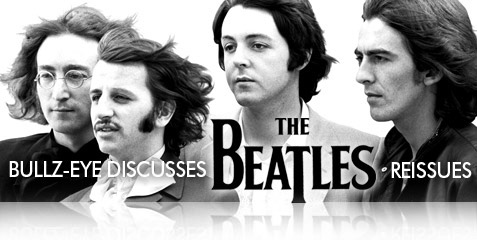
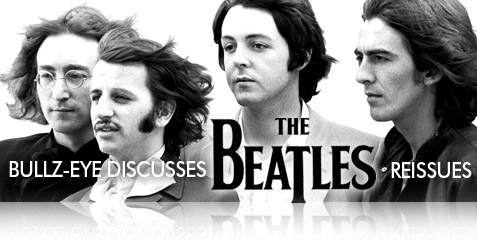
Unless you’ve been living under a rock for the last few weeks, you know by now that the entire Beatles catalog was given a new coat of paint on Wednesday, courtesy of a series of painstaking remasters commissioned by the gang at Apple Records — but what you may not know is whether the reissued albums are worth your hard-earned coin. With a slew of CDs on the market, including a limited-edition, 11-disc box of mono mixes, a person could conceivably spend upwards of $400 on the freshly polished Fab Four. If you’re on the fence about the remasters, never fear — Bullz-Eye is here to help.

In a discussion held by David Medsker and yours truly, the stereo remasters are held up against not only the original Beatles CDs, but the remastering fad in general, as well as the compression fad that has sent modern recordings on a quest for ever-brighter levels of sound. (In David’s words, “We’ve heard some shitty-sounding records in the last few years, haven’t we?”) Like many of you, we were concerned that the ’09 versions of these classic albums wouldn’t really do the original recordings any favors, and approached them with a healthy degree of cynicism.

So how did it turn out? Not to be too suspenseful about it, but you’ll have to click on the image above or follow this link to get the verdict. See you there!

Chris Knight: Trailer II

A lot of country singers don’t know squat about horses, trailer parks, and rural life – but they can sound like they do, thanks to the songs written for them by guys like Chris Knight. A former coalmine inspector from a speck on the map in Kentucky, Knight is one of those plucked-from-obscurity successes whose story sounds like it was dreamed up in a Beverly Hills bungalow for a crappy movie script, but he’s the real deal – and though he’s never enjoyed a ton of success as a recording artist, he’s written plenty of cuts for more established acts: Montgomery Gentry, John Anderson, Ty Herndon, and Gary Allan are just a few of the performers who have covered his songs. Trailer II, as you might have already gleaned from its title, is a collection of demos taped in a trailer, and a sequel to 2007’s well-received The Trailer Tapes. Recorded over a decade ago, when Knight was still years away from making his major label debut, these performances offer a grippingly intimate snapshot of an artist with little more than a guitar and a dream. Unlike The Trailer Tapes, the songs that make up Trailer II will be familiar to Knight’s fans, but hearing them here, in all their stripped-down majesty, provides a more direct emotional connection to the material. He’s been described as “John Prine and Steve Earle rolled into one,” and despite the hyperbole of the comparison, that’s as apt a way as any to describe what you’ll hear here. Forgive the somewhat dodgy fidelity and bask in the sweltering heat of a bona fide Americana talent. (Drifter’s Church 2009)

Chris Knight MySpace page

Gordon Gano and the Ryans: Under the Sun

Nine years removed from the demise of the Violent Femmes, erstwhile head Femme Gordon Gano has left his past as a folk-punk godfather behind, both literally (Femmes classic “Blister in the Sun” is now a Wendy’s commercial jingle) and musically, via his latest artistic incarnation as the frontman for Gordon Gano and the Ryans. Under the Sun, the fruit of a years-long, postal service-assisted collaboration with former Bogmen Brendan and Billy Ryan, provides Gano’s grating adenoidal whine with a thicker, more colorful musical backdrop than it usually enjoys – which is nice, certainly, but what would make it nicer is a set of uniformly solid songs. Now 46, Gano is still most effective when plumbing the depths of rock & roll whimsy, and when the band dares to be stupid here – as on “Way That I Creep” and “Oholah Oholibah” – Under the Sun can be a lot of fun despite his extreme vocal limitations. Too much of the album, however, gets – pardon the pun – bogged down in melody-deficient ponderousness to hold much interest. Femmes loyalists will probably miss the acidic bite of Gano’s earlier work, but there’s no denying this new partnership offers sonic vistas far more expansive than those offered by his better-known band. With enough time and some stronger material, it might just give him something interesting to do with all that Wendy’s money. (Yep Roc 2009)

Gordon Gano and the Ryan Brothers MySpace page

« Older posts Newer posts »