Not everyone can lead. It’s just a fact of life. Some will lead, and the rest will follow, and you will find no greater place to observe this behavior in action than in the world of music, where every band who scores even a sliver of attention inadvertently gives birth to a gaggle of copycats. Most of which, naturally, suck hard.
However, just because someone is a follower does not mean that they’re not bringing something new to the table, and California trio Elogy is a good example. From the first breath that singer Derek Cannavo takes on One, the band’s debut album, it’s clear that he really, really likes the way Chris Martin sings, executing both of Martin’s trademark moves (the aching baritone, followed by the aching falsetto) in a matter of seconds. And yet, for all the tricks the band may have stolen from other bands’ playbooks, One is a consistently engaging listen, stuffed to the gills with anthemic choruses and slice & dice programming that will make Passion Pit green with envy. The soaring “Eager We Are” will surely land in a CW show in the next six months, while “Welcome to Inertia” out-Aqualung’s Aqualung, skillfully blending major keys with full-blown melancholia. The band’s true star, though, is drummer Nick Lyman, who positively bashes his set when he’s not unleashing drum samples that sound like Everything but the Girl’s Walking Wounded set on puree.
If they can stay away from overblown power ballads like “Rest Your Senses” (think Staind’s “It’s Been Awhile” for the bedroom pop set), there should be little preventing Elogy from jumping to the next level. It may not be the most unique first step a band’s ever taken, but it would not be at all surprising to see Elogy evolve into a band that others want to copy. (Elogy 2010)
Rocksteady is the title of the eighth studio album from Big Head Todd & the Monsters since 1989, but it also serves as the mantra for the Colorado band. Although 1993’s Sister Sweetly was spectacular, the rest of their records have been good efforts with plenty of pleasant moments. Nothing they have released since Sister Sweetly has approached that masterpiece. Rocksteady joins a very workmanlike catalog, complete with a gem or two along with a forgettable song here and there. The album sails nicely through 11 tracks and acts as a sorbet, nicely cleansing the palate and leaving an agreeable taste behind.
The usual blend of pop, light jazz and bluesy riffs fill the record while the production is pristine as Todd Park Mohr’s voice and guitar take center stage as usual. The record stretches a bit in the blues direction when Big Head channels Howlin’ Wolf on “Smokestack Lightnin’.” This is nothing new for the band, who memorably dueted with Johnny Lee Hooker on “Boom Boom” from 1997’s Beautiful World. The Monsters cover the Stones on a light-as-air version of “Beast of Burden” that lacks any kind of bite. Mohr’s lyrics about Muhammad Ali on a record released in 2010 seem oddly out of date, making the track of the same name seem dated. The record ends on a high note with the eloquent “Fake Diamond Kind,” which contains the best lyrics on the record and seems to stay in the listener’s head well after the disc has finished playing. (Big Head Todd & The Monsters 2010)
Note to self: never go away for the weekend. Had 160 emails waiting for me when I got back. Ugh.
Dale Earnhardt Jr. Jr. – Vocal Chords
Fans of Robin Williams comedy album Reality, What a Concept surely laughed out loud when they saw the name of this Detroit band (“Oh no, Sammy Davis Jr. Jr.!”). For a city known for its no-nonsense rockers, this tune is remarkably sunny and airy, a lot like many were expecting the most recent Vampire Weekend album to sound like.
SAADI – Bad City
Sounds like an unfinished Curve track. That’s not a bad thing, in our book.
Here We Go Magic – Casual
Ooh, dreamy. Perfect post-rave chill music. I bet the Magic Numbers like these guys.
New Collisions – Dying Alone
After my beloved Tribe stalled on their way to world domination, I never miss the chance to pimp a Boston band, especially if it’s a female-fronted five-piece, just like Tribe. Oddly enough, this group may be coming 20 years after Tribe, but this song sounds like it was recorded roughly five years before them. (Read: it’s new wave-y.)
Lower Dens – Hospice Gates
Bravely venturing into Mazzy Star-ish ambient guitar pop territory without boring me to tears. Well done, gents. That’s a compliment, seriously.
S. Carey – In the Dirt
Bon Iver percussionist makes solo album. Pitchfork wets themselves. And while I live for resisting anything that can be remotely classified as hipster, this is pretty. Very pretty, in fact.
Neil Finn titled his first post-Crowded House solo album Try Whistling This, and that may as well have been a manifesto for everything he’s done since. Once a dispenser of instantly memorable hooks, Finn spent his solo years burrowing into an increasingly insular (and ethereally lovely) melodic world, and where albums like One Nil were arguably more meaningful than his earlier work, it often felt like he was engaging in a bit of passive resistance against the pop fame he achieved – and inexplicably lost. Fine, he seemed to be saying. You didn’t buy brilliantly catchy Crowded House records like Woodface and Together Alone? I won’t bother with the mainstream stuff.
Fans who’d been frustrated with Finn’s drift away from stuff they could whistle were doubtless cheered when he unexpectedly decided to reconvene Crowded House in 2007, after a more than ten-year hiatus – but anyone who thought the reunion meant Finn was sitting on another “Don’t Dream It’s Over” must have been crushingly disappointed in their first album back, Time on Earth. For all intents and purposes, it sounded like another Finn solo record – which made sense, given that the sessions started out that way, but the band’s trademark energy was noticeably lacking.
So was Time on Earth just a case of Finn cleaning out the pipes before he got back to business? Yes and no. It’s true that Intriguer sounds like more of a band effort than Time on Earth, but what this album really establishes is how Finn has evolved as a songwriter. He’s always addressed unusual themes – this is a band that recorded a song titled “Pineapple Head” and once fantasized about Andrew Lloyd Webber’s pants falling down in front of the Queen of England — but as the years have worn on, Finn has found the confidence (or maybe just the means) to probe deeper, and with deceptively unrestrained emotion, into the things we worry about in middle age and onward. Family, aging, commitment, the bonds of friendship, the struggle to square one’s dreams with who and where they really are – these are the places Finn’s muse has led him, and as topics for pop songs go, they’re briar patches.
They beg for connections, though, and that’s the crux of the reunited Crowded House – it’s a musical fraternity, and not the kind that wears togas and slips roofies to undergrads. If you can listen past the lack of an obvious hit here (leadoff single “Saturday Sun” is about as straight up as the album gets), you can hear bonds being built; in three-minute increments, you can hear Finn discovering who he is as a husband, a father, a musician, and a friend. (Alternately, you can just let it sort of wash over you; aside from a few forays into spiky dissonance, Intriguer is as gauzily lovely as it is thoroughly mid-tempo.)
Songs like these clearly aren’t for everyone. Finn’s late-period work has a tendency to flit away if you try to get a grip on it, and Intriguer is cut from the same cloth. You need to slow down and let these songs come to you. It might take some effort, but it’s worth the wait. “These are times that come only once in your life,” Finn sings at one point, “Or twice if you’re lucky.” It sounds like an allusion to the band’s history, but he’s speaking for all of us. (Fantasy 2010)
A trio of well-coiffed lookers who scored a worldwide #1 smash in 1985 thanks in large part to a revolutionary, eye-popping video. For an entirely different generation, though, a-ha is this:
The one-hit wonder is now distilled down to a “Family Guy” cutaway. A very funny cutaway, but a marginalization of the band’s legacy just the same. But here’s the thing about a-ha that most people don’t know:
They were one of the most underrated pop bands of their time.
Underneath those drum machines, Fairlight samples, rubber bracelets and gel – it’s no coincidence that their 1986 US tour was sponsored by Agree shampoo – was a damn smart band, with a dark side to boot. That they came to prominence in the mid-’80s is both the best and worst thing that could have happened to them. Best in that they were able to capitalize on the video medium and reach the hearts of teenage girls everywhere; worst in that many of their songs were crippled by dated production that prevented the band from reaching a larger audience. Still, that dated production didn’t stop a new generation of bands from finding inspiration in their songs, and with a couple FOA (Friends of a-ha) currently dominating the charts, our friends at Rhino decided the time was right for a little revisionist history. Please bear in mind that star ratings are for the overall package. Subtract half a star for the rating of the albums themselves.
Hunting High and Low (1985)
With all due respect to Tony Mansfield – his work on that first Naked Eyes album forever puts him in our cool book – we can see why the band chose to go with Alan Tarney for their sophomore album. Mansfield’s production does not feature much in the way of sonic experimentation, despite the fact that sampling and drum programming were still very much in their infancies and the ones who went for broke (Art of Noise, Shannon’s “Let the Music Play”) reaped the biggest rewards. All the same, you can hear the births of both Keane (“Love Is Reason”) and Coldplay (the title track, which Chris Martin has performed live) in these songs, and “The Blue Sky” wouldn’t have sounded out of place on an OMD record from that period. Still, the Tarney productions “Take on Me” and “The Sun Always Shines on TV” are playing a different sport than the rest of the album on a number of levels. They even sound like an honest to goodness band on the latter song, and its fast but melancholy tone would serve as the perfect springboard for the band’s follow-up album, which came a little over a year later. Even better, the success of the Tarney singles encouraged the brass to pony up for an orchestra on the remix to the title track, a genius move by all accounts.
Extras: Sweet Jesus. This set is absolutely packed. Remixes of three of the album’s four singles are tacked on to Disc 1, including an incredibly rare extended version of “The Sun Always Shines on TV” and the original single issue of “Take on Me” that was issued a year before Tarney’s version became a smash. We can see why they didn’t include the Dead or Alive-ish remix of “The Sun Always Shines on TV” that was issued on 12″ in the States (it just doesn’t fit in with everything else), but the exclusion of the promo-only 12″ mix of “Take on Me” is unfortunate. Still, the demo versions of every song that made the album, along with 13 others that didn’t, atone for this oversight. The original version of the title track sounds nothing like the final version, and one wonders why songs like “The Love Goodbye” were not considered for the album. Better yet are “Lesson One” and “Never Never,” which would ultimately evolve into “Take on Me” and “The Sun Always Shines on TV.”
Scoundrel Days (1986)
Chart success (or lack thereof) be damned, Scoundrel Days is actually better than its predecessor. It may not have, as the Warner suits were quick to observe, a clear hit single, but it boasts a far stronger overall set of songs – and despite none of them achieving worldwide hit status, the three singles released from the album were still damned good – and the production, handled by Tarney this time around with additional help from a-ha guitarist Paul Waaktaar and keyboardist Magne Furoholmen, eschews Hunting High and Low‘s bedroom pop aesthetic for a more muscular approach. Embracing the darker aspect of their songwriting, a-ha is like a more pinup-friendly Ultravox here, skillfully blending full-blown melodrama with vaguely danceable beats and the occasional burst of guitar. “Manhattan Skyline” is still the band’s oddest and finest song, with waltz-driven verses and a slamming, guitar-laden chorus. The more rock-driven “I’ve Been Losing You,” meanwhile, shows that the band could come up with a good lyric as well. “I can still hear our screams competing / You’re hissing your s’s like a snake / Now in the mirror stands half a man / I thought no one could break.” If Ben Gibbard had written that, it would be called poetry.
Extras: Like the Hunting High and Low issue, Disc 2 contains demo versions of each Scoundrel song, some better preserved than others (“The Swing of Things” and “Cry Wolf,” to name a couple, are pretty rough). Most of the songs are pretty faithful to their final counterparts, though the version here of “I’ve Been Losing You” sounds like The Hurting-era Tears for Fears and “Maybe Maybe” sounds like a lost Jimmy Jam/Terry Lewis track. B-side “This Alone Is Love” is here, along with the ultra-rare “Days on End.” The rest of the disc is fleshed out with live performances from a show in Croydon, where the trio takes full advantage of their backing band and fleshes the songs out (i.e. each track is over five minutes long). They don’t best the original versions, but they’re not without their charms. Rhino (2010)

 Not everyone can lead. It’s just a fact of life. Some will lead, and the rest will follow, and you will find no greater place to observe this behavior in action than in the world of music, where every band who scores even a sliver of attention inadvertently gives birth to a gaggle of copycats. Most of which, naturally, suck hard.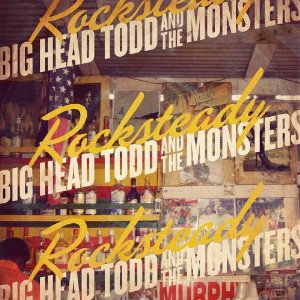


 Scoundrel Days (1986)