Category: Artists (Page 73 of 262)

Lucero: 1372 Overton Park


RIYL: Ryan Bingham, Bruce Springsteen, Soul Asylum

1372 Overton Park is the sixth album from these Memphis blues rockers, but it marks their major label debut. There’s a rootsy blues rock sound at the core, but with a punk influence and soulful horn arrangements from Memphis session player Jim Spake. The band claims no one genre as their own, preferring to mix and match. Guitarist/vocalist Ben Nichols is the star of the show, delivering gritty vocals blending blues with punk and country vibes throughout the album. You rarely hear a punk influence blended with a horn section though, making for a relatively unique vibe.

The tunes are mostly bluesy rockers, accented with those soulful Memphis horns to create a sound that seems like it would go well with adult beverages. “The Devil and Maggie Chascarillo” builds slowly with piano and arpeggiated chords, and some tasty lead guitar that could open up nicely live. “What Are You Willing to Lose” shines with an up-tempo rocker where Nichols truly sounds like a man who is indeed ready to lay it all on the line, as he sings in the song. “Sixes and Sevens” is a high-energy party tune about gambling and carousing, with the horns and lead guitar intertwining nicely, while “Hey Darlin’ Do You Gamble?” brings things down a notch with a heartfelt romantic plea from Nichols to the girl of his affections to gamble on running with him. Overall, the album hits the mark as an homage to the musical heritage of Memphis. (Universal Republic 2009)

Lucero MySpace page

21st Century Breakdown: Jim Washington’s Best Albums of the 2000s

As I compiled my list of the best music of the decade (a much, much longer list than you see here) one inescapable conclusion reared its shaggy head: the last 10 years pretty much belonged to Jack White.

How many other artists produced five stellar albums in the aughts, not to mention a couple of killer side projects and (that old rock critic standby) incendiary live shows?

No one, that’s who.

So, the best album of the decade really came down to which White Stripes album did you like more, White Blood Cells or Elephant.

Thankfully there’s no wrong answer. I first became enamored of “Fell in Love With a Girl,” totally fell for “Dead Leaves and the Dirty Ground,” became quite close to “We Are Going to Be Friends” and spent a lot of time in “Hotel Yorba” and “Little Room.”

On the other hand, Elephant had “Seven Nation Army.”

“Seven Nation Army,” motherfuckers. How could a song released in 2003 sound like it invented the bass line? Not just that bass line, but the whole concept of bass lines.

So as we recap our favorites of the decade, rock lives on into the new century in various forms, from low down and dirty to high and arty to pulsating and poppy, while what was once the cutting-edge hip-hop has devolved into auto-tuned disco synth. No doubt something new will emerge in the next decade to take our minds off it.

1. The White Stripes: White Blood Cells (or Elephant)
2. Wilco: Yankee Hotel Foxtrot
3. Outkast: Stankonia (or Speakerboxx/The Love Below)
4. Green Day: American Idiot
5. The New Pornographers: Electric Version (or maybe Mass Romantic)
6. The Flaming Lips: Yoshimi Battles the Pink Robots
7. LCD SoundsystemL Sounds of Silver
8. TV on the Radio: Return to Cookie Mountain
9. Jay-Z: The Blueprint
10. The Strokes: Is This It?

Just a few of the runner-ups:

Queens of the Stone Age: Songs for the Deaf, Rated R
Belle & Sebastian: Dear Catastrophe Waitress
Drive By Truckers: Southern Rock Opera, Dirty South
Sufjan Stevens: Come On Feel the Illinoise
Arcade Fire: Funeral
Franz Ferdinand: Franz Ferdinand
Decemberists: Picaresque, Crane Wife
Radiohead: In Rainbows
Ben Folds: Rockin’ the Suburbs
Missy Elliott: Miss E…So Addictive
The Roots: Phrenology

OK Go: Of the Blue Colour of the Sky


RIYL: Prince, MGMT, Death Cab for Cutie

They are only releasing their third album, but OK Go has rather shrewdly defined themselves as a multimedia phenomenon rather than a rock band. It’s a genius move, really, because suddenly the standard benchmarks for judging a band’s success are thrown out the window. Did the last album go gold? Who cares? The video they made of themselves dancing on treadmills has racked up over 49 million plays on YouTube. They are, in short, the kind of band that record labels used to kill to have on their roster; their devoted fan base would guarantee that all of the band’s albums would sell reasonably well, and as an added bonus, they allowed their bean-counting overlords to tell people that they believe in the creative process above all else. (Pssst. They don’t.)

©Jeremy & Claire Weiss Photography/Day19.

You get the sense that the band is more than aware of their rather fortunate place in the pop universe, because they just used that freedom to create their most adventurous, and consistent, album to date. Of the Blue Colour of the Sky bears little resemblance to the over-caffeinated power pop that once served as the band’s calling card, trading the muscular grooves of their 2005 album Oh No for something, well, groovier. Prince’s influence is all over the place, from the Parade-ish “WTF?” (complete with a 5/4 time signature and rip-roaring solo) to the slammin’ “White Knuckles,” which is one of the best “1999” covers ever. (Likewise “End Love,” which is this album’s “I Would Die 4 U.”) Singer Damian Kulash gives the falsetto an extensive workout here, which is fitting with the lyrical content; he’s clearly had his heart broken – “Needing/Getting” is the Jilted Lover song of the year – so the falsetto gives good voice to his pain.

If they’re smart, OK Go will consider adding producer Dave Fridmann as an unofficial fifth member, because his influence here cannot be underestimated. The drum tracks sound like the stuff of Steve Lillywhite’s wet dreams circa 1983, and the guitars are crystal-clear. He clearly encouraged the band to think big, because these songs bob and weave in ways the band had never dared to try before; “Needing/Getting” and “Skyscraper” both feature lengthy outros, and the overall sound is positively massive compared to the stripped down Oh No. If there’s a catch, it’s the album’s final third; there is nothing particularly wrong with the songs, but emotional fatigue begins to creep in. And then, in the final moments of closing track “In the Glass,” they clean the slate with one hellacious tribute to “I Want You/She’s So Heavy,” a slow-building, climbing/falling chord sequence that will give Chris and Ben from Death Cab fits. If only Fridmann hadn’t recorded the drums so hot at the end; the music is so pretty, but when turned above a whisper, the drums sound like an avalanche. Pity, since Fridmann had done such a good job avoiding that pitfall up until then.

Of the Blue Colour of the Sky may not bring many new fans to the OK Go camp – outside of a few Prince devotees – but we’re guessing that doesn’t really concern the band much, and that is exactly how it should be; the second a band starts worrying about what other people think of them, they’re done. At this rate, it wouldn’t surprise us to see OK Go turn into the pop equivalent of Wilco. God knows, the world could use more of those. (Capitol 2010)

OK Go MySpace page
Click to buy Of the Blue Colour of the Sky from Amazon

21st Century Breakdown: R. David Smola’s Best Albums of the Decade

The 2000’s weren’t great for breaking new and exciting artists but some established folks sure put out some good material. The Purple one returned to make his best record in a long time and a metal specialist put out a mellower, kinder disc with compelling results. One of the best characters the music business has ever produced created an incredible record about saying goodbye with grace and dignity; he pulled it off with a little help from his friends. In our final final installment of our series on the best of the 2000s, here are the ten best releases from the most recent decade:

1. Warren Zevon: The Wind (2003)
Zevon was a ridiculously clever songwriter and half the time you couldn’t tell if he was making fun of you while you found him clever or not. He was intelligent, witty and knew how to construct a great song. Faced with terminal cancer, he willed himself to complete the album and see it completed (in direct contrast to his doctors’ orders). It was more than a simple swan song; it was a graceful and bittersweet conclusion to his life and underrated career. An all-star cast of cameos (Bruce Springsteen, Dwight Yoakam, Don Henley and Tommy Shaw, to name a few) really enriched the material. “Keep Me in Your Heart” is the sweetest, most haunting ballad ever written and a further demonstration of the class and dignity of the artist.

2. Aimee Mann: Bachelor No. 2 or The Last Remains of the Dodo (2000)
No one quite knows how to tell someone to fuck off as intellectually as she can. The fact that she had to rescue the album from the record company just like Wilco had to rescue Yankee Foxtrot Hotel makes this album even more satisfying. She always comes up with strong material but this record is perfect. Several tracks appeared on the “Magnolia” soundtrack. The rest of the material is sharp, melodic, catchy and full of unmistakable and brilliant Aimee Mann lyrics.

3. Sugarland: Twice the Speed of Life (2004)
A flawless country record with incredible pop crossover appeal. Jennifer Nettles establishes herself as a tremendous front woman and the material is top notch. There isn’t one wasted track. “Baby Girl” is a tremendous tune because the story feels authentic and the ballad “Just Might (Make Me Believe)” is Nettles at her best as she sings the hell out of it.

4. Johnny Cash: American IV – The Man Comes Around (2002)
As Cash is dying, Rick Rubin gets one more gem out of him, including the haunting version of “Hurt” in which Cash clearly steals the song away from Trent Reznor. Guest appearances by Fiona Apple, Don Henley and Nick Cave really enhance this marvelous record of Cash covering other artists and re-interpreting a few of his own. I suppose, off the top of your head, you would figure that Johnny and Nine Inch Nails, or Johnny and Depeche Mode would be silly, but you would be wrong. This is the best of the four American Recording records, but the other three are terrific also.

5. System of a Down: Mezmorize/Hypnotize (2005)
The three previous records indicated how good SOAD could be, but these two records realized all that potential and to this point is the pinnacle of their work. Angry, assaultive, and full of noise and tempo changes, these two records leave you exhausted and your ears begging for both mercy and for more. Serj Tankian and Daron Malakian blend their voices perfectly similarly to the way that Layne Staley and Jerry Cantrell did in Alice in Chains. Serj is clearly the lead, but Daron (like Jerry) adds an intense layer of complementary harmony and occasional leads. Serj’s solo record is very good (Elect the Dead) and Scars on Broadway (Malakian’s band) had some solid moments, but I believe the whole is better than the sum of the parts. The parts have put out some compelling stuff: bring back System of a Down.

6. Cathy Richardson: Delusions of Grandeur(2006)
Now that she is a member of Jefferson Starship and busy touring with her own band, I wonder if she will have time to produce any more records under her name. This is an incredible work of art, from the songwriting to the soulful vocal performance to the album packaging. It is exquisite and her talent is overwhelming. It was my favorite record of 2006 and belongs on this list as one of the best of the decade. Her ability to move seamlessly through genres and sound equally at home and competent is unique. “Overwhelmed” is an absolute gem and a perfect example that Ms. Richardson knows exactly how to use that extraordinary vocal talent. “Ain’t No Home” is flawless laid back soul which much like the rest of the record sharply expresses the pain of loneliness. This is a great record, period.

7. Devin Townsend: Ki (2009)
Talk about a change-up. Townsend has been the songwriter, shredder and lead screamer for Metal monsters Strapping Young Lad, sang lead for Vai (the one album band project for guitar God, Steve Vai) and produced some fascinatingly heavy records under his own name and the Deven Townsend Band. After taking a break from touring and writing to clean up and recharge, Towsned’s first record in a four-record cycle is mellow, engaging, beautiful and melodic. Many of those adjectives shocked Townsend enthusiasts, but the man has depth. Ki is an incredible record which shows that the man can write very interesting introspective stuff and sing, yes, he can sing. Ki adds to the amazing range of a gifted musician. His sense of purpose in following his own muse, not what is expected, is a necessity that the music industry desperately needs.

8. Prince: 3121 (2006)
The little purple fellow finally put out a record that was worthy of his royal name. Yes, he borrows heavily from himself, but he funks the heck out of the album and it is a fabulous addition to his accomplished catalog. Most of his records after Purple Rain featured excellent tracks, but no record is as consistent as this one. He turns up the volume on the bottom end and really lets it fly. It took a long time to get to 3121, but it was well worth the wait.

9. The Mob: The Mob (2005)
There is something exhilarating when a band comes out of nowhere (unfortunately they’re most likely a one-off) and produces a spectacular melodic hard rock record that no one saw coming (and probably no one outside of Europe heard much). This super group made up of shredder Reb Beach (Winger, Dokken, Whitesnake), Dug (yep he changed his name) Pinnick (King’s X) on vocals, keyboardist Timothy Drury and drummer Kelly Keagy (Night Ranger), was produced by Kip Winger. The music is tight, the production is pristine and the songs are memorable. “The Magic” is a great power ballad and the best thing sung by Kelly Keagy (his only lead on the record) since “Sister Christian”.

10. Richard Marx and Matt Scannell: Duo (2008)
I am going to catch hell for this, but the ’80s ballad schlockster and the lead voice and songwriter of Vertical Horizon combine for an absolutely gorgeous recording of nine previous hits and one original. The production on this is clear; every strum on the guitar and vocal harmony is treat for the ear. Their voices blend naturally and the material sounds fresh and revitalized by these simple but elegant arrangements on acoustic guitars and occasional piano.

Honorable mentions certainly can be passed out to the following which just missed out on the top ten:

2000
XTC: Wasp Star: Apple Venus Volume 2
Nik Kershaw: To Be Frank

2002
Maroon 5: Songs About Jane

2003
Switchfoot: The Beautiful Letdown

2004
Incubus: A Crow Left of The Murder,
Green Day: American Idiot
Tears for Fears: Everybody Loves a Happy Ending
Bowling For Soup: A Hangover You Don’t Deserve

2005
Glenn Hughes: Soul Mover

2006
Queensryche: Operation: Mindcrime II

2009
Heaven & Hell: The Devil You Know

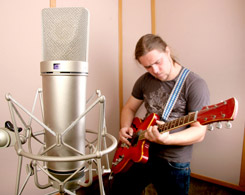
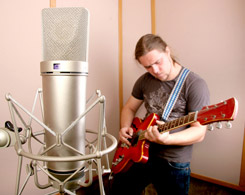
The low cost of recording equipment: good thing, or bad thing?

The other day, I had a random thought: will anyone ever be nostalgic for the ’00s? From my admittedly biased perspective (I didn’t come of age in this decade, so my perspective isn’t as rose-colored as it may be for others), the answer is an emphatic ‘no.’ The political climate was as toxic and divisive as the country has ever known. The music business fell to pieces. Baseball suffered, and is still suffering, its worst scandal. A football player was caught killing dogs. Tweens started dressing like strippers. Sexting. Paris Hilton. Television was as good as it’s ever been, but so what? It’s only television.

Then again, we’re sometimes nostalgic for days gone by not because of what happened in the world, but because of what happened to us. (Again, that whole coming-of-age thing.) Someone will lose their virginity to a Creed song, and have a soft spot for the band for the rest of their lives because of it. That’s how nostalgia works; it can’t be reasoned with, which means that someone will think of these as the best days of their lives. Yikes.

And yet, it would be wrong to say that the ’00s were without their charms. As I said, television was pretty awesome, and that “Umbrella” song will bury every man, woman and child currently living today. As the Bullz-Eye staff assemble their lists for favorite this and that of 2009 and the decade as a whole, I began with something a little more personal: the ten things that had the biggest impact on my life and those around me, both good and bad. Here is one of the bad things.

The low cost of recording equipment

Let me guess: you just said, “You’re arguing against the low cost of recording equipment?” Absolutely. Now that virtually anyone can make their own music, every spoiled, over-privileged teenager now feels that it is their God-given right to do so.

It’s not.

Say what you want about the major label system before downloads brought them to their knees, but there was some quality control taking place when they were the gatekeepers. That filter has since been removed, and now all it takes is a few million fake hits on a MySpace page, a greased palm on this or that music blog (writers are ridiculously easy to bribe; start with booze), and boom, suddenly Johnny Bedroom is a big deal. (In fact, our own Jeff Giles is convinced that the success of Conor Oberst is a practical joke hatched by the editors of Pitchfork gone horribly wrong.) Where bands used to have to gig for years – and thus improve in the process, which benefited all concerned – they can now make waves with little more than sleight of hand.

This isn’t good for anyone. The marketplace was already overcrowded; now it’s ten times worse, making it virtually impossible for a band to maintain a high commercial profile for more than an album or two. As bands have struggled to maintain chart success, listeners’ tastes have become more liquid (which is a nice way of saying ‘fickle’), compounding the problem even more and all but ensuring that only the most mainstream of pop acts ascend to the upper reaches of the Hot 100. New bands now have to literally give their songs away in order to be heard, with little thought given to how that only further devalues their product.

The idea behind cheaper recording equipment is that it will level the playing field. The reality behind it is that the upper class is unaffected – and in fact are getting much, much richer – while the lower class has suddenly tripled in size. (The middle class, ironically, remains the same because it consists mostly of heritage acts who spend more time on the road than in the studio.) And on the off chance that some unknown artist scores national attention thanks to their bedroom pop record, what is the first thing they do with their newfound name recognition? Sign to a major label, of course. Not exactly the act of rebellion that home recording was supposed to inspire.

The bottom line is that music is subject to the same principles of supply and demand as everything else. When supply goes up but demand stays the same, the value drops. (Technically, it’s the price that’s supposed to drop, but we all know that that’s not going to happen.) Releasing an album used to be a big deal; it meant that you had talent – or at the very least, a marketable quality – and someone in a position of power believed in you enough to pay for your studio time. Now, it merely means that you were able to save up a little bit of cash.

To read the entire article, which also includes a handy comment section translation table, click here.

« Older posts Newer posts »