Category: Pop (Page 61 of 216)

Devendra Banhart: What Will We Be


RIYL: Donovan, Marc Bolan, Veviter

Toiling within the ranks of the indie underground, Devendra Banhart has managed to elevate himself into the highest ranks of the so-called “freak folk” hierarchy. His last album, Smokey Rolls Down Thunder Canyon, made a pitch to expand that tag, with Banhart attempting to meld his obtuse approach with the idyllic imagery of the L.A. environs that spawned such ‘60s lynchpins as Neil Young, CSN, the Mamas and the Papas, Joni Mitchell, and various others that made music in those hallowed hills. Likewise, his recruitment by the majors – in this case, Warner Bros. records, home to many of those aforementioned icons – seemed to indicate a concerted effort to break through the barriers.

Indeed, while Banhart’s new label affiliation might seem a concession to commercialism, in truth, the results are every bit as eclectic…and, for that matter, every bit as eccentric…as his earlier efforts. The songs are sung in both English and Spanish, and rather than the clear, coherent melodies identified with the so-called Southern California elite, Banhart still shifts his set-ups – often radically and in the space of a single song. Consequently, “Rats” has a somewhat foreboding start before segueing abruptly into a state of kinetic jubilation. The jazzy inference of “Chin Chin & Muck Muck” morphs several times before the song hits its stride. Likewise, “Angelika” might have succeeded as a soothing serenade had it not accelerated midway through into a sizzling Latin samba.

Still, for all his abrupt turns, Banhart retains a decidedly old school stance. His melodies may seem somewhat amorphous, but his quivering vocals and loping tempos frequently recall the pixie-like warble of Donovan and Marc Bolan. A couple of tracks might bode well for future sing-alongs, specifically “16 & Valencia Roxy Music” and the gentle Spanish serenade called “Brindo.” As an album that’s magnified by ambition and grand designs, What Will We Be may well be his best yet. (Warner Bros. 2009)

Devendra Banhart MySpace page
Click to buy What Will We Be from Amazon
Rickie Lee Jones: Balm In Gilead


RIYL: Joni Mitchell, Carly Simon, Janis Ian

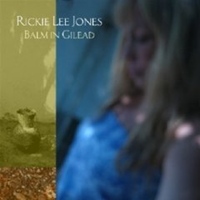
It seems but a blink of the eye when in reality it’s been three decades since Rickie Lee Jones scored her breakthrough hit, “Chuck E.’s In Love,” and subsequently garnered her Grammy for Best New Artist. In the 30 years since, Jones has mostly flown below the radar, at least in terms of her commercial appeal, but her sassy, soulful style continues to leave its imprint and make her a recurring staple. Jones has always seemed most comfortable playing the role of both barfly and ingénue, crooning twilight ballads with a knowing air of cool and sophistication, while also taking sharp turns at practically every juncture.

Its not surprising then that those disarming glances haven’t necessarily helped tug Jones back into the mainstream. So consider it fortunate that her new album, the uniformly pleasing Balm In Gilead, again finds her at the top of her game, vamping with versatility through a surprisingly disparate set of songs. No longer the shadowy chanteuse, she proves here that her pull is still intact. Encompassing songs that were written years, and even decades, before, the album gathers some of the best songs she’s authored in years. While her devotees will find the smoky barroom vibe of “Old Enough,” “The Moon Is Made of Gold” and “Eucalyptus Trail” akin to a reassuring refrain, her country croon on “Remember Me” and ambient drone of the stirring “His Jeweled Floor” show an obvious willingness to expand her parameters into more accessible terrain. Toss in some beguiling ballads – “Bonfire,” “Wild Girl” and “A House on Bayless Street” – and Balm In Gilead becomes a soothing salve indeed. (Fantasy 2009)

Rickie Lee Jones web page
Click to buy Balm in Gilead from Amazon

Sam Shrieve: Bittersweet Lullabies


RIYL: Denison Witmer, Jeff Buckley, Adam Cohen

A chip off the old rock? Well, not exactly, although admittedly Sam Shrieve shares his dad’s penchant for making a mark at an early age. The elder Shrieve was, of course, the frenetic drummer for the first Santana band, the youngest musician to play Woodstock and the piercing on-camera presence that practically stole the show from his colleagues. Young Sam takes a more refined route and while his glamorous good looks are obviously destined for full exploitation, his music is considerably more cerebral than either dad’s tribal tempos or than the typical pinup poser. Consequently, Bittersweet Lullabies proves an apt title for these pleasant soft pop musings, alternately celebratory (“Beautiful,” “”Kiss You,” “I’m Sorry”) and unabashedly sentimental (“Welcome to Your Life,” “”I’ll Be There,” “”Sanctuary”). An aching take on the oft-covered “Hallelujah” actually cuts through the competition and fits perfectly in the mix, as sure a sign of Shrieve’s proficiency as any of his originals. A solid support cast, including veterans Bill Frisell and Lyle Workman, lend additional credibility, but Sam’s the man when it comes to carrying the bulk of the musical weight. Dad must be proud, although wondering where the rhythm went. Nevertheless, this impressive initial outing carries a weight all its own. (Colorburst Soundfield 2009)

Sam Shrieve MySpace page

Timothy B. Schmit: Expando


RIYL: Graham Nash, America, Poco

Despite his indelible imprint on several generations of Southern California soft rockers – from Poco to the Eagles and various side duties along the way in support of his like-minded peers – Timothy B. Schmit has only rarely taken the solo spotlight via a mere handful of individual albums over the expanse of the past 40 years or so. With Expando, Schmit does what he’s always done beast, offering up a set of unassuming, inoffensive mid-tempo pop songs that spotlight his lilting vocals and amiable, good-natured melodies.

Indeed, if the new album reflects a burnished, distinctly ‘70s feel, its for good reason; Graham Nash, Levon Helm, Van Dyke Parks, Jim Keltner and the ever-present Benmont Tench are among the venerable old school stalwarts lending support. Not surprisingly, Schmit’s most impressive offerings are those that find him testing his upper register – specifically, “Ella Jean,” “A Good Day” and “Secular Praise,” a song that finds the Blind Boys of Alabama providing gospel accompaniment. The latter can also be found on the Blind Boys’ new Duets LP, where it also stands out as among the best of that bunch.

In fact, the only time Schmit seems out of his element is when he delves into a hint of blues and funk, respectively – as on lead-off track “One More Mile” and the tongue-in-cheek “White Boy From Sacramento.” Here’s a hint as far as the latter is concerned – the title tells all. (Lost Highway 2009)

Timothy B. Schmit website

Taylor Hollingsworth: Life with a Slow Ear


RIYL: Steve Earle, Conor Oberst, The Jayhawks

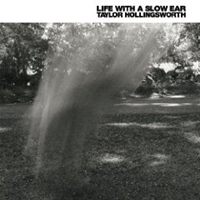
If 2009 were to yield a list of its strangest LPs, I, for one, would nominate the aptly named Life with a Slow Ear for at least an honorable mention. Not that its ragged, homespun ruminations offer anything especially unusual in and of itself; heading up the country and getting back to the roots is a popular path these days, especially for musicians who hunger for a respite from a daily diet of scorching guitars, amplifiers turned up to the max and rhythmic onslaughts that could replicate a small tsunami.

The surprise then isn’t that Taylor Hollingsworth follows suit. A journeyman musician, he spent time in the service of Conor Oberst’s Mystic Valley Band before upping both attitude and amplitude for his initial series of solo outings. However, now that he’s opted to unplug, the thing that separates him from his fellow rustic ramblers is – in a word – his vocals (That’s two words. -Ed.), a high-whining cornhusker of a drawl that suggests a cartoonish attempt at hillbilly authenticity. It undercuts any attempt to take these musings seriously, if for no other reason than it’s such a jolt every time he commands the microphone. While one could concede there’s some synchronicity in his chipmunk chatter and the twangy plunking of “I Didn’t Know It Was the Devil” and “Westfalia,” anytime the mood turns somewhat surreptitious – as in “96 Crayons” and the blustery boogie of “New Orleans Blues” – Hollingsworth actually sounds silly. Attempting to give some weight to “Sin City Blues” – which references both Gram Parsons and Dylan’s “Stuck Inside of Memphis with Those Memphis Blues Again” – Hollingsworth’s voice betrays him, even despite his obvious instrumental dexterity. So while Life with a Slow Ear Is otherwise an admirable effort, it’s a less than critical ear that’s required. (Team Love 2009)

Taylor Hollingsworth MySpace page

« Older posts Newer posts »