Category: Country (Page 5 of 33)

Johnny Cash: American VI: Ain’t No Grave


RIYL: Kris Kristofferson, Waylon Jennings, Willie Nelson

“There ain’t no grave that can hold my body down.” So sings the Man in Black on the opening track of what we are assured is truly the final entry in his series of his Rick Rubin-helmed American Recordings albums. It’s been six years since his death, yet if there’s anyone you could believe would make good on such a lyric, it’s Johnny Cash. In that brief interim between losing his beloved wife, June Carter Cash, and losing his own battle against the health issues which had plagued him for several years, Cash entered the studio and cut the material on both this album and its predecessor (American V: A Hundred Highways), but while the sessions may have given him the opportunity to provide his own musical epitaph, listening to material like “I Don’t Hurt Anymore” and “Can’t Help But Wonder Where I’m Bound” serves first and foremost to reopen the old wound left by Cash’s demise. Only after getting past the sense of loss can one truly begin to appreciate American VI…and trust me when I tell you that it’s liable to take you a few spins to reach that point.

The stomping arrangement of the opening track, “Ain’t No Grave,” is immediately reminiscent of “God’s Gonna Cut You Down,” from American V, but it’s hard to argue with any song which could still give the ailing, mourning Cash the chance to come across as rebellious. From there, it’s into the only contemporary cover on the collection: Sheryl Crow’s “Redemption Day,” which becomes far more ominous and foreboding when being sung by a man who knows his days are numbered. Not that Cash himself was concerned about the inevitable: his take on Kris Kristofferson’s “For the Good Times” shows a man who was aware of how little time he had left on this planet. (“Don’t look so sad / I know it’s over / But life goes on / And this old world / Will keep on turning.”)
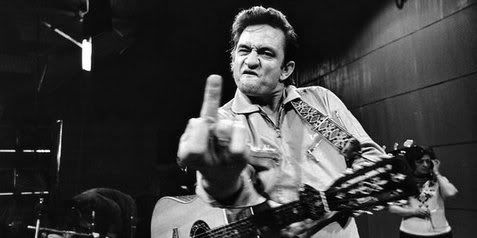
How Johnny Cash greeted the Grim Reaper

At 10 songs and a run time of just under 33 minutes, American VI is a succinct album…but, then, the best epitaphs are. It was a wise decision to save the more maudlin songs from Cash’s final sessions until several years after his death, as releasing them too quickly after his passing would’ve made them seem like a cheap stunt. In its current context, the record at least feels like the farewell that Cash almost certainly intended it to be, and it will no doubt inspire many a toast in his memory, particularly during the surprising yet somehow perfect closer, “Aloha Oe.” Unfortunately, however, it is so thoroughly defined as a farewell that it’s unlikely to earn the same number of repeat spins as the albums which preceded it. – (American Recordings / Lost Highway 2010)

Johnny Cash’s official website
Click to buy American VI: Ain’t No Grave from Amazon

Allison Moorer: Crows


RIYL: Emmylou Harris, Linda Rondstadt, Tift Merritt

Weaving her way through the series of hard-luck stories that illuminate Crows – her much-anticipated follow-up to last year’s critically acclaimed Mockingbird – Allison Moorer cries foul on any number of subjects, among them broken hearts, leaving lovers and all manner of ills in general. Apparently life for Mrs. Steve Earle is no bed of roses, and with song titles like “Just Another Fool,” “The Broken Girl,” “Should I Be Concerned,” “When You Wake Up Feeling Bad” and “Sorrow (Don’t Come Around),” it’s clear she has numerous thoughts that need venting.

Allison_Moorer_03

Then again, Moorer’s music rarely dwells on optimism. Over the course of her eight albums, Moorer’s reflected a worrisome perspective, belabored by ongoing remorse, disappointment and despair, as well as an ache and a yearning that often keeps her focus somewhat removed. Crows essentially offers more of the same, from the troubled rumblings of “Abalone Sky” and the plaintive repose of “Easy in the Summertime” to the acrimonious dismissal of “Sorrow (Don’t Come Around)” and the scorching break-up ballad “Still This Side of Gone.” The mournful sentiments create an air of unrelenting sadness, yet one that still allows the beautiful melodies to shine through. Suffice it to say, those who were smitten by Mockingbird will find Crows a similar bird of a feather. (Ryko 2010)

Allison Moorer MySpace page

Various Artists: Crazy Heart: Original Motion Picture Soundtrack


RIYL: Stephen Bruton, Ryan Bingham, T Bone Burnett

At the turn of the century – just about the time the record industry was experiencing its Wile E. Coyote moment before plunging into its recent sales abyss – Jeff Bridges decided to start a label, Ramp Records, and release a Michael McDonald album alongside Bridges’ own solo debut, Be Here Now. Neither release received much attention at the time, but as vanity-plate recording projects from actors tend to go, Bridges’ wasn’t bad; he had a rumpled, Dude-like charm as a vocalist, and although his songwriting tended toward the ponderous (“Buddha & Christ at Large,” anyone?), the songs communicated the same calculatedly offhand attention to craft as his acting. Point is, Bridges’ critically acclaimed turn as the booze-soaked songwriter at the center of “Crazy Heart” isn’t wholly revelatory – and Be Here Now might have stood a better chance at being a hit if he’d surrounded his songs with stellar, downbeat performances from artists like Buck Owens, Sam Phillips, and the Louvett Brothers.

And okay, so Bridges didn’t have much of a hand in writing “Crazy Heart’s” original songs, but he does steal the spotlight on the soundtrack – no mean feat when you’re sharing the stage with the aforementioned artists, as well as young Americana lion Ryan Bingham, who’s already won a Golden Globe for one of his contributions, “The Weary Kind.” There really aren’t any bad songs here, but it’s Bridges’ performances that’ll draw you in the most – when he sings “funny how fallin’ feels like flyin’ for a little while,” sounding for all the world like a more tuneful John Hiatt, you’ll flash back to every heartbreak you’ve ever suffered and every shitty bar you’ve ever been sorry you sat down in. If you’ve seen the movie, you’ll want to own this, without question – but even if you haven’t, it’s the best cross-industry soundtrack we’ve seen since John Mellencamp starred in Falling from Grace in 1992. Pour yourself a strong one, sprinkle some sawdust on the floor, and get carried away. (New West 2010)

Crazy Heart MySpace page

Jimmy Wayne: Sara Smile


RIYL: Restless Heart, Dierks Bentley, Billy Currington

Jimmy Wayne became a country music star so fast in 2008 when the title track to his Valory Music debut, Do You Believe Me Now? rocketed to #1 on the Billboard country music chart, Wayne and his label did not want to waste any time before issuing the follow-up. Fast forward to November 2009, only 15 months later, and Wayne returned with Sara Smile. The title track, as you have likely already gathered, is a cover of the Hall & Oates hit from 1976 that ultimately reached #4 on the Billboard Hot 100, and has been a staple on soft rock radio for decades. And really, if you consider how much success the country music genre has had “borrowing” songs from the pop/rock world, releasing a track that already was a hit is a good strategy when trying to follow up on what was basically overnight success. The problem, though, is that “Sara Smile” is easily the best track on Wayne’s sophomore release, and it’s made better by the fact that Daryl Hall and John Oates sing backing vocals on Wayne’s version. The rest of the songs, while mostly catchy and serviceable, and having been written by the likes of Keith Urban as well as Nashville powerhouse songwriters like Hillary Lindsey and Rivers Rutherford, are pretty good, but not great. Along with the title track, the best of the rest are the upbeat opener, “Things I Believe,” written by Urban and John Shanks; and the sugary power ballad “Counting the Days.” And lest we fail to mention, Wayne is surely one of the better male vocalists in Nashville today, and he has the supporting cast for staying power. (Valory Music 2009)

Jimmy Wayne MySpace Page

Lucero: 1372 Overton Park


RIYL: Ryan Bingham, Bruce Springsteen, Soul Asylum

1372 Overton Park is the sixth album from these Memphis blues rockers, but it marks their major label debut. There’s a rootsy blues rock sound at the core, but with a punk influence and soulful horn arrangements from Memphis session player Jim Spake. The band claims no one genre as their own, preferring to mix and match. Guitarist/vocalist Ben Nichols is the star of the show, delivering gritty vocals blending blues with punk and country vibes throughout the album. You rarely hear a punk influence blended with a horn section though, making for a relatively unique vibe.

The tunes are mostly bluesy rockers, accented with those soulful Memphis horns to create a sound that seems like it would go well with adult beverages. “The Devil and Maggie Chascarillo” builds slowly with piano and arpeggiated chords, and some tasty lead guitar that could open up nicely live. “What Are You Willing to Lose” shines with an up-tempo rocker where Nichols truly sounds like a man who is indeed ready to lay it all on the line, as he sings in the song. “Sixes and Sevens” is a high-energy party tune about gambling and carousing, with the horns and lead guitar intertwining nicely, while “Hey Darlin’ Do You Gamble?” brings things down a notch with a heartfelt romantic plea from Nichols to the girl of his affections to gamble on running with him. Overall, the album hits the mark as an homage to the musical heritage of Memphis. (Universal Republic 2009)

Lucero MySpace page

« Older posts Newer posts »