Category: Progressive (Page 5 of 7)

21st Century Breakdown: Jim Washington’s Best Albums of the 2000s

As I compiled my list of the best music of the decade (a much, much longer list than you see here) one inescapable conclusion reared its shaggy head: the last 10 years pretty much belonged to Jack White.

How many other artists produced five stellar albums in the aughts, not to mention a couple of killer side projects and (that old rock critic standby) incendiary live shows?

No one, that’s who.

So, the best album of the decade really came down to which White Stripes album did you like more, White Blood Cells or Elephant.

Thankfully there’s no wrong answer. I first became enamored of “Fell in Love With a Girl,” totally fell for “Dead Leaves and the Dirty Ground,” became quite close to “We Are Going to Be Friends” and spent a lot of time in “Hotel Yorba” and “Little Room.”

On the other hand, Elephant had “Seven Nation Army.”

“Seven Nation Army,” motherfuckers. How could a song released in 2003 sound like it invented the bass line? Not just that bass line, but the whole concept of bass lines.

So as we recap our favorites of the decade, rock lives on into the new century in various forms, from low down and dirty to high and arty to pulsating and poppy, while what was once the cutting-edge hip-hop has devolved into auto-tuned disco synth. No doubt something new will emerge in the next decade to take our minds off it.

1. The White Stripes: White Blood Cells (or Elephant)
2. Wilco: Yankee Hotel Foxtrot
3. Outkast: Stankonia (or Speakerboxx/The Love Below)
4. Green Day: American Idiot
5. The New Pornographers: Electric Version (or maybe Mass Romantic)
6. The Flaming Lips: Yoshimi Battles the Pink Robots
7. LCD SoundsystemL Sounds of Silver
8. TV on the Radio: Return to Cookie Mountain
9. Jay-Z: The Blueprint
10. The Strokes: Is This It?

Just a few of the runner-ups:

Queens of the Stone Age: Songs for the Deaf, Rated R
Belle & Sebastian: Dear Catastrophe Waitress
Drive By Truckers: Southern Rock Opera, Dirty South
Sufjan Stevens: Come On Feel the Illinoise
Arcade Fire: Funeral
Franz Ferdinand: Franz Ferdinand
Decemberists: Picaresque, Crane Wife
Radiohead: In Rainbows
Ben Folds: Rockin’ the Suburbs
Missy Elliott: Miss E…So Addictive
The Roots: Phrenology

21st Century Breakdown: David Medsker’s Top 10 Albums from the 2000s That You Never Heard

A problem, sadly, that tended to happen far too often this decade.

I’m not going to write some lengthy intro for this; if you’re reading our continuing coverage of the decade that was – and thank you very much if you are – then you know that despite music’s increased exposure thanks to the interwebs, it also became damn hard to either find a good band or vault them to the next level. Several of the bands in the list below actually had both good buzz and record company support behind them, and still failed. Such was the ’00s: as the Icehouse song goes, no promises.

Here are ten of my favorite albums that no one bought, or at least, didn’t buy enough of.

Sugarbomb: Bully (2001)
A small but devoted cult has built around this completely insane group of Ft. Worth power pop aficionados. Legend has it they dressed like women and kissed onstage while rocking the ever-loving shit out of their audience. This was their only major label release, and because of the sudden belt-tightening the nation suffered upon its release – it came out September 25, 2001, ow – the band was dropped shortly afterwards. Pity, because these guys could play. And they could sing better than they could play. And man, could they do a, um, killer Queen impression. Think Muse sounds a lot like Queen? Listen to “After All,” the closing track on Bully.

The main songwriters in the band, Les Farrington and Daniel Harville, seemed so distraught over the collapse of the band that they never really gave it another shot, at least in terms of playing to their strengths. Last I heard, Harville was slumming in some Shiny Toy Guns-type band that’s far beneath his abilities, whlie Farrington has pulled an Andy Sturmer – a fitting analogy, since Farrington’s a big fan of Sturmer and his band Jellyfish – keeping virtually no profile on the web. Again, pity. All concerned deserved better.

Midnight Juggernauts: Dystopia (2008)
Odds are, if a band signs to Astralwerks, I’m going to like them. but even I was unprepared for how totally fucking awesome the Midnight Juggernauts’ debut album Dystopia is. They’re an Australian trio that melds Daft Punk beats to late ’80s modern rock stylings, with perhaps a dash of Air-style ambience. And best of all, they’re an actual band, playing these songs on real guitars, keys and drums. Anyone who listens to Peter Murphy, David Bowie and Daft Punk should own this at once.

The Lolas: Silver Dollar Sunday (2001)
Poor Tim Boykin. He’s sickeningly talented, a guitar virtuoso and a wizard at stacking harmonies like a Jenga block, but his power pop band the Lolas never quite got off the ground. It could have been a matter of timing; the band sputtered to a halt shortly after MySpace took off, and according to the band’s MySpace page, they haven’t checked it since May 2006 – but even if he had kept waving the power pop flag, the odds of a band like the Lolas making the jump is unlikely, especially if they’re based in Birmingham. The Alabama Birmingham, not the UK Birmingham. For those who scoured NotLame’s release sheets in the early ’00s like a meth addict looking for another fix, though, the Lolas’ sophomore effort Silver Dollar Sunday was, pardon the pun, a hell of a score. They wiped the floor with Oasis on “Long Time,” and turned in the best Stone Roses impression ever on “Wild Blood.” If the YouTube vids are any indication, Boykin is now a long-haired guitar instructor in his hometown of Birmingham. I urge everyone within 200 miles of his house to sign up for lessons.

Delays: Faded Seaside Glamour (2004)
Their influences are apparent – The Hollies, Cocteau Twins, the La’s – but there isn’t a band alive quite like Delays. Their debut single “Nearer Than Heaven” is a flat-out skyscraper, and Greg Gilbert’s androngynous tenor/falsetto combo is as unique a voice as you’ll find in music today. This was one of those records that just made me dance around the house in a ‘hey it’s all going to work out’ kind of way. And in 2004, that was a stark contrast to the other dark, melancholy shit we were being subjected to. This album makes me glad to be alive. That’s as nice a compliment as one can pay, if you ask me.

Rialto: Night on Earth (2001)
They may have been late to the Brit Pop party (and extremely late at that, dropping their debut in 1998), but Rialto singer and chief songwriter Louis Eliot has a way with a tune – ask the people in South Korea, they loooooove Rialto – and in many ways the band improves upon their eponymous debut with Night on Earth. They had two drummers first time around, but are down to one drummer and the occasional machine on this one, and in the case of a melodramatic song like “London Crawling” it fits like a glove. “Idiot Twin” is one of the best songs Depeche Mode never wrote, and “Shatterproof” will make any fan of OMD’s “If You Leave” squeal with delight. Of course, I bought the import, convinced that it would never see the light of day in the States. Sure enough, two months later, Eagle Rock releases it, with bonus tracks to boot. So I bought it again, and gave the import to a friend.

Gene: Libertine (2001)
As much of a Britpop fan as I was during the mid-’90s – seriously, what the hell else was I going to listen to, Hootie and Alanis? – Gene never grabbed me the way I expected those endless Smiths comparisons to. I loved “Fighting Fit” from Drawn to the Deep End, but scarcely listened to anything else from that album. When their 2001 album Libertine came up for grabs during my tenure with PopMatters, I thought, ‘What the hell,’ and ended up thinking, ‘Hell, yes.’ More mature, more patient, and eager to explore different textures, Gene basically laid the groundwork between Coldplay’s Parachutes and A Rush of Blood to the Head. You’re welcome, Chris Martin.

Paul Melancon: Camera Obscura (2002)
When this album was released, I had daydreams about hooking up Atlanta pop genius Paul Melancon with Jon Brion. It made perfect sense to me; they both love classic pop melody, fractured fairy tales, and the Beatles. It’s a match made in heaven, and Brion will make him a star. Ah, but being signed to an Indigo Girl’s record label apparently only had so much pull, and the album didn’t quite jump into the general consciousness the way I hoped it would. Damn. Didn’t they hear his love letter to ELO mastermind Jeff Lynne, cryptically titled “Jeff Lynne”? Even better is the album’s final track “Fine,” which sports one of those great wordless choruses. Oh, and it ends with arson, like all love stories should.

Click to hear Paul Melancon’s “King Sham”

Republic Tigers: Keep Color (2008)
The Republic Tigers are like the American version of the Feeling – they are simply not from their time. Listen to those melodies (the A-ha tribute “Buildings and Mountains”), the patience they take with the arrangements (“Golden Sand”). Ideally, someone will hear this album and think that that is how songs should be written. But after the whole Paul Melancon thing, I’m not holding out hope. For what it’s worth, guys, the people who grew up in the ’80s think you guys are peachy keen.

Click to hear the Republic Tigers’ “Fight Song”

Kenna: New Sacred Cow (2003)
This was going to be included in our piece on the best albums you never heard, but we based the inclusion of the albums on which artists were willing to answer a few simple questions, and Kenna forwarded us to his publicist…who couldn’t be bothered to respond. Ironically, Kenna called me shortly before his second album came out, even though I told the label that we needed to reschedule the interview. As it turned out, the interview was never rescheduled, and to borrow a phrase from Led Zeppelin, it makes me wonder. Here’s me, an avowed fan of the man – one of the best concerts I ever attended was a Kenna show at Schuba’s in Chicago. The show started at 6:00, and drinks were on the house, woot! – and the label can’t coordinate an interview. I suppose it’s fitting, since labels just have no idea what to do with an artist like him. He’s black, but his music knows no color. You’d think that the fact that his high school buddies, who are now known as the Neptunes, produced the record would be enough. Not so. Oh well. I love this album, and this album also produced one of the most original videos of the year.

Swag: Catch-All (2001)
When we asked Swag singer Doug Powell about Catch All, his stint with one-shot super group Swag, he dismissed it as pedestrian pop, and seemed surprised that anyone would love it. I get where he’s coming from, since the album doesn’t exactly rewrite the rules of pop, but it sports some damn good tributes to the Zombies (“Please Don’t Tell”), Elvis Costello (“Eight”), and the Byrds (“Lone,” “Louise”). And what’s wrong with that? Not a damn thing, if you axe me.

21st Century Breakdown: James B. Eldred’s Top 10 Albums of the Decade

Oy, this decade was a mess. The ’90s were easy. Rock had grunge, hip-hop had gangsta rap and a genre-defining electronic album seemed to come out every week thanks to artists like Aphex Twin, the Prodigy and the Orb (just to name a few). There was no Zeitgeist-turning moment in music this decade, no Next Big Thing. Instead, we saw mainstream rock dissolve into a post-grunge funk from which it might never recover, while pop music infiltrated rap music in insulting and embarrassing ways (thanks, Auto-Tune). Meanwhile, both the punk rock kids and hippies discovered electronic music, giving Pitchfork whole new genres of music to build up and tear down.

We’re more fragmented then ever – case in point: of all the albums selected by the writers who’ve contributed to our End of Decade series, only one album has been selected twice – which means that there’s something out there for anyone, but nothing for everyone. It sucks if you like the idea of a rock band being bigger than Jesus, especially if you don’t want that band to be U2. But if you like the idea that at any given moment there’s probably an album being released that will appeal to just you a few thousand other people, then this is a great time to be alive. However, that also means the chances of finding something truly “original” are next to nil. We’re getting to a point where it feels like everything has been done, and everyone is just paying homage, making pastiche or ripping off something that came before.

That being said, there were still a few original albums to make their way to my ears this decade, and almost all of them ended up being my favorites. So while you say this is my “best of” list for the decade, you could also call it my “most original” list as well.

1. Fucked Up: Chemistry of Common Life
Canadian indie rock seemed to be the scene of the ’00s, and while it gave us some good music, most of it bored me. It was just so damn pleasant. And Fucked Up is a lot of things, but pleasant isn’t one of them. In fact, almost everything about them, from their R-rated name to the abrasive vocals of their lead singer (who goes by the name Pink Eyes) almost dares you not to like them. I sure as hell didn’t at first; it seemed like they were trying too hard to be “outrageous.” But when they give you a song as brilliant as “Son the Father” with its goosebump-inducing riff and the best lyric of the decade (“It’s hard enough being born in the first place / Who would ever wanna be born again?”), it’s impossible not to take notice. This is hardcore punk’s Dark Side of the Moon and will probably be just as influential in the years to come.

2. Arcade Fire: Funeral
Okay, so not all of the indie-rock from Canada bored me. I didn’t want to like Arcade Fire, I didn’t want to fall for their melancholy lyrics and haunting melodies, and I didn’t want to be put under enchantment by the haunting closing track “In The Backseat.” It just kind of happened that way. Damn Canadians and their near-perfect records.

3. Hell: Teufelswerk
An as-yet-unheard masterpiece, although there is some hope still since it only came out this year. Teufelswerk picks up where The Orb’s Adventures into the Underworld left off, taking the listener on a journey across two discs that include ambient, house, electro and just about everything else in between. Not made entirely for the dance floor, it’s the kind of electronic album that should have mainstream appeal, even with its 13-minute tracks and bizarre guest appearance roster of Bryan Ferry and Diddy. If you consider yourself a fan of electronic music and you don’t have this album, you’re doing it wrong.

4. At the Drive-In: Relationship of Command
It came out in 2000, and nearly 10 years later there’s still nothing that sounds remotely like it. It’s usually pegged as an emo record, (the first time I heard the word “emo” was in regards to this record) but modern emo has little in common with this masterpiece of tempo changes, passionate vocals and adrenaline-fueled insanity. Too bad the band couldn’t survive much past the album’s release, and the two offshoots they formed after the break-up, the Mars Volta and Sparta, have come close to even matching this record in the years that have followed. Of course, almost no one else has, either.

5. Marnie Stern: This Is It And I Am It…
“This chick is kinda nuts,” said my editor when he pitched this CD to me. I’m naturally attracted to insane women, so that’s partially why I took a shine to Stern so quickly, but it mostly had to do with the fact that I’ve heard nothing like her before. She’s some heavenly combination of Van Halen and Sleater-Kinney, taking guitar virtuosity and mixing it with riot grrl passion to create an entirely one-of-a-kind sound in the process. She’s her own beast, creating her own genre which should just be called “holy shit music,” because that’s all I can think to myself when I hear her.

6. Deltron 3030: Deltron 3030
Indie hip-hop may be easy to find now, but in 2000 there was no scene for that, at least there wasn’t in my consciousness. I still don’t remember how I found this record, which is a crazy concept album about an intergalactic rap battle in the year 3030, but I remember being pleasantly surprised when a year later everyone involved on it (Del Tha Funkee Homosapien, DJ Kid Koala, Dan the Automator and Damon Albarn) went on to form Gorillaz. But this album is still better than anything those animated monkeys put out. It isn’t only the best hip-hop album of the decade, but the most original as well.

7. Mastodon: Leviathan
Prog-rock and heavy metal, two great tastes that taste great together, especially when used to create a concept album based on “Moby Dick.” Mastodon’s early albums showed promise, but this seafaring epic really sealed the deal and heralded their arrival as “the” metal band in 2004. It was also the first album to show me that popular metal was finally getting past that nu-metal BS that nearly ruined the genre at the turn of the millennium. There needs to be more metal based on classic American novels. I’m waiting for a metal interpretation of “The Age of Innocence.”

8. Yeah Yeah Yeahs: It’s Blitz!
The biggest 180 of the decade. Sounding nothing like their previous records, the Yeah Yeah Yeahs didn’t go dance-punk for their third LP, they went full-on dance – like a rocking version of Kylie Minogue. You’re not going to hear a better dance track this year than “Zero,” unless you count all the other up-tempo numbers on this flawless record.

9. Yeah Yeah Yeahs: Fever to Tell
Oh yeah, and their first album wasn’t half bad, either.

10. The Strokes: Is This It?
The poster band and the poster album for the for the poster genre (post-punk revival) that was supposed to become the Next Big Thing. And while that didn’t really happen, we still got some really good records out of it, this one still being the best. And even if you didn’t like it, you have to admit that it probably got a bunch of kids listening to the Stooges for the first time. And the UK version (see photo) had the best album cover of the decade as well.

21st Century Breakdown: David Medsker’s Top 10 Albums of the Decade

There has been much speculation about the real reason for the dramatic decline in record sales. I am here to give you the answer.

It’s my fault.

The first rumblings that all was not well in Musicland began right as my wife and I were planning our big move from Chicago (Rock Records, R.I.P.) to Columbus. I was traveling a lot, either to Ohio to look for houses or for the last few media boondoggles that my wife was invited to. (The trip to Orlando to meet the Atlanta Braves and take BP in the batting cages was the best.) Then I took a consulting gig, flying to Baltimore and back every week. Long story short, this cut greatly into my record shopping time.

In the spring, after we had settled into a house, I walked away from the world of finance and took the Bullz-Eye job. Pretty soon, I didn’t have to buy anything anymore. I was awash in a sea of free music. My first act as senior editor was to bring in Will Harris, one of only two people I knew who bought more music than I did. So then he stopped buying music, too.

And that, my friends, is when the shit hit the proverbial fan. My bad.

All kidding aside, I’m having a hard time trying to put the decade in music into words. The ’90s were so easy by comparison. There was 1990, one of the worst years for music EVER. (Hammer, Vanilla Ice, Wilson Phillips. End of story.) Then there was grunge, and then industrial (or, if you were an Anglophile like me, this is when you got into Brit pop), and then ska (or Big Beat), and then teen pop. It was pretty easy, really.

The ’00s, by comparison, were a complete clustercuss of styles. Punk pop and nu metal ruled the early years. The pop landscape turned into a hip hop free-for-all (and still is to this day). Modern rock suffered a bit of an identity crisis, as stations had to decide between the Evanescence/Linkin Park branch of the tree and the Franz Ferdinand/Yeah Yeah Yeahs branch. Classic rock artists were renamed “heritage” acts – a word that got one hell of a response from Lindsey Buckingham when the aforementioned Will Harris interviewed him – and pop songwriting became as faceless and boring as it has ever been. I personally blame Rob Thomas for that last one.

MySpace was huge in getting music into people’s hands and promoting up and coming talent. And almost as quickly, people devised ways to register fake hits on their site in order to make them seem more popular than they really were. Recording equipment got really cheap, and believe it or not, that actually made things worse; suddenly everyone was an artist, and the already crowded market was now three times more crowded. Band names, meanwhile, went to complete and utter shit.

And somehow, some way, after sorting through the wreckage – which led me to completely give up on popular music made by anyone not named Madonna – I found some damn fine albums. Some were by old friends, others from newcomers. Most of them, as is my tendency, were British. Here are my ten favorite albums of the decade, the second in our series of our writers’ recaps of the wacky aughts. Let’s hear your faves of the year in the comment section.

10. The Feeling: Twelve Stops and Home
Never in a million years did I think a group like this would appear after the power pop bubble burst in 1997, never mind sell millions of records (in England, anyway). “Sewn” and “Never Be Lonely” are the finest songs Supertramp never wrote. And just when you least expect it, they will completely rock out. Will wrote me before the album even came out in the States and simply said, “You need to hear this right now.” Man, how right he was.

9. The Silver Seas: High Society
Props to staff writer Mike Farley for hipping me to these guys. Many artists received accolades for their AM radio-inspired pop, but for my money, no one did it better than the Silver Seas. I’d bet dollars to donuts that Brian Wilson is trying to buy the rights to “Miss November” right now, the song is such a dead ringer for his glory days with the Beach Boys. The only bad thing I can say about them is that one of our writers did some graphic work for the band, and was never paid for it. It’s never too late to make amends, guys.

8. Attic Lights: Friday Night Lights
The tale of how I found this band is pure serendipity. I wrote a piece about Teenage Fanclub, and I get an email from a UK publicist, who says, “Hey, if you like Teenage Fanclub, check out this band that’s managed by TFC member Francis MacDonald.” Every publicist compares their client to a band that they couldn’t hope of duplicating on their best day, so I was understandably skeptical. Watched their video “Wendy,” couldn’t get the song (or video) out of my head. He sent me the record. And here it is. Gorgeous guitar pop, with a healthy dose of alt.country when the guitarist sings lead. It’s a travesty that this album didn’t sell better.
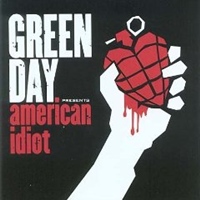
7. Green Day: American Idiot
Quite possibly the last Event Record. This album sent shockwaves through the industry, outselling all of the bands other albums at a time when punk pop was considered passe and, considering the lackluster performance of the band’s previous album, 2000’s Warning (which I quite like, for the record), Green Day was very much in a make-or-break scenario. They made, and then they broke. Two monster song suites, a song that Cheap Trick would kill for, and that title track, a surefire candidate for Single of the Decade.

6. Kirsty MacColl: Tropical Brainstorm
I still get misty thinking about the fact that Kirsty’s gone (killed in a boating accident in 2000, right in front of her children), and right after she made one of her best albums. This blend of bone-dry British wit and Cuban rhythms is irresistibly good, not to mention funny. Who else would sing about stalking one of her fans, or having online chats with a guy that works in a porno shop? I still put the one-two punch of “Alegria” and “Us Amazonians” on mix discs to this day.

5. Kaiser Chiefs: Employment
Man, would I like to have a do-over on this review. This fast became one of the most-played albums around the house, and their live performances at Lollapalooza in 2005 and 2009, well, ask anyone lucky enough to have seen them, and they will tell you that they were awesome with a zillion exclamation points. It is not a coincidence that they are my two-year-old son’s favorite band. “This is ‘I Predict a Riot’!” Damn right it is.

4. Muse: Black Holes and Revelations
It would have been very easy for Muse to play it safe on this album, after achieving some breakthrough success with 2003’s Absolution. Instead, they let it all hang out, ramping up the rock choruses – “No one’s gonna taaaaaaake meeeeee aliiiiiiiiive!” – and dabbling in electronic stylings, funk, and Pink Floyd-esque grandeur. This is a hard album to top, and those of you who bought their 2009 album The Resistance know exactly what I mean.

3. Daft Punk: Discovery
I remember seeing the five-star review for this in Q Magazine and thinking, “They’re nuts.” Sure, “Da Funk” was a badass track, but were they really capable of making a five-star album? Hell yes, they were. It served as both a flawless dance album and a great pop record at the same time, and even included prog-esque keytar elements. My single biggest regret of the decade was deciding to go home early the first night of Lolla in 2007 when Daft Punk were the headliners, and missing what people would later tell me was the single greatest live performance they’ve ever seen in their lives.

2. Jon Brion: Meaningless
Despite the fact that he’s scored a dozen major motion pictures and produced a dozen major label artists (Aimee Mann, Rufus Wainwright, Fiona Apple, Keane, even the Crystal Method), Jon Brion remains one of the best kept secrets in music. This is all sorts of wrong. Dude’s a pop genius, and this album, which was supposed to be released by Atlantic in 1997 but never saw the light of day until Brion released it himself in 2001, is the proof. The drum track to “I Believe She’s Lying,” recorded at half speed like the piano solo to “In My Life,” is brilliantly low-tech studio wizardry, while “Ruin My Day” explained my feelings for an ex-girlfriend better than I could explain them myself. Jon, you’re welcome to record a follow-up album any time now.

1. New Pornographers: Twin Cinema
It doesn’t hurt that they have one of those singers that can make the phone book sound like the sweetest, sexiest thing ever said. (Neko Case, *swoon*) But what separates Twin Cinema from the rest of the New Pornographers’ outstanding body of work is both its incredible depth of style – Zulu chants, surf drums, wordless choruses, songs modeled after Charles Manson tunes – and the quality of each and every song. Fans of the band are not unlike “Twilight” followers; odds are, you’re in Team Carl or Team Dan. Twin Cinema was the one album where Carl Newman and Dan Bejar met in the middle, and in the process created their most focused, consistent album to date.

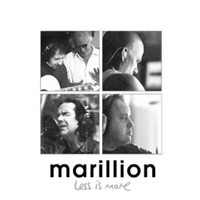
Marillion: Less Is More


RIYL: U2, Simple Minds, Radiohead

It seems a somewhat formidable task to encapsulate two decades of music within the span of a dozen tracks, but Marillion’s latest makes the case that it’s at least worth trying. Summing up the group’s progress following the transition from original singer Fish to current front man Steve Hogarth at the end of the ‘80s, this modest anthology holds together remarkably well, each song segueing seamlessly into the next with scarcely any change in tone or tempo. One can only surmise that that the band is either a stickler for consistency or simply at a loss for new ideas; either way, their sprawling, unhurried sound is as spare as the album title suggests. Songs begin with little more than a few notes on a keyboard or the simple strum of an acoustic guitar before acceding to an underlying, unresolved tension that ripples just below the surface. When the material soars, as with the slightly more emphatic “Hard As Love” or via the bebop rhythms of “If My Heart Were a Ball,” Marillion manage to emulate the plaintive tomes of U2 and Simple Minds. However, aside from the “hidden track” “Cannibal Surf Babe” and a moving cover of Radiohead’s “Fake Plastic Trees” – one of two live bonus tunes – the melodies are somewhat diffuse, showing only a lackluster attempt at capturing a more emphatic sound.

Ironically, when Fish sang with the band during their formative years, Marillion was far more dynamic, though they were constrained by the notion they were simply a poor man’s Genesis. Less Is More suggests the Fish connection is still there, but it’s more like the kind that seeks a hook to hang on. (Eagle Records 2009)

Marillion website

« Older posts Newer posts »