Category: Pop (Page 19 of 216)

Crowded House: The Very Very Best of Crowded House


RIYL: The Beatles, The Everly Brothers, Squeeze

Picking songs for a Crowded House compilation is a fool’s errand. The British press was only slightly kidding when they said that Neil Finn pisses genius; the first three albums he made as Crowded House after dissolving his brother Tim’s band Split Enz in 1984 (Tim had left the band earlier that year) are about as perfect as pop records get, and the band’s fourth album, 1994’s Together Alone, is pretty damned good, too. This compilation, the second attempt to condense the band’s best work to a single disc, has an even harder task in that it includes tracks from the band’s fifth album, 2007’s Time on Earth. Five good to great albums, sliced and diced to one disc, and it’s supposed to be the very, very best of the band.

Nope.

Still, The Very Very Best of Crowded House is no misfire either, since it would have been filled with beautiful, haunting melodies and Finn’s trademark lyrical paranoia regardless of which songs had made the cut and which ones had been forsaken. But at this stage in the game, this is a two-disc affair no matter how you slice it, and as luck would have it, Capitol has released a two-disc version of this set as well. For newbies, that is the way to go, as the single-disc version of this set is simply missing too many great – and nearly all of the upbeat – moments. The band’s first two albums are reduced to a mere four songs, only one of which came from the criminally underrated Temple of Low Men (1988). Together Alone and 1991’s Woodface, meanwhile, account for over half of the songs here. Perhaps they chose to favor the later material of the Capitol years in order to keep the set more in step with the band’s recent work, but doing so makes for the most dour collection of the Capitol years that one could assemble.

The Very Very Best of Crowded House is a four-star collection of a five-star catalog. Go for the two-disc set instead; it costs more, but with the addition of “Hole in the River,” “World Where You Live,” “Now We’re Getting Somewhere,” “Into Temptation,” “Whispers and Moans” and “I Feel Possessed,” that set opens doors to the band’s work that the single-disc set doesn’t even acknowledge. This is good, but more – and more balance – would have been better. (Capitol 2010)

Crowded House MySpace page
Click to buy The Very Very Best of Crowded House from Amazon
Click to buy The Very Very Best of Crowded House (Two-Disc set) from Amazon

Steal This Song: Destroyer, “Chinatown”

For the last five years, there has never been any question that when it came to the songwriting powers that be behind the New Pornographers, I am a Carl Newman guy. It’s not that I disliked Dan Bejar’s stuff – “Jackie, Dressed in Cobras” is still my fave – but his songs never scaled the dizzy heights of pure pop tunes like “Sing Me Spanish Techno,” “The Bleeding Heart Show,” “Stacked Crooked” and “These Are the Fables.”

You’ll notice that I only listed songs from the New Pornographers’ 2005 album Twin Cinema. That’s because I’ve been largely underwhelmed by the band’s work since then. And it appears that Bejar is ready to take advantage of my wavering loyalties.

Armed with yet another album under his day job Destroyer (his tenth in 15 years), the band’s new album Kaputt, set for release in January, might surprise some people. Bejar forsakes his usual disjointed pop for something more casual, like he’s been listening to a lot of ’80s-era Bryan Ferry (which he cops to in the press release), and perhaps even Al Stewart. It seems an odd match on paper, but his voice is actually well suited for the genre, and the tunes he came up with are gorgeous. We’ve been given permission to share the album’s opening track, “Chinatown,” and it’s a must for anyone who digs the Blue Nile, China Crisis, and their ilk. Dig in.

Destroyer – Chinatown

Syd Barrett: An Introduction to Syd Barrett


RIYL: early Pink Floyd, Robyn Hitchcock, The Flaming Lips

Fans of Pink Floyd’s original frontman, the late Syd Barrett, will no doubt look at this latest collection of some of the man’s greatest musical moments and wonder why on earth they should be expected to fork out several more dollars for songs that they already possess in their collections. Indeed, a cursory glance at the track listing would lead one to believe that the only possible merits to purchasing An Introduction to Syd Barrett are these: it’s the first time that there’s been a Barrett collection which also included highlights of his work with the Floyd, and there are a handful of tracks…five, if we’re to be precise: “Matilda Mother,” “Here I Go,” “Octopus,” “She Took A Long Cool Look” (note the title change, as the look in question used to be cold), and “Dominoes”…which bear parenthetical assurances that they have been either freshly mixed or newly remixed in the year of our lord 2010. Is this really enough to make An Introduction worth your while, let alone your money? Before you make that decision, it’s worth considering that the purchase of the CD, whether in digital or physical form, also grants you the opportunity to download “Rhamadan,” a heretofore-unreleased instrumental from the Barrett vaults.

That’s got you, hasn’t it? And don’t think EMI doesn’t know it.

It might also up the credibility of this collection to know that the mixing and remixing has been done at the hand of one D. Gilmour, with assistance from Damon Iddins and Andy Jackson. Gilmour also added a bit of bass of “Here I Go,” despite the fact that the song had successfully remained bass-free for 41 years, but given that he and Roger Waters probably had as much (if not more) to do with The Madcap Laughs getting finished as Barrett himself, it’s hard to begrudge him the opportunity to fix something that he’s apparently always heard as broken.

While it’s not hard to accept that the world might be a better place with a collection that covers both Barrett’s work as a solo artist and as a member of Pink Floyd, the choice of material to represent the latter could’ve done with a bit more expansion. Presumably, EMI didn’t want to lose possible future purchases of A Saucerful of Secrets by including the only Barrett composition from that record, but given that “Jugband Blues” stands as his final song to be placed on a Pink Floyd album, its absence can’t help but be felt. And when in Syd’s name is someone at that label going to wise up and offer official release to “Vegetable Man” and “Scream Thy Last Scream”? Surely this was the time and place to finally make it happen, but, no, they dropped the ball, much as they’ve continued to drop it for…wow, has it really been 43 years since those songs were recorded and locked in the vault? How time flies.

If you’ve yet to be introduced to the strange and psychedelic world of Syd Barrett, this is certainly a way to go, but if we can pretend for a moment than An Introduction to Syd Barrett is about bringing new fans into the Barrett camp (as opposed to getting existing fans to spend more money on old material), it’s not likely to do any better or worse than any of the existing albums. Underlining Barrett’s place in Pink Floyd’s legacy is a noble gesture on Gilmour’s part, but Syd’s still going to be the same acquired taste that he’s always been. (EMI 2010)

Syd Barrett official website

The Macrodots: The Other Side


RIYL: Tears for Fears, Scandal, Matthew Sweet

When was the last time you heard a really good power pop record? When the last time recorded music compulsively dictated your feet to tap from the beginning of track one to the end of the last song? When was the last time you heard a disk that sounded fun, nearly flawless and still had enough of a left hook to knock you out? Boys and girls, that record has arrived and it is the brainchild of two music vets who absolutely and unapologetically have made a tremendous pop record.

Zack Smith is the founder of Scandal, which launched several tracks into the collective consciousness of the ’80s, including “Goodbye to You,” “Love’s Got a Line on You” and “The Warrior.” Cathy Richardson has released five studio discs, including the masterpieces Road To Bliss (2003), Delusions of Grandeur (2006) and Jefferson’s Tree of Liberty (2008) as part of Jefferson Starship. The collaboration here is nothing short of magically delicious (well, it may not be Lucky Charms but it is one hell of a record). Vocally, Richardson has always shifted in and out of styles gracefully with tremendous command and presence. The Other Side features her staying in the power pop realm from beginning to end. This is demanding material and she is up for the challenge. This statement is one that is difficult to make considering her tremendous reputation, but it needs to be said; this is her best vocal performance to date.

“Beautiful Girl” mixes two parts Beach Boys with two parts late-period Beatles with just a splash of Tears for Fears to create a powerful ambiance and a brilliant canvass for Richardson to blast out the dreamy lyrics. Much like the rest of the record, Smith and Richardson create arrangements that are devoured by the ear. “Everything” begins with a dreamy effects laced introduction before building into an arena-sized chorus and features some very clever guitar work. It is such a perfectly crafted song that it begs to be placed on permanent repeat status. The power ballad “If I Could” caresses your heart and kicks you in the gut at the same time. Studio vets Michael Lockwood and Jude Gold, along with Smith and Richardson, create enough guitar crunch to give the record the kick that provide the perfect complement to Richardson’s monstrous vocal talent. I am hoping that this is not a onetime project. This is a record that begs for a sequel. (Cash Rich 2010)

The Macrodots Website

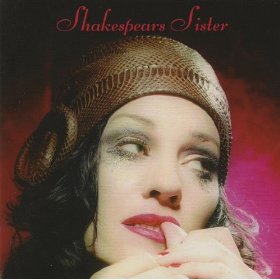
Shakespears Sister: Songs from the Red Room


RIYL: early Roxy Music, Blondie, Goldfrapp

It had to sting Siobhan Fahey a little that the band that she began as a solo project only saw commercial success when someone else was singing lead. She was Dave Stewart’s wife. She was in Bananarama, goddamnit. Why was it that the world only paid attention to her when some high-pitched American was on the mic?

Because that high-pitched American (Marcella Detroit, for those keeping score at home) had a dynamic voice, and when it crawled out of the speakers begging listeners to staaaaaaaay wiiiiiiith her, you stayed. Fahey, on the other hand, had to settle for playing the supporting role once again, even though it was her own band, and she was the lead singer. Ow.

Having said that, Fahey kind of forced the label’s hand in some regards. After playing the role of tarted-up hottie for years, Fahey was understandably bored with being a slice of cheesecake and adopted a look that resembled thrift store Gothic. Combine that with the fact that she had the second-best voice in her own band – or at least the second most striking voice – and it’s easy to see why the label chose to promote them as a duo, rather than as a Fahey solo project. You can imagine the label’s horror when Detroit left the band in 1993; now we just have the low-voiced Goth girl? What the hell do we do with her?

Bury her, it appears. Fahey made one more album in 1996 under the Shakespears Sister name, but it took eight years and some nasty dealings with her label to get it released. Plans for a Fahey solo album were scrapped…twice. So Fahey resurrects Shakespears Sister for the sake of artistic collateral in order to get her solo material out, 18 years removed from her biggest (and in the US, only) hit. How has time treated her?

Pretty well, actually. Songs from the Red Room is an odd blend of glam, dance beats and sass. There isn’t anything here that will tear up the charts, but the whole album is strangely compelling, begging repeat spins despite the lack of a killer hook. She ropes in Terry Hall to duet with her again (the two sang “It Ain’t What You Do” together with Bananarama and Fun Boy Three in 1982) on “Was It Worth It?,” and taunts Marc Bolan on opening track “Pulsatron,” a song that Bolan would have killed for solely for the title. It will shock the daylights out of anyone who’s only familiar with the the band’s chart successes, but that appears to be the point. At long last, Fahey sounds like she’s making the music she meant to make all along. Better late than never, we suppose. (SF Records 2010)

Shakespears Sister MySpace page
Click to buy Songs from the Red Room from Amazon

« Older posts Newer posts »