Category: CD Reviews (Page 46 of 398)

Mark Ronson: Record Collection


RIYL: Taking ’60s pop and hip hop and throwing them into a blender

As the DKNY poster boy and the It producer for nearly everything out of the UK since 2006 (Lily Allen, Amy Winehouse, Adele, Kaiser Chiefs, and Duran Duran’s upcoming album), Mark Ronson has reached Timbaland levels of productivity of late without suffering from Timbaland levels of overexposure. Granted, much of that is due to his work’s general lack of commercial crossover in the States – of all the pop artists he’s worked with, only his work with Winehouse has cracked the US Top 40 – but chart success or not, it stands to reason that someone with seven producer credits since the beginning of 2009 alone would need a break. Instead, Ronson has decided to release another solo album.

Mark_Ronson_03

Record Collection, Ronson’s third solo album and first since 2007’s all-covers project Version, sounds exactly like his other work; tasteful drum programs (the most organic drum machines you’ll ever hear), ’60s-style pop songwriting, a dash of early ’80s synth pop, some two-step, and lots and lots of guest performers, prodiminantly from the world of hip hop. Most of the time, Ronson matches song to singer (and/or rapper) quite well, particularly the hoppin’ leadoff track (and first single) “Bang Bang Bang” and “Somebody to Love Me,” which sports a haunting vocal from Boy George. Ronson splits vocal duties with Simon Le Bon on the dark wave title track, an amusing stab at the here-today-gone-today nature of the music business and the best song Le Bon’s sung in half a decade (“I made a mint in 1987, now I’m living in my parking space”).

There are times, though, when Record Collection could have benefited from a little less busyness. Did the Nuggets-riffing “The Bike Song” really need a rap break from Spank Rock? It’s great that Ronson loves ’60s pop and hip hop, but the two really have no business hooking up, and “The Bike Song” and “Lost It (In the End”) would have been better off if they hadn’t employed the kitchen sink approach. As it is, Record Collection, is one of the more diverse and hook-laden pop records you’ll hear this year. One wonders, though, if it could have reached instant classic status had Ronson reined things in a bit. (RCA 2010)

Mark Ronson MySpace
Click to buy Record Collection from Amazon

Marnie Stern: Marnie Stern


RIYL: Hella, Steve Vai, Sleater-Kinney

Marnie Stern’s wackshit crazy combination of Van Halen-style guitar fingertapping and riot grrl rock really came together on her ridiculously named sophomore album that I will refer to in shorthand as This Is It. So much so that I named it the fifth best album of the decade. Now she’s back with her third album, which forgoes a marathon title and is just self-titled, thank God. Typing out that last one was a mother).

This Is It was an album of all peaks. Not only were all the songs amazing, but they were all manic explosions of emotion. Blistering combinations of lightning guitar work by Marnie and frantic breakbeats by Hella drummer Zach Hill with Marnie’s bizarre yet endearing stream-of-consciousness lyrics created a dream/acid-trip experience that was one of a kind. This album isn’t as insane as that, but it’s still pretty damn nuts. The biggest change is that Marnie actually slows things down this time around on tracks like “Transparency Is the New Mystery” and in the closer “The Things You Notice.” The down-tempo is jarring at first, but what the slower songs lack in energy, they make up for with melody and complexity.

The quieter numbers are the exception though, as most of the songs, like the awesomely-titled “Female Guitar Players Are the New Black” are trademark frantic and manic Marnie. “For Ash” is a track especially worth noting. A memorial to an ex who committed suicide, it has all the power, energy and emotion of any song on This Is It times a hundred. Maybe that’s why Marnie Stern isn’t as over-the-top as the previous album – she blew all the energy on that one track. Still, when the worst you can say about an album is that it’s only almost as good as an album that was one of the best records of the decade, that’s not much of an insult. (Kill Rock Stars 2010)

Marnie Stern MySpace Page

Raul Malo: Sinners & Saints


RIYL: The Mavericks, Roy Orbison, Texas Tornadoes

51jgaIohSgL._SCLZZZZZZZ_[1] Raul Malo is an awesomely gifted vocalist and musician, but his solo career has been long on quantity (seven albums in less than a decade) and short on quality control. Too often, his solo albums have given the impression that Malo’s years with the Mavericks wore him out – he’s been content to coast with covers projects, like 2006’s syrupy You’re Only Lonely or 2007’s country-focused After Hours, or specialty-market releases like The Nashville Acoustic Sessions and his Christmas album, Marshmallow World and Other Holiday Favorites. All of which have been fine, in their limited fashion, but nowhere near as exhilarating as those Mavericks records. Without a band to push him forward, it sounded like Malo was happy to keep things at a pleasant, undemanding drift – 2009’s Lucky One, which packed a dozen Malo originals and hearkened back to his days as one of country’s most exciting young performers, seemed like a pit stop between covers projects.

It’s a pleasant surprise, then, that he carries over some of that spirit with Sinners & Saints, a largely self-penned collection that Malo calls “as much of me as I’ve ever put on a record.” It’s brief – ten tracks and under 45 minutes – but its abbreviated length keeps Malo from indulging his weakness for drawn-out ballads, and the result is the loosest, most energetic studio album of his solo career. Recorded with a stellar supporting cast (including Augie Meyers and Shawn Sahm), Sinners highlights the breadth of Malo’s talents, with hints of pop, rock, country, and Tex-Mex in the mix – but it’s also a focused affair, an album where even the longest songs (like a six-minute cover of Rodney Crowell’s “‘Til I Gain Control Again”) feel lean and tightly arranged.

Raul Malo once seemed destined for superstardom, but his career lost momentum in the late ’90s, and Sinners & Saints probably isn’t going to change that. It does, however, prove that this once-prolific songwriter still has some gas left in the tank, as well as plenty of his old passion for playing in the borders between genres. The faithful will be pleased, and if you’ve got a little room in your musical diet for a restless troubadour with the voice of an angel, it just might make you a fan. (Fantasy 2010)

Raul Malo MySpace page

Fran Healy: Wreckorder


RIYL: Travis, Travis, Travis

If you’re the principal songwriter and lead singer in a band, you will invariably be asked about going solo. If you actually decide to do it, prepare to be hit with one of the most unfair complaints in all of music: “It sounds just like your old band. Why bother going solo?”

Fran_Healy_01

The implication, of course, is that solo albums should sound drastically different than the artist’s day job, and for some, that is precisely the purpose. Most songwriters, though, write like they write, and asking them to change their approach is like asking them to breathe differently. No one ever accused Bryan Ferry of making solo albums that sounded too much like Roxy Music, and no one should be surprised, or disappointed, to discover that Wreckorder (pronounced ‘recorder’), the solo debut from Travis front man Fran Healy, sounds just like a Travis album. If anything, it’s cause for celebration, because it sounds like a The Man Who or The Invisible Band-era Travis album.

Lead track “In the Morning” is a slow-building minor key ballad with a galloping drum beat the likes of which Travis drummer Neil Primrose hasn’t seen in years. “Anything” would fit seamlessly next to anything from the Nigel Godrich-produced albums, and “Sing Me to Sleep,” a duet with Neko Case, trumps anything from the New Pornographers’ last album (and Case’s last solo album, for that matter). “Buttercups” is as perfect a first single for the album as one could dream up, blessed with climbing-falling chord progressions and that signature wave of melancholia washing over it all. Sometimes Healy gets a little too close to the old days, like on the banjo-plucking “Holiday” (it even does the four count intro on the drum sticks that appeared in every other song on The Man Who), but between the hypnotic “Shadow Boxing” and the hilarious, “Flight of the Conchords”-esque “Robot,” Wreckorder shows that Healy still has much to offer while not forgetting where he came from. Good to see you again, Fran. (Rykodisc 2010)

Fran Healy MySpace
Click to buy Wreckorder from Amazon

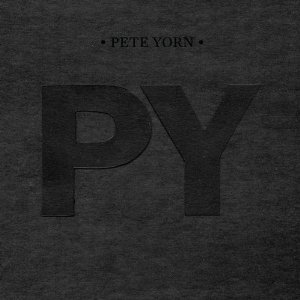
Pete Yorn: Pete Yorn


RIYL: Son Volt, Sugar, Ryan Adams

I imagine the conversation went something like this.

Pete: (drumming his fingers on the stained bar top) So… Frank… or is it Francis? Black? Anyway… what do you think about producing my next album?

BF: (shakes his head and signals the bartender) I dunno.

Pete: (looks wistfully at his empty glass) Oh, come on. I’m the king of collaboration and we both have indie cred to burn. Why not?

BF: (sets his beer down without drinking, thinks for a second) Okay… but one thing first. (bends over to the battered case lying at his feet, unfastens the lid and lifts out a well loved Strat) First… show me you still know what to do with this.

Pete: (frowning) That’s cold, man. I was emoting.

BF: Yeah… well get over it.

So that is more than a little bit facetious, as this latest Yorn album was supposedly recorded before 2009’s Back & Fourth. And to be fair, Pete Yorn’s affair with adult contemporary/personal catharsis wasn’t a total disappointment (and in concert he and his band totally rocked), but as a studio album, it was a less than exciting departure from a signature sound he’d developed over his amazing original trilogy. Teaming up with ex-Pixie Frank Black, Yorn takes his sound in yet another new direction on his fifth, eponymously-titled album.

Not the most coherent record, Pete Yorn borrows from a variety of stripped down guitar sounds, some roots rock, some alt rock and even some ’90s post-grunge. One listen and you’ll swear that Black’s contemporary, Bob Mould, had a hand in the guitar line for “Velcro Shoes,” and Frank’s current work shapes “Badman” heavily. “The Chase” sounds like a cover of a lost track from Social Distortions 1990 self-titled classic.

Lyrically, Yorn goes with his eclectic, left-field tendencies that made his original music so intriguing. It happens that his version of “Paradise Cove” – clearly the original, prior to what appeared on Back & Fourth – is much more Yorn-like and interesting in this rougher, lo-fi take. Still, it is also clear that releasing this collection of songs (and it really is more a collection of songs than an album) was something of an afterthought, and while engaging, it is not to be understood as a definitive new direction for Yorn. He created an inescapable, unique sound in his original three albums. Perhaps this, along with Back & Fourth and the brilliant duets album Break Up with Scarlett Johansson, will be looked at as a second trilogy in Yorn’s career; a trio of personal experiments that showcases a prolific talent trying to find his next level. Enjoy Pete Yorn for what it is, but after this, let’s see where he’s really going. (Vagrant 2010)

Pete Yorn MySpace page

« Older posts Newer posts »