Category: CD Reviews (Page 38 of 399)

Kid Rock: Born Free


RIYL: Bryan Adams, Bob Seger, Glenn Frey

It still hardly seems possible to those of us who remember the gleefully profane, barely conscious persona he cultivated with his first four albums (including his 1998 breakthrough Devil Without a Cause), but Kid Rock has somehow become the heir apparent to Bob Seger’s Motor City rock ‘n’ roll throne. In fact, modern rock is such a graveyard that Rock is damn near an elder statesman of the genre – the kind of artist who routinely draws fawning reviews from Rolling Stone, along with interviews where he’s given a forum to roll his eyes at Steven Tyler joining the judges’ table on “American Idol.” Actually, on that last count, Rock’s no guiltier than the rest of us. But you get the point – that stringy-haired honky rapper with the glassy-eyed stare and the fedora-and-wife-beater wardrobe was never supposed to grow up and give us songs like “Rock N’ Roll Pain Train,” “Rock N’ Roll,” “Rock N Roll Jesus,” and “Rock On.”

But here we are with Kid Rock’s eighth(!) studio album, the flag-wrapped Born Free, offering up a dozen mind-numbingly bland alternatives to actual old-time rock ‘n’ roll. If Seger’s classic records are as solidly unassuming as a cold can of Stroh’s, consider Born Free the equivalent of Natty Light – it’s cheap, and it’ll get the job done if you’re desperate enough, but it really should be better. Really, for the most part, this sounds a lot like an early ’90s Bryan Adams record – which is sort of fitting, considering that Adams’ Canuck take on heartland rock was just as counterfeit as this corny, Rick Rubin-produced collection of would-be anthems and motel ballads.

It feels strange to miss the guy who made songs as proudly brain-dead as “Bawitdaba,” but at least that song had balls and a dangerous vibe, however slight; these days, Rock’s gelded, commercial-ready music is slickly competent at best. On the Born Free album cover, he’s reclining in the back of a convertible, feet up on the seats, amber waves of grain in the background. You can’t tell that the car is rolling gently down the middle of the road, but you can definitely see that no one’s in the driver’s seat. (Atlantic 2010)

Kid Rock MySpace page

Home Video: The Automatic Process


RIYL: Kid A-era Radiohead, Underworld, Doves

Finally: a Radiohead album that people can play around their kids without making them cry.

Brooklyn (by way of New Orleans) duo Home Video would probably take offense to that, but here’s the thing: Oxfordshire’s finest have done what all great rock bands should do by continuously searching for inspiration in places where mere mortals fear to tread, and for that they have been rewarded handsomely by fans and critics. But they have reached a point where “Paranoid Android” sounds like a Top 40 hit compared to the songs on their last two albums, leaving many Radiohead fans to like the idea of the band more than the band itself.

Home_Video_01

Anyone who considers himself a member of this support group of sorts will find lots to love about The Automatic Process, Home Video’s debut. The two layer instruments both electronic and organic on top of melodies that are intricate but not obtuse (a major distinction), while singer Collin Ruffino’s voice can’t help but recall Thom Yorke’s breathier moments. The songs are steeped in minor keys but don’t feel dark, and in the cases of the Seal-like “Beatrice” and “Every Love That Ever Was,” they throw in a catchy major chord to pick things up. They even delve into In Rainbows levels of weirdness on “Description of a Struggle,” where Ruffino sings wordlessly over a warped keyboard refrain. The lyrics don’t leave much of a footprint (six spins in, and we can’t remember a single word), but when closing track “You Will Know What to Do” slowly builds up to its widescreen climax, all is forgiven. The funny thing is, Radiohead comparisons aside, Home Video are actually more likely to become the next Underworld. What a wonderful thing that would be. (Home Video 2010)

Home Video MySpace page
Click to buy The Automatic Process from Amazon

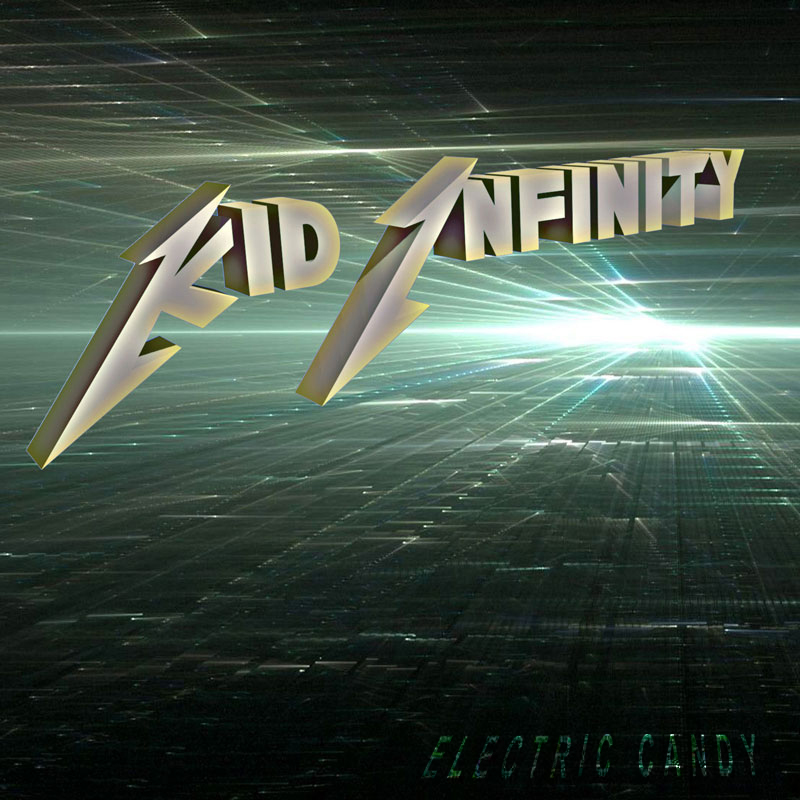
Steal This Song: Kid Infinity, “Snobs and Hammers”

This column has made its stance abundantly clear on the growing desire of today’s youth to be famous for the sake of being famous (ahem, Lolene’s “Rich (Fake It Til You Make It)“). It’s a clear ripple effect of reality television, which has turned several people with no discernible talent – other than a willingness to make a spectacle of themselves in front of the camera – into tabloid fodder, as if any of that was a good thing. (It’s not, by the way.)

Enter LA electronic hip hop white boy duo Kid Infinity, who positively skewer this mindset on their hilarious new song “Snobs and Hammers.” The “singer” (he’s really just talking) spends the first verse as the sympathetic friend to someone who’s been criminally passed over for stardom. (“You deserve success. Goddamnit, why hasn’t anyone noticed yet?”) The second verse is from the POV of the girl herself, seething with envy as a younger, prettier version of herself steals the spotlight that she feels is rightfully hers. Thank God not everyone is buying into this whole fame game nonsense. These guys are permanently in our cool book for this one.

Kid Infinity – Snobs and Hammers

Quincy Jones: Q – Soul Bossa Nostra


RIYL: unexpected collaborations, the R&B Top 40, hitting “shuffle”

He’s more of an elder statesman than a hitmaker these days – his last album came out 15 years ago, and his influence has been on the wane since the ’80s – but the term “living legend” may as well have been coined to describe Quincy Jones, and he proves it all over again with the ridiculous number of superstar guests assembled for Q: Soul Bossa Nostra.

Like anyone who’s ever been successful in the music business, Jones isn’t shy about his own accomplishments, and Bossa Nostra functions essentially as an album-length tribute to himself, with modern hip-hop and R&B artists making cameo appearances on a rundown of Q-affiliated classics like “Strawberry Letter 23” (featuring Akon), “You Put a Move on My Heart” (a show-stopping Jennifer Hudson), the “Sanford and Son” theme (walking acronym factory T.I. and B.O.B.), and the title track (Ludacris). Generally speaking, it’s all a lot better than it has any right to be; for one thing, Jones has to have a marvelous sense of humor to invite, say, Talib Kweli to turn “Ironside” into a hip-hop showcase, or ask Snoop Dogg to add his verses to “Get the Funk Out of My Face.” More importantly, most of the artists sound like they have genuine affection for the material, and they produce some genuine highlights, including John Legend’s lovely “Tomorrow,” Mary J. Blige and Q-Tip’s “Betcha Wouldn’t Hurt Me,” and the Wyclef-led “Many Rains Ago (Oluwa).”

Like most compilations, Bossa Nostra has the occasional bald spot; for instance, it’s easy to assume that Jones tucked Amy Winehouse’s disastrous take on “It’s My Party” late in the album because he listened to the tapes long enough to wonder why it sounds like Winehouse lost her teeth on the way to the studio, and not a few listeners will blanch at the notion of T-Pain lending his Auto-Tune croon to a new version of “P.Y.T.” But these are minor complaints, given the overall strength of the rest of the record – and how much quibbling is really necessary when you’re talking about an album that concludes with a rap-a-riffic version of the “Sanford and Son” theme song? It won’t light up the charts the way Quincy did with The Dude in 1981 – or even 1989’s Back on the Block – but it’s a helluva lot of fun, and proof that the living legend hasn’t lost his touch. (Interscope/Qwest 2010)

Quincy Jones MySpace page

« Older posts Newer posts »