Category: CD Reviews (Page 30 of 399)

The Jayhawks reissues, Part I: Hollywood Town Hall and Tomorrow the Green Grass

RIYL: Flying Burrito Brothers, early Wilco, Gram Parsons

We say Part I because Jayhawks guitarist Gary Louris personally told us that there are plans to reissue the band’s remaining three albums with American and Lost Highway before the end of the year. Insert fist pump here.

It sure seemed like the planets were aligned, on several occasions, for the Jayhawks to become a much bigger band. They were discovered in an only-in-the-movies fashion, as American Recordings A&R chief George Drakoulias was on the phone with the president of Twin Tone Records and heard Blue Earth, the band’s 1989 sophomore album, in the background. He quickly signed them and produced their first two major label albums. They sold well, but beneath the ‘next Black Crowes’ hype they were tagged with at the time, which was a silly tag to hit them with in retrospect, but you know how the music business works, even when it’s counterproductive to a band’s long-term health.

Jayhawks 2010 edit

And ultimately, that inability to break through to the next level cost them in more ways than one. Singer and founder Mark Olson left the band shortly after the song “Blue” failed to take off the way they had hoped it would, and Louris took over the band for three more albums before quietly calling it a day. Then something strange and wonderful happened: Olson realized that he and Louris had unfinished business. The two made a quiet album together, 2009’s Ready for the Flood, and before they knew it, the definitive Jayhawks lineup was playing together again and are currently putting the finishing touches on their first album in eight years. As an appetizer, Sony Legacy has reissued the band’s first two albums for American Recordings along with some hard-to-find B-sides and basement tapes that were the stuff of urban legend. Dig in.

Hollywood Town Hall

Modern rock radio was still in its infancy when Hollywood Town Hall came out in late 1992, and you can’t help but think that the fact that they received support from modern rock stations actually cost them airplay on the traditional rock stations. Whatever the reasons, it deserved to do better, because this is one solid rock album, thanks in no small part to the blossoming of Louris as a songwriter. The Jayhawks were Olson’s band in the beginning, but he would never have written something like “Waiting for the Sun” or “Settled Down Like Rain,” and it’s no coincidence that both of those songs were tapped as singles. The harmonies are as tight as ever, and the inclusion of piano and organ fleshes the songs out and gives even the more countrified moments a rock flavor. For a band that began as country rock act, Hollywood Town Hall is certainly far removed from their roots, yet the band’s essence remains intact.

The bonus tracks are just as good, too, particularly “Leave No Gold” and a raucous version of the gospel standard “Up Above My Head.” Many of these songs never saw the light of day in the US (and two of them were never released at all), so their inclusion here is a big, big plus.

Tomorrow the Green Grass

Here is all you need to know about Tomorrow the Green Grass: when the band announced that they had reformed and were doing a mini-tour, and would be dedicating certain nights to playing one of these two albums in its entirety, the shows where they were playing all of Tomorrow the Green Grass were the first ones to sell out. With keyboardist Karen Grotberg involved in the recording sessions (she came on board after the band had finished recording Hollywood Town Hall) and the band ready to experiment with different sonic textures, songs like the string-kissed “I’d Run Away” soared like no Jayhawks song had ever soared before. “Nothing Left to Borrow” is the best song the Byrds never wrote, and “Blue” practically started its own religion. It’s pop in the best sense of the word, melding a myriad of influences (check out the rockin’ “Real Light”) to create something wholly unique. Tomorrow the Green Grass is in a class all its own.

And look what Legacy dug up to go with it – the so-called Mystery Demos that Jayhawks fans gossiped about for a good 10 years on message boards. Comprised of two sessions between Olson and Louris (one of which featured a violinist), several of these songs wound up on Tomorrow the Green Grass, but the stark versions here are just as memorable, particularly “Red’s Song” and an almost fully formed “Nothing Left to Borrow.” Of the tracks to receive the deluxe recording treatment, the Grotberg-sung “Last Cigarette” and the stomping title track are highlights. We eagerly await Round II of the Jayhawks reissue campaign, not to mention the band’s new album, their first in eight years, later this spring. For the first time in a long time, it’s good to be a Jayhawks fan. (Sony Legacy 2010)

The Jayhawks official website
Click to buy Hollywood Town Hall from Amazon
Click to buy Tomorrow the Green Grass from Amazon

Duran Duran: All You Need Is Now


RIYL: Duran Duran’s first two albums, Mark Ronson

It’s funny how people can surprise you even when you think you know them better than they know themselves. After spending a good decade releasing albums that ranged from underrated (Medazzaland) to underwritten (Pop Trash), Duran Duran reunited the Fab Five lineup early in the 2000s and dropped Astronaut in 2004. It was the closest the band had come to their trademark sound in 20 years, and they were rewarded with some of the best reviews of their career. But old feelings die hard, and guitarist Andy Taylor bailed on the band again the middle of making the follow-up to Astronaut. That album, titled Reportage, was supposed to be a back-to-basics affair, an angrier, more aggressive album. Rather than finish the album, though, the band dissolved their partnership (we’re guessing that’s a money move, so Andy would no longer be involved in any revenue sharing) and started over from scratch…

…with Timbaland and his hack protege, Danja Hills. Ye gods.

DD_London_3705_Reduced

The ensuing album, 2007’s Red Carpet Massacre, was a gigantic step backward, filled with wonky synthesizers and the worst drum sounds a rock band ever put to tape (and that includes Missing Persons’ Rhyme & Reason). The whole modern-day hip-hop production didn’t suit them at all, and the worst part is that there were ways that Duran Duran could have modernized their sound without looking silly; Timbaland was not one of them.

And clearly the band realized this, because midway through the tour for Red Carpet Massacre, they teamed up with UK It Boy Mark Ronson and asked him to remodel their hits. The collaboration proved to be fruitful, as Simon Le Bon would go on to sing on Ronson’s (great) 2010 album Record Collection (the title track, no less), and keyboardist Nick Rhodes contributed a song. Ronson returned the favor by producing the band’s new album, All You Need Is Now, and with that, they found their new Colin Thurston and released their best album since Rio.

Let’s qualify that best-album-since-Rio line, though. It’s their most consistent album since Rio, no question, with nary a duff track in the bunch. But it’s surprisingly lacking in the ‘killer hit single’ department. The title track is a gem, and “Runaway Runaway” captures the essence of the band’s glory days better than anything here, but as good as these songs are, it’s an album full of songs on par with “Anyone Out There” and “My Own Way.” There isn’t an “Ordinary World,” “Planet Earth” or even a “New Moon on Monday” to be found.

There is, however, a new “The Chauffeur” buried in the album’s final third. “The Man Who Stole a Leopard” is a masterpiece, but its run time (over six minutes) and tone will make it a hard sell for release as a single. Beginning with a flanged keyboard, string accents (courtesy of Arcade Fire’s Owen Pallet) and minimalist percussion, the song slowly builds into a melancholy dance track not unlike Massive Attack’s “Unfinished Sympathy,” with haunting call-and-respond vocals from Kelis. Easily the best song the band’s done since “Ordinary World” and “Come Undone.”

It looks as though something good came out of Red Carpet Massacre after all. The band realized that chasing the pop charts is a fool’s errand, and that the best thing they can do at this point in time is simply be themselves. All You Need Is Now could be better, sure, but Duran Duran hasn’t shown this kind of focus in nearly 30 years, and that alone is reason to be cheerful. Well done. (Skin Divers 2011)

Duran Duran MySpace page

2011 Song of the Year Candidate #1: Duran Duran, “The Man Who Stole a Leopard”

Welcome to a new column here at ESDMusic, which I created for the sole purpose of talking about new songs that make me giddy. First up: my boys from Birmingham, Duran Duran.

Last time we heard from Duran, they were, well, royally pissing me off. They had just shelved an album that was reportedly a harder-edged back-to-basics affair, modeled after the Kaiser Chiefs and Bloc Party, two bands that Duran bassist John Taylor loved. Why would they do such a thing, you ask? Because Andy Taylor had left the band, again, because the band expressed interest in adding one more song to the album…featuring Timbaland and Justin Timberlake. Now, I can see where a guy like Justin might appeal to them, but Timbaland? Really? Do they know what he does to the people he produces? He makes sure they all sound like him. You will use this drum machine; you will use this keyboard sound. And you will let him say “wicky wicky” at some point. Is there any place for that on a Duran album? Answer: no, and Andy knew it, so he bailed.

DD_London_3705_Reduced

So the band started over from scratch, using the Timbaland collaboration not as a one-off but as a starting point (!). The end result: Red Carpet Massacre, where Duran Duran traded in their identity for one last attempt to remain relevant to the pop charts. The single stiffed, the label dropped them, and Duran went about making things right by doing what I’ve been wanting them to do since 2007: work with Mark Ronson. The band’s new album, All You Need Is Now, released on their own Skin Divers label – a curious name, considering it’s the name of the failed Timbaland collaboration – is the most traditional-sounding Duran Duran album since Seven and the Ragged Tiger (and is actually better than Tiger). And tucked away in the album’s back half is one of the best songs they’ve ever done.

“The Man Who Stole a Leopard”… Jesus, what do you say about this? It builds slowly, a la “The Chauffeur,” and features this gorgeous call-and-response vocal from Kelis that borders on haunting. The lyrics, based on an idea of John and Nick’s (and inspired by the 1965 Terence Stamp movie “The Collector”), tell the tale of a man who, you guessed it, kept a leopard in his apartment, and how his obsession with said creature fulfilled him like nothing else, but also led to his undoing. Ronson tones down the drum tracks some, making for one of those melancholy dance tracks along the lines of “Enjoy the Silence” or “Unfinished Sympathy.” With a run time of over six minutes, “The Man Who Stole a Leopard” is not likely to be among the songs chosen for release as a single, but you can bet that it will – and if the YouTube comments are any indication, already has – become a fan favorite. Give the video one listen, and see if you’re not running to the iTunes store seconds later.

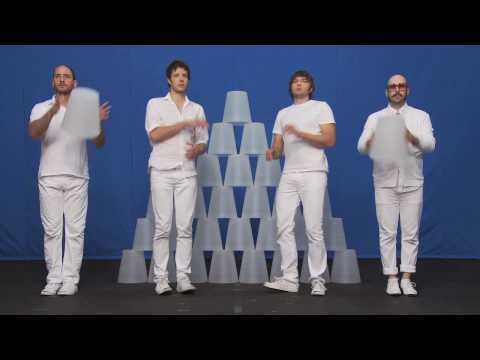
Steal This Remix: OK Go, “White Knuckles”

It’s been kind of quiet here in ESD Land, and that’s intentional – everyone has stuff to do during the holidays, and we’re only happy to wind things down so we can get our shopping done. But here’s a little pre-Christmas treat for you all, courtesy of the people behind what my daughter calls the doggie video, OK Go.

Like most remixes these days, the majority of the original song didn’t survive, but there are a few lines from the song and a keyboard riff here and there. And hey, it’s free. Can’t beat free. Happy holidays, everyone. See you in 2011.

OK Go – White Knuckles (Sam Sparro remix)

The Marsalis Family: Music Redeems

stars:
RIYL: John Coltrane, Thelonious Monk, Harry Connick Jr.

The first family of New Orleans jazz gathered for a special concert last year at the Kennedy Center in Washington, D.C., and thank goodness they recorded it for release. There is far too little collaboration in this clan – patriarch Ellis on piano, Wynton on trumpet, Branford on sax, Delfeayo on trombone and youngest brother Jason on drums. They’re all world-renowned musicians and hearing them together is something special. This CD also makes a great gift for any jazz fan – it’s a historic gathering of the Marsalis clan, including stories and anecdotes about growing up in New Orleans. The proceeds also go to educational programming at the Ellis Marsalis Center for Music, “the heart of the New Orleans Habitat Musicians’ Village.” The project was conceived in 2005 by Branford Marsalis and Harry Connick, Jr. (who also guests in this performance) in partnership with New Orleans Habitat for Humanity following Hurricane Katrina.

The band opens with Charlie Parker’s “Donna Lee,” featuring an up-tempo walking bass line from the bassist Eric Revis, some dynamic whistling melodies from Jason and a great piano solo from Ellis.
Wynton and Branford both speak afterward about growing up, with Branford noting how Ellis’ breakthrough song “Monkey Puzzle” (written by James Black) was almost like a cartoon theme song to the kids. The classic song receives an eight-minute treatment, with great solos all around and some stellar work by Jason on the vibes.

A pair of Ellis-penned tunes follow. “After” is an elegant solo piano song, and then “Syndrome,” an old school piano-based tune that brings in the rest of the band with some smooth unison horn lines. Harry Connick Jr., then joins the ensemble for “Sweet Georgia Brown,” where sparks fly on sensational dueling pianos between Connick and Ellis. Another peak occurs with a reading of Thelonious Monk’s “Teo,” which oozes the jazzy jazz that comes from such great horn players. There’s also another superb piano solo, followed by a succession of stylish horn solos that are like a jazz playbook.

Ellis Marsalis III then delivers a poignant spoken word poem written just for the occasion to honor his father, “The Man and the Ocean.” A nearly 10-minute version of Jason’s “At the House in Da Pocket” follows and it’s a magic track, with the horns seeming to hold an animated conversation while the other instruments vamp out behind. The Marsalis family chemistry really starts flowing here and it’s only a shame that this track basically ends the set instead of setting the stage for more. But in classic New Orleans fashion, the group apparently exits through the audience playing a rousing version of the traditional song, “The 2nd Line.”

This entire performance will make you want to book travel to New Orleans at your nearest convenience. If you can’t make it in person, the next best thing may be streaming local radio station WWOZ, without a doubt one of the greatest and most diverse stations on the planet. (Marsalis Music 2010)

« Older posts Newer posts »