Category: CD Reviews (Page 133 of 399)

Duran Duran: Rio (Collector’s Edition)


RIYL: The Killers, Roxy Music, Spandau Ballet

Finally. Ask an American Duran Duran collector, and they will tell you that every CD pressing of the band’s seminal 1982 album Rio up to now has been horribly flawed, because Capitol had the nerve to use the original mixes of the songs on “Side I,” instead of the David Kershenbaum remixes of those songs that we Yanks grew up with. Some of the Kershenbaum mixes popped up on later CD singles and compilations, but two of them, namely “Rio” and “Lonely in Your Nightmare,” remained in the vaults…until now. This two-disc set features a remastered Rio plus the Kershenbaum remixes on Disc One, and a veritable treasure trove of demos, B-sides, Night Versions and remixes from the various Carnival EPs on Disc Two. If a specific mix or B-side has eluded you up to this point, odds are it is included here.

Duran_Duran_06

As for the difference between the 2009 remaster of Rio and the 2001 remaster, well, if you can spot a difference, let us know. We’ve played several tracks back to back, and they sound identical. (The version of “Hold Back the Rain,” though, is a different mix entirely.) And why shouldn’t they? Colin Thurston’s original production was so crisp and well balanced – not to mention recorded in the pre-digital, compress-the-shit-out-of-everything era – that there is little point in tweaking Rio for the sake of tweaking it. Those long-dormant Kershenbaum mixes, however, could have used a tune-up, specifically in the upper frequencies, so if you had designs of assembling a playlist equivalent of your original Rio cassette, prepare for a few shifts in audio quality. Still, the ability to finally make that playlist, with enough remixes left over to make your own personal Carnival, makes this set a no-brainer. They even tagged a Christmas greeting from Simon LeBon onto the final track on Disc Two. Awwww. (Capitol 2009)

Duran Duran MySpace page
Click to buy Rio Collector’s Edition from Amazon

Ace Frehley: Anomaly


RIYL: Kiss, Led Zeppelin, Jimi Hendrix

Former Kiss guitarist Ace Frehley delivers his first solo album in 20 years, and it’s a big winner. Frehley’s work with Kiss in the 1970s inspired a legion of youngsters to pick up the guitar, including many of those who would gain fame in the alt-grunge explosion of the early ’90s, making Frehley one of the most important influences in rock history. The source of this influence is all over Anomaly.

“Foxy and Free” starts up with a hard rocker where Ace’s voice sounds like it could still be 1978, the year his first solo LP came out. “Outer Space” rocks just as hard in a tale about how Ace came from outer space and “is sick and tried of the human race.” A cover of Sweet’s “Fox on the Run” fits like the proverbial glove. Ace’s vocals are spot-on and the track has a fun vibe. Things really open up on the epic “Genghis Kahn,” a mostly instrumental tune that features a dynamic acoustic intro before giving way to a big jam featuring pulsing bass, Bonham-like drums, and heavy chord changes. The face-melting guitar solo is straight-up sick. It gets even better on “Space Bear,” another monster instrumental featuring a hybrid of classic riffage recalling Zeppelin, Hendrix and early Kiss on one of the best jams Ace has ever laid down.

“Change the World” finds Ace moving in a socially conscious direction that Gene & Paul would never abide on a Kiss album. It’s a catchy number that feels totally natural and features another stellar solo. “A Little Below the Angels” has a similar spiritual vibe, as Ace sings another melodic tune about leaving his wild ways behind so he can move forward. “It’s a Great Life” continues in that vein with a dynamic rocker that starts with a funky groove somewhat recalling David Bowie’s “Let’s Dance,” before some rocking changes come in as Ace continues to dispel his hard-earned wisdom. “Fractured Quantum” closes the album with a soaring instrumental rocker, the fourth song in the “Fractured” series that started on his 1978 LP. The playing and production work are both superb as Ace demonstrates his musical depth.

It’s that musical depth and the lyrical maturity demonstrated in tunes like “Change the World” that puts Ace light years beyond the current version of Kiss, which currently dresses up former Black and Blue guitarist Tommy Thayer as the Space Ace. It may help sell tickets, but it’s a fraudulent maneuver that Gene Simmons should be ashamed of, if he knew the meaning of the word. (Bronx Born Records 2009)

Ace Frehley MySpace page

Talking Heads: Stop Making Sense

One of the best concert films of all time gets its hi-def due with this lovingly curated reissue “Stop Making Sense.” Directed by Jonathan Demme, “Sense” captures the Talking Heads at their squirrelly best, spasmodically jumping between new wave, funk, and arty Afro-pop with a crack band of ace sidemen that included Bernie Worrell, Alex Weir, and Lynn Mabry. The Talking Heads found their footing slowly, evolving from willfully experimental Rhode Island hipsters to a merry band of world music vagabonds, and Demme frames their journey with a stage setup that opens slowly; for the opening number, “Psycho Killer,” David Byrne comes out with nothing but his guitar and a boombox. He’s joined by bassist Tina Weymouth on the next number, they’re joined by Chris Frantz next, Jerry Harrison follows Frantz, and so on and so forth, until the whole entourage is under the lights, making the most joyously paranoid racket of the ‘80s.

The Blu-ray transfer doesn’t scrub every last scratch or speck of dust from the frame, but knowing the Talking Heads, that may very well have been intentional; in any case, it makes for fine viewing at 1080p, despite periodic minor problems with the picture, and the sound – presented here in a pair of DTS-HD Master Audio 5.1 mixes that let the viewer choose between the equivalent of audience and soundboard recordings – more than makes up for any visual flaws. The special features include audio commentary from the band and director (everyone’s tracks separately recorded, natch), along with other bonus content ported over from the DVD version (bonus tracks, storyboards, a few minutes of Byrne interviewing himself), plus Blu-ray exclusive footage of the 1999 press conference that reunited the band for “Stop Making Sense’s” 15th anniversary screening. There’s a short list of concert films whose contents justify a $34.99 list price, regardless of format. This is one of them. (UMVD)

Click here to buy “Stop Making Sense”

Sondre Lerche: Heartbeat Radio


RIYL: Prefab Sprout, David Gray, Beautiful South

Normally, one might think of Norway as kind of an isolated place, at least in terms of its being removed from the mainstream. However, considering ex-patriot Sondre Lerche’s ability to absorb soft rock styles and recycle them in his own breathless, breezy style, he’s clearly in sync when it comes to fashioning a radio-ready formula. Lerche’s previous albums have shown a steady evolution in honing his approach and smoothing over the rough edges, ensuring that Heartbreak Radio isn’t only palatable to the masses but possibly his most accessible effort yet. Lerche’s powder-puff vocals are as unobtrusive as cotton candy, but underscored by the teeming pulse and rambunctious strings of “Good Luck,” the staccato rhythm of “If Only,” and the unruly – relatively speaking – posturing of “Easy to Persuade” and “Almighty Moon,” Lerche is mostly able to avoid coming across as completely cloying. Not that he skirts it altogether; the giddy designs of “Words & Music,” the smooth croon of “I Cannot Let You Go” and schmaltzy posturing of “Goodnight” are mired in a syrupy sound best suited to the vacuous airs of an adult contemporary radio format. It stands to reason then that only when its pulse starts pumping, Heartbeat Radio gets its blood flowing. (Rounder 2009)

Sondre Lerche MySpace page

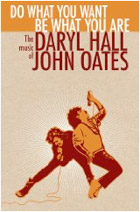
Daryl Hall & John Oates: Do What You Want, Be What You Are

RIYL: Daryl Hall, John Oates, and Daryl Hall & John Oates

hall_oatesThey’ve been feted in countless compilations, but Daryl Hall and John Oates have never received the deluxe box set treatment until now – which seems odd, considering they’re the top-selling duo of all time. The cumbersomely named Do What You Want, Be What You Are: The Music of Daryl Hall John Oates has been in the works for over a decade, tumbling to Legacy when Sony merged with BMG a few years ago, and for once, a corporate mega-merger bears a little artistic fruit; just about everything the duo has done, from pre-H&O recordings with the Masters and the Temptones through their early Atlantic years as a folk/rock act and on into their most recent incarnation as a slick adult contemporary object of Yacht Rock hipster fetishism, is here. The hits are present and accounted for, of course, which is actually what puts a hiccup in Do What You Want’s stride: Is there a Hall and Oates fan on Earth who doesn’t already have at least one of their best-of compilations? Is there any such thing as a “casual” fan of the duo that’s willing to drop coin on a four-disc box? This set tries to play to both groups, lumping in Hall and Oates’ amazing streak of hits alongside a smattering of deep cuts, live performances, and demos. It’s a pleasantly full-figured portrait of their work, but it has the nasty side effect of rendering Disc Three essentially worthless (or, at the very least, utterly redundant) for the hardcore fans who have been waiting for this collection.

The music is solid, of course, and even blindingly glossy later hits like “Everything Your Heart Desires” still hold up – but in terms of value for the fans, this could have been so much more. (Sony Legacy 2009)

Daryl Hall & John Oates MySpace page

« Older posts Newer posts »