Category: Electronica (Page 4 of 34)

Shakespears Sister: Songs from the Red Room


RIYL: early Roxy Music, Blondie, Goldfrapp
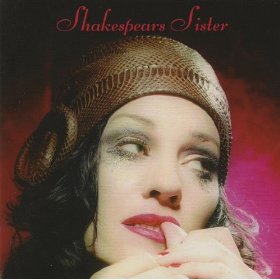
It had to sting Siobhan Fahey a little that the band that she began as a solo project only saw commercial success when someone else was singing lead. She was Dave Stewart’s wife. She was in Bananarama, goddamnit. Why was it that the world only paid attention to her when some high-pitched American was on the mic?

Because that high-pitched American (Marcella Detroit, for those keeping score at home) had a dynamic voice, and when it crawled out of the speakers begging listeners to staaaaaaaay wiiiiiiith her, you stayed. Fahey, on the other hand, had to settle for playing the supporting role once again, even though it was her own band, and she was the lead singer. Ow.

Having said that, Fahey kind of forced the label’s hand in some regards. After playing the role of tarted-up hottie for years, Fahey was understandably bored with being a slice of cheesecake and adopted a look that resembled thrift store Gothic. Combine that with the fact that she had the second-best voice in her own band – or at least the second most striking voice – and it’s easy to see why the label chose to promote them as a duo, rather than as a Fahey solo project. You can imagine the label’s horror when Detroit left the band in 1993; now we just have the low-voiced Goth girl? What the hell do we do with her?

Bury her, it appears. Fahey made one more album in 1996 under the Shakespears Sister name, but it took eight years and some nasty dealings with her label to get it released. Plans for a Fahey solo album were scrapped…twice. So Fahey resurrects Shakespears Sister for the sake of artistic collateral in order to get her solo material out, 18 years removed from her biggest (and in the US, only) hit. How has time treated her?

Pretty well, actually. Songs from the Red Room is an odd blend of glam, dance beats and sass. There isn’t anything here that will tear up the charts, but the whole album is strangely compelling, begging repeat spins despite the lack of a killer hook. She ropes in Terry Hall to duet with her again (the two sang “It Ain’t What You Do” together with Bananarama and Fun Boy Three in 1982) on “Was It Worth It?,” and taunts Marc Bolan on opening track “Pulsatron,” a song that Bolan would have killed for solely for the title. It will shock the daylights out of anyone who’s only familiar with the the band’s chart successes, but that appears to be the point. At long last, Fahey sounds like she’s making the music she meant to make all along. Better late than never, we suppose. (SF Records 2010)

Shakespears Sister MySpace page
Click to buy Songs from the Red Room from Amazon

Home Video: The Automatic Process


RIYL: Kid A-era Radiohead, Underworld, Doves

Finally: a Radiohead album that people can play around their kids without making them cry.

Brooklyn (by way of New Orleans) duo Home Video would probably take offense to that, but here’s the thing: Oxfordshire’s finest have done what all great rock bands should do by continuously searching for inspiration in places where mere mortals fear to tread, and for that they have been rewarded handsomely by fans and critics. But they have reached a point where “Paranoid Android” sounds like a Top 40 hit compared to the songs on their last two albums, leaving many Radiohead fans to like the idea of the band more than the band itself.

Home_Video_01

Anyone who considers himself a member of this support group of sorts will find lots to love about The Automatic Process, Home Video’s debut. The two layer instruments both electronic and organic on top of melodies that are intricate but not obtuse (a major distinction), while singer Collin Ruffino’s voice can’t help but recall Thom Yorke’s breathier moments. The songs are steeped in minor keys but don’t feel dark, and in the cases of the Seal-like “Beatrice” and “Every Love That Ever Was,” they throw in a catchy major chord to pick things up. They even delve into In Rainbows levels of weirdness on “Description of a Struggle,” where Ruffino sings wordlessly over a warped keyboard refrain. The lyrics don’t leave much of a footprint (six spins in, and we can’t remember a single word), but when closing track “You Will Know What to Do” slowly builds up to its widescreen climax, all is forgiven. The funny thing is, Radiohead comparisons aside, Home Video are actually more likely to become the next Underworld. What a wonderful thing that would be. (Home Video 2010)

Home Video MySpace page
Click to buy The Automatic Process from Amazon

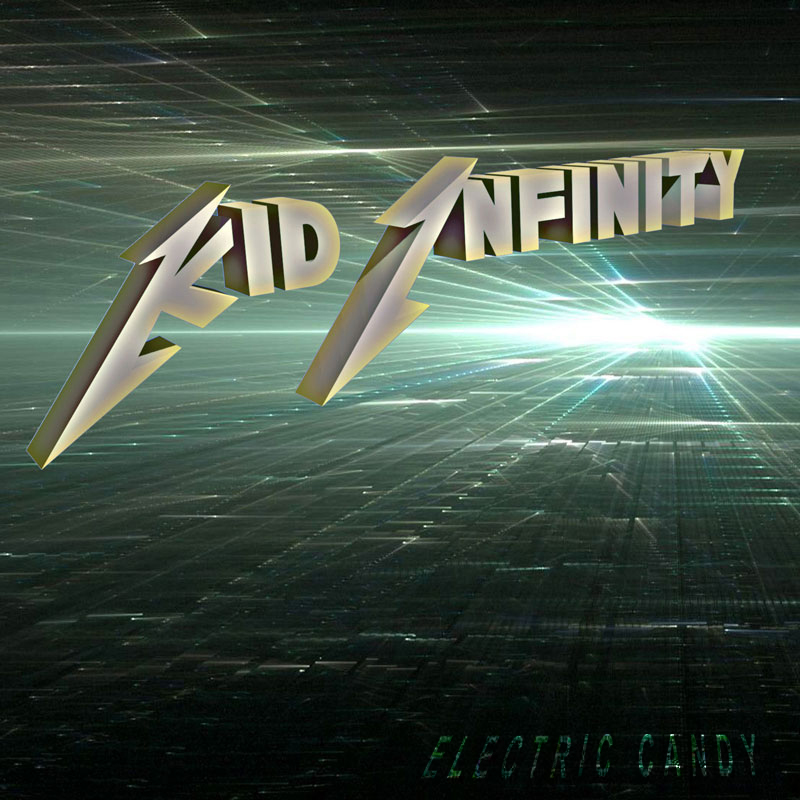
Steal This Song: Kid Infinity, “Snobs and Hammers”

This column has made its stance abundantly clear on the growing desire of today’s youth to be famous for the sake of being famous (ahem, Lolene’s “Rich (Fake It Til You Make It)“). It’s a clear ripple effect of reality television, which has turned several people with no discernible talent – other than a willingness to make a spectacle of themselves in front of the camera – into tabloid fodder, as if any of that was a good thing. (It’s not, by the way.)

Enter LA electronic hip hop white boy duo Kid Infinity, who positively skewer this mindset on their hilarious new song “Snobs and Hammers.” The “singer” (he’s really just talking) spends the first verse as the sympathetic friend to someone who’s been criminally passed over for stardom. (“You deserve success. Goddamnit, why hasn’t anyone noticed yet?”) The second verse is from the POV of the girl herself, seething with envy as a younger, prettier version of herself steals the spotlight that she feels is rightfully hers. Thank God not everyone is buying into this whole fame game nonsense. These guys are permanently in our cool book for this one.

Kid Infinity – Snobs and Hammers

Nitzer Ebb: Industrial Complex


RIYL: Depeche Mode, Combichrist, My Life With The Thrill Kill Kult

Nitzer Ebb’s last album was Big Hit, which came out in 1995. Since then the group both broke up and got back together with hardly anyone noticing. It makes sense; they weren’t exactly superstars. Even at the peak of their popularity with tracks like “Join in the Chant” and “Fun to Be Had,” they were also-rans in the industrial/electronic scenes. They never got the success that groups like Depeche Mode enjoyed, and they never enjoyed the cult success of more abrasive and harder-sounding groups like Ministry and Skinny Puppy. So the fact that we’re even talking about Nitzer Ebb in 2010 is pretty amazing, and the fact that were talking about a great new record by Nitzer Ebb in 2010 is freaking mindblowing.

Nitzer_Ebb_01

Seriously, where the hell did this come from? This is one of Nitzer Ebb’s best records to date. While it can’t top their earlier records in terms of originality and innovation, it can certainly hold its own against them when it comes quality. In fact, some of the tracks on Industrial Complex, such as the killer opener “Promises,” and the eerie ballad “Going Away from Me,” might be some of the best tracks the group has ever released.

Many of the best tracks on Industrial Complex owe themselves to the suddenly powerful vocals of Douglas McCarthy, who spent much of the ’80s and ’90s growling and yelling through the band’s best tracks. Here, he’s actually singing, and singing damn well at that. But fans of the ridiculous shouting matches of Nitzer Ebb old like “Join in the Chant” shouldn’t be too worried; McCarthy still howls his head off a couple times on Industrial Complex, like on “Payroll,” a sick and sleazy track that combines not-too-subtle metaphors about sucking with aggressive dance beats and a hard house sound ripe for remixing.

If you’ve been eagerly awaiting more Nitzer Ebb since their breakup in the ’90s, then your wait was well worth it with Industrial Complex. And if you’ve never heard the group before, then this is a shockingly great jumping-on point. (Artists’ Addiction Records 2010)

Click here for a free download of Nitzer Ebb’s “Promises”
Nitzer Ebb MySpace page

The Octopus Project: Hexadecagon


RIYL: Minimalism, The Orb, the soundtrack to Koyanisquatsi

The Octopus Project are an indie instrumental electronic group. So while they’ll probably never have a sound that one would describe as “pop,” their 2007 album Hello, Avalanche came pretty close. Tracks like “Ghost Moves” and “Truck” were just a vocal track away from a James Murphy tune, and the hauntingly beautiful “I Saw The Bright Shinies” proved that you don’t need a singer to make an excellent ballad as long as you have a Theremin.

But anyone who was hoping that the group might take the sound from Hello, Avalanche and advance it even further into the pop landscape is going to be shocked with the group’s latest effort, the highly experimental Hexadecagon. Taking a hard right away from the traditional songwriting structure from Hello, Avalance, Hexadecagon dumps all the hooks, jangle and upbeat beats from that album and replaces them with Philip Glass and Steve Reich-influenced minimalism. Repetition is the name of the game here, with tracks like the opener “Fuguefat” and the aptly named “Circling” focusing on a single motif and repeating it over and over again, slowly introducing new elements piece by piece. It’s not dance music, that’s for sure. But it still maintains one important element of Hello, Avalanche; it’s a great record that is a lot of fun. (Peek-a-Boo 2010)

The Octopus Project MySpace Page

« Older posts Newer posts »