Category: Alternative (Page 39 of 155)

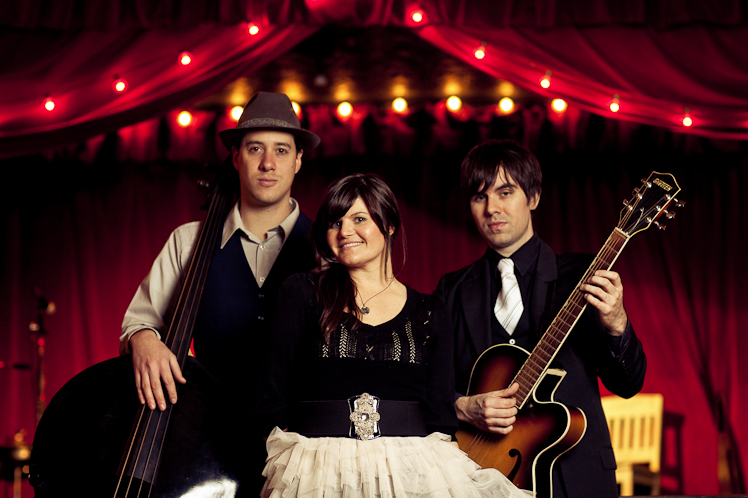
April Smith and the Great Picture Show: Songs for a Sinking Ship


RIYL: KT Tunstall, Squirrel Nut Zippers, Liza Minnelli

Sometimes great singers try a bit too hard to prove that they’re great. April Smith is not one of those singers. The arrangements on her latest and most impressive album Songs for a Sinking Ship fit her sultry voice like a glove and her songwriting is both playful and intellectual. April Smith is clearly capable of controlling the whole circus when it comes to vocal acrobatics but possesses the restraint to allow each song to shine as bright as her ability.

After numerous listens, I’ve yet to find a track that I didn’t thoroughly enjoy. A standout track on Songs for a Sinking Ship is “Wow and Flutter” which combines semi-dark theatrics with a refrain that could have found a home on a Ratt record. Odd, I know, but it totally works. Additionally, the closer “Stop Wondering” is easily the most delightful “fuck you” to a former lover ever recorded.

April_Smith_02

Aside from her glowing talent behind the mic and the pen, she’s clearly figured out the business side of things as well. She used kickstarter.com and her ever-growing fan base (acquired from near constant touring over the past few years) to fund this release. We always hear stories of bands collecting cash online to fund their latest projects but many of those bands were once privileged enough to receive that initial “major label” push. April did it her way from the start and we can only hope that in the years to come she will be recognized as the fearless trailblazer that she is.

There are no gimmicks on Songs for a Sinking Ship. Only great writing and performing which is a very welcome change of pace from your typical release. You’re going to want to sing along with April Smith but you had better stretch out before attempting it or you will most certainly hurt yourself. (Little Roscoe 2010)

April Smith and The Great Picture Show | Official Website
Click to buy Songs for a Sinking Ship from Amazon

Rob Zombie: Hellbilly Deluxe 2


RIYL: Rob Zombie, White Zombie…other zombie related culture

Rob Zombie’s 2006 album Educated Horses was a shocking departure for the shock rocker where he dropped the industrial dance beats and heavy production in lieu of classic rock riffs and heavy metal grooves. It was mature, experimental and a brave move for the man who hadn’t really advanced his musical style since 1992.

Hellbilly Deluxe 2 is not a brave move. Coming 12 years after the original Hellbilly Deluxe, this album finds Rob Zombie forcefully stripping away every development and evolution in his sound to deliver an album that is intentionally uninspired and derivative, but is that a bad thing? Because even though Educated Horses was a bold move for Zombie and it showed he could do more than he did in the past; the brand of rock he first showed us with “Thunder Kiss ’65” is still the what he does best. And while nothing here is original, it’s still a hell of a lot of fun. The industrial beats and distorted guitars that worked in 1998 on tracks like “Dragula” and “Superbeast” still work fine on “Dream Factory” and “Werewolf Women of the SS” (the latter of which named after Zombie’s mock trailer for “Grindhouse”). About the only thing that doesn’t work on this belated sequel is the closing “The Man Who Laughs,” which is a bloated overblown production complete with string arrangements by film composer Tyler Bates and a (very) extended drum solo. Prog rock excess does not belong on a Rob Zombie record.

There are artists who change and evolve their sound over time (REM, U2), and there are artists who discover that they are only really good at one thing early in their career and they stick to it, prevailing cultural winds be damned (Motorhead, AC/DC). It’s becoming apparent that Zombie is more than happy to be in the latter group, and Rob Zombie sounding like Rob Zombie for 20 more years is preferable to someone else trying to instead. (Road Runner 2010)

Rob Zombie MySpace Page

Juliana Hatfield: Peace and Love


RIYL: Aimee Mann, Tracy Bonham, Carina Round

Juliana Hatfield has had a long and creatively varied musical career. She evolved from her ‘80s jangle rock roots with the Blake Babies, into the tough, confessional rock of her alternative ’90s, before becoming the mature singer songwriter of the current decade. Along the way she was involved in several side and supporting projects, making hers a quite prolific career. A career in which not only did her sound transform, but also her thematic and emotional content. The Blake Babies were intelligent college rock, while her early solo work was both emotionally raw and confident. As she failed to break it really big, her music became tinged with a sense of bitterness, especially on her 2000 Beautiful Creatures and 2004’s In Exile Deo. Excellent albums that explore broken relationships and addiction, anger and no small amount of self-loathing.

Juliana_Hatfield_01

But times change and her music continues to change along with it. Progressing through two more solo works and a published biography, she has reached 2010 at a different place in her life, and Peace and Love is clear evidence of this. Stripped down to a quiet and mostly acoustic sound, Hatfield is still unafraid of the intensity of her emotions, but is more accepting and willing to be heartfelt in their expression. Peace and Love is a minimalist collection of 12 songs that performs a very difficult task. These songs sing of love and heartbreak and loss without any sense of resentment or cynicism, instead showing a mature positivity and acceptance without falling into schmaltzy platitudes. She asks, “Why Can’t We Love Each Other” as an honest question, lacking any resignation. Even when she sings, “I’m Disappearing” with a fragile vulnerability, she is refusing to give in to any inevitable dissolution.

Peace and Love is just Juliana and her guitar or piano with minimal effects, pouring herself into a surprisingly inspirational record that is never pat or preaching. What might seem at first to be a darkly solitary album turns out to be subtly strong and affirming. Excellent work from a master songstress that should open new doors in an already amazing career. (Ye Olde Records 2010)

Juliana Hatfield MySpace page

Danny Ross: One Way


RIYL: Sufjan Stevens, Wilco, Ben Folds

It’s one thing to say you sound different than everyone else. It’s another thing entirely to do it without trying. New York City-based singer/songwriter/pianist Danny Ross falls into the latter category, at least it seems that way on his latest, One Way. Sure, you can try to lump Ross in with the likes of Ben Folds or Sufjan Stevens, but he set out to add elements of the Who’s Tommy or Wilco’s Yankee Hotel Foxtrot, while also channeling his background studying jazz piano. The result is an exuberant batch of songs that may not grab you right away, but slowly do so after repeated listens, when you hear things you didn’t hear the first time around. Ross’ falsetto and unique melodies may also remind you of the late Jeff Buckley, but that’s just a point of reference because dude is clearly doing his own thing. If you like your music to have perfect structure and ear candy hooks, you won’t find much to like on here – but if you veer off the beaten path and like your music to do the same, you’re going to love Danny Ross’s music. The best tracks on this fine set are the literal opener, “Sleepy Dream;” “Stay Here with Me” and “And The Trumpets Sing” which both have melodic elements of ‘60s pop; and the driving, triumphant title track. Just do yourself a favor, and give this one a few spins with time to fully digest it. (Danny Ross 2009)

Danny Ross MySpace Page

Massive Attack: Heligoland


RIYL: The Specials’ “Ghost Town,” Radiohead’s In Rainbows, film noir soundtracks

If you read enough reviews of Heligoland (spoken as ‘Hell Ego Land’), Massive Attack’s new album and first in seven years, you’ll eventually be able to play Bingo with them. At some point, the phrases “dark,” “brooding,” “trip-hop,” “atmospheric,” and “guest vocals” will pop up in the majority of them, and as overused as those expressions are, they fit. Of course, the other reason many reviews will say these things – again – is because, well, what else is there to say about Massive Attack? They have carved such a unique niche for themselves that talking about their music is akin to dancing about architecture. Some bands just are. Massive Attack is one of them. It’s a sweet place to be if you can swing it, but it makes objective analysis of their music almost impossible.

Massive_Attack_01

Up to this point, however, no one has ever needed to write “twelve years removed from their last good album” when discussing Massive, but that is exactly where the band finds itself; you have to go back to last century’s Mezzanine (‘last century’ is a trick writers use for dramatic effect) to find their last consistent piece of work, so the band needs this one to stick. And for the most part, it does, certainly when compared to the 2003’s hazy 100th Window; with a more focused approach on songwriting rather than groovemaking, Heligoland plays like Radiohead’s In Rainbows if they had gone the Santana route and recruited a slew of guest vocalists. (Bingo!) Longtime friend Horace Andy sings on the odd “Girl I Love You,” which begins in the vein of “Angel” but ends with a horn section jazz-out not unlike Radiohead’s “The National Anthem,” and the skittery “Babel” is like “Bela Lugosi’s Dead” done as a drum ‘n bass track. That’s a good thing, in case you were wondering.

Massive’s achilles, however, has always been their tendency to stay in a groove until it becomes a rut, and Heligoland is no exception. There is a lot to admire about the album, but it’s difficult to love; for as much time as they spend exploring dark themes both musically and lyrically, it’s lacking in emotional impact, and not even Damon Albarn can save the album’s final third from coasting to the finish line. Still, bringing the band back to a duo (100th Window was basically a solo project by Robert “3D” Del Naja) was a step in the right direction, but now that they’ve made two albums without Andrew “Mushroom” Vowles, it’s evident that present day Massive Attack is much like Think Tank-era Blur without Graham Coxon. The band still exists, but things will never be what they once were. It is now up to us to accept this and hope for the best going forward. (Virgin 2010)

Massive Attack MySpace page
Click to buy Heligoland from Amazon

« Older posts Newer posts »