Category: CD QuickTakes (Page 28 of 149)

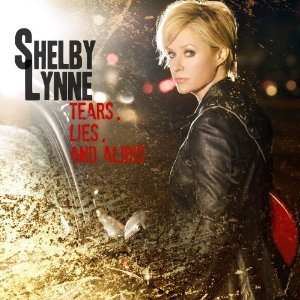
Shelby Lynne: Tears, Lies, and Alibis


RIYL: Roseanne Cash, Tift Merritt, Neko Case

It took ten years for Shelby Lynne to declare I Am Shelby Lynne, following her little-noticed first life as a glossed over country-pop singer from the late ’80s to the mid ’90s. This period was so little noticed, in fact, that I Am Shelby Lynne earned her a “Best New Artist” Grammy in 2001, even though the not-so-unknown Epic label had released her 1989 debut a full ten years prior. But we all know how with-it the Grammys are.

Anyway, since then, Shelby has done a little western swing (Restless), some Dusty Springfield covers (2008’s Just a Little Lovin’), and now she returns to roost in a mostly stripped back, rootsy country vibe with Tears, Lies, and Alibis. A little bit of Dusty’s Memphis soul from the last album informs this disc, but for the most part, this is country music as it was meant to be – about real life situations, and with no gimmicky production tricks or cynical modern pop chord changes and productions.

shelby_lg

The stripped back production is especially welcome in light of the beautiful directness of songs like “Family Tree,” which is as bitter and biting as similar minded tracks by Elvis Costello and Bob Dylan; or “Alibi,” which packs its main wallop via low key vocal harmonies that are deservedly allowed to step forward each time before the chorus hook. They only show for a few seconds each time, but that’s all the time they need to make their point.

At ten songs, the album is lean, though not a second is wasted. It’s exactly the kind of record that one hopes to find these days – the kind that has no weak moments, that doesn’t drag on too long, and that has a strong enough emotional resonance to keep inviting a return listen. Granted, it’s not going to fit every situation, but on a dreary rainy day, it’s perfectly in sync with the environment. In times of heartbreak, it reads your mind and says what you’re not courageous enough to say. And in times when you just want to hear a solid, well crafted album filled with well written songs, you couldn’t do much better. (Everso 2010)

Shelby Lynne MySpace page

Original Cast Recording: American Idiot


RIYL: Green Day, “Rent,” “Glee”

Here’s the God’s honest truth about the Broadway cast recording of “American Idiot” – it’s neither as good nor as bad as you’ve heard it is. These kinds of projects serve as a knives-out snarkfest for the more weak-willed music critics, who are then assaulted by the band’s faithful followers in the comment sections. Don’t take sides; they’re both right, and they’re both wrong.

The album features Green Day’s landmark 2004 album American Idiot in its entirety – they even included some B-sides from the Idiot sessions – along with a few tracks from the band’s 2009 album 21st Century Breakdown. The backing tracks are by and large Green Day’s original recordings, though “Last of the American Girls” starts off with a knowing wink to “Eleanor Rigby.” This makes for some smooth transitions from CD to the stage, though “Jesus of Suburbia” sports one of the most jarriing key changes you’ll ever hear when it’s the female lead’s turn to sing.

Perhaps the most shocking thing about American Idiot is the fact that Green Day’s original recordings of these songs are in many ways more musical than the musical versions. Stacked vocals are stripped away for the purpose of building to the big choral effect, though they don’t do that big choral effect nearly enough. Indeed, many songs are frankly undersung. The songs are already larger than life; the Broadway versions of them should be massive, like Godzilla-destroying-Manhattan big. The title track pulls a nifty layered vocal build-up during the break, and “Whatsername” capitalizes on the song’s soft-LOUD arrangement to make for a triumphant finale. “21 Guns” is the album’s showstopping moment, with the most theatrical arrangement and a vocal to match. The album could use more moments like them. “Wake Me Up When September Ends” has the pretty string touches, but for a musical about a post-9/11 landscape, that song of all songs should have been sung to the heavens.

The band were unquestionably treading a slippery slope in adapting their music for the stage, and they must have felt pressure to keep the spirit of the originals intact. Ironically, American Idiot could have benefited from a little more tinkering. It’s great to hear a Broadway score rock like this, but it would have been better to see them fully embrace what people love about Broadway in the first place. (Reprise 2010)

Click to buy American Idiot from Amazon

MGMT: Congratulations


RIYL: The Beach Boys, The Beta Band, The Flaming Lips

With “Time to Pretend,” MGMT crafted a brilliant piece of pop that detailed exactly why they were destined for obscurity. Of course that song ended up being an underground hit of sorts and skyrocketed the band to an appeal that wasn’t exactly mainstream, but was definitely above their original low expectations. And while the band will never attain the stereotyped superstar status that will bring them heroin, models and international fame detailed in that song, they have managed to achieve one rock cliché with the release of Congratulations; the mediocre and needlessly complex second album.

The band has gone out of their way to describe this album in interviews as a cohesive work that should be listened in its entirety, and that it’s not a “singles” record. That’s a lie. This is the definition of a singles record, with the singles being the only worthwhile tracks on the album. Psychedelic freakouts “It’s Working” and “Flash Delirium” stand out so high above the sonic wallpaper they surround that they almost sound like they were recorded by a different band. This rings especially true with “Flash Delirium,” a piece of Beach Boys-inspired psychedelia that Brian Wilson might have written during one of his more manic phases. Another Brian supplies inspiration for the album’s third and final stand-out track; “Brian Eno,” a fast-paced romp of glammed power pop that should please fans of Eno-era Roxy Music.

mgmt band

The rest of the album is just so dull and forgettable that it’s not even worth complaining over, but I’ll try anyway. “Someone’s Missing” is an apt title for a track so incomplete, as it sounds like a half-finished idea that someone forgot to produce, while the bloated “Siberian Breaks” is a 12-minute journey into ambivalence, devoid of anything resembling a hook or memorable riff. The duo’s attempt at slowing things down, like on the tepid “I Found a Whistle” and the instrumental ‘Lada Dada’s Nightmare” are where things really fall apart into a sea of somber banality. Yikes, maybe there is some stuff here worth complaining over after all.

Download “Flash Delirium,” “It’s Working” and “Brian Eno,” because they are amazing tracks. But avoid everything else that Congratulations has to offer. Until then, here’s hoping that MGMT’s third album is the stereotypical “comeback” record that brings them back to form. (Sony/Columbia 2010)

MGMT MySpace Page

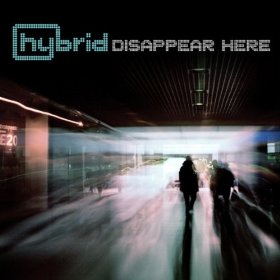
Hybird: Disappear Here


RIYL: Leftfield, Faithless, Infected Mushroom

I’ve been in love with Hybrid ever since first hearing “Finished Symphony” on the soundtrack to the PS2 snowboarding game “SSX Tricky.” I’ve also been nearly unable to describe them. They’re dubbed “progressive beats” and “nu skool breaks” by electronic fans, but I have no idea what that actually means. And how could anyone classify Hybrid into one (sub)genre? Listening to the quiet majesty of “Finished Symphony” and the aggressive beats of “Can You Hear Me Now” off of their newest album Disappear Here is almost like listening to two completely different bands; the two tracks sound nothing alike.

And while it’s to be expected that a band might change sound over the course of their career, Disappear Here itself is full of radical genre changes from track to track. While the aforementioned “Can You Hear Me Now” is an intense dance number, it’s immediately followed up by “Green Shell Suit,” a hauntingly beautiful instrumental that would fit side-by-side with “Finished Symphony” on the band’s 1999 debut Wide Angle. About the only thing that’s consistent on Disappear Here are vocals by the band’s newest full-time member Charlotte James. Her distinctive voice serves well as a connective tissue between the wildly varying styles on the album, although some hardcore fans might complain that her near-constant presence on the album takes the band one step too close to a mainstream sound.

Regardless of what you might think of the extra vocals on Disappear Here, this is still Hybrid being Hybrid, going all over the place from one style to another and doing it a damn good job of it. It’s as cinematic and epic as their previous releases, and some tracks, like the pounding “Original Sin” and darkly ominous “Break My Soul” can stand up with the group’s best. This is just more “wow” from a group that can seemingly do no wrong. (Distinct’ive Breaks 2010)

Hybrid MySpace Page

Rogue Wave: Permalight


RIYL: Nada Surf, Death Cab For Cutie, The Shins

Fans of alternative pop/rock band Rogue Wave know that their music can be somewhat of an acquired taste, just like the Shins or Death Cab for Cutie. But therein lies a big reason for their success. The music won’t instantly grow on you nor make you instantly tired of it. Instead, Zach Rogue (who has a soft tenor a la Josh Rouse) and his band mates make the kind of music that should have staying power on your master play list. Rogue Wave’s latest, Permalight, is a departure from previous work, though it’s not exactly easy to pinpoint just why. Maybe it’s because Rogue suffered a couple of slipped discs in his neck in late 2008, which rendered him unable to move and scared him into believing he had a life-threatening illness. Eventually the swelling went down, and he regained enough feeling in his hand to be able to play the guitar. Many of the songs on Permalight are noticeably bouncier and happier than what one would expect from Rogue Wave, but the quality of songwriting is definitely still there.

Rogue_Wave_01

If you like upbeat alt-pop, you’ll find the jangly “Solitary Gun” or “Stars and Stripes” to your liking. But if you favor the darker side of what made you love Rogue Wave, “Sleepwalker” or the acoustic driven “Fear Itself” will suit you more. Then there is the total oddity of the title track or the robotic “We Will Make a Song Destroy,” which shows Rogue Wave becoming more experimental. One thing is for sure, though; many of us are glad that Rogue is okay and that Rogue Wave is still making music. (Brushfire/Universal 2010)

Rogue Wave MySpace page

« Older posts Newer posts »