
Author: Jeff Giles (Page 17 of 41)

Everything you need to know about “The Beatles: Rock Band”

In case you hadn’t already noticed, we’re living in a post-superstar world — a place where stylistically far-flung artists like Devendra Benhart, Passion Pit, and the Gossip can be hugely popular in their own right, but unheard (and virtually unknown) outside their own small pockets of fandom, and where even a legitimate household name like Reba McEntire can score a Number One record simply by selling 95,000 units in a week. In fact, the top-selling album of 2009 — Michael Jackson’s Number Ones — is a compilation originally released in 2003, which should tell you pretty much everything you need to know about the current state of music.

Or how about this: the year’s most anticipated new release by a major artist isn’t a CD at all, but a video game — and one from one of the last true superstar acts, a band that’s been broken up for almost 40 years.

We’re talking, of course, about the imminent arrival of “The Beatles: Rock Band,” the new edition of the wildly popular game that, in the words of Bullz-Eye’s David Medsker, “allows the players to pretend that they’re in the greatest band of all time.” The game, like the freshly remastered versions of the Beatles’ catalog that fans are drooling over, won’t arrive in stores until September 9, but in the meantime, you can read Bullz-Eye’s breakdown of what to expect in a piece titled — of course — “While Our Plastic Video Game Guitars Gently Weep.” To read about the 10 tracks we can’t wait to play, the songs we’re hoping Harmonix chooses for future expansion packs, and assorted random thoughts on what’s sure to be the gaming event of the year, click the above image or follow this link!
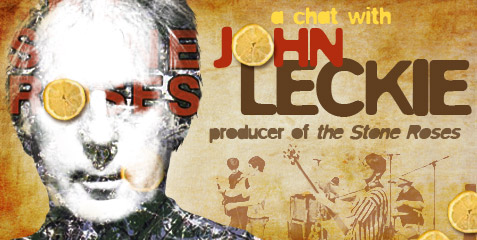
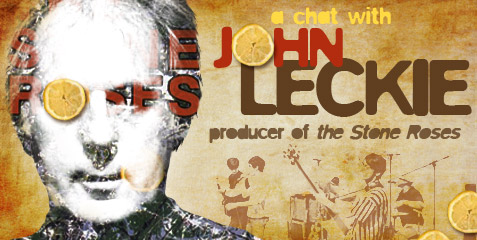
Twenty years later, producer John Leckie looks back on “Stone Roses”

Producer John Leckie may not be a household name, but thanks to his work behind the boards for a long list of diverse, well-respected acts (including Pink Floyd, Radiohead, all four Beatles, and Public Image Limited), his talents are well known to most rock fans — whether or not they’re aware of it. One of his past projects, the Stone Roses’ self-titled debut, celebrates its 20th birthday this year, and thanks to the good people at Sony Legacy, it’s getting scrubbed and primped for a deluxe reissue — one which Leckie is now out making the promotional rounds to support. Bullz-Eye’s David Medsker, an unabashed Stone Roses fan, naturally jumped at the opportunity to interview Mr. Leckie — and the transcript of their chat is now live at Bullz-Eye.

One of the first questions, naturally, is just how far the reissue’s sound has come from the original CD — and Leckie has an interesting response:

We would make the vinyl master that would then be a CD master, and then it would be copied again for overseas. By the time it’s pressed in America or Australia, it’s a copy, of a copy, of a copy, of a copy.

In other words, if you own an original U.S. pressing of Stone Roses, the fidelity is even dodgier than you might have imagined. But is the new CD remaster the be-all, end-all version, or does Leckie recommend trendier audiophile measures, like listening to a new vinyl pressing? Leckie is vinyl-friendly, as you might imagine, but he’s surprisingly pragmatic, as it turns out:

It’s like, well, what are you playing it on? Most people listen to music on iPods or even little speakers on their laptop. Or in the car, with the windows open. Vinyl is an experience. You don’t do anything else. You just sit and listen to it.

To read more of David Medsker’s wide-ranging interview with John Leckie — including his thoughts on the punk bands of the ’70s, some of his favorite lesser-known projects, and his 20-years-removed perspective on Stone Roses, click on the above image or follow this link!

Kate Earl: Kate Earl

Earl’s 2005 debut, Fate Is the Hunter, came and went with barely a whisper, which might be why her sophomore effort takes no chances: With Earl’s name (and thoroughly enjoyable face) plastered across its garishly bright artwork, Kate Earl would leap off store shelves if there still were any. Musically speaking, these 11 songs cover plenty of bases too, from the moody, vaguely Dido-ish “Nobody” to the charmingly retro “Only in Dreams,” which sounds like Olivia Newton-John recording a Phil Spector tribute with Imogen Heap behind the boards. (In other words, awesome.) After drawing the listener in with a stack of unapologetically (and, it must be said, pleasantly) commercial pop tunes, Earl wisely spends the back half of the album getting deep. Tracks like “Golden Street” lack the bright melodic sparkle of Earl’s earlier cuts, but they also prove she has something more to say than “a love like this is everlasting” (from “Everlasting,” natch). An Alaska native, Earl may have picked the wrong year for her breakout – the poor girl will have to answer as many questions about Sarah Palin as she will about her own music – but she’s still primed for her major-label breakout. Whatever that means in 2009, anyway. For pop fans who can’t stomach Colbie Caillat levels of saccharine sweetness, Kate Earl is one of this year’s better bets. (Universal Republic 2009)

Kate Earl MySpace page

Vertical Horizon: Burning the Days

“I’m done with the middle ground,” moans lead singer Matt Scannell on the third track of Vertical Horizon’s latest album, but nothing could be further from the truth. Burning the Days is, in fact, the most relentlessly, punishingly middle of the road record you’ll have the displeasure of hearing all year, a solid block of dull beige mid-tempo ballads that will leave all but the most rock-allergic listeners resorting to desperate measures – such as punching one’s self in the throat, for example – to break up the monotony. Whoever engineered or mastered it deserves a Grammy simply for staying awake; conversely, Rush’s Neil Peart – who plays drums on three tracks and wrote lyrics for the album closer, “Even Now” – is old and successful enough to know better, and should be severely punished for encouraging this kind of senseless, yawning musical horror. Scannell has always had a weakness for adult contemporary mush, but Burning the Days represents a new, nougaty soft frontier for his music; it’s an experiment in blandness that makes MOR dozers such as Chicago’s XXX sound like Sgt. Pepper’s-level works of genius. The bitterest shame of the whole thing is that Vertical Horizon is on its own label again, free from corporate interference, and could have chosen this moment to make a strong artistic statement. For what few hardcore fans the band has left, this might be worth your time and money, but for anyone else, it’s positively deadly. (Outfall 2009)

Vertical Horizon MySpace page

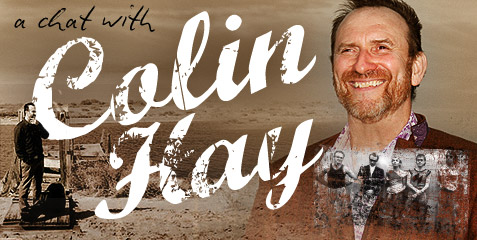
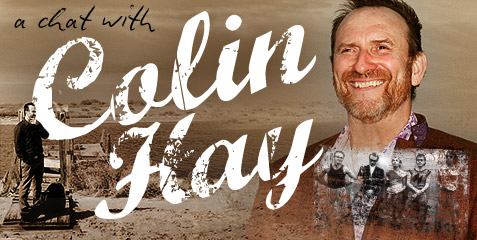
Colin Hay basks in the “American Sunshine”

If you remember Colin Hay, it’s probably for one of two things: his days as frontman for ’80s superstars Men At Work, or his multiple appearances on the soundtracks of Zach Braff’s “Garden State” and “Scrubs.” The reality, of course, is that Hay’s career is deeper than either of those things might suggest; since rising from the ashes of Men At Work in the ’80s, he’s released a series of solo recordings that, while not as commercially successful as he might have hoped, have earned him consistently solid reviews — and the ongoing devotion of a small but dependable following. Hay’s latest album, American Sunshine, is out this week — and Bullz-Eye’s Mike Farley (who also reviewed the album) sat down for a chat to discuss Hay’s outlook on the new material, his years as a solo artist, and the prospects for a Men At Work reunion.

You’ll notice Mr. Hay is smiling in the above photo, and for good reason — not only did Braff’s fanhood expose him to a new (and presumably rather lucrative) avenue of exposure for his music, it helped keep the audiences at his gigs from turning into the depressing “give us the hits” crowds many “heritage” artists have to deal with. As he tells it:

Maybe there are some people that want to hear Men at Work songs, and that’s cool. There’s nothing wrong with that. But for the last decade or so, the people that come to see me tend to not mind the Men at Work songs, but they tend to want to hear new things.

Also undoubtedly helping Hay’s mood — and inspiring the title of his latest album — is his longtime residency in southern California, which he recounts in the interview:

I came here (Los Angeles) in 1988, because they suggested that I meet the record company and say hello and hang out and stuff like that. So I came over here, and I ended up making the record here. And then things were pointing away from Australia at that particular time, so I just stayed. And I’m still here, really. I like it. I like Los Angeles.

To read the rest of Mike Farley’s interview with Colin Hay, click on the image above, or just follow this link!

« Older posts Newer posts »