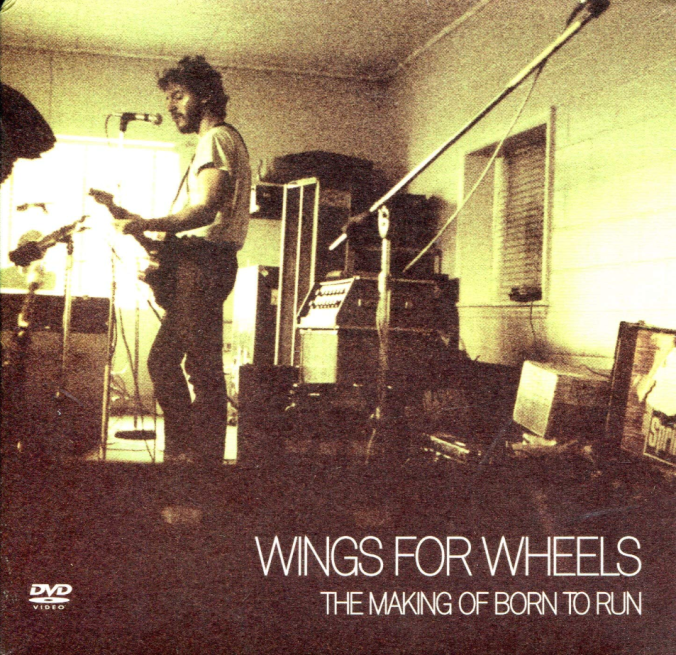
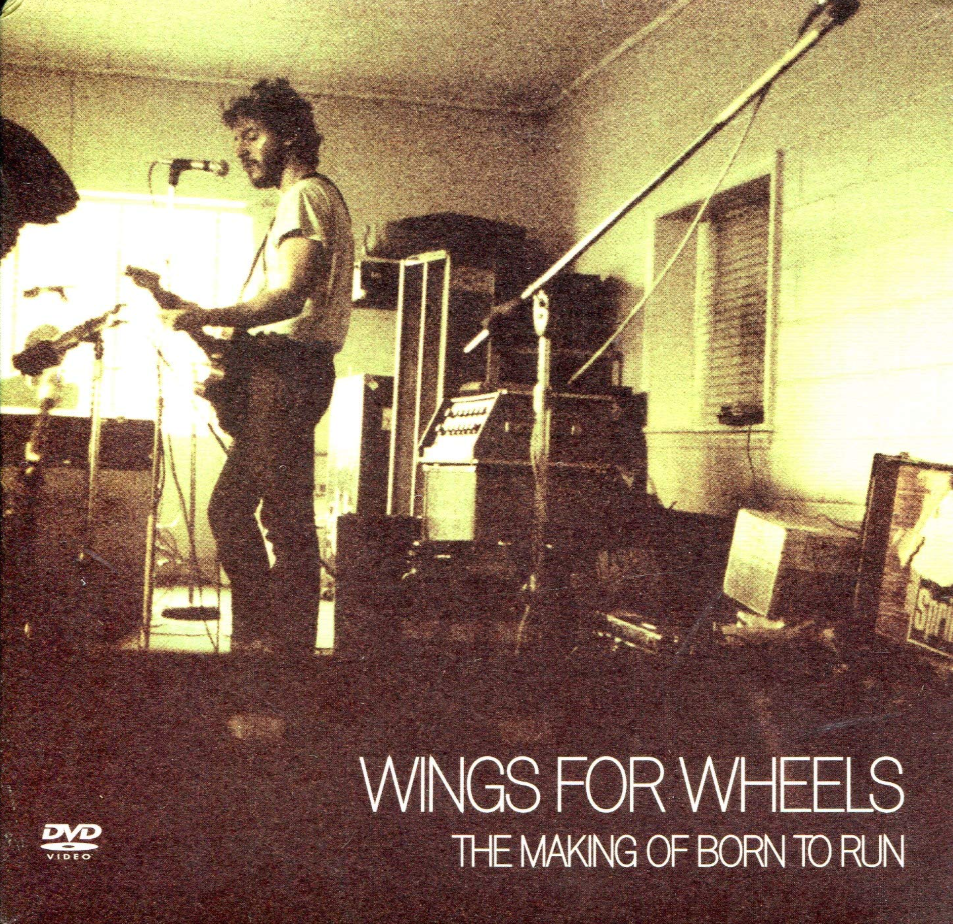
“Wings for Wheels: The Making of Born to Run” is a 2005 Grammy-winning documentary (Best Long Form Music Video) directed, edited, and produced by Thom Zimny. It chronicles the creation of Bruce Springsteen’s iconic 1975 album Born to Run, widely consider to be one of the greatest rock albums of all time.
The documentary runs about 90 minutes and was released as part of the 2005 Born to Run 30th Anniversary Edition, alongside a remastered album and a 1975 Hammersmith Odeon concert film. The film features rare archival footage from 1973–1975 (much never publicly seen before), including studio sessions, rehearsals, and early performances. In a number of scenes we have Bruce listening along to early recordings and demos as he discusses the tortuous recording process. The film also includes footage of Brice driving around New Jersey, visiting sites tied to the album’s creation like the West Long Branch house where he wrote the album’s song on a piano, along with 2005-era interviews and reflections from Bruce, Jon Landau, Mike Appel, Jimmy Iovine, Patti Scialfa and E Street Band members.
The film isn’t intended as an objective look at Bruce or the album. Instead, it’s a heartfelt celebration of this landmark achievement, paired with a deep, insider’s dive into the making of the record. Created for Springsteen’s fans, it delivers exactly what it promises.
Pressure to Succeed
The pressure to create a great album was enormous, though much of that pressure was self-inflicted by Bruce himself. He was a perfectionist, and he wanted to create something special. In the film, Bruce explains his grand ambitions. He wanted to create “something that would be noticed.” That translated to an obsessive commitment to every detail as he drove everyone around him a little crazy. But that perfectionism also helped to create a masterpeice. Clarence Clemons explained in the film how Bruce helped direct every note of his epic “Jungleland” sax solo.
The pressure also went for beyond Bruce’s own expectations. His first two records were excellent, but they did not achieve commercial success. The vibe with the record company was pretty clear . . . Bruce needed a big hit or he would be dropped from the label.
Storytelling
This album firmly established Bruce Springsteen’s reputation as a master storyteller. As he reveals in the film, he approached each track as a mini-epic. He spent months obsessively crafting the lyrics, filling notebooks with drafts and constantly revising them to match the evolving music. Determined to escape the wordiness of his earlier work, he ruthlessly stripped away clichés in pursuit of sharper, more vivid storytelling. At the same time, he drew inspiration from noirish B-movie films, aiming to make the songs feel cinematic—an influence that shaped both their atmosphere and their memorable titles.
Recording Process
The entire recording process was extremely difficult. Bruce was a perfectionist, and as mentioned about he felt intense pressure to succeed. The song “Born to Run” famously took around six months to record, and towards the end of the process it still wasn’t quite right. That’s when Steven Van Zandt showed up and famously explained to Bruce how the signature riff of the song was being drowned out by other aspects of the recoding. Bruce called this Miami Steve’s greatest contribution to his music, and shortly after Van Zandt joined the band for the rest of the recordings.
That was one of several band changes during the recording of the album. David Sancious (keyboards/piano) and Ernest “Boom” Carter (drums) played on the title track “Born to Run,” which was largely completed in August 1974 at 914 Sound Studios. This was one of the first major pieces finished for the album after months of arduous work. Shortly after wrapping that song, both musicians left the E Street Band to pursue other opportunities. The film doesn’t get into why they left, but the grueling recording sessions probably had something to do with it. Both graciously gave interviews for the film and reflected positively on their experiences. In one clip, with a wry smile and humorous tone, Carter jokes about hearing the massive success of Born to Run after he and David Sancious had already left. He quips something to the effect of wanting to “kill himself” when he realized what a huge hit it became, as he had missed out on the fame, touring, and long-term rewards that came with it.
Springsteen brought in Roy Bittan (piano/keyboardist) and Max Weinberg (drummer) after a bunch of auditions, and both became fixtures in the E Street Band for decades.
Other major changes were also taking place. Jon Landau’s arrival began to reduce Mike Appel’s influence within the camp. While both men speak kindly about each other in the film, Wings for Wheels deliberately avoids the deeper drama, including the lawsuit Springsteen later filed to escape his contract with Appel. Released long after they had buried the hatchet, the documentary chooses instead to celebrate the positives from that turbulent time.
Massive Success
As it turns out, the end result was more than worth all the struggle. Born to Run became a massive commercial and critical triumph, propelling Bruce to stardom and landing him simultaneously on the covers of Time and Newsweek in the same week. Though Bruce never welcomed the intense hype, he refused to let it slow him down. Decades later, “Wings for Wheels” gives us a nostalgic look back at the making of the album and captures why it still resonates so deeply.
