 Movies get made for many reasons, and turning a profit is an entirely legitimate one. The best films, though, tend to be driven by something deeper, an artistic vision that transcends the balance sheet. Then there’s the middle tier: competently executed, formulaic pictures engineered to capture box office and streaming revenue by following a proven template.
But a newer phenomenon deserves its own category: the music biopic. At its core, the modern music biopic isn’t really a film so much as a brand exercise. The movie itself is almost beside the point, a vehicle for leveraging an artist’s existing audience and then amplifying it. The true return on investment comes afterward, when renewed interest drives streams, catalog sales, and other ancillary revenue to new heights.
Queen Template
“Bohemian Rhapsody,” the 2018 Queen biopic, is the purest expression of this formula. Made on a production budget of roughly $50 million, the film grossed over $910 million worldwide, a staggering return by any measure. But the box office was almost beside the point. In the six months following the film’s release, on-demand streams of Queen’s catalog more than tripled, jumping from 588 million to 1.9 billion, while album sales rose 483 percent. The catalog generated nearly $18 million in revenue over that period, compared to just $4.4 million in the six months prior. The halo effect proved remarkably durable. Three years after the film’s release, Queen’s annual royalties were still running above $53 million. And the ultimate measure of what the film did for the brand: Queen eventually sold their catalog to Sony Music for $1.27 billion. A $50 million movie investment helped transform a beloved but aging rock catalog into a billion-dollar asset. That is the template every music biopic is now chasing.
Same Template for Michael Jackson
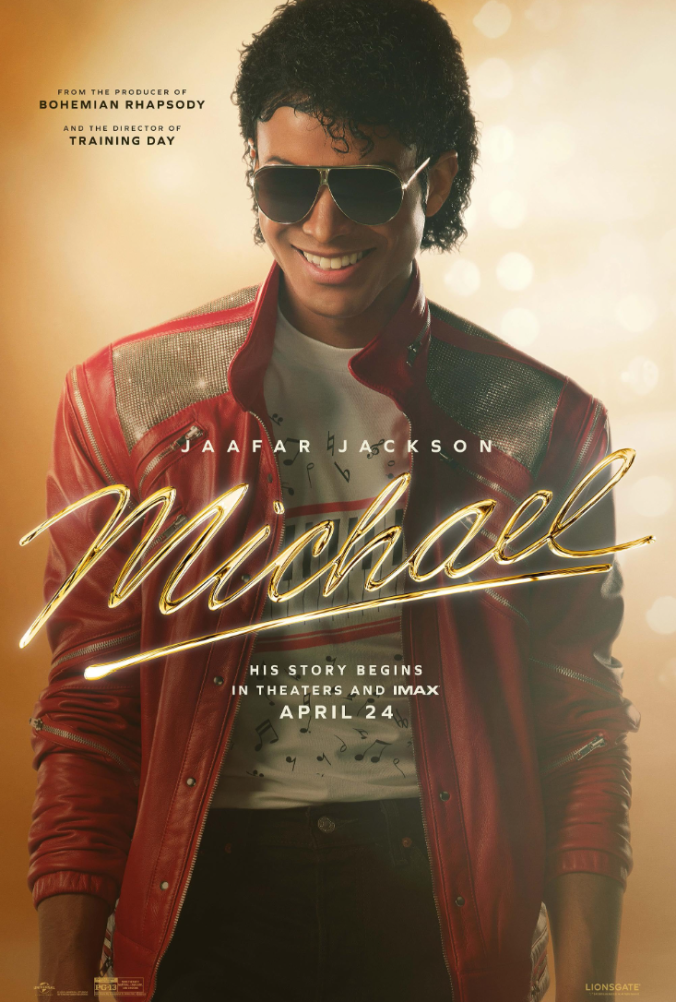
The Michael Jackson estate is now running exactly the same play. The recently released “Michael,” directed by Antoine Fuqua and starring Jackson’s nephew Jaafar in his film debut, opened to $97 million domestically and $218 million globally, setting the all-time record for a biopic opening weekend. The film carries a price tag near $200 million, with costs split between Lionsgate, Universal, and the Jackson estate itself, a telling detail that reveals just how deliberately the estate has treated this as a business investment rather than a passion project. And the catalog effect is already materializing in real time. Jackson’s solo catalog pulled nearly 48 million on-demand streams in the film’s opening weekend in the United States alone, a 116% surge compared to the prior weekend, putting him on track for his biggest streaming week ever. The estate clearly studied the Queen playbook closely. Its strategy explicitly mirrors “Bohemian Rhapsody,” and it has renegotiated terms with Sony to benefit directly from the streaming surge. The box office is almost secondary. The real prize is what happens to the value of one of the most lucrative music catalogs in history once a new generation decides Michael Jackson’s music matters to them. The estate has been brilliant in managing the Michael Jackson empire.
Fans Love It; Critics Not So Much
With this backdrop it’s not at all surpising that critics have savaged the film while die hard fans around the world love it. Just check out Rotton Tomatoes, where the film has a 38% critic score and a 97% audience score. I’ve never seen numbers like that!
This review from Rob Dean sums up the reaction well:
Why is “Michael” so inert? Putting aside the aggrandizing mythology and the so-shallow-it’s-flat psychology that also brings down this film for a moment, and I’m left wondering how this biopic of the King of Pop is so damn boring and lifeless? Director Antoine Fuqua, working from a script by John Logan and with approval from the Jackson family/estate, has crafted a limp movie devoid of emotional engagement and visual flourishes. “Michael” is bland, lionizing, and lacks any insight into the life of Michael Jackson—in short, it fails at basically every aspect of being a biopic.
The film isn’t interested in any of the controversies surrounding Michael’s life. That’s not the point here. It’s not about creating a compelling story. Rather is just a celebration of the artist and his music. And of course the music is amazing. We can understand why fans love this.
Expect to see and hear much more of Michael Jackson in the coming years. The estate is sitting on a gold mine, and they’re going to mine every last nugget.
