Page 90 of 583

Seen Your Video: OK Go, “End Love”

Sweet Jesus. OK Go has done it again.

What I love about “End Love” is that the stop motion photography reminds me of Zbigniew Rybczyński’s groundbreaking videos in the early ’80s, particularly the Art of Noise’s “Close (To the Edit)” and Lou Reed’s “Original Wrapper.” Only, of course, OK Go takes the concept into outer space by turning the clip into an all-nighter and, in the end, a giant group production. Along with a few very curious geese.

Tim is clearly the best dancer of the bunch here, but that’s almost become an in-joke of sorts. If Dan and Andy suddenly learned how to be as fluid as Tim, it wouldn’t look right. The occasional inclusion of super slo-mo shots was a nice touch too, but nothing touches that human cyclone at song’s end. And now that they have gained control of the album and released it on their own label, we don’t have to worry about any of that ‘no embedding’ nonsense. Get comfy. You’re going to need to watch this one a couple times to catch everything.

Devo: Something for Everybody


RIYL: Jerking back and forth, whipping it, playing peek-a-boo

Jimi Hendrix, Janis Joplin, Jim Morrison and Kurt Cobain lived and died in less time than the gap between Devo’s last decent album and the present. (Add a year if you want to go back to their last truly good album.) The band’s last album, Smooth Noodle Maps, is almost old enough to buy its own beer, all of which is a flowery way of saying that it’s been a long, long time since Devo was even close to being on their game.

Devo_01

Or maybe they were just biding their time. After all, there was no point in Devo releasing new music in the ’90s or even the first half of the ’00s, as the musical climate would have been indifferent at best and hostile at worst. Now, on the other hand, is a damned good time to be Devo, on a number of levels. Between the New New Wave movement (most of which, frankly, stinks) and the emergence of former alt.rock chart giants dominating the kids music circuit, Devo, for the first time in decades, has options. And they’re striking while the iron is hot.

Something for Everybody, Devo’s first album in 20 years, is an embarrassment of riches. The songs are insanely catchy – “What We Do” and “Human Rocket” are among the best songs the band’s ever done – and the production deftly blends classic Devo (think Freedom of Choice, New Traditionalists and Oh No! It’s Devo) with modern-day flourishes. The lyrics are still oddball, but tamer; there’s no talk of slapping mammies or altruistic perverts, and that’s just fine. Not everything here works – “Cameo” tries a bit too hard, and “Sumthin'” is too slavish in its attempt to channel “Whip It” – but this is far better than anyone had a right to expect from a band nearly 30 years removed from its commercial peak. Bravo, gents. (Warner Bros. 2010)

Devo MySpace page
Click to buy Something for Everybody from Amazon

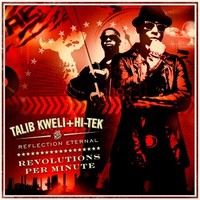
Talib Kweli & Hi-Tek Are Reflection Eternal: Revolutions Per Minute


RIYL: Common, Mos Def, Erykah Badu

It’s been a decade since Talib Kweli and Hi-Tek released their first album as Reflection Eternal. Following that album, Train of Thought (a critical and commercial success), the former has maintained his position as a darling of the hip-hop underground, releasing several albums that cemented his status as a lyrical genius. The latter has branched out into more commercial waters, providing beats for the likes of 50 Cent and the Game. The two have worked together sporadically in the last decade, but they’ve finally returned for a full-album collaboration with Revolutions Per Minute.

On this long-awaited effort, the Brooklyn MC and the Cincinnati DJ pretty much keep it the same as it ever was, with solid rhymes over soulful production. Kweli remains an amazingly gifted and literate rhymer, whether the subject matter is political (“Ballad of the Black Gold” could not be more timely) sensual (“Long Hot Summer”), or just plain ol‘ hip-hop braggadocio, as evidenced by the all-star posse cut “Just Begun.” As on the first Reflection Eternal album, Hi-Tek’s production is solid but unspectacular. Kweli’s worked with better producers (how dope would a Kweli/Kanye collaboration album be?), but he and Hi-Tek have a chemistry that keeps Revolutions fairly enjoyable. While the forays into crossover territory (featuring the likes of R&B songstress Estelle and hipster-pop duo Chester French) should probably be avoided, fans who’ve waited patiently for this album to surface will be pretty satisfied (and totally not surprised) with what they hear. (Blacksmith/Warner Bros. Records 2010)

Reflection Eternal MySpace page

Tom Petty & the Heartbreakers: Mojo


RIYL: Lucinda Williams, Jackson Browne, aging white dudes who like to toke up

Mojo is the strongest set of songs from Tom Petty & the Heartbreakers in over a decade and a half. Ever since “Mary Jane’s Last Dance,” the singer and the band have tried time and again to come up with a classic album that meets the standards of their earlier work. As the band has aged into one of the stalwarts of rock and roll, they have produced music that may be biting in the lyrics, but musically and production-wise lacked a certain edge.

During the Heartbreakers rise to success in the ’70s and ’80s, there was a danger in their music, perhaps because the band members were constantly at each other’s throats. Hostility brewed beneath the surface, from the fights between Petty and former drummer Stan Lynch, to the drugs and alcohol that affected the lives of bassist Howie Epstein and keyboardist Benmont Tench. At one point, Petty punched his fist through a wall, breaking his hand because he couldn’t get a song right. That kind of passion either cause a band to implode, or the members find a way to compromise and mellow with age. For the Heartbreakers, both kind of happened. Lynch quit the band and Epstein was asked to leave; he eventually OD’d on heroin. Meanwhile, Petty achieved nova-like success and decided that it was good to be king and that he didn’t want to fight all of the time.

Tom_Petty_15

The past fifteen years have seen some good Petty songs, but not necessarily good Petty albums. From the sound of it, Petty and the band set out to really change that with Mojo.

“Jefferson Jericho Blues” shares some of the same looseness of early Heartbreakers deep cuts, while Mojo’s first single, “I Should Have Known It,” is the cousin of “Mary Jane’s Last Dance” and “You Don’t Know How It Feels” (from 1995’s Wildflowers). Elsewhere, there are some tender ballads, which Petty never gets enough credit for, like the country-tinged “No Reason to Cry” and “Something Good Coming.” The latter holds up with some of Petty’s best heartbreakers.

Petty once claimed that he didn’t like repeating himself and the band continues to explore other genres besides the Americana rock they are famous for playing. “First Flash of Freedom” is an extended jam featuring fine guitar interplay between Mike Campbell and Scott Thurston. It feels like it may have been inspired in a haze of second-hand smoke during some of the Heartbreakers gigs with the Allman Brothers Band. “U.S. 41” is a swampy blues stomp; “Takin’ My Time” is embedded deep in the blues; and “Don’t Pull Me Over” has a reggae groove that will likely go over well in concert.

Throughout the album, Campbell and Thurston trade guitar licks with relish and Tench displays some of his finest organ playing and piano textures in all of the Heartbreakers long history. As usual, Ron Blair (the band’s original bassist who came back to the fold after Epstein was canned) holds things down with sturdy, unobtrusive bass playing.

Still, there is a sameness to this lot of songs that, unfortunately, must be attributed to drummer Steve Ferrone. The longtime session player plays with such precision and technical prowess that it lacks any personality. If the Heartbreakers are one thing, it’s a band full of personalities, from Blair’s dyed black hair to Campbell’s dreads to Petty’s entire personality. There are some tracks on Mojo in which Ferrone seems to find that Heartbreaker groove, but these are only moments. Frankly, it just doesn’t sound like the Heartbreakers, at least, not the Heartbreakers we’ve all come to love. Alas, it’s not our band but Petty’s; and if he’s happy with a human metronome behind the drum kit, then fans will have to live with it (seriously, the drums on “Let Yourself Go” and “Running Man’s Bible” could have been programmed in Tench’s organ, they’re that lifeless).

For this reason, despite the strong number of songs (there are a couple fillers- the curse of the CD age) repeated listens of Mojo may breed familiarity of the songs, but none of them really scream “classic.” (2010, Reprise)

Tom Petty & the Heartbreakers official site
Click to buy Mojo from Amazon

Indigenous: The Acoustic Sessions: A 10 Year Anniversary


RIYL: Stevie Ray Vaughan, Los Lonely Boys, Government Mule

Guitarist Mato Nanji is celebrating the 10-year anniversary of his band with acoustic renditions of songs that cover the band’s entire career. The anniversary covers the decade of album releases from the band’s 1998 debut Things We Do up through their most recent album, 2008’s Broken Lands. The band has always centered around Nanji’s electrifying guitar work on his trusty Fender Stratocaster. But as we see here, Nanji’s ace musicianship translates very well to the acoustic spectrum. These tracks also serve to highlight his ever-soulful vocals and strong blues songwriting.

The disc opens with two great tracks from Things We Do,; “Now That You’re Gone” and the title track. Both epitomize Nanji’s endearing style with bluesy but melodic tunes that feature sharp chord changes and lead guitar lines that sing. Nanji’s wife Leah also sings on the harmonies, helping to keep Indigenous a family affair (following the departure of Nanji’s brother, sister and cousin from the band in 2006.) Nanji then moves on the band’s great second album Circle, featuring “Little Time” and “Rest of My Days.” The former features some of the best riffing on the album over a tribal sort of rhythm. The latter highlights the way Nanji mixes heartfelt vocals with hard-hitting riffs to really dig deep into the blues. Both were electrifying in their original format, but work great acoustically too thanks to the stinging riffs, vocal melodies and crisp rhythms.

“Want You to Say” moves on to the band’s third eponymous album with one of the band’s top tunes, a deeply melodic and infectious love song that benefits from the husband and wife harmonies. Three songs are featured from the fourth album Chasing the Sun. “Fool Me Again” has some great note bending and more strong harmonies. “Come on Home” is a deep blues ballad that just oozes soul. “Leaving” has some of Nanji’s bluesiest riffs, and feels like it could fit on the soundtrack to a Clint Eastwood western. It also features some great guest fiddle work, which deepens the bluesy feel of the track even further. The last album is represented with “Should I Stay” and “Eyes of a Child,” two more soulful tunes that feature the deeper perspective of the passage of time. A playful cover of Roy Orbison’s “You Got It” closes the album on an uplifting note.

The whole album serves as a great back-to-basics exercise in the blues. It’s easier to impress with amps cranked, but Nanji’s virtuoso blues playing and songwriting really shines on these tracks. (Vanguard Records 2010)

Indigenous MySpace page

« Older posts Newer posts »