Page 66 of 583

Matt White: It’s the Good Crazy


RIYL: John Mayer, Jason Mraz, Maroon 5

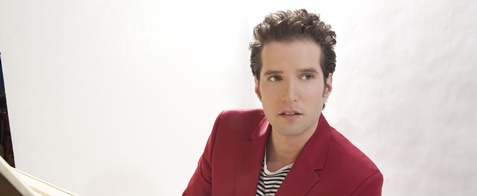
Thanks to the success of guys like John Mayer, a new crop of “sensitive” singer-songwriters has flourished in the music world. The dawn of the 21st century brought along the resurgence of musical guys with “feelings,” and Matt White is one of the latest artists to attempt to stake his claim in that crowded scene. In a perfect blend of an old archetype with new-school technology, White (who uses piano as his primary instrument but also plays guitar) was discovered by record execs after amassing over 50,000 friends and fans on MySpace.
Matt_White_01

It’s the Good Crazy, White’s second full-length album, is exactly what you’d expect a modern-day singer-songwriter album to be. Many songs on the album turn out to be reminiscent of songs or artists that have been omnipresent on Adult Top 40 radio these last few years. You hear echoes of Coldplay (right down to the falsetto) on the spare piano ballad “When I Fall,” a sound White might want to explore further, as it’s the best track on the album. The funky “On My Wall” conjures up Adam Levine’s many Prince impressions, and “Colorblind” (at least instrumentally) is reminiscent of Mayer’s “Your Body is a Wonderland.” They’re all pleasant enough, but the fact that they recall other artists makes one wonder if White will be able to carve out his own niche – it’s the only thing that’s going to make him stand out amongst the legions of young male songwriters.

I definitely dig the guy’s voice. While his normal range is relatively anonymous, White has a soaring falsetto that impresses even though he occasionally veers into screechy territory. Lyrically, there’s definitely a sense that he suffers from that borderline annoying smart-assery that plagues guys like Jason Mraz. Ultimately, It’s the Good Crazy turns out to be fairly standard singer-songwriter fare, but there’s enough promise shown to suggest that a really good album might be within his reach. (Rykodisc 2010)

Matt White on MySpace

Robert Plant: Band of Joy


RIYL: Buddy Miller, Bob Dylan, Daniel Lanois

Robert-Plant-Band-of-Joy-artwork[1]Like a handful of his graying peers – Van Morrison and Neil Young come to mind – Robert Plant has made a career out of defying and confounding his fans’ expectations. What makes Plant unique among rock’s elder contrarians, though, is quality control; he may not give his fans what they say they want, but it’s rare that he delivers an album that’s impossible to love.

Band of Joy is a case in point. In terms of tone and vibe, it picks up more or less where his Grammy-winning collaboration with Alison Krauss, Raising Sand, left off: an album of rootsy, Nashville-recorded covers, rich in beautifully subdued atmosphere. But Plant remains too restless to settle for a straight sequel; he abandoned the follow-up sessions with Krauss and Sand producer T Bone Burnett, opting instead to team up with producer/guitarist Buddy Miller for a set whose title serves as a playful reminder of his pre-Zeppelin band.

What listeners are left with is an album that lacks Sand‘s stately grace, but has a pungent, bluesy heft all its own. Plant’s choice of material is as impeccable as ever – standouts include a mandolin-laced version of Los Lobos’ “Angel Dance” and a mournfully loping take on Townes Van Zandt’s “Harm’s Swift Way” – and Miller proves a splendid foil, adding dark, roiling swaths of guitar that hover over crisply recorded arrangements. And then, of course, there are the vocals: Plant remains in fine form, and if you’re disappointed by his continued disinterest in unleashing his old hammer-of-the-gods howl, you can take comfort in the presence of Patty Griffin, who lends a layer of burnished harmony to seven of the album’s 12 tracks.

So it isn’t a Zep reunion, and it isn’t Raising Sand II. Here’s what Band of Joy is: An addictive collection of strong, quietly confident performances from a 62-year-old man who could have started phoning it in 25 years ago, but hasn’t forgotten how to make music simply for the joy of it. If it isn’t one of the best albums of the year, it’s certainly one of the purest. (Rounder 2010)

Robert Plant MySpace page

Seen Your Video: Starsmith, “Give Me a Break”

Four words: Daft Punk does disco, as in ’70s disco. Some might think ’70s disco is redundant, since that’s when disco was big, but the hip club kiddies know that there bands making disco music today. Hell, what’s Hercules and Love Affair if they’re not a disco band? (Answer: they’re totally a disco band.) Love the stop-motion photography. It reminds us of that video for Hilly Michaels’ “Calling All Girls,” and we can’t help but be happy whenever that song comes to mind.

Herra Terra: Quiet Geist


RIYL: Kenna, Muse, The Killers

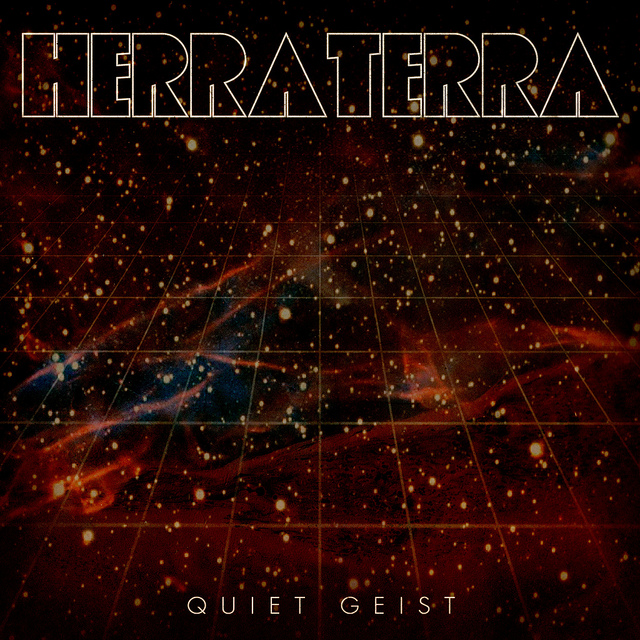
The press release for Quiet Geist, the new album from Northeastern electronic pop quartet Herra Terra, dared to name-check two big D’s that will get us to instinctively request a review copy like a Pavlovian dog: Depeche, and Duran. Silly us. We’ve seen this before, it’s almost never accurate, and as it turns out, it wasn’t accurate here, either. But in their defense, that’s probably because they knew that comparing it to Kenna’s New Sacred Cow would just leave people scratching their heads.

The funny thing is, we’ve heard quite a few artists lately who have taken inspiration from Kenna’s first album, the joke being that no one bought the record, but everyone seems to have heard it. And we’d bet dollars to donuts that Herra Terra could play the album start to finish at their next Halloween show, if leadoff track “Ejection Seats” is any indication. The songs are better arranged than they are written, which is not to say the songs are poor; it’s just that the music doesn’t stand above the nifty shifts in tempo or the slow builds, both of which anchor “You Were the Accelerator.” There is also the matter of singer John Paul Tonelli’s voice; It’s too muscular for the kind of music the band plays. That might sound like quibbling, but show us the last synth-driven band with a butch singer. Still, there is potential here. When the songwriting catches up with the band’s sense of atmospherics, they could be dangerous. (The Mylene Sheath 2010)

Herra Terra MySpace page
Click to buy Quiet Geist from Amazon

Santana: Guitar Heaven: The Greatest Guitar Classics of All Time


RIYL: rabies shots, “The Human Centipede,” being punched in the genitals

61JbX1SSfaL._SCLZZZZZZZ_[1] Carlos Santana has claimed for years that he gets his artistic marching orders from the angel Metatron, but after listening to Guitar Heaven, even some of his staunchest fans may be forced to admit the possibility that Carlos has been dipping a little too deeply into his stash of Santana DVX — either that, or Metatron is actually a vengeful ghost who hates Santana, classic rock, and the record-buying public.

Equal parts cynically commercial and shockingly misguided, Guitar Heaven takes a dozen classic rock tracks and turns them into Golden Throats-style shotgun blasts of unintentional comedy. The idea of Santana recording glossy, lukewarm covers of “Whole Lotta Love,” “Smoke on the Water,” and “Bang a Gong” sounds senseless enough, but Metatron’s plan for the album – subtitled The Greatest Guitar Classics of All Time – came with a fiendish twist. Each of these unnecessary covers, you see, comes bundled with a vocal cameo from a singer who, in most cases, has absolutely no business performing the song in question.

Time and again, unstoppable chutzpah meets immutable rock ‘n’ roll classics. Chris Cornell wails all over a limp “Whole Lotta Love.” Chris Daughtry clenches his teeth through a neutered version of Def Leppard’s “Photograph.” Rob Thomas – Rob Thomas! – steps in front of the mic for “Sunshine of Your Love.” Nas and Janelle Monae collaborate on the clattering horror that is this album’s take on “Back in Black.” (Sample line: “Carlos on the guitar, relentless / Makes me visualize the clubs when they spin this.” Really.) Gavin Rossdale adds nothing to Santana’s sax-frosted arrangement for “Bang a Gong.” Jacoby Dix of Papa Roach is somehow allowed to sing “Smoke on the Water.” So on and so forth. Perhaps no album since the Shaggs’ Philosophy of the World has presented such a stunningly ill-conceived and consistently outmatched union of performers and material.

About the only thing here that makes sense is Joe Cocker showing up to lend his still-strong vocals to “Little Wing,” which suits Santana’s style and Cocker’s voice so well that you wish they’d done an entire album together. It wouldn’t have made Clive Davis’ eyes light up, but at least it wouldn’t have included Pat Monahan of Train singing Van Halen’s “Dance the Night Away,” or Scott Stapp – Scott Stapp! – dropping a deuce on “Fortunate Son.” If you happen to see Metatron, please punch him in the kidneys for us. (Arista 2010)

Santana MySpace page

« Older posts Newer posts »