Page 67 of 583

Bill Hicks: The Essential Collection

RIYL: Lenny Bruce, Jimi Hendrix, hunting and killing Billy Ray Cyrus
bill hicksBill Hicks has become the trendy name to drop of late when talking about influential comics, and while it’s irritating to see Hicks become a hipster icon, the simple fact is that it’s better late than never for Hicks to find a larger audience, hipster cred or otherwise. Truthfully, it’s not surprising that Hicks didn’t find a larger audience during his lifetime; his material, while rooted in truth, was sardonic and mean. He spoke at length about pornography and fantasized about being an angel of death. He also brewed up material that a million comics wish they had thought of. Using terminally ill people as stuntmen in movies? Genius. Unconscionable, but genius.

This four-disc set (two CDs, two DVDs, one download card) tries valiantly to create some order from the chaos that was Hicks’ brain, saving the political material for Disc 2 and using Disc 1 to talk about everything else. A chronological sequencing probably would have worked better, for two reasons: it would give the unfamiliar a better sense of how Hicks’ material evolved, and it would get the listener more excited as they go through it simply because Hicks is playing to bigger and bigger crowds. Several of these tracks are marked ‘Previously unreleased,’ but many of those are just different versions of bits that appeared on the albums Ryko issued in the late ’90s and early ’00s. There really isn’t a duff bit here, and they even had the balls to include “Worst Audience Ever,” where Hicks ran into a particularly stoic crowd in Pennsylvania, and made sure they knew it.

Bill_Hicks_05

Fans will want this collection for the DVD material. Disc 1 contains some early (as in 1981, when Hicks was 19 years old) routines, mostly recorded at the Comix Annex in Houston. Hicks was still finding his voice during this period, and for a show in Indianapolis in 1985, it looks as though Hicks’ new idol was Steven Wright, as he delivers his material in a monotone voice. (He’s also wearing a news boy cap, just like his friend Sam Kinison.) The material he had written then wasn’t great, but it’s still interesting to see what stuff he went through before he settled on talking about Jimi Hendrix cutting Debbie Gibson in half with his cock. And speaking of Kinison, one of the two Houston gigs from 1986 literally screams Kinison, from the constant yelling to the trench coat. The money piece from Disc 1 is the poolside interview with Hicks from 1988, where he speaks of Kinison’s permanent banning from a local comedy club, inspiring the birth of the Outlaws.

Disc 2 features the rare “Ninja Bachelor Party,” a delightfully silly 30-minute martial arts spoof film Hicks shot over a period of eight years, along with a series of bootleg clips of Hicks in Austin in the early ’90s. The bootlegs are just that, shot from the back of the room and frequently out of focus, but it also features the best material on either DVD, and it’s fun to see the Relentless and Arizona Bay material acted out. It doesn’t quite serve as the definitive collection of Hicks’ work, but it’s not called The Definitive Collection. It’s The Essential Collection, meaning it’s all must-own stuff. Just be prepared to seek out the rest of Hicks’ essential material. (Rykodisc 2010)

Click to buy Bill Hicks: The Essential Collection from Amazon
Chromeo: Business Casual


RIYL: Cameo, Zapp, Hall & Oates

If you’ve ever flipped the collar on an Izod shirt, owned a pair of Bugle Boy jeans, or purchased Hall & Oates’ Rock ‘n’ Soul, Part One on cassette or vinyl, Chromeo is your custom-built funky time machine – a synthy, vocoder-soaked trip to a parallel reality where musical history stopped in 1984. It was a pretty nifty trick the first couple of times around – and their last release, 2007’s Fancy Footwork, earned them a Daryl Hall endorsement and the ironic love of an audience too young to remember Lionel Richie’s Can’t Slow Down – but most tributes to dead genres wear thin pretty quickly (see: Darkness, The). So it would be a mistake to expect similar results from their next album, right?

Chromeo_01

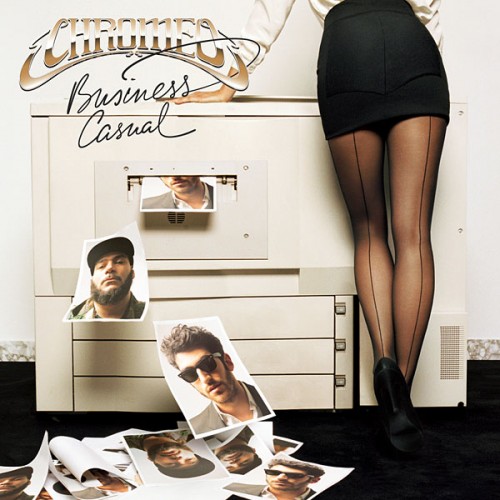
Maybe not. Business Casual doesn’t really add anything new to the Chromeo formula, but it doesn’t really need to – whether or not you believe P-Thugg and Dave 1 are serious, they’re really good at recreating that early ’80s vibe, to the point where you might find yourself wondering if you requested “The Right Type” on your local Top 40 station 25 years ago. Everything, from the buzzy synths to the soulful-but-not-too-soulful vocals, sounds like it’s being beamed in from a giant boom box on the planet Atari – and more importantly, the songs are as clever as they are catchy. It’s ultimately a fairly empty exercise, and if you’re old enough to remember when this sort of stuff was originally being made, it probably seems more than a little ridiculous to be witnessing a revival of something that was regarded as inherently disposable even when it was popular. What’s sillier, though: the idea of a band intentionally mimicking yacht soul, or the fact that Lil Wayne’s “Lollipop” spent five weeks at Number One?

In the long run, it’ll be interesting to see where Chromeo takes this; even the artists they’re imitating moved on eventually, never to return. But hey, if they can deliver three albums that do this much with such a paper-thin gimmick, there might not be anything they can’t do. Break out the velour and pass the cocaine. (Atlantic 2010)

Chromeo MySpace page

Brandon Flowers: Flamingo


RIYL: The Killers, Vigilantes of Love, U2

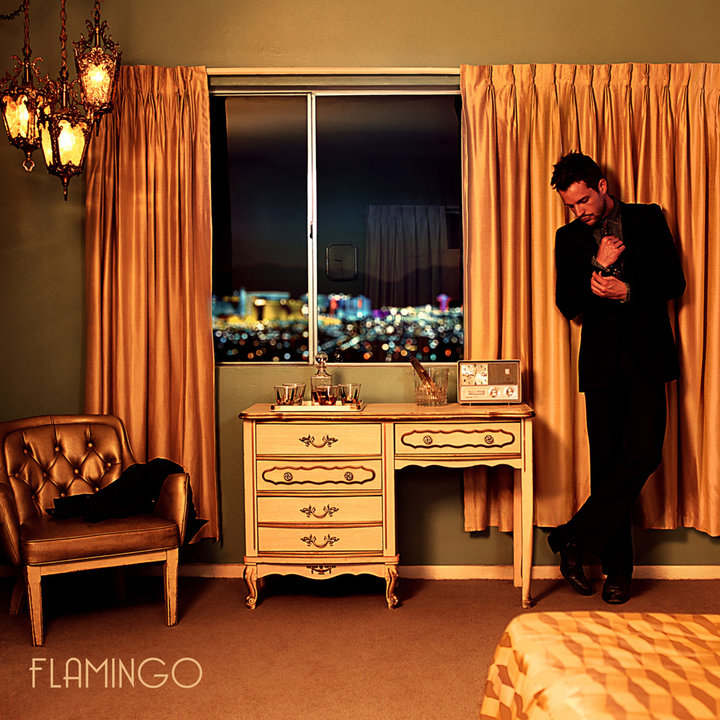
Brandon-Flowers-Flamingo-Official-Album-Cover[1] Flamingo, or chameleon? Listeners who mainly remember Brandon Flowers from early Killers hit singles like “Mr. Brightside” and “Somebody Told Me” may be in for a bit of a shock with his solo debut, which finds him toning down the gulpy vocal shtick that made him famous – and finally making the widescreen roots rock record he was aiming for with Sam’s Town.

Flowers has always struggled to get a grip on his outsize ambitions, and there are moments on Flamingo that don’t resonate as strongly as they’re supposed to. For the first time in his career, though, he doesn’t sound like he’s trying too hard; these songs come across more like personal statements than would-be epics. They’re still woefully derivative of Flowers’ influences – seeing Daniel Lanois’ name in the credits is going to trigger waves of eye-rolling from U2 fans who still think of Flowers as a Bono wannabe – but the difference here is that instead of trying to stand on the shoulders of giants to craft Grand Statements, he’s just using his musical DNA to write songs. It may read like a pretty fine distinction, but when it’s pouring out of the speakers, it’s huge – the difference between being handed a message and beaten over the head with it.

Of course, he’s still earnest to a fault. Flamingo might present a slightly subtler Brandon Flowers, but this is still music that leaves you feeling like you’re speeding across a lonely highway, or pensively looking out over a sepia desert mountaintop. It never hits as hard as it wants to, but so few mainstream rock records even bother asking you to really feel anything anymore – there’s something hopelessly noble about an album aimed so squarely at the heart. (Island 2010)

Brandon Flowers MySpace page

Seen Your Video: Music video directors who made the jump to the big screen

music_video_directors

It was not along ago that there were only a couple paths to the director’s chair on a studio lot. Many went to film school and did time toiling for Roger Corman, while others jumped over from another profession within the industry. (Joel Schumacher, for example, began as a costume designer.) In the ’80s, there suddenly was a new way to get into the game – use a music video as your calling card.

Now, of course, we’re at the point where people receive job offers after posting a clip to YouTube (Lasse Gjertsen, who made the live stop-motion clips “Hyperactive” and “Amateur,” has received several offers of employment, but has turned them all down), and the music video path is now a well-worn road. Indeed, there are two movies coming out in the next few weeks (“Never Let Me Go” and “The Social Network”) that were helmed by men who got their start telling rock stars to act like rock stars, which inspired us to take a look at the more prominent directors of the music video world and track their success. The lesson we learned: even when someone has so many small successes, it only takes one big disappointment to kill them. (Big, big shoutout to the good people at the Music Video Database for helping to clear the cob webs, as well as opening our eyes on just how prolific some of these directors were.)

Julien Temple

You know it’s a Julien Temple video when: The entire piece looks like it was filmed in one giant tracking shot. (Look closer – the edits are there.)
Breakout video: ABC’s “Poison Arrow,” and the short film “Mantrap” the band made in conjunction with their (spectacular) album The Lexicon of Love.
Big screen debut: Temple is the only one on this list whose feature film debut came before his music video debut, though some would argue – and we wouldn’t disagree – that the movie in question, the Sex Pistols “documentary” “The Great Rock ‘n Roll Swindle,” is actually just a long-form music video.
Best Temple video you never saw: Paul McCartney, “Beautiful Night,” from Macca’s Flaming Pie album. Gorgeous, and the tune is a good one, too.

Russell Mulcahy

You know it’s a Russell Mulcahy video when: Dozens of extras are wearing body paint, or when a prop nearly kills Simon Le Bon. In slow motion.
Breakout video: Mulcahy was arguably the first “name” director of the music video world, helping clips for Ultravox, Kim Carnes and the Tubes – and, let us not forget, the Buggles’ “Video Killed the Radio Star,” the first video MTV ever played – but it was the clip for Duran Duran’s“Hungry Like the Wolf,” along with the other videos he shot for the songs from Rio, that made him a household name…with music geeks like us, anyway.
Big screen debut: “Razorback,” a monster movie about, yep, a bloodthirsty Australian pig. Mulcahy’s luck on the big screen changed two years later when he made the cult classic “Highlander”…then lost some luster when he made “Highlander II: The Quickening.”
Best Mulcahy video you never saw: “The Flame,” the overlooked third single from Duran Duran spinoff group Arcadia. Le Bon is in full Barry Bostwick mode as he attends a fancy dinner party and the hosts try to kill him Agatha Christie-style.

To read the rest of the article, click here.

Linkin Park: A Thousand Suns


RIYL: Nine Inch Nails, Guster, growing up

First, a mea culpa to Chester Bennington.

In our review of Linkin Park’s 2007 album Minutes to Midnight, we (and by ‘we,’ we mean I) accused Bennington of wearing his sadness like a cheap suit in order to remain faithful to the band’s lyrical core, and therefore make gobs more money. This was based on two things: first, the lyrics, where Bennington sings about how miserable he was. Second, Chester’s notes in the credits, where he thanked his wife (“a.k.a. The Hotness”) and his four kids. Which produced the following thought: this married father of four is whining about how he wants to die? Oh, fuck this guy.

Should have hit Wikipedia. Bennington divorced his first wife in 2005, and married The Hotness a couple years later. He has one child with each wife; the other two are The Hotness’ from a previous relationship. So it turns out that he is indeed happily married, and presumably singing about his ex-wife, not his current one. My bad.

Having said that, Minutes to Midnight was still not a great record, though it did have its moments. They were clearly trying to add stronger melodies into the music, but most of the time, they either went too far or not far enough. The band goes a long way to rectifying this problem, along with a couple of others, on A Thousand Suns, their latest. Musically, it’s their most melodic album yet, and lyrically, it’s their most contrite, which is good, because if they spent this album still complaining about some girl or another, it would have been embarrassing. Sonically, this is their most mature album (the piano was a welcome addition), but it still maintains their glitchy roots. “Robot Boy” is not tailor-made hit single material, but it might be the band’s best song, as Bennington layers vocals – actual honest-to-goodness vocals – over a simple but effective minor-to-major chord progression, and “Burning in the Skies” appears to be Bennington taking responsibility for his failed marriage. “I’m swimming in the smoke, of bridges I have burned / So don’t apologize, I’m losing what I don’t deserve.”

The most curious song is “Blackout,” which sports a borderline bubblegum pop melody with Bennington screaming his head off for the first two verses, at which point Mike Shinoda takes over and sends the song into a furious scratch and sample-driven breakdown. From there, Bennington gives the music the pop vocal it deserves. It ultimately serves as a standalone bridge between the band’s past and their present, as does “When They Come for Me,” which begins as a jungle drum-heavy showcase for Shinoda, only for the band to slip in a killer pop hook within the chaos. “Iridescent” is as big a lighter-waving anthem as the band’s ever done, and “The Catalyst” is simply huge. Several interludes fill in the cracks (lyrical callbacks and foreshadows abound), though one stands above the others: “Wisdom, Justice and Love,” where the band takes a vocal sample from Martin Luther King Jr. and slowly morphs his voice into robotic menace.

Growing up is never easy, especially when you’ve made a career out of articulating every confused thought in your head. But every band gets happy at some point if they stick around long enough, and Linkin Park finally does it here. It may have taken a decade to do it, but strangely it doesn’t seem like it took too long. If anything, it’s impressive to see a band who defined themselves with all things adolescence (angst, profanity, hip hop, hardcore) find a way to maintain those elements in their sound, yet grow beyond them at the same time. Fans of the Hybrid Theory-era Linkin Park will probably hate A Thousand Suns, of course, but that happens to every band, too. They might lose more fans than they gain in the short run with this one, but there isn’t any question which of the two albums will have a longer shelf life. (Warner Bros. 2010)

Linkin Park MySpace page
Click to buy A Thousand Suns from Amazon

« Older posts Newer posts »