Page 63 of 583

The Airborne Toxic Event: All I Ever Wanted: Live from the Walt Disney Concert Hall

Note: This is a review of the 90-minute documentary film only. At press time, we did not have access to the CD or the DVD of the entire show. Though we hope to, soon.

It’s still baffling to us that Pitchfork would go so far out of their way to bash a band like the Airborne Toxic Event – they gave the band’s eponymous debut album, which we loved, a scathing 1.6 on their 10-point scale – and after watching “All I Ever Wanted: Live from the Walt Disney Concert Hall,” the insult seems twice as offensive. They seem like geniunely good, extremely gracious people, and the way they got the community involved in their landmark show was deeply touching. A local high school band plays on “Does This Mean You’re Moving On?” and a raucous cover of the Ramones’ “Do You Remember Rock ‘n Roll Radio?,” while a school girl’s choir jumps in for a rousing, kitchen-sink version of “Missy.” The band sounds great – the high school band misses a few notes, but hey, they’re kids – and they look like they’re having the time of their lives both performing and recording this show.

If there is one problem with the movie, it’s that it goes for long stretches without any music, and when they do include music, they opt for a cover version (the Ramones, Magnetic Fields, Q Lazzarus) as often as they show them playing one of their own songs. The covers are cute, but the movie could have used more original material. The set includes a separate DVD of the entire show, of course, but if we’re having our music documented for all eternity, we’re going to make sure the majority of the footage consists of original material, not someone else’s. But then again, that’s a very Mikel Jollett thing to do, favoring someone else’s songs over his own. (Island 2010)

Airborne Toxic Event MySpace page
Click to buy All I Ever Wanted from Amazon

Combichrist: Making Monsters


RIYH (Recommended If You Hate): Your history teacher, riding the bus to school, cleaning your room

Combichrist are angry! And mean! And scary! And other stuff that will hopefully scare parents and encourage misguided 14-year-olds who want to rebel by going to Hot Topic to buy their records.

The creation of Norwegian musician Andy LaPlegua, Combichrist has been around since 2003. Previous uplifting and inspirational efforts by LaPlegua and crew include The Joy of Gunz, Everybody Hates You and What The Fuck Is Wrong with You People?

Their sound could be be described as “Head Like a Hole” meets “Beautiful People” meets the entire hard house dance movement. Aggressive beats meets aggressive lyrics meets aggressive synths. It’s all just so…aggressive. So much so some call the genre of music aggrotech. But don’t do that – you don’t want to encourage that kind of rampant portmanteauing. If you’re over 20 and take this stuff seriously,then a) you’ll love this record, and b) there’s no helping you. If you find needlessly misanthropic song titles like “Throat Full of Glass” and “Through These Eyes of Pain” hysterical and want to know just how many times LaPlegua can call the object of his affection a slut on “Fuckmachine,” then you might find some humor in Making Monsters, and the music, while a little overbearing at times, is good in a “I need help to stay awake/hate humanity” kind of way.

Just give your mom a hug, or pet some kittens, after listening. (Metropolis Records 2010)

Combichrist MySpace Page

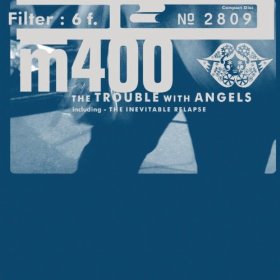
Filter: The Trouble with Angels


RIYL: Nine Inch Nails, Stone Temple Pilots, Alice Cooper’s Brutal Planet and Dragontown

Filter is Richard Patrick. It’s his toy and he is going to steer it, hire the rest of the band and collaborate with who he thinks will make the best record. Mind you, it is going to sound like a Filter record. There will be those trademark Patrick screams contrasted against his solid singing voice; there will be crunchy industrial guitar riffs, chugging bass lines, at least one ballad and Patrick will be wrestling lyrically with subjects like addiction and the ills of organized religion. For The Trouble with Angels, Patrick works with Bob Marlette (Iommi, Alice Cooper, Atreyu among others) to re-sharpen the fangs of Filter. Marlette produces and engineers the record while co-writing nine of the ten songs.

Consistently, this is a heavier effort throughout the 41 minutes then the last several records and is much more akin to the debut Filter release, Short Bus then anything released since. Interestingly enough, Patrick brings back original Filter co-conspirator Brian Liesagang (who left the band in 1997) to add “Sound Design and Programming” to the project. The first three tracks (“The Inevitable Relapse,” “Drug Boy,” and “Absentee Father”) roll over you like a locomotive. Patrick’s intentions are loud and clear. The fourth track, “No Love,” slows the train down but features a thumping chorus and Patrick singing at the edge of his range.

There are two songs where things slow down and the record produces “Take a Picture”-like moments with the ballads “No Re-entry” and the gorgeous album closer “Fades Like a Photograph (Dead Angel).” The latter features some of Patrick’s most poetic and moving lyrics to date. Other than those two songs, Marlette is inspiring Patrick to be heavy. Marlette got great work out of Alice Cooper on Dragontown and Brutal Planet, moving Alice into industrial metal territory for two records. Here he gets a good record out of Patrick’, who has been busy the last couple of years re-energizing the brand name. Filter has released two albums, a greatest hits package and a remix album of 2008’s Anthems for the Damned in the last four years. Sobriety has treated Richard Patrick well and his fans have reaped the rewards of his re-energized work ethic. (Rocket Science Ventures, 2010)

Filter MySpace page

Me, Myself, and iPod 9/22/10: Wake me up when September ends

esd ipod

Sorry, disappeared for a while there. I took a week off after Lollapalooza – my first week off in two years, I might add – and I still haven’t caught up on email. I know, wah wah wah, you have too much music to listen to. Hey, I’m just sayin’, there are only so many hours in the day. My kids miss their daddy when I hole up in the music cave, and I miss them, too.

Mackintosh Braun – Could It Be
Man, if only the rest of the record could keep up with this song. In theory, I should love Mackintosh Braun. They make ELO-inspired synth pop, which is as close to my wheelhouse as things get. In reality, I merely like Mackintosh Braun. I think it was the processed vocals that did me in. They have ’em on every track. The record overall is good, and I’m betting they can do better next time around, but if you’re going to take one song of theirs with you, this one, for now, is it.

Chatelaine – Broken Bones (Depreciation Guild remix)
Ah, Toni Halliday. She could sing the phone book, and I’d swoon. Her new band, Chatelaine, is a much mellower beast than Curve, but their album Take a Line for a Walk is a keeper. This remix of the leadoff track is a neat mix of both her past and her present. But mostly her present.

Doppelganger – Breaks My Head
I’m a sucker for those slow-building songs with only a handful of chords. This is one of those songs.

John Legend and the Roots: Wake Up!


RIYL: Bill Withers, The Roots, Raphael Saadiq

john-legend-roots-wake-up-cover-e1279246652953[1] Before he reached the presidency – and thus subjected himself to at least four years of being picked apart, second-guessed, and portrayed as a letdown by pollsters and pundits – Barack Obama was a signal of meaningful social change, and a source of profound inspiration, to millions of Americans. His roots as an urban community organizer served as a reminder of a time when community really meant something – particularly in the black community – and raised hopes for a return to outreach, investing in urban infrastructure, and a renewed focus on the common good.

People were hoping for a paradigm shift, in other words, and those never happen as quickly, simply, or clear-cut as we feel like they should (as a passing glance at any newspaper will tell you). But that’s the thing about major change: As slowly as things might seem to be moving on the surface, moments of inspiration have a way of paying unexpected dividends. Case in point: John Legend and the Roots’ Wake Up!

Conceived during the 2008 election, Wake Up! combines Legend’s political awakening with the Roots’ peerless soul scholarship to produce an album that functions on two levels: One, as a call to greater personal responsibility and communal awareness, and two, as a sort of gateway into the classic records Legend and the Roots chose to cover. As chief Roots ambassador ?uestlove points out in the liner notes, these songs will be appreciated by two generations – the folks who still remember Baby Huey, Bill Withers, Harold Melvin, and Donny Hathaway, and the younger listeners who have grown up hearing bits and pieces of the music repurposed for hip-hop beats. (In a nifty, knowing twist, Wake Up! includes a cover of Ernie Hines’ “Our Generation” that features a guest verse from CL Smooth, who sampled the song 18 years ago.)

There’s something a little off-putting about the fact that a call to attention this powerful has to rely so heavily on songs that have been around for decades, and listening to Wake Up! – as with the Dirty Dozen Brass Band’s similarly themed 2006 cover of Marvin Gaye’s What’s Going On album, conceived in the wake of Hurricane Katrina – you may find yourself alternating between feelings of joy and disappointment. It’s hard not to wonder why today’s young soul artists aren’t making new music this marvelously aware – or why, if Legend was going to end the album with an original cut, he couldn’t have come up with something more deserving than the mawkish “Shine.”

On the other hand, great music is timeless, and there’s no denying that every one of these classic songs is every bit as resonant today as the day it was originally released – or that Legend and the Roots prove capable, empathic interpreters of the material. Wake Up! isn’t a new soul classic, but it reaffirms the undimmed relevance of the artists who helped shape the genre’s golden era. Here’s hoping the album expands the spirit of inspiration that brought it to life – and that other artists heed its title’s call. (Columbia/G.O.O.D.)

John Legend MySpace page

« Older posts Newer posts »