Page 61 of 583

Someone Saved My Life Tonight: Albums that got us through some heavy shit

Men don’t like to talk about it, but there are times in our lives where things are less awesome than usual, and by that we mean that life is complete and utter shit. Being men, we’re not supposed to show when we’re down, but as the poet laureate Geena Davis once said (using her pen name Charlie Baltimore), life is pain. Sometimes it’s hard to hide when we’ve been wounded by the loss of a girl, or a job, or a family member. And since talking about our feelings is not the first choice for most men, many of us find solace in music, where someone else is doing the talking and all we have to do is listen. In private. Remember, that whole ‘not supposed to show when we’re down’ thing.

This summer, a golden opportunity presented itself to tell one of the musicians who gave us the proverbial pat on the back about what they had done for us. The man: Glenn Tilbrook, front man for UK pop giants Squeeze. The album: Play, the band’s 1991 debut (and swan song) for Reprise, a literate and moving collection of songs about love, loss, and hope. Tilbrook’s reaction to the news that he helped us through a rough spot: “Wow.” Apparently, someone else had told him the exact same thing about Play‘s magical healing powers. He thought it a weird coincidence that two people would have such a strong reaction to the album…

…which is complete nonsense, if you ask us. A quick survey on Facebook revealed that several people had the same emotional bond to Play that we had, at which point some other staffers revealed they had their own tales of woe, and the albums that saw them through it. Behold, the albums that, while they didn’t literally save our lives, at the very least got us through some heavy shit.

Tom Petty & the Heartbreakers: Let Me Up, I’ve Had Enough! (1987)
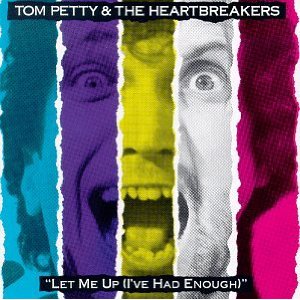
On the day after Christmas in 1986, mid-way through my junior year of high school, my family moved from North Carolina to central Pennsylvania, beginning a period of upheaval and ill will between me and my parents and siblings that took several years to address and heal. Music was my refuge, the thing that kept me on an even keel when all I wanted to do was either put my fist through something hard, or slip down into the fetal position and cry. What I really needed was some flat-out rock and roll, performed by a band that could play bee-you-tiff-lee or durrrrty, depending on what was called for.

In April of the the following year, Tom Petty and his merry band put out Let Me Up (I’ve Had Enough), a record I connected with on levels both emotional and visceral. It had moments of sheer beauty (“Runaway Trains,” “It’ll All Work Out”), pure pop (“All Mixed Up,” “Ain’t Love Strange”), and rollicking good fun (“One of These Days,” “How Many More Days”). It also had, in the single “Jammin’ Me” and the title track, amped-up Stonesy rock that I would turn up loud in my bedroom, loud enough to piss off my family, enabling me, however briefly, to give my tormenters the auditory finger now and again.

It was a small modicum of revenge, but it meant a lot. The music also helped me feel that everything was going to be all right, which meant even more. -Rob Smith

To see more life-saving albums, click here.

Ryan Bingham & the Dead Horses: Junky Star


RIYL: The Black Crowes, Ryan Adams & the Cardinals, Bob Dylan

Many know Bingham only from “The Weary Kind,” his deep country Oscar-winning song from “Crazy Heart” that he wrote with producer T Bone Burnett. But Bingham’s sophomore effort, 2009’s Roadhouse Sun, was a critically acclaimed rock ‘n’ roll album, and rightly so. That album – as well as his excellent 2007 debut Mescalito – was produced by ex-Black Crowes guitarist Marc Ford. It was clear that Bingham and Ford shared a taste for mixing rock and country elements into some tasty Americana sounds. Both albums were a mix of high energy rock tracks with some low-key, yet compelling country/blues tunes.

It’s therefore puzzling to see Rolling Stone’s Mark Kemp taking Bingham to task for not being more like Billy Joe Shaver, and giving Junky Star just 2.5 stars. Kemp should be immediately relieved of album review duties, because Junky Star is one of 2010’s best. It features Burnett in the producer’s chair, bringing his patented old school blues production techniques, so the sound is fab but it’s not quite as rocking as the first two albums. But this is still Bingham’s show and the album includes some of his best rock songs yet. Is he seeking to tap further into the country crossover market? Perhaps. But anyone who’s caught the live headlining show from Bingham and his Dead Horses knows this is a rock ‘n’ roll band at its core.

Album opener “The Poet” draws the listener in with a laid back vibe, with Bingham’s soulful voice backed mainly by just acoustic guitar and harmonica. It’s one of the most unique voices in music today, like a genuine cowboy (Bingham spent time on the professional rodeo circuit before moving into music) but with the soul of a hippie. The band kicks in for “The Wandering,” and a great band it is. The Dead Horses aren’t just sidemen, but a tight unit with chemistry. The uplifting, mid-tempo number features Bingham at his heartfelt best. “Strange Feelin’ in the Air” has a big bluesy Western sound, featuring slide guitar and more of those gritty vocals.

The title track delves back into “Crazy Heart” territory, with a bluesy, country-ish tune about love lost and feeling down and out. It’s on the somber side, but those heartfelt lonely vocals about “stumbling on the whiskey from the bar” remain compelling. “Yesterday’s Blues” and “Lay My Head on the Rail” delve into similar stripped-down country blues flavor.

A top highlight is song of the year candidate “Depression,” a gorgeously layered zeitgeist rocker about keeping it together after losing one’s job amidst the nation’s economic woes. “Hallelujah” is a highlight too, starting with rich textures before building into a mid-tempo blues catharsis. “Direction of the Wind” is another great zeitgeist rocker, an upbeat bluesy romp with slide guitar and politically-edged vocals that recall classic Bob Dylan. “Hard Worn Trail” features bluesy acoustic picking that recalls Bon Jovi’s “Wanted Dead or Alive,” before giving way to more of a Western soundtrack vibe. Bingham’s voice takes on a haunting quality that brings the song to life. “All Choked Up Again” closes the album with a slow but shimmering Western tune about a gambling man.

The last third of the album could use one more rocker, but there’s no one on the scene who is blending rock with country and western blues flavors like Bingham & the Dead Horses. Bingham has become one of modern music’s most intriguing troubadors precisely because of how his gritty soulful voice personifies the growing intersection between rock and country. Junky Star fuses the genres beautifully. (Lost Highway 2010)

Ryan Bingham MySpace page

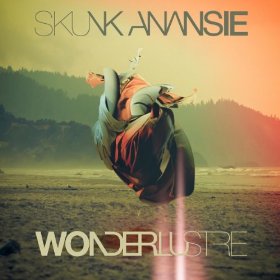
Skunk Anansie: Wonderlustre


RIYL: Sevendust, Guano Apes, Muse

During their original run through the ’90s, Skunk Anansie was the alt-rock equivalent of “Beauty and the Beast.” When they weren’t breaking your heart with fragile, sparse ballads like “Secretly” and “Follow Me Down,” they were breaking your legs with political punk rock thrashers like “Selling Jesus” and “On My Hotel T.V.”

After a decade-long hiatus, the group is back, and for the first time they seem to be combining their penchant for romantic/lovelorn ballads and fast-paced mosh-friendly hard rock. Wonderlustre is the group’s most mainstream record to date, full of mid-tempo rock made for the radio. But Skunk Anansie playing for the pop crowd is still Skunk Anansie, and lead singer Skin’s powerful vocals and intelligent lyrics add depth to songs like “Over The Love” and “You’re Too Expensive,” which would be a bit too pedestrian and by-the-numbers without her. Skin also proves that her monopoly on beautiful-but-depressing songs about how much love sucks remains intact with the gut-wrenching “I Will Stay But You Should Leave” and “Talk Too Much,” two incredibly powerful songs that should be barred from the iTunes libraries of the recently dumped (trust me).

The music behind the lyrics needs some work, but its nice to see Skunk Anansie back. Even if they’re not at top form, Wonderlustre leaves little doubt that they soon will be once again. (V2 Records 2010)

Skunk Anansie MySpace page

KT Tunstall: Tiger Suit


RIYL: Sheryl Crow, The Sundays, Stevie Nicks

KT Tunstall catapulted herself to overnight success in 2006 with her debut album, Eye to the Telescope, which spawned the hit single “Black Horse and the Cherry Tree.” Her 2007 follow-up, Drastic Fantastic, was just as good, if not better, than the debut, and now Tunstall is back with Tiger Suit. As usual, Tunstall’s songs are mostly upbeat hook-fests, albeit with slightly less magic than before. With Tiger Suit, she’s regressed a bit, because these are good tracks that are structured well and have solid melodies and arrangements – but something is lacking compared to Tunstall’s previous work, be it soul or depth or that slight bit of alternative grit that was present on both Telescope and Drastic.

Tiger Suit opens with “Uummannaq Song,” an odd title but the familiar mid-tempo singsong style that is most closely reminiscent of her earlier work. That rolls right into “Glamour Puss,” a song that is catchy beyond belief but somehow not exactly memorable. The best tracks on here are “Difficulty,” a song that lends itself to some quirky but effective production, and “Lost,” which is slower yet but arranged nicely. “Come on, Get In” is her label’s attempt at having Tunstall re-create “Cherry Tree,” and it’s kind of a lame one at that. Still, let’s face it – Tunstall’s mediocre is far better than most female singer/songwriters’ work these days. It’s just that her die hard fans may come away slightly disappointed this time, especially after a three-year wait. (Virgin 2010)

KT Tunstall website

Rush: Classic Albums, “2112” and “Moving Pictures”

The Classic Albums series gives the fans two albums for the price of one in this two-hour set covering the band’s biggest albums, 1976’s 2112 and 1981’s Moving Pictures. The band is extremely candid about how 2112 was a life-or-death album for them, and how they refused to give in to label pressure to write a hit. They even bring the band’s longtime producer Terry Brown (he and the band parted ways after 1982’s Signals) to break down the tracks, and explain the origin of the eerie synthesizer line that opens the “Overture” section to “2112.” Foo Fighters drummer Taylor Hawkins and Barenaked Ladies’ Ed Robertson are also on hand to sing the band’s praises.

If there is one downside to this one, it’s that they had so much ground to cover that they tend to focus solely on the hits. Side II of Moving Pictures is ignored completely, and the song “Tears” – first power ballad ever? – is only discussed as an aside in one of the interviews in the bonus features. The content they do provide is damn good, though. And with the way they edit the Peart interview segments, we can’t help but wonder just how much talking he did that didn’t wind up on the final cut. (Eagle Vision 2010)

Click to buy Classic Albums: 2112 and Moving Pictures from Amazon

« Older posts Newer posts »