
Two words: animated toast.
Page 51 of 583

RIYL: The Thrills, The Pogues, The Lilac Time
If you had asked us what we expected the next move to be from Keane after they released their fourth album Night Train in May of this year, our gut response would have been “lengthy hiatus, followed by announcement of signing with new, smaller label.” Don’t get us wrong, we love the boys from Battle, but the release of Night Train, coming so quickly on the heels of the band’s 2008 album Perfect Symmetry, looked for all intents and purposes like they were trying to fulfill their contractual obligations to Interscope and move on. Consider this: Night Train was designated EP status in their native England. Here, it’s a full-fledged long-player. Hmmm.

Keane may very well be going on a lengthy hiatus, but two of its members have already cranked out their first side project, which makes it their third album in two years: Mt. Desolation, a collection of, wait for it, country songs, filtered through their English sensibilities. It’s country in the same way that the Thrills are West Coast pop, but Mt. Desolation is a charming album just the same. Rice-Oxley and Quin don’t have the booming voice of their bandmate Tom Chaplin, but their voices actually suit these songs better, though it would be nice to hear Chaplin take a whack at the Keane-ish “Bitter Pill” somewhere down the road. The album has its share of drinking songs (“My My My”) and shit-kickers (“Annie Ford,” “Platform 7”), and while it’s clear that country music is more of a hobby than a lifestyle for those involved, it’s also clear that these songs come from the heart, making this a more honest country record than most country records. Writing a song that could pass for a B-side to Beck’s Sea Change (“Another Night”) doesn’t hurt, either. This is one side project that we’d like to see grow some legs. (Cherry Tree/Interscope 2010)
Mt. Desolation MySpace page
Click to buy Mt. Desolation from Amazon
RIYL: Gnarls Barkley, Outkast, Al Green
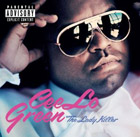 Say what you will about the record industry in 2010 – but given that this was the year Cee Lo Green scored the biggest hit of his solo career with “Fuck You,” things can’t be all bad, can they?
It made bloggers go crazy, scored Cee Lo guest spots on every talk show from Letterman to Colbert (where he rejiggered the chorus into “Fox News”), and offered a welcome stylistic change of pace from just about anything else that’s popular at the moment, but “Fuck You” is still basically a novelty song; to really take advantage of the buzz it generated, Green needed to give listeners an album full of even better songs – and songs that didn’t leave “Fuck You” sticking out like a sore thumb.

He’s delivered on both counts with The Lady Killer, a swaggering 14-track set that finds the famously restless Green as focused as he’s ever been – both in terms of music and in terms of clear crossover ambition. Like any other neo-soul artist, Cee Lo knows how to craft a retro vibe without settling for a simple homage, but he’s less reverent about the music than most of his peers, and the result here is a loose song suite that’s as proud of its classic soul DNA as it is excited about splicing it into a flashy modern hybrid.
Green worked with a small army of producers on the album, but it doesn’t sound like the work of a committee; in fact, it almost works as a concept album, introducing Green as a Lothario with a “license to kill” in the tongue-in-cheek intro, then following him as he hits the town (“Bright Lights Bigger City”), finds out he’s been jilted (“Fuck You”), and gets his woo on (“Wildflower”) – all while brushing past soul and R&B touchstones from Motown to ’80s synth funk. It’s the kind of album that makes room for everything – production from the Smeezingtons, a Philip Bailey cameo, a cover of Band of Horses’ “No One’s Gonna Love You” – without sounding chaotic or overstuffed. It’s the work of an artist at the top of his game. Though it isn’t as brazenly eclectic as some of his earlier work, longtime fans shouldn’t mistake The Lady Killer‘s comparatively limited scope for evidence that Green is selling out or slowing down; it’s just the logical next step in his inevitable world domination. (Elektra 2010)

RIYL: Dream Theatre, King’s X, Judas Priest
Operation: Mindcrime might have been the record that established Queensryche, but Empire was the record that blew them through the artistic and commercial ceiling. There is some excellent work that follows this period, and the band still churns out very good records to this day; it’s just that Empire is nearly perfect. The lyrics as always challenged the listener to think, the guitar work is stellar, singer Geoff Tate’s voice is monstrous, but the entire record was full of hooks. The sound is enormous, filling your ears with almost more than they can handle. The tracks blasted out of your speakers and into the back of your consciousness forever. “The Thin Line,” “Jet City Woman,” and “Another Rainy Night Without You” were built for arena audiences to sing back to the band. “Silent Lucidity” became their one and only number one single (on the rock charts, anyway). Twenty years later, it still sounds terrific.

What does the 20th anniversary package contain that may make it tempting to grab? Three bonus tracks that have appeared elsewhere are tacked on to the end of Empire. The second disc contains a terrifically loud and monstrous live show recorded in 1990 at London’s Hammersmith Odeon and features seven tracks from Empire. This performance doesn’t always have the perfect mix (Tate’s voice isn’t loud enough on opening track “Resistance”) and there are moments where you can hear feedback, like during the opening seconds of “Silent Lucidity.” It is these imperfections that make this such a terrific complementary piece. Queensryche is a machine. To hear those tiny miscues as the band pounds out this terrific material is a reminder of the raw energy underneath those fabulously professional musicians. If you don’t have the record, what the hell is the matter with you, seriously? If you don’t own any live Ryche, this is a real cool recording. (Capitol/EMI 2010)

RIYL: Daniel Lanois, Chris Whitley, Robbie Robertson
 In 1990, Daniel Lanois was instrumental in getting Chris Whitley signed to Columbia Records; his keyboard player and production protégé, Malcolm Burn, ended up producing Whitley’s stellar debut, 1991’s Living with the Law, and Lanois maintained an association with Whitley throughout the late, great alien bluesman’s career (that’s Lanois’ ghost-webbed lead guitar on the Whitley track “Weightless”). Chris passed away in 2005, but his daughter Trixie has grown into a fine singer and recording artist in her own right – and now she’s carrying the Whitley/Lanois connection into a new generation as a member of Black Dub.
Lanois is Black Dub’s guitarist and producer, as well as the most famous name – the lineup also includes drummer Brian Blade and bassist Daryl Johnson, names that will be familiar to liner notes junkies and few others – so it’s understandable that he’ll get the lion’s share of the publicity spotlight for this release. And to be fair, his sonic thumbprint is all over Black Dub; it’s a thick, reverb-drenched record, heavy with vibe and run through the dark, sepia-toned filter he’s used for many of his best projects. But make no mistake, this is a band project – not just because Trixie Whitley’s throaty, gospel-tinged vocals are all over the record, but because it actually sounds like people playing together in the same room. The music might be covered with that Lanois blanket, but that only keeps it warm. This record moves and breathes. It’s a shame that these are such rare qualities in major-label rock music, but if you miss the sound of musicians working together, Black Dub is a cure for what ails you.
More importantly, the songs are some of Lanois’ best. His solo albums have plenty of high points, but they’re also littered with more than their share of filler; in contrast, Black Dub holds together as a cohesive whole, from the sort of frayed, abstract blues meditations that the elder Whitley might have recorded (“Ring the Alarm”) through slow-burning vocal showcases for Trixie (the torch ballad “Surely”) and sideways roots excavations (the “Wade in the Water”-lifting “Last Time”). Lanois says Black Dub came together after he started writing songs with Trixie Whitley in mind, and it’s obvious that having a new muse has energized his songs – but it’s had an impact on him as a performer, too, as evidenced by his lead vocal on the album’s most moving track, “Canaan.”
Whitley has a recording career of her own, and Lanois is always busy as a producer (not to mention restless), so there’s no telling when, or if, Black Dub will reconvene. Having a hit with their debut couldn’t hurt, though, so do your part and pick up a copy today. (Jive 2010)
FOLLOW US!

CATEGORIES
© 2026 Eat Sleep Drink Music
Theme by Anders Noren — Up ↑