Category: Alternative (Page 13 of 155)

Fran Healy: Wreckorder


RIYL: Travis, Travis, Travis

If you’re the principal songwriter and lead singer in a band, you will invariably be asked about going solo. If you actually decide to do it, prepare to be hit with one of the most unfair complaints in all of music: “It sounds just like your old band. Why bother going solo?”

Fran_Healy_01

The implication, of course, is that solo albums should sound drastically different than the artist’s day job, and for some, that is precisely the purpose. Most songwriters, though, write like they write, and asking them to change their approach is like asking them to breathe differently. No one ever accused Bryan Ferry of making solo albums that sounded too much like Roxy Music, and no one should be surprised, or disappointed, to discover that Wreckorder (pronounced ‘recorder’), the solo debut from Travis front man Fran Healy, sounds just like a Travis album. If anything, it’s cause for celebration, because it sounds like a The Man Who or The Invisible Band-era Travis album.

Lead track “In the Morning” is a slow-building minor key ballad with a galloping drum beat the likes of which Travis drummer Neil Primrose hasn’t seen in years. “Anything” would fit seamlessly next to anything from the Nigel Godrich-produced albums, and “Sing Me to Sleep,” a duet with Neko Case, trumps anything from the New Pornographers’ last album (and Case’s last solo album, for that matter). “Buttercups” is as perfect a first single for the album as one could dream up, blessed with climbing-falling chord progressions and that signature wave of melancholia washing over it all. Sometimes Healy gets a little too close to the old days, like on the banjo-plucking “Holiday” (it even does the four count intro on the drum sticks that appeared in every other song on The Man Who), but between the hypnotic “Shadow Boxing” and the hilarious, “Flight of the Conchords”-esque “Robot,” Wreckorder shows that Healy still has much to offer while not forgetting where he came from. Good to see you again, Fran. (Rykodisc 2010)

Fran Healy MySpace
Click to buy Wreckorder from Amazon

The Influence: Falling Objects


RIYL: Bush, Jimmy Eat World, ’80s modern rock

On their current album, the Influence have produced a collection of emotional guitar-driven rock songs that may have a lot of people recalling the glory days of Gavin Rossdale and Bush. For geezers like myself, it’s hard not to hear elements of early ’80s modern rock in the music of this band from Virginia. The Influence create a certain groove in their music. Although it contains driving guitars and a big drum sounds, it also have a beat you can shake your ass to.

Listen to “Falling Objects,” “Bleed Out,” “Torn” and “Break” and you’ll find your head unconsciously bobbing to the beat with your eyes closed and images of a sweaty dance floor in your head. Isn’t that the signature of a great pop song – one that tugs the heartstrings but also gets you moving as well? Bowie knows this; so do Springsteen, Prince and Madonna. Not sure I’d place the Influence in the pantheon of those icons, but Falling Objects is one heck of a catchy album.

This record is not an explosion of emo angst, like so many of this band’s contemporaries. Instead, lead singer Matt Stephenson controls his voice to serve the music. He may wear his heart on his sleeve, but he doesn’t make each track bleed like it’s his last thought and prayer, either. This isn’t Dashboard Confessional.

That doesn’t mean these guys don’t bust out some crunchy guitars when it’s called for. “Slippin’” is a nasty metal-driven number with some excellent harmonies. Toss in a thoughtful acoustic number (“The Sleep”) and a couple of power ballads (“The Following” and “Anisoptera”) and you have what constitutes a really good pop/rock album. (Flying Eye 2010)

The Influence MySpace Page

Jimmy Eat World: Invented


RIYL: Anberlin, Get Up Kids, Sense Field

By now, most of you are probably already familiar with Jimmy Eat World’s back story. Arizona band gets major label deal, then gets dropped, then gets signed by another huge label, and finally enjoys commercial success. 2001’s Bleed American was packed to the ceiling with one sun-soaked hook after another, and each album that’s followed it has provided plenty more. After the dissonance of 2004’s Futures, Jimmy Eat World honed in on their pop sensibilities on 2007’s Chase This Light. Although the album didn’t deliver the kind of sales numbers it deserved, it still features some of vocalist Jim Adkins’ finest performances.

Invented, Jimmy Eat World’s seventh studio album, doesn’t divert too far from Chase This Light. If there’s one thing that immediately stands out, it would be the subtlety in some of the arrangements. Outside of a few cuts (“My Best Theory,” “Action Needs an Audience”), most of the material on Invented doesn’t try and hit you over the head with a flurry of power chords. This is a nuanced batch of songs, and producer Mark Trombino (Blink 182, Rocket from the Crypt) does a bang-up job of capturing all the small details. Whether it’s an acoustic guitar being strummed faintly in the background, or a track of harmony vocals, Trombino brings the listener into the room with the band. After a couple albums without him, it’s great to hear Jimmy Eat World back in a recording studio with the guy.

Sonic triumphs aside, Invented isn’t without its faults. Like much of Futures‘ second half, a few songs are dragged down by weaker vocal lines and a darker tone that doesn’t necessarily work well with some of the material. Jimmy Eat World are at their best when both their guitar riffs and vocal performances are soaked in melody. We’re not suggesting for every track to be an upbeat radio-ready number, but when the group surrenders too often to the somber side of their sound, things get less interesting. We’re not sure if Invented will be remembered as favorably as some of the older albums in their fantastic discography, but there certainly are enough fine moments on it to warrant your attention today. (DGC 2010)

Click here to read our interview with Jimmy Eat World lead singer Jim Adkins

Jimmy Eat World MySpace page

The Hours: It’s Not How You Start, It’s How You Finish


RIYL: Pulp, Coldplay, The Wonder Stuff

To call It’s Not How You Start, It’s How You Finish a debut album is technically true, but a bit misleading. In truth, it’s a Franken-album, culling the best moments from the Hours’ first two, import-only albums, 2006’s Narcissus Road and 2009’s See the Light, plus one new track (two if you buy the deluxe edition). Still, debut* album or not, it’s a doozy, filled with sky-high chorus after sky-high chorus, gorgeous octave-jumping piano lines and one of the most optimistic lyric books you’ll find outside of Christian pop (or Howard Jones). On the opening track “Ali in the Jungle,” better known here as the soundtrack to Nike’s “Human Chain” ad, speaks of how “everybody gets knocked down / How quick are you gonna get up?” In “These Days,” singer Antony Genn (think Miles Hunt of the Wonder Stuff, with better pipes) advises us, “If there’s ever a time we need to come together, the time is now.” In “Icarus,” he opines that “If you don’t shoot, then you don’t score.” They’re not deep statements, but they resonate in conjunction with the music.

The_Hours_04

The band admittedly runs at two main speeds. There are the upbeat, chugging skyscrapers like “Big Black Hole,” “Narcissus Road” and “Ali in the Jungle,” and there are the showstopping ballads like “Back When You Were Good” (a very gutsy song title in a snarky world) and the splendid “Come On.” The big exception to this is the closer “See the Light,” a slow-building, two-chord track in the vein of Pulp’s “Common People.” It’s arguably the best song here, though a thousand lashes to the person who decided to edit it down from its original seven-minute glory. This is beautiful stuff across the board, but a quick note to Genn: the people most likely to buy your music probably have kids, so let’s cut back a bit on the ‘F’ bombs, shall we? It’s unbecoming. (Adeline 2010)

The Hours MySpace page

Someone Saved My Life Tonight: Albums that got us through some heavy shit

Men don’t like to talk about it, but there are times in our lives where things are less awesome than usual, and by that we mean that life is complete and utter shit. Being men, we’re not supposed to show when we’re down, but as the poet laureate Geena Davis once said (using her pen name Charlie Baltimore), life is pain. Sometimes it’s hard to hide when we’ve been wounded by the loss of a girl, or a job, or a family member. And since talking about our feelings is not the first choice for most men, many of us find solace in music, where someone else is doing the talking and all we have to do is listen. In private. Remember, that whole ‘not supposed to show when we’re down’ thing.

This summer, a golden opportunity presented itself to tell one of the musicians who gave us the proverbial pat on the back about what they had done for us. The man: Glenn Tilbrook, front man for UK pop giants Squeeze. The album: Play, the band’s 1991 debut (and swan song) for Reprise, a literate and moving collection of songs about love, loss, and hope. Tilbrook’s reaction to the news that he helped us through a rough spot: “Wow.” Apparently, someone else had told him the exact same thing about Play‘s magical healing powers. He thought it a weird coincidence that two people would have such a strong reaction to the album…

…which is complete nonsense, if you ask us. A quick survey on Facebook revealed that several people had the same emotional bond to Play that we had, at which point some other staffers revealed they had their own tales of woe, and the albums that saw them through it. Behold, the albums that, while they didn’t literally save our lives, at the very least got us through some heavy shit.

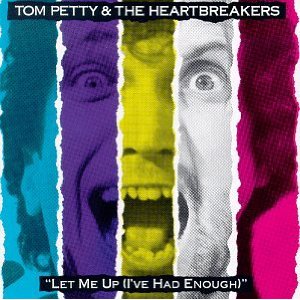
Tom Petty & the Heartbreakers: Let Me Up, I’ve Had Enough! (1987)

On the day after Christmas in 1986, mid-way through my junior year of high school, my family moved from North Carolina to central Pennsylvania, beginning a period of upheaval and ill will between me and my parents and siblings that took several years to address and heal. Music was my refuge, the thing that kept me on an even keel when all I wanted to do was either put my fist through something hard, or slip down into the fetal position and cry. What I really needed was some flat-out rock and roll, performed by a band that could play bee-you-tiff-lee or durrrrty, depending on what was called for.

In April of the the following year, Tom Petty and his merry band put out Let Me Up (I’ve Had Enough), a record I connected with on levels both emotional and visceral. It had moments of sheer beauty (“Runaway Trains,” “It’ll All Work Out”), pure pop (“All Mixed Up,” “Ain’t Love Strange”), and rollicking good fun (“One of These Days,” “How Many More Days”). It also had, in the single “Jammin’ Me” and the title track, amped-up Stonesy rock that I would turn up loud in my bedroom, loud enough to piss off my family, enabling me, however briefly, to give my tormenters the auditory finger now and again.

It was a small modicum of revenge, but it meant a lot. The music also helped me feel that everything was going to be all right, which meant even more. -Rob Smith

To see more life-saving albums, click here.

« Older posts Newer posts »