Author: David Medsker (Page 12 of 96)

Someone Saved My Life Tonight: Albums that got us through some heavy shit

Men don’t like to talk about it, but there are times in our lives where things are less awesome than usual, and by that we mean that life is complete and utter shit. Being men, we’re not supposed to show when we’re down, but as the poet laureate Geena Davis once said (using her pen name Charlie Baltimore), life is pain. Sometimes it’s hard to hide when we’ve been wounded by the loss of a girl, or a job, or a family member. And since talking about our feelings is not the first choice for most men, many of us find solace in music, where someone else is doing the talking and all we have to do is listen. In private. Remember, that whole ‘not supposed to show when we’re down’ thing.

This summer, a golden opportunity presented itself to tell one of the musicians who gave us the proverbial pat on the back about what they had done for us. The man: Glenn Tilbrook, front man for UK pop giants Squeeze. The album: Play, the band’s 1991 debut (and swan song) for Reprise, a literate and moving collection of songs about love, loss, and hope. Tilbrook’s reaction to the news that he helped us through a rough spot: “Wow.” Apparently, someone else had told him the exact same thing about Play‘s magical healing powers. He thought it a weird coincidence that two people would have such a strong reaction to the album…

…which is complete nonsense, if you ask us. A quick survey on Facebook revealed that several people had the same emotional bond to Play that we had, at which point some other staffers revealed they had their own tales of woe, and the albums that saw them through it. Behold, the albums that, while they didn’t literally save our lives, at the very least got us through some heavy shit.

Tom Petty & the Heartbreakers: Let Me Up, I’ve Had Enough! (1987)
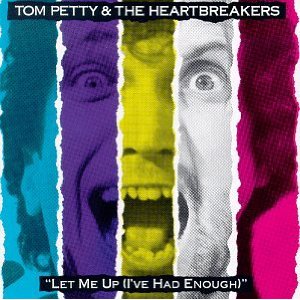
On the day after Christmas in 1986, mid-way through my junior year of high school, my family moved from North Carolina to central Pennsylvania, beginning a period of upheaval and ill will between me and my parents and siblings that took several years to address and heal. Music was my refuge, the thing that kept me on an even keel when all I wanted to do was either put my fist through something hard, or slip down into the fetal position and cry. What I really needed was some flat-out rock and roll, performed by a band that could play bee-you-tiff-lee or durrrrty, depending on what was called for.

In April of the the following year, Tom Petty and his merry band put out Let Me Up (I’ve Had Enough), a record I connected with on levels both emotional and visceral. It had moments of sheer beauty (“Runaway Trains,” “It’ll All Work Out”), pure pop (“All Mixed Up,” “Ain’t Love Strange”), and rollicking good fun (“One of These Days,” “How Many More Days”). It also had, in the single “Jammin’ Me” and the title track, amped-up Stonesy rock that I would turn up loud in my bedroom, loud enough to piss off my family, enabling me, however briefly, to give my tormenters the auditory finger now and again.

It was a small modicum of revenge, but it meant a lot. The music also helped me feel that everything was going to be all right, which meant even more. -Rob Smith

To see more life-saving albums, click here.

Rush: Classic Albums, “2112” and “Moving Pictures”

The Classic Albums series gives the fans two albums for the price of one in this two-hour set covering the band’s biggest albums, 1976’s 2112 and 1981’s Moving Pictures. The band is extremely candid about how 2112 was a life-or-death album for them, and how they refused to give in to label pressure to write a hit. They even bring the band’s longtime producer Terry Brown (he and the band parted ways after 1982’s Signals) to break down the tracks, and explain the origin of the eerie synthesizer line that opens the “Overture” section to “2112.” Foo Fighters drummer Taylor Hawkins and Barenaked Ladies’ Ed Robertson are also on hand to sing the band’s praises.

If there is one downside to this one, it’s that they had so much ground to cover that they tend to focus solely on the hits. Side II of Moving Pictures is ignored completely, and the song “Tears” – first power ballad ever? – is only discussed as an aside in one of the interviews in the bonus features. The content they do provide is damn good, though. And with the way they edit the Peart interview segments, we can’t help but wonder just how much talking he did that didn’t wind up on the final cut. (Eagle Vision 2010)

Click to buy Classic Albums: 2112 and Moving Pictures from Amazon

Gin Blossoms: No Chocolate Cake


RIYL: Marshall Crenshaw, Del Amitri, Toad the Wet Sprocket

The Gin Blossoms pulled a nifty comeback when they dropped Major Lodge Victory in 2006. It didn’t exactly reinvent the wheel, but this is the Gin Blossoms we’re talking about – they’re just not one of those bands, and there isn’t a goddamn thing wrong with that. Unfortunately, while the band may not be reinventing themselves, they are repeating a disturbing pattern from their days in the spotlight: following a good album with an inferior one.

Gin_Blossoms_01

And whle we’re talking about their first “inferior” album, let’s be clear about one thing up front: Congratulations I’m Sorry was not a bad record. Granted, it wasn’t a great record, but its biggest crime was that it wasn’t able to catch the public off guard like New Miserable Experience did. As radio songs go, “Day Job,” “Follow You Down” and “Not Only Numb” are only slightly, only slightly behind “Hey Jealousy,” “Found Out About You” and “Mrs. Rita” on the ear candy scale. The biggest thing Congratulations had against it was timing, and the same could be said of No Chocolate Cake. Once the Blossoms put Major Lodge Victory on the shelves, they lost the element of surprise once again. Chocolate Cake is perfectly pleasant, and occasionally more than that, namely “Wave Bye Bye” and “Something Real,” which was inexplicably relegated to the album’s basement (song #10 out of 11). Lead single “Miss Disarray” hits all of the same buttons that their earlier songs hit; the problem is that those buttons don’t work anymore.

But is that the Gin Blossoms’ fault? If anything, give them credit for sticking to their guns and doing the one thing they know how to do really well, commercial prospects be damned. A weaker band would have turned in some lame Rob Thomas knockoff a decade ago for another chance at the brass ring. Not the Gin Blossoms. If they’re going down, they’re going down doing what they love, and they deserve credit for that. Besides, that corporate circuit is a profitable one, from what we’ve heard, and there isn’t a goddamn thing wrong with that, either. (429 Records 2010)

Gin Blossoms MySpace page
Click to buy Chocolate Cake from Amazon

OMD: History of Modern


RIYL: old-school OMD, Kraftwerk

One could make a strong case for OMD as one of the most overlooked bands of synth pop’s first wave, and ironically, it was their commercial success that diminished their profile. Before the band struck American gold with “So in Love” and “If You Leave,” OMD were more inclined to mess around with their new toys just to see what kinds of sounds they could make. Hit songs were a bonus, but the band was more concerned with making art with a capital A. Then those hits came, and damned if it didn’t feel nice and warm in the spotlight. The band wanted to stay there a little longer, so they made 1986’s The Pacific Age. They were rewarded with one Top 20 single in “(Forever) Live and Die” and declining record sales on both sides of the pond. Not even a support slot on Depeche Mode’s stadium-filling Music for the Masses tour could stop the band from imploding, as singer Andy McCluskey watched the rest of the band walk away. Whoops.

OMD_02

McCluskey ultimately grew tired of carrying the OMD torch by himself after 1996’s Universal, but it was ten more years before McCluskey and co-founder Paul Humphreys buried the hatchet and embarked on a special tour featuring the band’s Architecture and Morality in its entirety (which makes them trendsetters on the ‘full album live’ front). At long last, McCluskey and Humphreys, along with original rhythm section Malcolm Holmes and Martin Cooper, are releasing History of Modern, their first album together since The Pacific Age. The good news is that they clearly recognize that there was magic in the sound of those early albums that was missing from their later work. The bad news is that they seem content to use their old songs as the framework for their new ones. And Humphreys doesn’t get a single lead vocal.

Sometimes the similarities to earlier songs are subtle, like the vocal in ther verses to “The Right Side.” The track itself is pure Krautrock goodness, but the vocal melody in the verse bears a strong resemblance to “We Love You.” Other songs are a bit more outspoken in terms of their origins; “RFWK,” another Kraut-ish gem (the title references the first initials of Kraftwerk’s best-known lineup), is essentially the 2010 version of “Souvenir,” while “Sister Mary Says” is a little bit “Enola Gay,” a little bit “Dreaming,” with a vocal melody in the verse that recalls the unintelligible vocal snippet throughout “Flame of Hope.” Interestingly, this song’s origins go back to 1981, and McCluskey revisited it for inclusion on Universal, but decided against it because it sounded too much like old OMD. That the song would be acceptable for inclusion now is either amusing, cynical or sad – we’re honestly not sure which.

Sonically, History of Modern chugs along like the long-lost follow-up to Junk Culture. Musically, it could have used a little more time in the oven. There are glimmers of hope here and there, like the shimmering “Sometimes” (dig the Macy Gray-ish vocals by Jennifer John), but the next time McCluskey and Humphreys decide to make a record together, let’s hope that the collaboration is a mutual one, rather than Humphreys agreeing to perform a bunch of songs McCluskey has already written. (Bright Antenna 2010)

OMD MySpace page
Click to buy History of Modern from Amazon

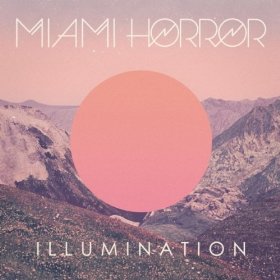
Miami Horror: Illumination


RIYL: Daft Punk, Midnight Juggernauts, Air’s Moon Safari

Some like to deride Daft Punk for how little they contribute to their own songs – for a clever YouTube clip of Daft Punk’s songs, and the songs they stole to create them, click here – but the world of electronic music, and pop in general, is much, much better off for having them in it. In the beginning of the 2000s, dance tracks were largely instrumentals for speed freaks, with jacked-up BPMs and no soul. Thanks to Daft Punk, the song has returned to the forefront. Even better, thanks to their song “Aerodynamic,” some acts have begun dabbling in prog. A terrifying concept on paper, but to date, it’s working quite well in execution, and the unofficial home for this techno-prog sub-genre appears to be Australia, of all places. Two years ago, the Midnight Juggernauts delivered an alt-dance classic with their debut Dystopia, and now Melbourne’s Miami Horror jumps into the fray with Illumination.

Musically, Illumination feels like a brainstorming session between Daft Punk and Nile Rodgers and (the late, great) Bernard Edwards. Bubbly synth lines (think Supertramp’s “The Logical Song”) intertwine with scratchy guitar riffs, along with a healthy dose of the wah-wah pedal, all laid on top of a four-on-the-floor Daft Punk beat. The back half of the album is a bit more experimental, as the band delves into some more complex chord sequences. “Grand Illusion” sounds like “Aerodynamic” had it been produced by Giorgio Moroder, and “Illuminated” could easily pass for a B-side from Air’s Moon Safari sessions. Smack dab in the middle is “Sometimes,” which sounds like New Order re-imagined as the Studio 54 house band. There is no surefire can’t-miss single (though “Echoplex” comes close), but that’s actually one of the refreshing things about the album; most electronic acts have that one tune that dwarfs the others, but Miami Horror has a more balanced attack. Will definitely keep your next party hopping. (Car W.S. 2010)

Miami Horror MySpace
Click to buy Illumination from Amazon

« Older posts Newer posts »