Page 79 of 583

Dax Riggs: Say Goodnight to the World


RIYL: John Doe, Birdmonster, Jeffrey Lee Pierce

Dax Riggs started as the lead singer of Acid Bath, a sludge/stoner metal band that was heavier than an elephant on Jupiter. After Acid Bath he went onto Agents of Oblivion and then Deadboy & the Elephantmen before finally just going solo with We Sing of Only Blood or Love. With each successive release, Riggs’ sound became more sonically mellow, even if his lyrics and own vocal delivery remained as raw and powerful as ever. On Say Goodnight to the World, Riggs starts strong (and loud) with the blues-rocking title track, and hints of his old metal ways can be heard on songs like “No One Will Be a Stranger” and “Gravedirt on My Blue Suede Shoes.” But the rest of the album is more barren and stark than anything Riggs has recorded to date. It’s occasionally interesting, but after a while the bleakness of it all becomes overbearing. The cover of “Heartbreak Hotel” is interesting, and certainly matches the somber lyrics of the song, but for the most part this album alternates between being horribly depressing, sleep-inducing or background noise.

If you thought Beck’s Sea Change and Nebraska by Springsteen were too upbeat, this is the record for you. (Fat Possum 2010)
Dax Riggs MySpace page

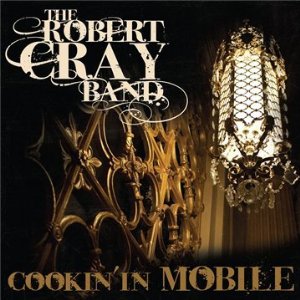
The Robert Cray Band: Cookin’ in Mobile


RIYL: Albert Collins, Stevie Ray Vaughan & Double Trouble, Freddie King

In the 1980s, when rock music took a slick turn and anyone playing the blues was kind of poo pooed, several artists carried the torch until the rest of the music world woke up from their hairspray-induced coma and rediscovered the blues. The two most prominent were Stevie Ray Vaughan and Robert Cray. Cray’s status is often overshadowed by the flashier Vaughan, but his place in the annals of blues rock is just as important as the deceased guitar god from Texas. The Robert Cray Band has continued to put out solid, plucky albums (18 so far) since their debut in 1980, while still dazzling audiences with their phenomenal live concerts. That expertise of the Robert Cray Band is on full display throughout Cookin’ in Mobile, this new CD (a DVD of the same concert is also available).

Recorded earlier this year at the historic Saenger Theater in Mobile, Alabama, Cray and his solid backing band of Jim Pugh on keyboards, Richard Cousins on bass and Tony Braunagel on drums, deliver a tight set of songs that rock the house right from the get go with the opening scorcher “Our Last Time.” Classic hits like “Right Next Door” and Cray’s signature song, “Smoking Gun,” are opened up for extended jamming between the musicians. The latter clocks in at over seven minutes as Cray decides to school his audience on what blues rock guitar sounds like. Elsewhere throughout the album, Pugh takes the spotlight, in particularly on “One in the Middle,” which has a killer organ solo by Cray’s longtime sideman.

While the album may appear to look short with just 12 songs on it, in actuality, only two of them clock in at under five minutes. What you get on Cookin’ in Mobile is a real concert experience, with the band giving the songs new life from their studio counterparts. You may not be able to see each pained expression Cray gives when making his Fender sing, but you can feel the passion from his playing on every track. If you’ve never had the opportunity to catch the Robert Cray Band in concert, Cookin’ in Mobile is a fine place to start. (Vanguard Records 2010)

Robert Cray MySpace Page
Purchase Cookin’ in Mobile from Amazon


Jonneine Zapata: Cast the Demons Out


RIYL: Concrete Blonde, PJ Harvey, the Dead Weather

Jonneine Zapata is a femme fatale out of LA’s famed Silverlake district, but she’s taking a much darker road than recent peers like Jenny Lewis or the Watson Twins. Zapata’s sound is much more reminiscent of LA’s early ’90s alt-rock breakout band Concrete Blonde. Zapata often sounds like she could be a sibling of Concrete Blonde vocalist Johnette Napolitano, which is classy territory.

zapata

But Zapata needs to crank up the rock factor a notch, because eight of the ten tracks here are ballads or slow blues. She has a compelling voice and powerful charisma, as evidenced on lead single “Good Looking,” a simmering tune where Zapata’s mournful voice grabs the ear. But the song never takes off, which is unfortunately the case with most of the songs. “Worry” has the same problem – the intro is entrancing, but you keep waiting for the song to kick in and it never does. Still, many of the tunes have a cinematic sort of appeal, as if taken from the soundtrack of some dark, twisted David Lynch flick.

A notable exception is “Burn,” a mid-tempo rocker composed of just a basic riff over a basic beat, but that’s all Zapata needs to propel her voice to a higher realm. The other rocker is “Cowboy,” which is downright heavy, features burning psychedelic guitar and has some serious punk attitude from Zapata. The smokey “2, 3, 4” is a highlight too, a slow burning blues song with some shimmery guitar that showcases Zapata’s mesmerizing quality when singing about what seems to be unrequited love.

Why there aren’t a few more rockers on this album is a puzzling mystery, especially considering the powerful set that Zapata and her band threw down at the Red Eyed Fly during Austin’s SXSW Festival in March. Zapata seems to come from a haunted place, so maybe she needed to cast these demons out before she can really open up. But it would be nice to see her hook up with a producer and/or creative partner who can help her fully realize the rock goddess that is clearly within. (Laughing Outlaw Records 2009)

Jonneine Zapata MySpace page

Anne McCue: Broken Promise Land


RIYL: Susan Tedischi, Lucinda Williams, Sheryl Crow,

On her second album, Broken Promise Land, Anne McCue delivers a tightly produced group of songs that is well paced and refreshing.  For the record, she’s backed by a rhythm section that consists of Ken Coomer (Uncle Tupleo, Wilco) on drums and Bones Hillman (Midnight Oil) on bass. Together, this trio creates a hard rocking sound that also pulls from the blues, country, and folk. It’s music that McCue calls “cosmic biker music.” On each track, the singer sings with a cool, lovely voice that draws you in. But it’s her killer guitar playing that keeps you coming back for more and her ability to write a catchy song that makes Broken Promise Land so memorable.

Bad ass songs like “Don’t Go to Texas,” “Rock ‘n Roll Outlaw,” and the title track show that McCue is staking her claim in the new blues movement that has made the White Stripes and the Black Keys popular. Elsewhere, on “Motorcycle Dream,” and “God’s Home Number,” a noirish, spooky number that reminds me of late night drives through the city, McCue uses crafty wordplay and a cool, slinky voice to lure you in until she unleashes a killer guitar solo.  Each track on Broken Promise Land flows naturally into the next, making this a complete listening experience and not just another album where you’re looking for the next hit single.

It’s easy to understand why McCue has gained fans in the likes of Nancy Wilson of Heart and Americana queen Lucinda Williams. McCue attacks her guitar on each song with a bevy of blues and classic rock that recalls some of the legends of the ’70s, including Wilson, while her songwriting and singing voice have an urgency and a haunted nature that recall the kind of passionate southern tales Williams has recorded during her storied career. There is a comfortableness about this music that makes it kind of timeless; no matter how many times you hear it, you never get sick of it. It’s the type of music that can form the soundtrack to peoples’ lives.  Broken Promise Land is a great listen and you’ll find yourself coming back to it again and again after your initial time through it. (Flying Machine Records 2010)

Anne McCue’s offcial website

Click to buy Broken Promise Land through Amazon

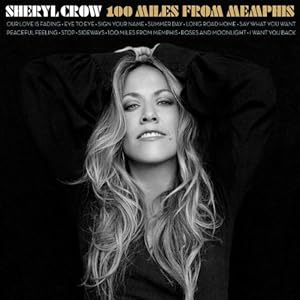
Sheryl Crow: 100 Miles from Memphis


RIYL: Shelby Lynne, Citizen Cope, Adele

To call 100 Miles from Memphis Sheryl Crow’s “soul” album would be a little misleading. It isn’t like the songwriter/songstress/Grammy favorite hasn’t always had something of a soulful streak running through her music. This latest effort just emphasizes that streak more explicitly than any of her previous albums. More importantly, it catches Crow (most of the time) in a playful, lighthearted mood. It’s a sharp turn from the heavy-handedness that’s made much of her last couple of albums a bit of a challenge to listen to, and it results in her best album in at least a decade.

Working with guitarist/producer Doyle Bramhall II, 100 Miles is a loose affair. In spirit and vibe, it’s the closest Crow has come to matching her charming 1993 debut, Tuesday Night Music Club. After focusing much of her material on personal and political issues for the past few years, it’s nice to hear her lighten up. The fact that she has lightened up a bit also makes the songs where she does turn serious (like the political “Say What You Want”) a lot easier to take.

The Hammond B-3 organ gets a major workout on 100 Miles. Not surprising, given that the instrument was a hallmark of the Memphis soul that Crow references in the album’s title. “Eye to Eye,” a standout track, matches an Al Green-type sound with a reggae beat. “Stop” is Crow’s most affecting ballad in quite some time, and she scores with big-name collaborators like Citizen Cope (on a cover of his “Sideways”) and Memphis native Justin Timberlake (on the album’s most surprising track – an effective cover of Terence Trent D’Arby’s “Sign Your Name”). As a tip of the cap to one of the people who gave her a start in the music industry, she adds a faithful cover of the Jackson 5’s “I Want You Back” to the end of the album. It’s casual, and Sheryl sounds like she had fun doing it – an apt way to close a record that’s one of the loosest (and best) of Crow’s career. (A&M Records 2010)

Sheryl Crow MySpace page

« Older posts Newer posts »