Page 63 of 583

OMD: History of Modern


RIYL: old-school OMD, Kraftwerk

One could make a strong case for OMD as one of the most overlooked bands of synth pop’s first wave, and ironically, it was their commercial success that diminished their profile. Before the band struck American gold with “So in Love” and “If You Leave,” OMD were more inclined to mess around with their new toys just to see what kinds of sounds they could make. Hit songs were a bonus, but the band was more concerned with making art with a capital A. Then those hits came, and damned if it didn’t feel nice and warm in the spotlight. The band wanted to stay there a little longer, so they made 1986’s The Pacific Age. They were rewarded with one Top 20 single in “(Forever) Live and Die” and declining record sales on both sides of the pond. Not even a support slot on Depeche Mode’s stadium-filling Music for the Masses tour could stop the band from imploding, as singer Andy McCluskey watched the rest of the band walk away. Whoops.

OMD_02

McCluskey ultimately grew tired of carrying the OMD torch by himself after 1996’s Universal, but it was ten more years before McCluskey and co-founder Paul Humphreys buried the hatchet and embarked on a special tour featuring the band’s Architecture and Morality in its entirety (which makes them trendsetters on the ‘full album live’ front). At long last, McCluskey and Humphreys, along with original rhythm section Malcolm Holmes and Martin Cooper, are releasing History of Modern, their first album together since The Pacific Age. The good news is that they clearly recognize that there was magic in the sound of those early albums that was missing from their later work. The bad news is that they seem content to use their old songs as the framework for their new ones. And Humphreys doesn’t get a single lead vocal.

Sometimes the similarities to earlier songs are subtle, like the vocal in ther verses to “The Right Side.” The track itself is pure Krautrock goodness, but the vocal melody in the verse bears a strong resemblance to “We Love You.” Other songs are a bit more outspoken in terms of their origins; “RFWK,” another Kraut-ish gem (the title references the first initials of Kraftwerk’s best-known lineup), is essentially the 2010 version of “Souvenir,” while “Sister Mary Says” is a little bit “Enola Gay,” a little bit “Dreaming,” with a vocal melody in the verse that recalls the unintelligible vocal snippet throughout “Flame of Hope.” Interestingly, this song’s origins go back to 1981, and McCluskey revisited it for inclusion on Universal, but decided against it because it sounded too much like old OMD. That the song would be acceptable for inclusion now is either amusing, cynical or sad – we’re honestly not sure which.

Sonically, History of Modern chugs along like the long-lost follow-up to Junk Culture. Musically, it could have used a little more time in the oven. There are glimmers of hope here and there, like the shimmering “Sometimes” (dig the Macy Gray-ish vocals by Jennifer John), but the next time McCluskey and Humphreys decide to make a record together, let’s hope that the collaboration is a mutual one, rather than Humphreys agreeing to perform a bunch of songs McCluskey has already written. (Bright Antenna 2010)
OMD MySpace page
Click to buy History of Modern from Amazon

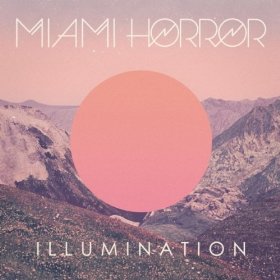
Miami Horror: Illumination


RIYL: Daft Punk, Midnight Juggernauts, Air’s Moon Safari

Some like to deride Daft Punk for how little they contribute to their own songs – for a clever YouTube clip of Daft Punk’s songs, and the songs they stole to create them, click here – but the world of electronic music, and pop in general, is much, much better off for having them in it. In the beginning of the 2000s, dance tracks were largely instrumentals for speed freaks, with jacked-up BPMs and no soul. Thanks to Daft Punk, the song has returned to the forefront. Even better, thanks to their song “Aerodynamic,” some acts have begun dabbling in prog. A terrifying concept on paper, but to date, it’s working quite well in execution, and the unofficial home for this techno-prog sub-genre appears to be Australia, of all places. Two years ago, the Midnight Juggernauts delivered an alt-dance classic with their debut Dystopia, and now Melbourne’s Miami Horror jumps into the fray with Illumination.

Musically, Illumination feels like a brainstorming session between Daft Punk and Nile Rodgers and (the late, great) Bernard Edwards. Bubbly synth lines (think Supertramp’s “The Logical Song”) intertwine with scratchy guitar riffs, along with a healthy dose of the wah-wah pedal, all laid on top of a four-on-the-floor Daft Punk beat. The back half of the album is a bit more experimental, as the band delves into some more complex chord sequences. “Grand Illusion” sounds like “Aerodynamic” had it been produced by Giorgio Moroder, and “Illuminated” could easily pass for a B-side from Air’s Moon Safari sessions. Smack dab in the middle is “Sometimes,” which sounds like New Order re-imagined as the Studio 54 house band. There is no surefire can’t-miss single (though “Echoplex” comes close), but that’s actually one of the refreshing things about the album; most electronic acts have that one tune that dwarfs the others, but Miami Horror has a more balanced attack. Will definitely keep your next party hopping. (Car W.S. 2010)

Miami Horror MySpace
Click to buy Illumination from Amazon

The Airborne Toxic Event: All I Ever Wanted: Live from the Walt Disney Concert Hall

Note: This is a review of the 90-minute documentary film only. At press time, we did not have access to the CD or the DVD of the entire show. Though we hope to, soon.

It’s still baffling to us that Pitchfork would go so far out of their way to bash a band like the Airborne Toxic Event – they gave the band’s eponymous debut album, which we loved, a scathing 1.6 on their 10-point scale – and after watching “All I Ever Wanted: Live from the Walt Disney Concert Hall,” the insult seems twice as offensive. They seem like geniunely good, extremely gracious people, and the way they got the community involved in their landmark show was deeply touching. A local high school band plays on “Does This Mean You’re Moving On?” and a raucous cover of the Ramones’ “Do You Remember Rock ‘n Roll Radio?,” while a school girl’s choir jumps in for a rousing, kitchen-sink version of “Missy.” The band sounds great – the high school band misses a few notes, but hey, they’re kids – and they look like they’re having the time of their lives both performing and recording this show.

If there is one problem with the movie, it’s that it goes for long stretches without any music, and when they do include music, they opt for a cover version (the Ramones, Magnetic Fields, Q Lazzarus) as often as they show them playing one of their own songs. The covers are cute, but the movie could have used more original material. The set includes a separate DVD of the entire show, of course, but if we’re having our music documented for all eternity, we’re going to make sure the majority of the footage consists of original material, not someone else’s. But then again, that’s a very Mikel Jollett thing to do, favoring someone else’s songs over his own. (Island 2010)

Airborne Toxic Event MySpace page
Click to buy All I Ever Wanted from Amazon

Combichrist: Making Monsters


RIYH (Recommended If You Hate): Your history teacher, riding the bus to school, cleaning your room

Combichrist are angry! And mean! And scary! And other stuff that will hopefully scare parents and encourage misguided 14-year-olds who want to rebel by going to Hot Topic to buy their records.

The creation of Norwegian musician Andy LaPlegua, Combichrist has been around since 2003. Previous uplifting and inspirational efforts by LaPlegua and crew include The Joy of Gunz, Everybody Hates You and What The Fuck Is Wrong with You People?

Their sound could be be described as “Head Like a Hole” meets “Beautiful People” meets the entire hard house dance movement. Aggressive beats meets aggressive lyrics meets aggressive synths. It’s all just so…aggressive. So much so some call the genre of music aggrotech. But don’t do that – you don’t want to encourage that kind of rampant portmanteauing. If you’re over 20 and take this stuff seriously,then a) you’ll love this record, and b) there’s no helping you. If you find needlessly misanthropic song titles like “Throat Full of Glass” and “Through These Eyes of Pain” hysterical and want to know just how many times LaPlegua can call the object of his affection a slut on “Fuckmachine,” then you might find some humor in Making Monsters, and the music, while a little overbearing at times, is good in a “I need help to stay awake/hate humanity” kind of way.

Just give your mom a hug, or pet some kittens, after listening. (Metropolis Records 2010)

Combichrist MySpace Page

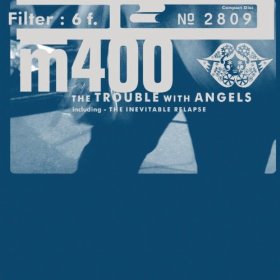
Filter: The Trouble with Angels


RIYL: Nine Inch Nails, Stone Temple Pilots, Alice Cooper’s Brutal Planet and Dragontown

Filter is Richard Patrick. It’s his toy and he is going to steer it, hire the rest of the band and collaborate with who he thinks will make the best record. Mind you, it is going to sound like a Filter record. There will be those trademark Patrick screams contrasted against his solid singing voice; there will be crunchy industrial guitar riffs, chugging bass lines, at least one ballad and Patrick will be wrestling lyrically with subjects like addiction and the ills of organized religion. For The Trouble with Angels, Patrick works with Bob Marlette (Iommi, Alice Cooper, Atreyu among others) to re-sharpen the fangs of Filter. Marlette produces and engineers the record while co-writing nine of the ten songs.

Consistently, this is a heavier effort throughout the 41 minutes then the last several records and is much more akin to the debut Filter release, Short Bus then anything released since. Interestingly enough, Patrick brings back original Filter co-conspirator Brian Liesagang (who left the band in 1997) to add “Sound Design and Programming” to the project. The first three tracks (“The Inevitable Relapse,” “Drug Boy,” and “Absentee Father”) roll over you like a locomotive. Patrick’s intentions are loud and clear. The fourth track, “No Love,” slows the train down but features a thumping chorus and Patrick singing at the edge of his range.

There are two songs where things slow down and the record produces “Take a Picture”-like moments with the ballads “No Re-entry” and the gorgeous album closer “Fades Like a Photograph (Dead Angel).” The latter features some of Patrick’s most poetic and moving lyrics to date. Other than those two songs, Marlette is inspiring Patrick to be heavy. Marlette got great work out of Alice Cooper on Dragontown and Brutal Planet, moving Alice into industrial metal territory for two records. Here he gets a good record out of Patrick’, who has been busy the last couple of years re-energizing the brand name. Filter has released two albums, a greatest hits package and a remix album of 2008’s Anthems for the Damned in the last four years. Sobriety has treated Richard Patrick well and his fans have reaped the rewards of his re-energized work ethic. (Rocket Science Ventures, 2010)

Filter MySpace page

« Older posts Newer posts »