Page 62 of 583

David Bowie: Station to Station (Special/Deluxe Editions)

david bowie
RIYL: David Bowie, cocaine

Bowie’s 1976 album Station to Station is one of his many masterpieces. It also serves as proof that one can not only function, but excel, on nothing but cocaine, milk and hot peppers, which was Bowie’s alleged diet at the time. One suspects the recording sessions for Station to Station would be legendary if anyone could remember them. The classic rumor being that Bowie was so high during the time that the entire year is blacked out from his memory.

Even with all the craziness that surrounds the record, Station to Station has kind of fallen to the wayside since its original release, eclipsed by both the Berlin trilogy (Low, “Heroes” and The Lodger) and his magnum opus of Scary Monsters (and Super Creeps). However, now it’s getting another chance in the limelight with a new special edition to commemorate…well nothing, aside from how awesome it is.

The new remaster is excellent, and does not fall prey to the Loudness Wars. Every snare is crisp and bass line clear. And thank God, because all six tracks on Station to Station are undeniable classics. The surreal imagery of the title track and ode to a heroin nightmare that is “TVC15”; the genuine love/lust of “Stay” and darkly comic “love” of “Golden Years”; the heartfelt balladeering of “Wild Is the Wind” and “Word on a Wing.” It’s all classic, it all sounds great, and it’s all a must-have.

If you already own Station To Station and need more than a new transfer in order to be persuaded to make a repurchase, the special edition reissue also includes an entire live concert from the Nassau Colosseum in 1976. If Bowie really was doped out of his brain during the late ’70s, it didn’t seem to affect his ability to perform here. He’s on fire at this show, and is probably the second-best Bowie live recording next to the Live at Santa Monica ’72 album. It alone more than justifies the double-dip.

But if you really want to justify the double-dip (and have 150-some bucks to spend), then go nuts and get the deluxe edition. This thing is insane. Not only does it include the remastered edition of the album and the concert on both CD and vinyl, but it also includes an entirely different master of the album from 1985 (which, in all honestly, sounds pretty much identical to the new remaster) and another CD with the single edits of every song on the album, save “Wild Is The Wind.” There’s also another disc, a DVD this time, that features even more mixes of the album, some in surround sound. All that goodness is packed in an beautiful box that includes new linear notes by Cameron Crowe, extensive information about the album itself, reproduced press and fan club materials and much, much more. Pretty much the only thing it’s missing is a bag of blow. (EMI 2010)
David Bowie MySpace Page

The Doobie Brothers: World Gone Crazy


RIYL: Bob Seger, The Eagles, Boston

51R3XNkkyPL._SCLZZZZZZZ_[1] News of World Gone Crazy‘s existence is likely to elicit one of three responses:

1. “The Doobie Brothers have a new one out? Who knew those dinosaurs were still around?”
2. “The Doobie Brothers have a new one out? Hope it doesn’t suck as much as their last couple of records!”
3. “Hell yeah! Good rockin’ tonight!”

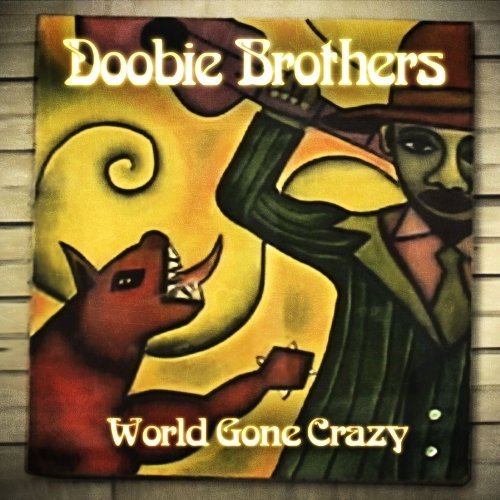
Responses one and two might seem to make the most sense, but against all odds, it’s the third one that most accurately describes the Doobies’ 13th album (and first in a decade). After scoring a gold record and a Top 10 single with their 1989 reunion album, Cycles, they limped through the ’90s and aughts, releasing a pair of weak albums (1991’s Brotherhood and 2000’s Sibling Rivalry) and wheezing into the “heritage rock” tour circuit like a band whose best creative days were long past. But World Gone Crazy isn’t just another piece of swag to sell at the concession stand during their next tour – it’s actually a helluva rock record, and easily the Doobies’ best album since 1978’s Minute by Minute.

Is that damning with faint praise, considering the unevenness of what came after? Perhaps. But World Gone Crazy is still a quality album – good enough, in fact, to serve as a template for the band’s peers during their own sporadic forays into the studio. It’s a record rich with nods to the past, including the band’s reunion with Ted Templeman and their resurrection of “Nobody,” a long-discarded track re-recorded for these sessions – but this doesn’t sound like a band trying to get back to its past. Instead, the Doobies simply sound comfortable with their legacy and their place in today’s music industry. It makes a world of difference – unlike a lot of new albums from bands of the Doobies’ vintage, World Gone Crazy never tries too hard. The Doobie Brothers are who they are, and while they’re willing to acknowledge their past (right up to inviting ex-Doobie Michael McDonald in for a guest spot on one track), there’s nothing self-conscious about these performances. They may as well have been performing for themselves.

Of course, it helps that the album is stacked with good songs. This is meat-and-potatoes West Coast rock ‘n’ roll, so you shouldn’t go in expecting poetry, but within the context of a genre that hasn’t seemed to have a creative pulse for far too long, World Gone Crazy is surprisingly vibrant. “Nobody” sounds like it was unearthed from a time capsule, which is understandable, given its age – but what’s surprising is just how seamlessly it stands up against everything else on the album. Open a beer – American, of course – and turn this up as loud as the neighbors will allow. Then ask yourself why bands like the Doobie Brothers ever went out of fashion. (HOR 2010)

Doobie Brothers MySpace page

Gin Blossoms: No Chocolate Cake


RIYL: Marshall Crenshaw, Del Amitri, Toad the Wet Sprocket

The Gin Blossoms pulled a nifty comeback when they dropped Major Lodge Victory in 2006. It didn’t exactly reinvent the wheel, but this is the Gin Blossoms we’re talking about – they’re just not one of those bands, and there isn’t a goddamn thing wrong with that. Unfortunately, while the band may not be reinventing themselves, they are repeating a disturbing pattern from their days in the spotlight: following a good album with an inferior one.

Gin_Blossoms_01

And whle we’re talking about their first “inferior” album, let’s be clear about one thing up front: Congratulations I’m Sorry was not a bad record. Granted, it wasn’t a great record, but its biggest crime was that it wasn’t able to catch the public off guard like New Miserable Experience did. As radio songs go, “Day Job,” “Follow You Down” and “Not Only Numb” are only slightly, only slightly behind “Hey Jealousy,” “Found Out About You” and “Mrs. Rita” on the ear candy scale. The biggest thing Congratulations had against it was timing, and the same could be said of No Chocolate Cake. Once the Blossoms put Major Lodge Victory on the shelves, they lost the element of surprise once again. Chocolate Cake is perfectly pleasant, and occasionally more than that, namely “Wave Bye Bye” and “Something Real,” which was inexplicably relegated to the album’s basement (song #10 out of 11). Lead single “Miss Disarray” hits all of the same buttons that their earlier songs hit; the problem is that those buttons don’t work anymore.

But is that the Gin Blossoms’ fault? If anything, give them credit for sticking to their guns and doing the one thing they know how to do really well, commercial prospects be damned. A weaker band would have turned in some lame Rob Thomas knockoff a decade ago for another chance at the brass ring. Not the Gin Blossoms. If they’re going down, they’re going down doing what they love, and they deserve credit for that. Besides, that corporate circuit is a profitable one, from what we’ve heard, and there isn’t a goddamn thing wrong with that, either. (429 Records 2010)

Gin Blossoms MySpace page
Click to buy Chocolate Cake from Amazon

OMD: History of Modern


RIYL: old-school OMD, Kraftwerk

One could make a strong case for OMD as one of the most overlooked bands of synth pop’s first wave, and ironically, it was their commercial success that diminished their profile. Before the band struck American gold with “So in Love” and “If You Leave,” OMD were more inclined to mess around with their new toys just to see what kinds of sounds they could make. Hit songs were a bonus, but the band was more concerned with making art with a capital A. Then those hits came, and damned if it didn’t feel nice and warm in the spotlight. The band wanted to stay there a little longer, so they made 1986’s The Pacific Age. They were rewarded with one Top 20 single in “(Forever) Live and Die” and declining record sales on both sides of the pond. Not even a support slot on Depeche Mode’s stadium-filling Music for the Masses tour could stop the band from imploding, as singer Andy McCluskey watched the rest of the band walk away. Whoops.

OMD_02

McCluskey ultimately grew tired of carrying the OMD torch by himself after 1996’s Universal, but it was ten more years before McCluskey and co-founder Paul Humphreys buried the hatchet and embarked on a special tour featuring the band’s Architecture and Morality in its entirety (which makes them trendsetters on the ‘full album live’ front). At long last, McCluskey and Humphreys, along with original rhythm section Malcolm Holmes and Martin Cooper, are releasing History of Modern, their first album together since The Pacific Age. The good news is that they clearly recognize that there was magic in the sound of those early albums that was missing from their later work. The bad news is that they seem content to use their old songs as the framework for their new ones. And Humphreys doesn’t get a single lead vocal.

Sometimes the similarities to earlier songs are subtle, like the vocal in ther verses to “The Right Side.” The track itself is pure Krautrock goodness, but the vocal melody in the verse bears a strong resemblance to “We Love You.” Other songs are a bit more outspoken in terms of their origins; “RFWK,” another Kraut-ish gem (the title references the first initials of Kraftwerk’s best-known lineup), is essentially the 2010 version of “Souvenir,” while “Sister Mary Says” is a little bit “Enola Gay,” a little bit “Dreaming,” with a vocal melody in the verse that recalls the unintelligible vocal snippet throughout “Flame of Hope.” Interestingly, this song’s origins go back to 1981, and McCluskey revisited it for inclusion on Universal, but decided against it because it sounded too much like old OMD. That the song would be acceptable for inclusion now is either amusing, cynical or sad – we’re honestly not sure which.

Sonically, History of Modern chugs along like the long-lost follow-up to Junk Culture. Musically, it could have used a little more time in the oven. There are glimmers of hope here and there, like the shimmering “Sometimes” (dig the Macy Gray-ish vocals by Jennifer John), but the next time McCluskey and Humphreys decide to make a record together, let’s hope that the collaboration is a mutual one, rather than Humphreys agreeing to perform a bunch of songs McCluskey has already written. (Bright Antenna 2010)

OMD MySpace page
Click to buy History of Modern from Amazon

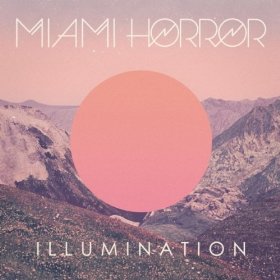
Miami Horror: Illumination


RIYL: Daft Punk, Midnight Juggernauts, Air’s Moon Safari

Some like to deride Daft Punk for how little they contribute to their own songs – for a clever YouTube clip of Daft Punk’s songs, and the songs they stole to create them, click here – but the world of electronic music, and pop in general, is much, much better off for having them in it. In the beginning of the 2000s, dance tracks were largely instrumentals for speed freaks, with jacked-up BPMs and no soul. Thanks to Daft Punk, the song has returned to the forefront. Even better, thanks to their song “Aerodynamic,” some acts have begun dabbling in prog. A terrifying concept on paper, but to date, it’s working quite well in execution, and the unofficial home for this techno-prog sub-genre appears to be Australia, of all places. Two years ago, the Midnight Juggernauts delivered an alt-dance classic with their debut Dystopia, and now Melbourne’s Miami Horror jumps into the fray with Illumination.

Musically, Illumination feels like a brainstorming session between Daft Punk and Nile Rodgers and (the late, great) Bernard Edwards. Bubbly synth lines (think Supertramp’s “The Logical Song”) intertwine with scratchy guitar riffs, along with a healthy dose of the wah-wah pedal, all laid on top of a four-on-the-floor Daft Punk beat. The back half of the album is a bit more experimental, as the band delves into some more complex chord sequences. “Grand Illusion” sounds like “Aerodynamic” had it been produced by Giorgio Moroder, and “Illuminated” could easily pass for a B-side from Air’s Moon Safari sessions. Smack dab in the middle is “Sometimes,” which sounds like New Order re-imagined as the Studio 54 house band. There is no surefire can’t-miss single (though “Echoplex” comes close), but that’s actually one of the refreshing things about the album; most electronic acts have that one tune that dwarfs the others, but Miami Horror has a more balanced attack. Will definitely keep your next party hopping. (Car W.S. 2010)

Miami Horror MySpace
Click to buy Illumination from Amazon

« Older posts Newer posts »