Page 58 of 583

Weezer: Hurley


RIYL: The Killers, Jimmy Eat World, Tegan & Sara

Casual fans of Weezer, the ones who only really know their pop hits, should love Hurley. The new album, their first since parting ways with Geffen and signing with indie label Epitaph, is a strong collection of pop rock/punk songs that will make the grayest autumn days ahead seem much sunnier. Everything about Hurley feels as big and burly as the photo of “Lost” actor Jorge Garcia (a.k.a. “Hurley”) on the front cover.

Throughout the album, Rivers Cuomo sings with the angst and melancholy of a singer half his age. But there is a lightness to his performances that makes you think that getting free from the corporate record company bog has given the band and Cuomo a new lease on life. “Memories” is a driving, nostalgic look back at that bygone era of… the ’90s. “Unspoken” begins with pretty, acoustic harmonies. Is this Weezer unplugged? Fear not, as the song shifts into gear by the end, kicking some serious ass. “Where’s My Sex” starts off as almost a joke, as Cuomo changed the letters of “socks” to “sex” in the lyrics. As the song nears its completion, the band suddenly becomes Green Day, switching time signatures and segueing into a completely different tune, a la “Jesus of Suburbia.”

The strongest selection on Hurley is “Hang On,” a beautiful work of ’70s-style pop/glam rock. Listen to it, you’ll hear shades of Sweet and Cheap Trick flowing freely with Weezer’s impeccable harmonies and hand claps. This one has radio written radio hit all over it. I hope so because this one would sound great coming out of teenage cars across America.

Each song on Hurley flows right into the next one making this a great listening experience. At ten songs (four bonus tracks are also available on a Deluxe edition) it’s also one of the quickest listens, too. Maybe the songs aren’t as complex as some of Weezer’s previous efforts, but this is certainly one of their most accessible and therefore fun albums. (Epitaph 2010)

Weezer MySpace page

The Orb featuring David Gilmour: Metallic Spheres

RIYL: The KLF, Pink Floyd, LSD

When the Orb first broke through into somewhat mainstream appeal with their 1991 epic The Orb’s Adventures Beyond the Ultraworld, some critics immediately drew comparisons between the ambient house outfit and classic prog rock of the 1970s. Both featured sprawling audio soundscapes, both included tracks that dipped well over 10 minutes in length, and both sounded amazing while under the influence of psychedelics. So while it’s kind of surprising that David Gilmour of Pink Floyd fame is working with the ambient-house legends, its even more surprising is that it took this long.

The story behind Metallic Spheres is a bit odd. Originally it was going to be a single track collaboration between occasional Orb collaborator Martin “Youth” Glover and Gilmour, but after Orb mastermind Alex Paterson got a hold of the tapes, he decided to turn it into an entire album instead. Its not exactly the most organic or natural way of recording an album, but it’s hard to argue with the results; Metallic Spheres is bloody brilliant, the best album to feature the Orb’s name in well over a decade. Unlike many of the recent releases under the Orb name, Metallic Spheres finds Paterson returning to what he (used to) do best; longform ambient tracks. There are only two “songs” on Metallic Spheres; “Metallic Side” and “Sphere Side” and on the CD version there’s barely a noticeable break in between the two. It’s all one big sonic journey that’s nearly impossible to describe since it goes just about everywhere imaginable. Some portions feature nothing but barely-noticeable beats and layers upon layers of Gilmour’s instantly recognizable guitar work, while some segments turn the record into a dub album, with funky beats and playful synths. It all peaks in an orgy of sliding guitars and vintage synths that sounds like the magical Moog baby of Pink Floyd’s Animals and Vangelis’ soundtrack to “Blade Runner.” It’s all very epic and very awesome. (Columbia 2010)

Ben Folds & Nick Hornby: Lonely Avenue


RIYL: swearing, playing the piano, swearing while playing the piano

Listening to Lonely Avenue, the geek pop wet-dream collaboration between Ben Folds and “High Fidelity” author Nick Hornby, one cannot help but think that there are moments where Folds is trying to pull a fast one on the public. This is not to say that Hornby’s credit is an ornamental one, but it seems strange that this smart, clever author, whose lightest books have more emotional depth than Folds’ songs have explored in over a decade, would actually write this, ever:

“I’m a fuckin’ redneck, I like to hang out with the boys
Play some hockey, do some fishing and kill some moose
I like to shoot the shit and do some chillin’, I guess
You fuck with me, and I’ll kick your ass”

Bull, shit. That’s a Folds chorus if ever there was one, and besides, it’s hard to believe that the English Hornby – or anyone else, for that matter – would care one iota about Levi Johnston to write a song about him. And if Folds did write the lyrics, that’s fine – actually, it’s not fine; the man is 44 with 11-year-old twins, and the whole potty mouth thing is beyond embarrassing at this point – but don’t include it here. Release it on your web site as a free download. Its inclusion here, and towards the front of the album, no less, nearly derails Lonely Avenue before it’s had a chance to spread its wings.

Indeed, the opening track only sets the stage for this to be like any other Folds album of late: filled with cranky, passive-aggressive hostility and naughty language. “A Working Day” comes off as a pre-emptive strike to people like, well, us, with a chorus of, “Some guy on the Net thinks I suck, and he should know / He’s got his own blog.” Folds may well be speaking from someone else’s point of view, but he has to know the dangers of singing a line like that and how thin-skinned it makes him look. (Plus, it has more foul language.) “Picture Window,” on the other hand, feels like a true Folds/Hornby collaboration, the sad tale of a woman giving birth on New Year’s Eve (at least that’s what we think it’s about). A beautiful string section shrouds Folds’ piano as he sings, “You know what hope is? Hope is a bastard / Hope is a liar, a cheat and a tease.” The album could use more songs like that and fewer songs like “Password,” which commits the unpardonable pop music sin of spelling out words (lots of them, too). Worse, the subject matter is quite disturbing, seemingly from the point of view of a lovestruck hacker. The song’s bitter ending only adds to the unpleasantness.

“From Above,” on the other hand, is one of the best songs of Folds’ solo career, describing two people who were meant for each other but never connect. The song’s last lines capture Folds’ lyrical essence better than Folds has captured it himself in over a decade: “Maybe that’s how books get written. maybe that’s why songs get sung / Maybe we owe the unlucky ones.” The album’s finale is equally moving. “Belinda” tells the tale of a singer forced to sing his lone hit, though it tortures him to do so because it’s about a girl he still loves but ultimately wronged. Is the song art imitating life? Folds, after all, divorced his second wife Kate in 1996, but he still plays “Kate” in concert.

Lonely Avenue doesn’t completely cure all of the ills of Folds’ recent work, but it’s definitely a step in the right direction, and the two are poised to be a modern-day John and Taupin. Keep the guy on speed dial, Ben. Please. (Nonesuch 2010)

Ben Folds MySpace
Click to buy Lonely Avenue from Amazon

The Posies: Blood/Candy


RIYL: Big Star, Matthew Sweet, the Foo Fighters

The Posies deliver their first album since 2005 here, and it’s a mixed bag. There’s a handful of songs that rival the Seattle-rooted band’s best work on Frosting on the Beater, their 1993 alternative-era classic. Big melodic hooks, vintage gear, soaring vocals with depth, rich harmonies; these are great to hear in 2010. But there are other songs where it sounds like band leaders Jon Auer and Ken Stringfellow couldn’t agree on which direction to go, and fused competing ideas together in odd ways that don’t quite gel. Either that or some of their mutual ideas were just weird. There’s an admirable effort at musical sophistication, but their best tunes tend to be the ones that keep it simple because these guys write really great hooks.

Posies_01

The first three songs all feature guest vocalists, but in subtle fashion. “Plastic Paperbacks” uses some low-end vocals from punk legend Hugh Cornwall of the Stranglers. It’s more of an embellishment than a major factor in the mid-tempo track, based around a melodic piano part and some atmospheric guitar. It feels like a bit of a misfire. But “The Glitter Prize,” featuring Kay Hanley from Letters to Cleo, is a tune with the classic Posies sound. It’s upbeat with layered guitars, a groovy bass line and infectious vocals. It’s too bad that Hanley is buried so deep in the mix, because this power pop gem is the best song on the album. Lisa Lobsinger from Broken Social Scene is a guest on the Beatlesque “Licenses to Hide,” but the tune sounds like Lennon and McCartney had an argument while writing the song and neither would budge (the Lennon-esque parts are better).

“So Caroline” gets back to the melodic rocking that the Posies do so well. “Take Care of Yourself” is another good one in a similar vein, but goes in a bluesier direction. “Cleopatra Street” mixes in some heavier guitar sounds and has some interesting psychedelia, but feels disjointed. “For the Ashes” brings in some Sgt. Pepper psychedelic vocal effects, but doesn’t really soar. “Accidental Architecture” is all over the place. It probably felt very creative in the studio, but it won’t likely last long in the band’s live repertoire.

“She’s Coming Down Again” has the band’s upbeat sound, but with some darker lyrics about a girl’s apparent drug problem. “Notion 99” is a dynamic tune with big drums and various sonic counterpoints, but seems like it would benefit from some thicker guitars. “Holiday Hours” never really gets going, but “Enewtak” closes the album with some majestic rock momentum. It’s too bad the album couldn’t have been a little more consistent, but you can’t really fault the band for seeking to experiment instead of just re-hashing a tried and true formula. It’s a fine line, but the bottom line is that it’s still great to hear Auer and Stringfellow working together again. (Rykodisc 2010)

The Posies MySpace page

Spot the Similarity: Linkin Park’s “Robot Boy” vs. Semisonic’s “She’s Got My Number”

Welcome to the debut of Spot the Similarity, where we take two songs and, well, do we really need to explain the purpose of the column?

Pop songwriting is hard. There are only a handful of chords, and underneath that, there are only a handful of chord progressions that will register as pleasing to the ears, so it comes as no surprise that sometimes a band looks as if they were caught peeking at someone else’s paper during the final exam, even if they weren’t. It could be a riff, or a vocal melody, or a certain rhythm.

Or, in this case, it could be several things.

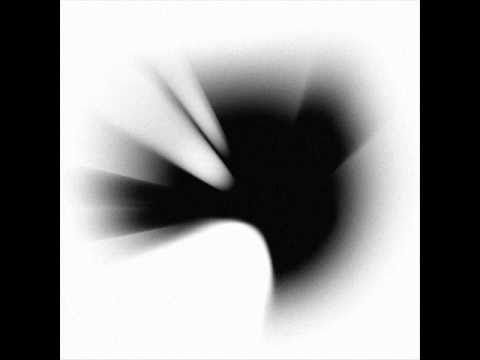
Now, let’s just state for the record that we do not believe for a second that Linkin Park were trying to steal from anyone. They take their music much too seriously to do such a thing. But, for the sake of argument, take a listen to “Robot Boy,” from their impressive new album A Thousand Suns.

Sweet little tune, right? Now, if you please, check out “She’s Got My Number,” from Semisonic’s 2001 album All About Chemistry.

Wowzers. Peas in a pod, these two songs. Lots of piano, eerily similar drum tracks, big swells towards the end. The chord progressions are different, no question, but not terribly different. Was Linkin Park aware of the existence of “She’s Got My Number”? Doubtful. The only link between the two bands is Rick Rubin, who produced Semisonic singer and principal songwriter Dan Wilson’s 2007 solo album Free Life as well as Linkin Park’s last two albums. But since Rubin didn’t get involved with Wilson until well after Chemistry was released, it’s safe to say that he’s never heard “She’s Got My Number,” which means Linkin Park probably hadn’t either, since they were still doing the angsty nu-metal thing at the time.

We have not reached out to anyone in Linkin Park for comment – because really, that would look like we’re accusing them of plagiarism, and we’re not – but we did send “Robot Boy” to Dan Wilson, and he told us this: “I usually don’t hear it when people tell me something sounds like a track of mine, but I totally hear it with this. Thanks for the note, it reminds me how much I like ‘She’s Got My Number.’ And now I like ‘Robot Boy.'” Awww, how cute is that? We love a happy ending.

Click to buy Linkin Park’s A Thousand Suns from Amazon
Click to buy Semisonic’s All About Chemistry from Amazon

« Older posts Newer posts »