Page 200 of 583

Chris Ayer: Don’t Go Back to Sleep

In the grand scheme of the music industry in 2009, you might ask the question, “Who needs another Teddy Geiger/Jason Mraz/Jack Johnson hybrid?” But singer/songwriter Chris Ayer, though he might fit that exact model of hybrid, is not just another one of them trying to rise above the pack. His latest, Don’t Go Back to Sleep, is Ayer’s sixth album since 2003. Sure, it’s jangly and sure, it sounds like amped-up coffeehouse fare much of the time, but here is something Ayer has that allow us to mention him in the same breath as those guys above without flinching—really good songs. And it’s those songs that will keep you listening to this album and keep you tapping your feet and bopping in your chair like a kid who ate too much candy. It’s also ironic that the Brooklyn-based Ayer recorded this album in Nashville, a city that claims to be about the song but churns out way too much crap—and many of these tunes are better than the bulk of Music City’s collective output. Much of Don’t Go Back to Sleep is similar in tone and tempo, but there really are no clunkers on here. The best of the bunch, though, are the uber-catchy “Lost & Found” and “Pretty Poison,” but don’t overlook the beautiful guitar/vocal gem, “In the Silence.” (LABEL: Another Record Company)

Chris Ayer MySpace Page

stellastarr*: Civilized

The latest from New York City based indie rock band stellastarr* (yeah, that’s how they spell it – no caps and that silly asterisk) is more of what you may have come to expect from them if you have followed them at all. The album, called Civilized and released on the band’s own Bloated Wife imprint, has the same elements of glam, new wave and punk that have lifted bands like the Cure and more recently, the Killers, to lofty heights. And while those comparisons may have black lipstick and nose-ring-wearing types to hit “download,” they should temper their expectations because these songs just don’t measure up. The band is undoubtedly talented, playing their instruments with precision and conviction, but at times lead singer Shawn Christensen just over-emotes to the point of it being like nails on a chalkboard. And most of the melodies, if you call them that, are not very memorable. The exceptions are the Cure-ish anthem “Tokyo Sky,” and “Move On,” which may remind you of another ‘80’s band, OMD. So while we’re not saying you should avoid stellastarr* like the bird flu, just don’t get your hopes up too high for this latest effort. (LABEL: Bloated Wife)

stellastarr* MySpace Page

R.I.P. Les Paul

Les Paul, innovator of the solid-body guitar and multitrack recording, died this morning at age 94.

A tinkerer and musician since childhood, he experimented with guitar amplification for years before coming up in 1941 with what he called “The Log,” a four-by-four piece of wood strung with steel strings.

“I went into a nightclub and played it. Of course, everybody had me labeled as a nut.” He later put the wooden wings onto the body to give it a tradition guitar shape.

In 1952, Gibson Guitars began production on the Les Paul guitar.

Pete Townshend of the Who, Steve Howe of Yes, jazz great Al DiMeola and Led Zeppelin’s Jimmy Page all made the Gibson Les Paul their trademark six-string.

Look around your room, office, or wherever you may be at this moment. Chances are there is some piece of audio equipment you’re either listening to or is lying around in the vicinity. Believe it or not, that equipment would not exist without Les Paul. Back in the days of primitive sound, all that existed was monophonic recording. Everything had to be recorded at once in a live setting. Phonographs, radio, and television all used this format. Originally using acetate disks, Paul was the first to create a multitrack recording. This innovation in sound led many companies to create stereo equipment that could support this technique. These days, the bulk of recordings are made by “dubbing” tracks. Rarely are guitar, bass, piano, drums, and vocals done “live” for a recording. They are multitracked, and Les Paul was the first to record with this method.

Still, Les Paul will always be best known for his signature guitar, the “Gibson Les Paul.” Guitarists the world over are loyal to the instrument and original models are treasured collectors’ items. Along with Leo Fender and Adolph Rickenbacher, Les Paul designed some of the first solid-body guitars. He needed a way for the traditional acoustic guitar to sound louder. By adding a phonographic needle into the body of the guitar, the sound was amplified. These innovations, essentially, led to the first electric guitar. Nearly everyone who plays or loves music should be very appreciative of this man.

There’s enough biography on Les Paul all over the Internet, so there’s no need reiterating it here. The importance of this post is to honor one of the most important people involved in music’s intriguing history. I’m amazed at how many music fans are unfamiliar with him. Watch the videos above. Even at 90, the guy was one of the better players.

Music site OurStage aiming for big second round

OurStage

For those who our unfamiliar with OurStage, it’s a music site where fans vote for unsigned artists much in the same way as “American Idol.” Artists upload their material and fans can then search the site specific to a genre. Essentially, artists garner more exposure by competing in head-to-head competitions with each other. Fans judge the competitions and those artists who receive more votes move up on the site’s charts. This can also lead to prizes for both artists and fans from sponsors such as JetBlue and Paste Magazine. The site raised around $13 million from over 100 angel investors last April and is now aiming for $6 million in the second round.

The company says it has raised a total of $20 million in funding, including $3 million worth of this second round; it plans to raise the additional $3 million later this year, which CEO Ben Campbell says should be enough money to get OurStage profitable in 2010. (Campbell didn’t disclose who the site’s investors were, but a notable recent addition to its board of directors is former Sony Music CEO and Chairman Don Ienner).

The site serves three customer segments: indie artists that can upload their tracks and build a fan base; clubs and venues that promote their upcoming live shows; and users, that can find and rate new music.

Artists can now can now sell their tracks from their profile pages though, like any distributor, OurStage takes a cut. As OurStage partners with more and more companies involved with the music industry, the hope is that the artists will frequently land record deals. Some have already found success, most notably Plush Gun who signed with Tommy Boy Entertainment in 2008.

The site is a great way to discover new music, especially for those who want to help out unsigned artists. There are numerous genres to choose from and one can easily spend hours giving the songs a chance. The real kicker is that the fans have a say in which artists succeed or not.

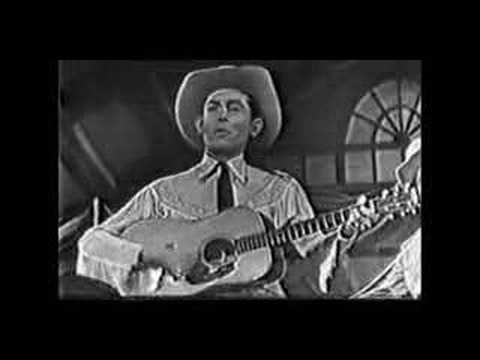
Hank Williams biopic in the works

Nobody sang about heartbreak quite like Hank Williams. Before Elvis Presley, Johnny Cash, and Ray Charles, Hank Williams was the symbol for the heroic American musician. Classics such as “Lovesick Blues,” “I’m So Lonesome I Could Cry,” and “Cold, Cold Heart” described a human suffering that was frighteningly sincere. Although a biopic starring George Hamilton was released in 1964, it does not come near the standards set by “Ray” and “Walk the Line.” Now it looks as if the Nashville-based 821 Entertainment Group and Strike Entertainment will give Williams’ story the preferential treatment. Strike’s partner, Marc Abraham, who produced “Children of Men,” will be writing the script.

I’m really looking forward to this. Williams was the first beloved American singer to succumb to drugs and alcohol. At age 29, he was found dead in his car as a result of a vitamin B12 and morphine overdose. A legend in country music, Williams laid the groundwork for guys like Gram Parsons and Bob Dylan.

« Older posts Newer posts »