Author: James B. Eldred (Page 7 of 21)

Sweet Apple: Love & Desperation


RIYL: Dinosaur Jr., Journey, the year 1978

Sweet Apple can be counted as a super group only if your definition of a super group is extremely liberal. Their most notable member is J Mascis of Dinosaur Jr. But the legendary alt-rocker isn’t playing guitar or even singing; instead, he’s the drummer. Up front on guitar and vocals are both John Petkovic and Tim Parnin of the marginally-known Cobra Verde, and rocking it on bass is band namesake Dave Sweetapple, who is in J Mascis’ other side-project Witch. Separately Cobra Verde, Dinosaur Jr. and Witch run the gamut from pop-punk, proto-grunge and stoner metal,. So it makes complete sense that when you combine all three of them you get the most stereotypical of ’70s arena rock.

Wait, what? How’d that happen?

Who knows. Maybe they’re doing it as a gag, or maybe they all secretly want to be in Cheap Trick (who doesn’t?) butLove & Desperation is nothing but 12 tracks of straight-up classic rock. It sounds all right at first, but once the novelty fades it, sounds remarkably like what it is: four dudes who are desperately trying way too hard to sound like something they obviously are not. It occasionally works in spite of itself; “Hold Me, I’m Dying” has an irresistible hook to it, and the faux-metal of “Blindfold” is full of fist-pounding excellence. But for the most part it’s just average, and even a little boring.

Fans of the bands that make up Sweet Apple will probably be more interested in this than the rest of us. Although that Roxy Music-referencing cover should appeal to every heterosexual man with a pulse. (Tee Pee 2010)
Sweet Apple MySpace Page

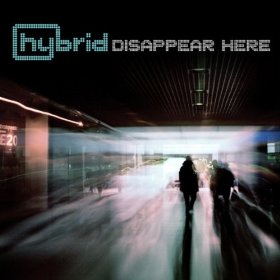
Hybird: Disappear Here


RIYL: Leftfield, Faithless, Infected Mushroom

I’ve been in love with Hybrid ever since first hearing “Finished Symphony” on the soundtrack to the PS2 snowboarding game “SSX Tricky.” I’ve also been nearly unable to describe them. They’re dubbed “progressive beats” and “nu skool breaks” by electronic fans, but I have no idea what that actually means. And how could anyone classify Hybrid into one (sub)genre? Listening to the quiet majesty of “Finished Symphony” and the aggressive beats of “Can You Hear Me Now” off of their newest album Disappear Here is almost like listening to two completely different bands; the two tracks sound nothing alike.

And while it’s to be expected that a band might change sound over the course of their career, Disappear Here itself is full of radical genre changes from track to track. While the aforementioned “Can You Hear Me Now” is an intense dance number, it’s immediately followed up by “Green Shell Suit,” a hauntingly beautiful instrumental that would fit side-by-side with “Finished Symphony” on the band’s 1999 debut Wide Angle. About the only thing that’s consistent on Disappear Here are vocals by the band’s newest full-time member Charlotte James. Her distinctive voice serves well as a connective tissue between the wildly varying styles on the album, although some hardcore fans might complain that her near-constant presence on the album takes the band one step too close to a mainstream sound.

Regardless of what you might think of the extra vocals on Disappear Here, this is still Hybrid being Hybrid, going all over the place from one style to another and doing it a damn good job of it. It’s as cinematic and epic as their previous releases, and some tracks, like the pounding “Original Sin” and darkly ominous “Break My Soul” can stand up with the group’s best. This is just more “wow” from a group that can seemingly do no wrong. (Distinct’ive Breaks 2010)

Hybrid MySpace Page

Coheed & Cambria: Year of the Black Rainbow


RIYL: Rush, Dream Theater, Queensrÿche

There have been plenty of concept albums, but Coheed And Cambria may be the world’s first concept band. All of the group’s releases to date have been installments in one epic story, a sci-fi space opera dubbed The Armory Wars. And if that wasn’t confusing enough, their debut album was actually the second part of the saga; the three albums that proceeded it told the third and fourth parts (the fourth part was in itself a two-parter). Now we finally get the first chapter with Year of the Black Rainbow.

Here’s a quick recap for the uninitiated: There’s a federation of planets called Heaven’s Fence, which are held together by an energy force called the Keywork. This system is ruled by the evil Wilhelm Ryan and the only person that can stop him is Claudio Kilgannon, the son of Coheed and Cambria Kilgannon (who also happens to share the name of the band’s lead singer Claudio Sanchez). His journey is one filled with violence, heartache and loss as he struggles to accept his fate as the messiah known as The Crowning. Oh, and at one point in the narrative focus shifts to “The Writer” who created all these characters. He’s tormented by an evil bicycle. (There is a comic book that makes all of this a little clearer…but not by much).

Coheed And Cambria

So in case your couldn’t already tell, this is prog rock. But it’s really good prog rock, and while Coheed’s lyrics aren’t exactly user-friendly, their music sure as hell is. Just like the band’s four other albums, Year of the Black Rainbow, effortlessly combines prog conventions (complex drumming, and the aforementioned lyrical insanity) with catchy pop hooks and heavy metal thunder ripped straight from ’80s power metal. And while it works well as a single work (or as one part of an even larger work), tracks like “The Broken,” “Far” and the excellent single “Here We Are Juggernaut” all stand strong as individual pieces, which is something that even a lot of the best prog rock albums can’t pull off.

It can be a little ridiculous and over the top at times, and Claudio’s distinctive Geddy Lee-esque voice will no doubt annoy some listeners to death. But if you like your rock as subtle as a punch in a face by a gorilla, then you’ll enjoy the bombastic insanity of Year of the Black Rainbow, and every other Coheed And Cambria album for that matter.

WARNING: Although all five parts of The Armory Wars records are great, listening to them back to back in narrative order will make you go insane. (Columbia 2010)


Coheed and Cambria MySpace Page

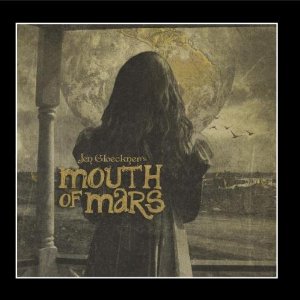
Jen Gloeckner: Mouth of Mars


RIYL: Polly Scattergood, Amanda Palmer, Tori Amos

Jen Gloeckner is…odd. That’s the best way to put it. I’m not good enough a writer to come up with a better word to describe her dark combination of dreamy surrealism and Gothic themes that traverse the genres of Americana, rock and electronic music via liberal use of cello, electric violins and what sounds like a wind chime on at lest one track. Some might call her quirky, but quirky implies a sense of goofiness and a lighthearted tone. And while there is some innocent fun to be had here, such on the 50-second interlude “Let’s Get Honest,” most of Mouth of Mars is either deliberately dark or just downright weird. “Burn Me” seems to be an indictment of a former lover but instead of taking an angry tone, it’s a darkly somber one due to a creaky cello and some haunting vocal effects that turn Jen’s already ethereal voice into that of a ghost. It’s followed up with “Die,” a much more obvious attack on a former flame, where she repeatedly proclaims that “I’m not gonna lie / One of us will have to die” over electric violins and a catchy dance beat. Gloeckner is no doubt amazingly talented and with her second album she’s already found her unique voice and style. It probably won’t appeal to most, but those who dig this will more than likely fall head over heels in love with it. (Spinning Hand Records 2010)

Jen Gloeckner MySpace Page

Good Shoes: No Hope, No Future


RIYL: The Cribs, Bromheads Jacket, Air Traffic

When read together that combination of album title and artist (No Hope, No Future, Good Shoes) sounds like a daily proclamation of despair by a depressed fashionista. Strangely enough, that combination of depressing and oddly upbeat fits as a descriptor for Good Shoes’ sophomore release, as it mixes dance-friendly Gang of Four-style post-punk dance with some woefully depressing lyrics. Does something suck? Odds are Good Shoes touch on it whether it be the evils of organized religion on “I Know,” the cruelty of growing old on “Times Change” or the overall crappy nature of interpersonal relationships on just about every other track. It doesn’t reach the level of Morrissey-level misery, but it’s omnipresent and depressing nonetheless. About the only stand-out in all the self-pity is “Our Loving Mother in a Pink Diamond,” which features slightly more abstract lyrics and an creeping bass line that complements the dark lyrics better than any other track on the album.

Saying that No Hope, No Future is an accurate prediction of how Good Shoes should view their career is a little harsh (although if they’re lyrics are any judge of their attitude, Good Shoes might disagree), but unless they step it up soon they will really have something to be down about. Fans of British post-punk might enjoy this, but event hat’s a stretch since it’s just so derivative. (Brille 2010)

Good Shoes MySpace Page

« Older posts Newer posts »