Page 128 of 583

Daniel Merriweather: Love & War


RIYL: Mark Ronson, Al Green, Elton John

It is said that late is better than never, but in an industry where timing is everything, the decision to push Love & War, the solo debut of Australian soul singer Daniel Merriweather – it is actually his second album; his first one remains unreleased – to 2010 is a curious one. If memory serves, the first word to come out about the album dropped in late 2007, presumably to take advantage of the buzz surrounding Merriweather’s performance of the Smiths’ “Stop Me if You Think You’ve Heard This One Before” on Mark Ronson’s album Version, released earlier that year. So what gives?

Our best guess: too many ballads. Love & War sounds exactly like you would expect a Mark Ronson-produced Daniel Merriweather album to sound. The arrangements are vintage soul and cutting-edge recording techniques at the same time, and Merriweather, who sounds like a soulful version of UB40’s Ali Campbell, emotes the ever-loving daylights out of these songs. The results are consistently pleasant and occasionally stunning, notably the horn-drenched “Change,” the Al Green-ish “Getting Out,” and the “California Dreamin'”-cribbing “Could You.” Give Merriweather credit for aiming high – the opening track “For Your Money” sports half a dozen key changes – but a few more shifts in tempo would have worked wonders. (J Records 2010)

Daniel Merriweather MySpace page
Click to buy Love & War from Amazon

BT: These Hopeful Machines


RIYL: Chicane, Paul Oakenfold, machine gun edits

BT’s 2003 album Emotional Technology is still arguably the most overproduced album in music history, which is saying something given the huge advancements in overproduction in the last few years. Indeed, it appears that Mr. Transeau himself knows that he went too far on Emotional Technology, because his next album, 2006’s This Binary Universe, consisted largely of ambient orchestral music, with not a single vocal to be found. Now seven years removed from his last pop album, BT finally gets back on the horse and, BT being BT, he goes whole hog, though in a slightly different way. Where Emotional Technology contained bushels of those trademark stutter edits, These Hopeful Machines contains boatloads of music. Two albums’ worth, in fact, with nary a track under five minutes…and six songs over ten minutes. Uh oh.

BT_02

Ah, we kid. These Hopeful Machines, despite its preposterous length – wisely, it’s being sold for the price of a single disc – is a triumphant return to form from a songwriting perspective. It may take 20 minutes to play them, but “Suddenly” and “The Emergency” are two of the best tunes BT’s written in ages, the latter of which sounds like a lost track from Chicane’s (awesome) Behind the Sun album. More importantly, BT has improved dramatically as a singer; the a cappella harmonies in “The Emergency” are stunning. He’s at the point where he doesn’t need guest singers to dress up his albums, though he brings a few in anyway, notably ex-Catherine Wheel singer Rob Dickinson. And we would be remiss if we didn’t mention “Rose of Jericho,” which blends Paul Oakenfold’s “Save the Last Trance for Me” with, of all things, Hot Butter’s instrumental “Popcorn.”

The album is still way, way too long – each song could stand to be at least a minute shorter – but closing Disc 2 with an ambient cover of the Psychedelic Furs’ “The Ghost in You” eases the listener fatigue a bit. The potential for a crossover hit is clearly here; if BT would submit to having an executive producer keep him focused, there would be little stopping him. (Nettwerk 2010)

BT MySpace page
Click to buy These Hopeful Machines from Amazon

Rocky Votolato: True Devotion


RIYL: Steve Earle, Rogue Wave, Damien Rice

When you’re at the bottom of a well, looking up, your surroundings are likely to be cold, damp, dreary and bleak. As Seattle-based singer/songwriter Rocky Votolato battled his own demons, namely depression and near suicide, that’s probably how things felt to him at the time. But in pulling himself from that proverbial well, he found writing songs to be therapeutic, and in the process he’s delivered to us some of his finest material yet. True Devotion is trademark Votolato vocally and melodically, but this effort is a more stripped-down record, almost solely acoustic. It’s a set of songs that have Votolato brimming with hope while at the same time dealing with his issues head on – and the best part is that he has a way of using his quirky melodies and chord structures to create a mood that reflects both his lyrics and his rainy day Seattle surroundings. He also has the vocal tone to stand up to an acoustic album. Rocky is good at belting it out and rocking a bit as he does on “Red River,” but he really shines on the simply arranged, darker material, the best of which are “Lucky Clover Coin” and “What Waited for Me.” (Barsuk 2010)

Rocky Votolato MySpace Page

Veil Veil Vanish: Change in the Neon Light


RIYL: Pom Pom Diary, The Sounds, White Lies

Metaphor time. Take a chocolate cake, for instance. Even a bad one has some tasty bits, and a good one is always a treat, no matter how many times you’ve had it before. Sure you can feel like you’ve OD’d on too much chocolate, but give it a little time, and you’ll be back for more.

A lot of rock music genres are the same way. The musical elements that define them as a genre or style are the same elements that become quite familiar and overused, both appealing and repetitive all at once. The heavily ’80s-influenced post punk revival of the past decade fits this description to a “T”, as does the debut album by Veil Veil Vanish, Change in the Neon Light. Only seconds in, it is obvious where the San Fran quartet got their recipe; it is all Cure, spiced with Echo & the Bunnymen, sprinkled with early U2 and iced with Gene Loves Jezebel. There is nothing subtle here, and one could argue it is derivative, but that is only on the surface. Take one big bite and you’ll find that Change in the Neon Light is one helluva good chocolate cake.

The atmospheric qualities of the entire album are shimmering and driving, an album full of layered guitars and danceable percussion. The opening title track and final song “Wilderness” perfectly bookend the darkly emotive mood that fills the album. Keven Tecon’s vocals are plaintive but never whiny, while Robert Marzio deserves MVP accolades for signature drums that carry every song forward relentlessly. The album never lets up. From beginning to end there is not a weak track, and it really hits its stride in the second half with “Secondhand Daylight,” where Amy Rosenoff’s bass line and Cameron Ray’s guitars play off each other expressively, and “Detachment,” which serves up Siouxsie Sioux-like power. “It’s no fun if it doesn’t leave a mark,” they sing, and this album proves the point.

Veil Veil Vanish (a name just ridiculous enough to stick) is a surprisingly strong as a band on this debut, and it bodes well for the future. They haven’t drastically changed the recipe in creating Change in the Neon Light, but they definitely know how to cook. Their debut sets a high bar for the next course. Recommended. (Metropolis Records 2010)

Veil Veil Vanish MySpace page

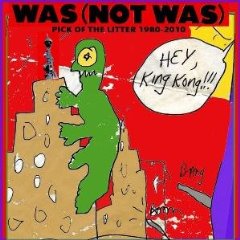
Was (Not Was): Pick of the Litter 1980-2010


RIYL: Tom Tom Club, Kid Creole & the Coconuts, the Boneshakers

In a perfect world, Was (Not Was) would be celebrating its 30th anniversary with something other than a vault-polishing compilation on a label known for reissuing old K-Tel records and The Best of the Five Man Electrical Band – but then, this is a band that has always reveled in the odd and inappropriate, so it’s only fitting that the band is celebrating its most recent milestone by giving us Pick of the Litter 1980-2010. It isn’t as good as a new album, but as far as reheated leftovers go, Litter ain’t bad, either in terms of breadth (19 tracks, culled from across the band’s entire catalog) or selection (five non-album mixes, including the 12” version of “Wheel Me Out” and the 7” version of “Out Come the Freaks”). Was (Not Was) has also never received a proper anthology, so this set actually fills a need for that small subset of the population that has warped enough taste to appreciate the band’s cracked dance music, but has somehow never bought any of its albums. A microscopic market, maybe, but Pick of the Litter still hangs together better than it has any right to, considering it contains vocal performances from Mel Torme, Leonard Cohen, Kim Basinger, and Ozzy Osbourne – and still makes plenty of room for the peerless Sir Harry Bowens and Sweet Pea Atkinson, whose dash of grit was always the cornerstone of the band’s appeal. Novelty tracks aside, Was (Not Was) helped keep soul music alive in the ‘80s. If you’ve ever wanted to know more about those “Walk the Dinosaur” guys, here’s the perfect place to start learning. (Micro Werks 2010)

Was (Not Was) MySpace page

« Older posts Newer posts »