Category: CD QuickTakes (Page 11 of 149)

The Hours: It’s Not How You Start, It’s How You Finish


RIYL: Pulp, Coldplay, The Wonder Stuff

To call It’s Not How You Start, It’s How You Finish a debut album is technically true, but a bit misleading. In truth, it’s a Franken-album, culling the best moments from the Hours’ first two, import-only albums, 2006’s Narcissus Road and 2009’s See the Light, plus one new track (two if you buy the deluxe edition). Still, debut* album or not, it’s a doozy, filled with sky-high chorus after sky-high chorus, gorgeous octave-jumping piano lines and one of the most optimistic lyric books you’ll find outside of Christian pop (or Howard Jones). On the opening track “Ali in the Jungle,” better known here as the soundtrack to Nike’s “Human Chain” ad, speaks of how “everybody gets knocked down / How quick are you gonna get up?” In “These Days,” singer Antony Genn (think Miles Hunt of the Wonder Stuff, with better pipes) advises us, “If there’s ever a time we need to come together, the time is now.” In “Icarus,” he opines that “If you don’t shoot, then you don’t score.” They’re not deep statements, but they resonate in conjunction with the music.

The_Hours_04

The band admittedly runs at two main speeds. There are the upbeat, chugging skyscrapers like “Big Black Hole,” “Narcissus Road” and “Ali in the Jungle,” and there are the showstopping ballads like “Back When You Were Good” (a very gutsy song title in a snarky world) and the splendid “Come On.” The big exception to this is the closer “See the Light,” a slow-building, two-chord track in the vein of Pulp’s “Common People.” It’s arguably the best song here, though a thousand lashes to the person who decided to edit it down from its original seven-minute glory. This is beautiful stuff across the board, but a quick note to Genn: the people most likely to buy your music probably have kids, so let’s cut back a bit on the ‘F’ bombs, shall we? It’s unbecoming. (Adeline 2010)

The Hours MySpace page

Skunk Anansie: Wonderlustre


RIYL: Sevendust, Guano Apes, Muse

During their original run through the ’90s, Skunk Anansie was the alt-rock equivalent of “Beauty and the Beast.” When they weren’t breaking your heart with fragile, sparse ballads like “Secretly” and “Follow Me Down,” they were breaking your legs with political punk rock thrashers like “Selling Jesus” and “On My Hotel T.V.”

After a decade-long hiatus, the group is back, and for the first time they seem to be combining their penchant for romantic/lovelorn ballads and fast-paced mosh-friendly hard rock. Wonderlustre is the group’s most mainstream record to date, full of mid-tempo rock made for the radio. But Skunk Anansie playing for the pop crowd is still Skunk Anansie, and lead singer Skin’s powerful vocals and intelligent lyrics add depth to songs like “Over The Love” and “You’re Too Expensive,” which would be a bit too pedestrian and by-the-numbers without her. Skin also proves that her monopoly on beautiful-but-depressing songs about how much love sucks remains intact with the gut-wrenching “I Will Stay But You Should Leave” and “Talk Too Much,” two incredibly powerful songs that should be barred from the iTunes libraries of the recently dumped (trust me).

The music behind the lyrics needs some work, but its nice to see Skunk Anansie back. Even if they’re not at top form, Wonderlustre leaves little doubt that they soon will be once again. (V2 Records 2010)

Skunk Anansie MySpace page

KT Tunstall: Tiger Suit


RIYL: Sheryl Crow, The Sundays, Stevie Nicks

KT Tunstall catapulted herself to overnight success in 2006 with her debut album, Eye to the Telescope, which spawned the hit single “Black Horse and the Cherry Tree.” Her 2007 follow-up, Drastic Fantastic, was just as good, if not better, than the debut, and now Tunstall is back with Tiger Suit. As usual, Tunstall’s songs are mostly upbeat hook-fests, albeit with slightly less magic than before. With Tiger Suit, she’s regressed a bit, because these are good tracks that are structured well and have solid melodies and arrangements – but something is lacking compared to Tunstall’s previous work, be it soul or depth or that slight bit of alternative grit that was present on both Telescope and Drastic.

Tiger Suit opens with “Uummannaq Song,” an odd title but the familiar mid-tempo singsong style that is most closely reminiscent of her earlier work. That rolls right into “Glamour Puss,” a song that is catchy beyond belief but somehow not exactly memorable. The best tracks on here are “Difficulty,” a song that lends itself to some quirky but effective production, and “Lost,” which is slower yet but arranged nicely. “Come on, Get In” is her label’s attempt at having Tunstall re-create “Cherry Tree,” and it’s kind of a lame one at that. Still, let’s face it – Tunstall’s mediocre is far better than most female singer/songwriters’ work these days. It’s just that her die hard fans may come away slightly disappointed this time, especially after a three-year wait. (Virgin 2010)

KT Tunstall website

David Bowie: Station to Station (Special/Deluxe Editions)

david bowie
RIYL: David Bowie, cocaine

Bowie’s 1976 album Station to Station is one of his many masterpieces. It also serves as proof that one can not only function, but excel, on nothing but cocaine, milk and hot peppers, which was Bowie’s alleged diet at the time. One suspects the recording sessions for Station to Station would be legendary if anyone could remember them. The classic rumor being that Bowie was so high during the time that the entire year is blacked out from his memory.

Even with all the craziness that surrounds the record, Station to Station has kind of fallen to the wayside since its original release, eclipsed by both the Berlin trilogy (Low, “Heroes” and The Lodger) and his magnum opus of Scary Monsters (and Super Creeps). However, now it’s getting another chance in the limelight with a new special edition to commemorate…well nothing, aside from how awesome it is.

The new remaster is excellent, and does not fall prey to the Loudness Wars. Every snare is crisp and bass line clear. And thank God, because all six tracks on Station to Station are undeniable classics. The surreal imagery of the title track and ode to a heroin nightmare that is “TVC15”; the genuine love/lust of “Stay” and darkly comic “love” of “Golden Years”; the heartfelt balladeering of “Wild Is the Wind” and “Word on a Wing.” It’s all classic, it all sounds great, and it’s all a must-have.

If you already own Station To Station and need more than a new transfer in order to be persuaded to make a repurchase, the special edition reissue also includes an entire live concert from the Nassau Colosseum in 1976. If Bowie really was doped out of his brain during the late ’70s, it didn’t seem to affect his ability to perform here. He’s on fire at this show, and is probably the second-best Bowie live recording next to the Live at Santa Monica ’72 album. It alone more than justifies the double-dip.

But if you really want to justify the double-dip (and have 150-some bucks to spend), then go nuts and get the deluxe edition. This thing is insane. Not only does it include the remastered edition of the album and the concert on both CD and vinyl, but it also includes an entirely different master of the album from 1985 (which, in all honestly, sounds pretty much identical to the new remaster) and another CD with the single edits of every song on the album, save “Wild Is The Wind.” There’s also another disc, a DVD this time, that features even more mixes of the album, some in surround sound. All that goodness is packed in an beautiful box that includes new linear notes by Cameron Crowe, extensive information about the album itself, reproduced press and fan club materials and much, much more. Pretty much the only thing it’s missing is a bag of blow. (EMI 2010)

David Bowie MySpace Page

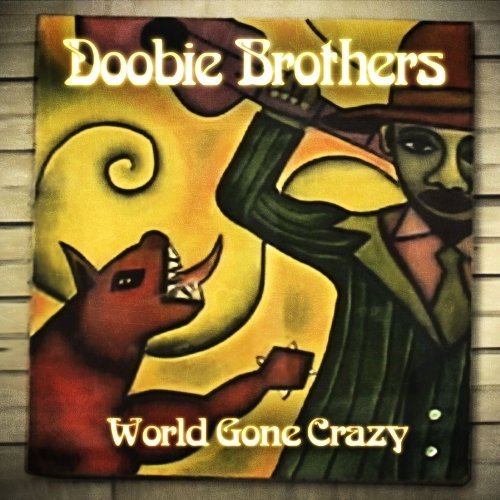
The Doobie Brothers: World Gone Crazy


RIYL: Bob Seger, The Eagles, Boston

51R3XNkkyPL._SCLZZZZZZZ_[1] News of World Gone Crazy‘s existence is likely to elicit one of three responses:

1. “The Doobie Brothers have a new one out? Who knew those dinosaurs were still around?”
2. “The Doobie Brothers have a new one out? Hope it doesn’t suck as much as their last couple of records!”
3. “Hell yeah! Good rockin’ tonight!”

Responses one and two might seem to make the most sense, but against all odds, it’s the third one that most accurately describes the Doobies’ 13th album (and first in a decade). After scoring a gold record and a Top 10 single with their 1989 reunion album, Cycles, they limped through the ’90s and aughts, releasing a pair of weak albums (1991’s Brotherhood and 2000’s Sibling Rivalry) and wheezing into the “heritage rock” tour circuit like a band whose best creative days were long past. But World Gone Crazy isn’t just another piece of swag to sell at the concession stand during their next tour – it’s actually a helluva rock record, and easily the Doobies’ best album since 1978’s Minute by Minute.

Is that damning with faint praise, considering the unevenness of what came after? Perhaps. But World Gone Crazy is still a quality album – good enough, in fact, to serve as a template for the band’s peers during their own sporadic forays into the studio. It’s a record rich with nods to the past, including the band’s reunion with Ted Templeman and their resurrection of “Nobody,” a long-discarded track re-recorded for these sessions – but this doesn’t sound like a band trying to get back to its past. Instead, the Doobies simply sound comfortable with their legacy and their place in today’s music industry. It makes a world of difference – unlike a lot of new albums from bands of the Doobies’ vintage, World Gone Crazy never tries too hard. The Doobie Brothers are who they are, and while they’re willing to acknowledge their past (right up to inviting ex-Doobie Michael McDonald in for a guest spot on one track), there’s nothing self-conscious about these performances. They may as well have been performing for themselves.

Of course, it helps that the album is stacked with good songs. This is meat-and-potatoes West Coast rock ‘n’ roll, so you shouldn’t go in expecting poetry, but within the context of a genre that hasn’t seemed to have a creative pulse for far too long, World Gone Crazy is surprisingly vibrant. “Nobody” sounds like it was unearthed from a time capsule, which is understandable, given its age – but what’s surprising is just how seamlessly it stands up against everything else on the album. Open a beer – American, of course – and turn this up as loud as the neighbors will allow. Then ask yourself why bands like the Doobie Brothers ever went out of fashion. (HOR 2010)

Doobie Brothers MySpace page

« Older posts Newer posts »