Category: Rock (Page 56 of 241)

The Whigs:In the Dark


RIYL: Dinosaur Jr., Foo Fighters, The Replacements

In the Dark starts out by rolling over you with a wall of guitars that, far from dissonant and buffeting, instead envelops you like the wind before a promising storm, and like some great thunder, the Whigs continue to prove they are an experience not to be missed.

Coming off their well-received second album, Mission Control, and a series of acclaimed live shows (not the least of which was a standout performance at the 2008 SXSW), it is evident that the hard core touring and energetic playing has only invigorated their songwriting. In the Dark is the Whigs’ best album yet, and one that engages from beginning to end.

The album is power rock, through and through, but it never forgets that melody and rhythm shouldn’t be sacrificed for that power. It is the same for the lyrics, as throughout Parker Gispert is clearly singing from those hidden places where anger and regret fester, but he refuses to either rage or mope. There is as much a sense of resolute energy as anything, even when he sings “Kill Me Carolyn” or questions his lust for “Someone’s Daughter.”

Most of the album openly embraces their primary influence, the more hard-rocking post punk of the Replacements (most evident on “Automatic” and “So Lonely,” with no little bit of the Godfathers thrown in there on the title track and the opening “Hundred/Million.” The production is just tight enough and the arrangements original and lush enough to push it beyond any assumed imitation, and the first five tracks are solid Whigs.

Then, just when it feels like you have a handle on the album, they throw you a hard curve right in the middle. “Dying” comes on and everything shifts into a heavy rhythmic chant full of psychedelic influences. It tosses you into dark places only hinted at up until now. That is the flow of the album. An energetic, but evident descent into the viscera of the music, but then the steady, strong drive that leads us back out; an inverted emotional parabola that never slows, but never lets us off the ride, either. Check out “I Am for Real” as the perfect catharsis moment.

In the Dark ends with a mini-jam session of a song, “Naked,” at times minimalist and echoing, while at others a pulsing rocker. It is one of the more inventive and original works that lets the Whigs flaunt their talent, energy and idiosyncrasies.

Check out In the Dark. It is one of the better albums to come along so far this year, and it should win them new fans while pleasing their faithful. Listen loud! ATO Records 2010

The Whigs MySpace page

Butch Walker and the Black Widows: I Liked It Better When You Had No Heart


RIYL: Candy Butchers, Fountains of Wayne, Bryan Adams

Before he became as ubiquitous in the pop/rock music world as Kara DioGuardi and Diane Warren, Butch Walker was so totally cool. He fronted an indie modern rock band called Marvelous 3, a group that put out a few blistering albums of awesome power pop. Then Walker went out on his own and delivered one of the best rock albums of all time in Left of Self-Centered. Naturally, he started to get phone calls from other artists and labels and managers, wanting him to write with, produce and guide artists such as Pink, Bowling For Soup and Avril Lavigne. He also released a few more solo albums along the way. And while nothing measured up to Left of Self-Centered or the Marvelous 3 stuff, Walker has clearly taken two steps backward with his latest, I Liked It Better When You Had No Heart. Maybe it’s because this one comes a little over a year after his latest, Sycamore Meadows, because being that prolific has a tendency to water down the material. In addition, part of the problem here is that while some of the songs seem catchy while you’re listening, you won’t be singing any of them afterward, because they’re not memorable, at least not based on the very high bar Butch has set for himself. There are a few exceptions, like “Stripped Down Version,” which has some slick guitar work and pretty harmonies, or “She Likes Hair Bands,” featuring lyrical snark reminiscent of the Marvelous 3 days. But on the likes of “Trash Day” and “House of Cards,” some of you die-hard Butch fans will be hitting “skip.” And while the closer, “Be Good Til Then,” carries a beautiful sentiment and was written for his very young son, the repetitive melody is more tired than anything Walker has ever delivered. I Liked It Better When You Had No Heart, will, sadly, have Butch fans saying that they liked it better when his songs had heart. (One Haven 2010)

Butch Walker website

Locksley: Be in Love


RIYL: The Beatles, The Strokes, The Kinks

The Brooklyn-by-way-of Madison quartet Locksley still holds a dubious honor in the Bullz-Eye/ESDMusic camp for the press release that announced the release of their debut album Don’t Make Me Wait. It was, without question, the worst press release we’ve ever seen, dismissing the entire Midwest as beer-drinking fatties with lousy taste. Here is the opening sentence. Try not to choke on the condescension:

Wisconsin is one of those Midwest states that we all assume is running rampant with overweight Miller High Life drinking blue collar boys at the Lambough Field.

We later learned that the person who wrote this is from, yep, Wisconsin. (To set the record straight, the band had nothing to do with the press release.) We’re pretty sure misspelling ‘Lambeau’ is punishable by death there, but we’ll have to get back to you on that.

At any rate, the press release did a terrible disservice to the band, as their debut was a smoking hot mixture of ’60s pop rock with modern-day attitude, and singer Jesse Laz can do spot-on impressions of both Lennon and McCartney. The band’s sophomore effort, Be in Love, is more of the same, and that’s perfectly fine. (You hear that, Vampire Weekend fans?) However, the songs don’t quite pop like the first batch did. There are some standout moments, notably the handclap-happy “It Isn’t Love” and surefire first single “Darling It’s True.” In the end, though, the Strokes comparison proves rather fitting, as Be in Love is their Room on Fire; it sounds just like the debut, only not as exciting. (Feature Records 2010)

Locksley MySpace page

Jimi Hendrix: Valleys of Neptune


RIYL: Buddy Guy, Stevie Ray Vaughan, Phish

The music gods have once again seen the time fit to bless us Earth-bound humans with some more musical treasure from the late 1960s, this time with 12 previously unreleased studio tracks (mostly from 1969) from the greatest guitarist of all time. They sound more like they were recorded in 2009, which is fitting since Jimi was way, way ahead of his time. Thanks go to Jimi’s timeless skills and mixing by the great Eddie Kramer, who engineered Jimi’s recordings back in the day.

The title track is obviously the centerpiece of the album, and for good reason. If one tried to imagine a lost track from the First Rays of the New Rising Sun sessions, this is exactly what you would hope for. It’s got the funky sound that Jimi was exploring more and more toward the end of his all-too-brief time here on this rock, along with the metaphysical vibe he was increasingly getting into, with lyrics referencing Atlantean love songs and impending Earth changes. It’s classic late-era Jimi – the louder you turn it up, the better it sounds. The song is sandwiched in between a smoking “Stone Free” and a cover of Elmore James’ “Bleeding Heart,” to open the album with three consecutive numbers featuring Billy Cox on bass, while the rest of the album has Noel Redding.

Jimi’s take on “Bleeding Heart” is an up-tempo bluesy rocker that sets the stage for deep blues treasure on “Hear My Train a Comin’.” The latter is well-known by fans of Jimi’s highly influential Band of Gypsys project, with the Live at Fillmore East version being one of Jimi’s greatest performances. But it’s always nice to get another version of a seminal jam, and Jimi is clearly feeling it here. Clocking in at seven and a half minutes, it’s the second longest track on the album (only “Red House” is longer), and it’s a showcase for all of Jimi’s skills with some nice scatting going on behind the first solo, and then some of his best wailing on the second solo.

The album also features two other premiere performances. “Ships Passing Through the Night” presents a mid-tempo tune about lonely ships hooking up and shaking the blues out of one’s hair. “Lullaby for the Summer” features Jimi riffing out all over, with the trio shifting directions toward a more syncopated groove in the middle of the song. This makes Jimi’s hot licks stand out even more, demonstrating superb use of sonic spacing.

“Mr. Bad Luck” is a funky blues workout from 1967, with Jimi clearly having been in a good mood during the recording. “Lover Man” gets a similarly tasty workout, but it’s Cream’s “Sunshine of Your Love” that conjures the big jam. Several live versions have been released before, but this one is a keeper, with a nice breakdown in the middle that builds back up into a big crescendo.

Familiar classics “Fire” and “Red House” get fresh readings and Jimi’s playing is scintillating on each. “Red House” gets the deluxe treatment with an extended jam taking the track past eight minutes as Jimi digs deep into the blues well. The album closes out with “Crying Blue Rain,” a tune that starts as a slow burner but picks up speed until it’s cruising over a galloping bass line. Jimi doesn’t go wild, but his rhythm playing is quite inventive, creating a superb collective groove that shows how to play for the song. He’s still the master.

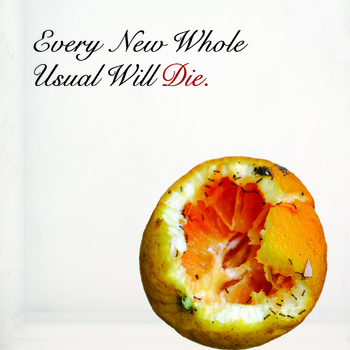
The New Whole Usuals: Every New Whole Usual Will Die


RIYL: Frank Zappa, Butch Boswell, The New Pornographers

The New Whole Usuals have returned, and once again they have made an album that defies easy categorization. Not content to just run along one groove per song, the Usuals like to shift gears, time signatures, sometimes entire instrumental arrangements within the scope of each track here. “Moonswell” manages to conjure up ’70s Frank Zappa during his Apostrophe and Over-Nite Sensation tenure, while “A Swiftly Tilting Planet” sounds right up the alley of the next New Pornographers project. But it’s more than all of those things, with banjos and brass instruments mingling with each other throughout the mix. “Ipso Phanto” sounds like you know exactly where it’s going to head, when it takes a left turn and never comes back, and “High Fructose” is as experimental and far-reaching as one might suspect with that sort of title. At times perhaps this stuff gets a little too way out, but not for long. Definitely good listening for those bored with the same old-same old floating out of their iPods these days. (Me and the Machine Records 2010)

The New Whole Usuals MySpace page.

« Older posts Newer posts »