Author: R. David Smola (Page 2 of 7)

Iron Maiden: The Final Frontier


RIYL: Dream Theatre, Savatage, Queensryche

Looking for another set of covers by an established act? How about a band looking to completely re-invent itself by offering up Bossa Nova versions of its classics (Rundgren did it in 1997 on With a Twist)? That ain’t happening here. Iron Maiden offers up 76 minutes of progressive metal, professionally and unapologetically on the very good The Final Frontier. The shortest track is 4:29, two tracks are slightly over 5:19 and the rest are in the six-to-11-minute range. Frontier has the necessary Maiden ingredients; song titles like “The Alchemist” and “The Talisman,” theatrical vocalizations by Bruce Dickinson, the monster guitar work, the rolling, rumbling bass lines and the kinetic drumming of Nico McBrain.

This is a 2010 release but sounds like a classic. With a loose galactic theme running throughout, Dickinson really lets it fly with his best vocal performance on “Coming Home.” That track joins Bowie’s “Space Oddity” or Planet P’s “Why Me?” in the pantheon of great space pilot songs. One wonders how Dickinson just doesn’t collapse because he sounds as if he puts everything he has in every note. He doesn’t have the vocal pop of Geoff Tate or Rob Halford, but he certainly makes up for it with passion and a delivery that lets it loose at the very edge of his range. As usual, the guitar work – and there is plenty of it as the keyboards are very subtle – from Dave Murray, Adrian Smith and Janick Gers is terrific, coming up with small nuances and solos making the material sound fresh and never tired. The first four minutes of dissonance and drum work from McBrain on “Satellite 15…The Final Frontier” grabs the listener by the throat before breaking into a fabulous rolling metal tune. Several of the songs set up with a slower, more methodical beginning, before the guitars soar and Dickinson’s starts to extend his voice. Maiden’s Frontier is full of delicious progressive work which demonstrates there is plenty of gas left in the old warhorses’ tank. (Columbia Legacy 2010)

Iron Maiden MySpace page

Gary Wright: Connected


RIYL: Alan Parsons, The Moog Cookbook; Gary Wright circa 1975

There are arguments about touring with Ringo Starr and his all-star band, which is currently in its eleventh incarnation. Some critics argue that it is a confirmation that you have become a nostalgia act. Some of the artists have used the exposure and experience as a springboard to record new material. That has been true for Ringo himself, who continues to put out consistently good records. Colin Hay, John Waite and Todd Rundgren have also offered new and decent recordings since touring with the former Beatle timekeeper. Now we can add Gary Wright to that list, as he jumps in the time machine and offers up Connected, a pseudo sequel to 1975’s Dream Weaver.

Jeff “Skunk” Baxter adds guitar to a couple of tracks while Ringo Starr and Joe Walsh guest on the opening track “Satisfied,” a funky little tune which seems to stick in your head for several days after first listen. The focus of the music here is the unique and effective vocal style of Wrights in combination with his time capsule keyboard work. They are an excellent complement of each other. The record is most effective when Wright’s unique keyboards funk it up like on “Satisfied, “Get Your Hands Up” and the very spacey and gospel-influenced ” Can’t Find No Mercy.” “No One Does It Better” is also a cut with a slower but equally tasty groove. The record for the most part is delightful and only slumps when it slows down. Tracks like “Under Your Spell” and “Life’s Not a Battlefield” sound preachy and lose the vibe established by the other tracks. The strength of the other material equates to a very solid effort by the former keyboardist of Spooky Tooth. (Larkio Music, 2010)

Gary Wright MySpace page

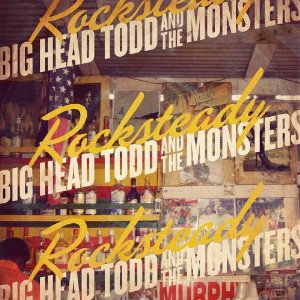
Big Head Todd & the Monsters: Rocksteady


RIYL: Gin Blossoms, Train, Robert Cray Band

Rocksteady is the title of the eighth studio album from Big Head Todd & the Monsters since 1989, but it also serves as the mantra for the Colorado band. Although 1993’s Sister Sweetly was spectacular, the rest of their records have been good efforts with plenty of pleasant moments. Nothing they have released since Sister Sweetly has approached that masterpiece. Rocksteady joins a very workmanlike catalog, complete with a gem or two along with a forgettable song here and there. The album sails nicely through 11 tracks and acts as a sorbet, nicely cleansing the palate and leaving an agreeable taste behind.

The usual blend of pop, light jazz and bluesy riffs fill the record while the production is pristine as Todd Park Mohr’s voice and guitar take center stage as usual. The record stretches a bit in the blues direction when Big Head channels Howlin’ Wolf on “Smokestack Lightnin’.” This is nothing new for the band, who memorably dueted with Johnny Lee Hooker on “Boom Boom” from 1997’s Beautiful World. The Monsters cover the Stones on a light-as-air version of “Beast of Burden” that lacks any kind of bite. Mohr’s lyrics about Muhammad Ali on a record released in 2010 seem oddly out of date, making the track of the same name seem dated. The record ends on a high note with the eloquent “Fake Diamond Kind,” which contains the best lyrics on the record and seems to stay in the listener’s head well after the disc has finished playing. (Big Head Todd & The Monsters 2010)

Big Head Todd & The Monsters MySpace page

Deftones: Diamond Eyes


RIYL: P.O.D., Soulfly, Black Sabbath

Diamond Eyes delivers a concise, effective and heavy record. The Deftones have been the most interesting band to emerge from the ’90s and has consistently delivered music that entertains, provokes and never bores. Currently in heavy rotation, the title track is the perfect opening to an excellent 41-minute ride. Alternating between Sabbath-esque deep riffs and a soaring chorus, “Diamond Eyes” sets the tone for the rest of the record.

IMG_6621 RETOUCH

The evolution of Diamond Eyes needs to be noted. Originally, the Deftones started recording a still-unreleased record titled Eros (as a follow up to 2006’s Saturday Night Wrist) but shelved it shortly after bassist Chi Cheng was in serious car accident, leaving him in a coma. Feeling the need to go in a completely different artistic direction, the band started constructing Diamond Eyes. With Cheng’s condition unchanged, Quicksand bassist Sergio Vega stepped in, played on the current record and is a touring. One would expect a bunch of songs about the angst surrounding the tragedy; instead the lyrics are more abstract and enigmatic while accompanied by the atmospheric, heavy and borderline progressive arrangements. Occasionally, the music is reminiscent of a much heavier and hookier Pink Floyd (on cuts like “Sextape” and “976-Evil”) but Chino and the boys offer enough guitar crunch to meet your metal jones and the record has just enough screaming to be effective without being obnoxious.

Diamond Eyes is akin to the brilliant P.O.D.’s 2008 When Angels and Serpents Dance, which was an example of a band evolving, perfecting and deepening their sound. Diamond Eyes is the same. The Deftones have a unique sound, most of it due to Chino Marino’s hypnotic vocals contrasting with the harder arrangements. Marino can scream, hit the highs and flat out sing when he feels like it. Diamond Eyes is satisfying enough at 41 minutes but leaves you wanting just a bit more. Isn’t that the way it should be? (Reprise 2010)

Deftones MySpace page

Slash: Slash


RIYL: Guns n Roses, Aerosmith, Alice Cooper

Duff McKagan is the newest member of Jane’s Addiction; Scott Weiland is back with STP; Matt Sorum has a Pussycat Dolls-like rock review with his Darling Stilettos, and Dave Kushner most recently co-wrote the theme song to “Sons of Anarchy.” What about the man in the top hat and the very soul of Velvet Revolver? Slash has left his Snakepit behind to release a guitar player’s record in which a different vocalist is featured on each track. So often these types of records are uneven because the vocalists skew the music so drastically apart, the end results feel like a series of singles slapped together. Most of the tracks are polished musical metal pop songs that his vocalists end up fitting into, adjusting their style to fit into his vision. On most of the songs, he doesn’t make the mistake of trying to build material for the singers except the collaborations with Adam Levine and Kid Rock, which feel more specific for those artists and sound like tracks that would be recorded by the vocalists on their records. Slash is fun, ripping good and more accessible then the two Velvet Revolver records. Contraband and Libertad had their moments, but weren’t very consistent regardless of the commercial and critical hoopla.

The formula mellows a bit for Kid Rock’s funky “I Hold On.” The Adam Levine-sung “Gotten” sounds a lot like a Maroon 5 groove. “Mother Mary” is an earthy effort by Beth Hart that conjures up a Janis Joplin vibe. “Watch This,” featuring Dave Grohl and Duff McKagan, is the lone instrumental and a tasty one at that. Slash compiles an eclectic guest list, but because the music is based on his bluesy soloing and magnificent crunchy riffs, the record has a remarkable consistency. Ozzy also appears on the very predictable sounding, “Crucify the Dead.” Doesn’t it seem like every Ozzy track these days kind of sounds the same? The copy available for this review also featured a Cypress Hill/Fergie collaboration for a cover of “Paradise City.” It has a weird sort of charm and works as does most of this record. Slash is a pleasant surprise and even with the diverse set of singers, is one of the better records thus far in 2010. (Dik Hayd 2010)

Slash MySpace page

« Older posts Newer posts »