This panel featured former Weather Underground leader Bill Ayers, Wayne Kramer of the MC5, Country Joe McDonald and Kent State 1970 shooting survivor Alan Canfora in a wide-ranging discussion of how music intersected with revolutionary politics and activism in the late ’60s and early ’70s. It was only a shame there weren’t more young musicians in the audience.
“There seemed to be an agreement among everyone that something was wrong [with society],” said Kramer. “Music fit in… because we tell the stories of it… We had a zeitgeist going.”
McDonald said that it was natural for him to put political lyrics in his music because of his radical upbringing, as opposed to most of his contemporaries who were rebelling against straight parents. He said it was this upbringing that enabled him to write his famous “Fixing to Die Rag.”
“Music empowers people… My song didn’t end the war, but it validated your feelings… ‘Four Dead in Ohio,’ wow, it releases your feelings and empowers you… It [music] is addicting, it’s like a drug.”
Ayers said the stomach-turning stories of G.I.s that came home from the Vietnam War were what had energized him and his peers to become active in the anti-war movement and that music was a constant in that movement
“Whenever we came together, we sang,” said Ayers. “It brought us the courage.”
Canfora said he and his classmates never imagined they might actually get shot at in the peaceful May 4, 1970 anti-war protests that saw four students killed and himself among nine wounded.
“We always had the idea that if we kept our distance, we’d be okay,” said Canfora, labeling the May 4 shootings a “barbaric crime which still remains a grievous injustice to this day.”
Ayers called it a “horrible wake-up call to the sewer we lived in,” and went on to describe the lessons of the era. “A mass movement starts with one person, two, three in your own neighborhood… This is the lesson… You fight and lose, you fight and lose, fight and lose, and then you win one.”
Canfora said music was a key part of the activism at Kent State that he felt helped eventually end the Vietnam War.
“Our goal was a strategy to bring the war home… We helped stop a criminal, imperialist war. We rose to that task and we won and that revolution continues today, and it was inspired by music,” said Canfora, who cited Country Joe & the Fish, the MC5 and Jefferson Airplane as key influences.
A line in Jefferson Airplane’s 1969 classic “We Can Be Together” was cited by both Canfora and Ayers as one of the most inspiring and on-point lyrics of of the times – “We are forces of chaos and anarchy…and we are very proud of ourselves.” Canfora cited modern punk bands the Casualties, the Unseen and Anti-Flag as current acts following in the revolutionary tradition, saying the lyrics now are much more powerful than what his generation had.
“It’s still going on today… The fact that SXSW is thriving is a good example of how we have won this revolution,” said Canfora in reference to the way that rock ‘n’ roll has become a huge part of American culture instead of just the counterculture.”


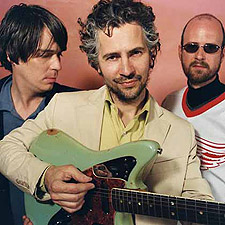 My first exposure to the Flaming Lips was seeing the video for “She Don’t Use Jelly” on MTV’s “Beavis and Butthead” show, which immediately pegged the Lips as a novelty in my mind (and not one that I even enjoyed all that much). How could one not see novelty in a song with a character who spreads Vaseline on her toast? This was kid stuff, and yes, I could be a silly kid, but where I drew my lines of tolerance for silliness were admittedly very arbitrary (example: I unironically enjoyed Mister Ed). As such, I completely shut out the Lips.
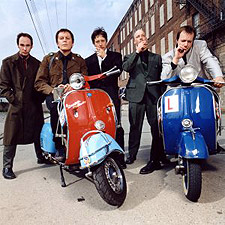 The buzz was loud and clear on Bee Thousand, the lo-fi masterpiece by Dayton alt-rockers Guided by Voices. This was the record that everyone positively had to own, so I borrowed it from a friend of mine…and totally didn’t get it. The songs aren’t finished! Are these demos? When lead singer Robert Pollard – whose last name should be a synonym for ‘prolific’ – saw a song to its completion, as he did on “Tractor Rape Chain,” I was definitely into it, but too many of the songs felt like piss takes to me, so I politely stayed off the bandwagon. Five years later, he made “Teenage FBI” with Ric Ocasek, which I loved, but still didn’t buy any of their records. Then they dropped Human Amusements at Hourly Rates, a compilation of Pollard’s more, ahem, finished songs, and I finally bit, and the disc scarcely left my CD player for months afterward. And then, of course, the band broke up just when I was beginning to appreciate them. Luckily, they recorded 16 albums in 17 years before calling it quits. The only question now is: which one do I start with? – David Medsker